

Most people who buy a GMADA plot think of it as land. The authority thinks of it as an obligation.
A plot allotted by GMADA comes with a construction deadline written into the rules. Miss it and a charge starts running, and it keeps running, and at the far end of it the authority has the power to take the plot back. A great deal of land in this district is bought to hold rather than to build on, which means a great many owners are carrying this liability without knowing it is there.
The rule
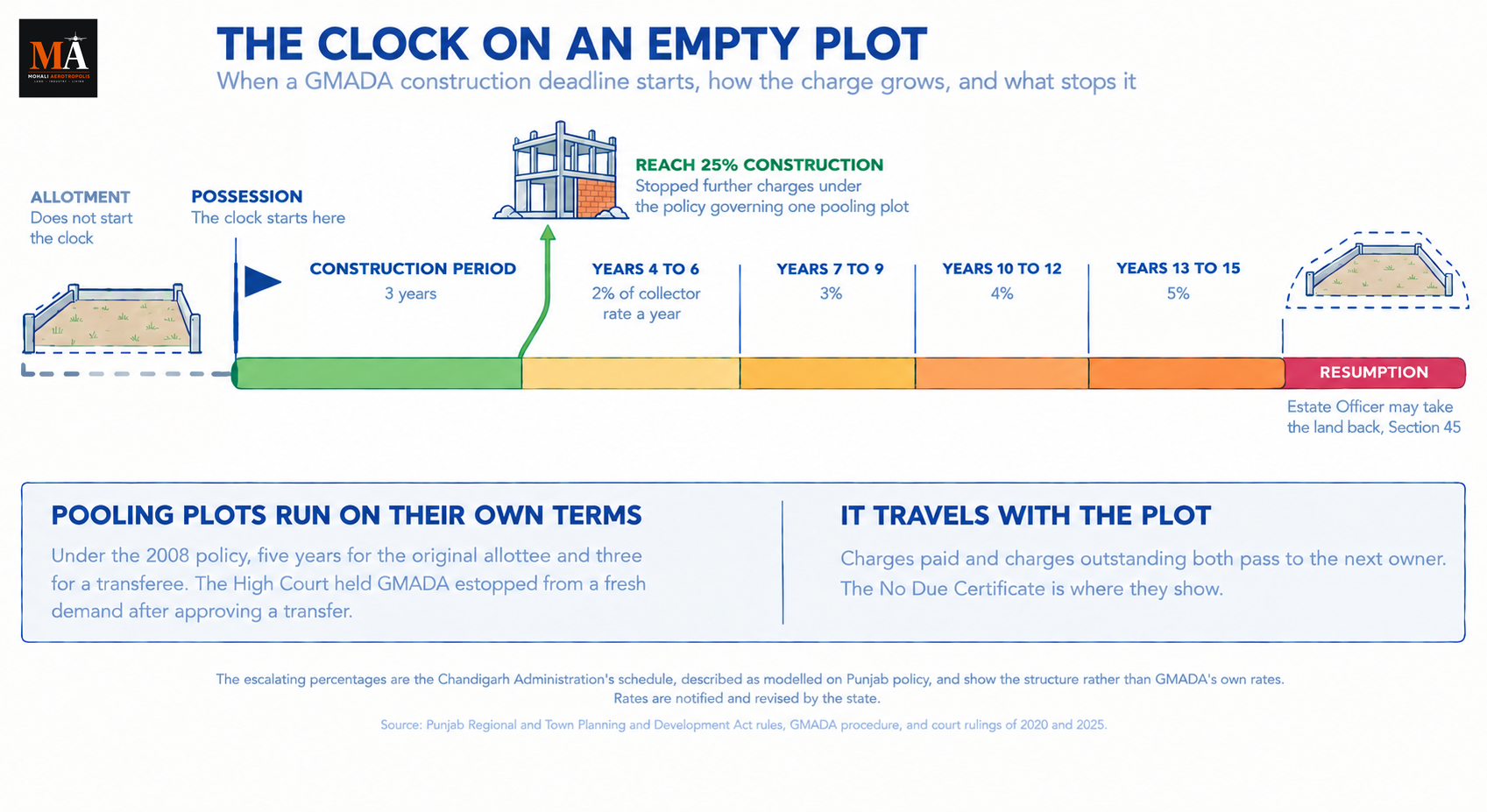
Under rules made under the Punjab Regional and Town Planning and Development Act, 1995, an allottee has to complete the building as per the approved building plan within three years from the date of possession of the land. If they do not, the Estate Officer may resume the land, the building, or both, under Section 45 of the Act.
GMADA's own published procedure puts it plainly. The allottee has to complete the building within three years, and no extension is allowed beyond that except in exceptional cases, for up to another three years, for reasons recorded in writing, and on payment of an extension fee.
The word is complete, not start. And the sanction at the end is not a fine. It is losing the land.
The clock starts at possession, not at allotment
A 2020 case before the Punjab State Consumer Disputes Redressal Commission shows the arithmetic. The complainant, Bharat Bhushan, had bought the plot from the original allottee. The Letter of Intent was issued on 18 March 2011 and possession was taken on 24 March 2015. The Commission held that the three year construction period ran from possession, to 23 March 2018, and that non-construction charges from April 2018 onward were correctly levied.
Four years passed between the LOI and possession, and none of that counted against the owner. The obligation to build cannot begin until there is a plot to build on.
The LOI in that matter also required GMADA to hand over possession within 30 months, and gave the allottee the right to withdraw with a refund at 10 per cent simple interest if the authority could not. And the Commission held it had jurisdiction to decide whether non-construction charges and extension fees had been validly levied, because they are statutory dues. That gives an owner a forum other than the High Court.
Land pooling plots run on their own policy terms
In April 2025 the Punjab and Haryana High Court quashed a GMADA demand for non-construction charges on a plot allotted under the Land Pooling Scheme. A bench of Justice Sureshwar Thakur and Justice Vikas Suri held the demand arbitrary and contrary to the policy dated 9 September 2008.
That policy gave the initial allottee five years to build. It separately provided a three year period where the plot was transferred to a new owner. GMADA had applied three years from the original allotment, which the court held wrong for both the original allottee and the purchaser.
The facts decided the rest. The original allottee did not build within the five years, which ran out on 27 October 2020. GMADA then accepted non-construction charges from her for six months and permitted the transfer. The court held that having approved the sale, and having failed to act within the five year period, GMADA was estopped from raising a fresh demand against the purchaser, and that applying the three year rule in those circumstances was inequitable.
So the term depends on how the plot was allotted and under which policy. The 2008 policy is not the only pooling policy, and an Aerotropolis plot runs on the terms of its own allotment. In Pockets A to D the question is still some way off: the state only decided in June 2026 to route pending compensation through the Reference Court, which was reported as clearing the way for GMADA to take possession of that land.
What the charge is, and how it grows
The extension fee is levied for each year beyond the construction period, and the rates are notified and revised by the state from time to time.
The structure is escalating rather than flat. The Chandigarh Administration, which adopted a schedule it described as modelled on the Punjab government's policy, charges 2 per cent of the collector rate for the fourth, fifth and sixth years, 3 per cent for the seventh to ninth, 4 per cent for the tenth to twelfth, and 5 per cent for the thirteenth to fifteenth. That is the UT's own schedule rather than GMADA's, but it shows the shape: a percentage of collector rate that rises the longer the plot sits empty.
Because the charge is tied to the collector rate, it rises when collector rates rise. A plot held empty through a period of annual collector rate revisions is accumulating a liability on a base that is itself climbing.
Twenty-five per cent can stop it
The April 2025 ruling also records that the purchaser had begun construction and claimed 25 per cent completion, which under the policy governing that plot exempted her from further non-construction charges.
So under that policy the obligation was not binary. An owner did not have to finish the house to stop the charge; reaching a quarter of the construction was the threshold. Whether other allotment terms carry a similar threshold decides how much an owner who cannot yet build out keeps paying.
It travels with the plot
Non-construction liability attaches to the plot, which means it passes to whoever holds it.
Both cases above involve purchasers rather than original allottees. In the High Court case, the purchaser took the benefit of charges already paid and of GMADA's approval of the transfer. The same mechanism works the other way: a buyer who takes a plot with charges outstanding takes the charges too. The No Due Certificate is where an unpaid non-construction liability surfaces before a transfer can complete.
When the plot was never handed over
A case listed before the High Court in September 2026 shows how far a demand can drift from the rule.
A plot in Sector 69 was paid for in full in 1995. Possession was never delivered to the purchaser. After a Revisional Authority directed in September 2024 that the plot be transferred to him, GMADA's Estate Officer sought non-construction charges of ₹1.66 crore.
His counsel argued the charges could not be sought because the Revisional Authority had already decided the purchaser's right to the transfer, because the 1997 policy relied on concerned penalty for delayed payment rather than non-construction, and because the Estate Officer had no authority to issue the notice once the matter had been decided.
The possession rule points the same way. If the construction clock runs from possession, as the 2020 ruling held, a plot whose possession was never handed over has had no clock running at all. The matter is before the court and has not been decided.
What decides the liability on any given plot
The possession date starts the clock, not the allotment and not the purchase, and it is recorded on the possession certificate.
The allotment route and its policy set the term. Three years from possession for a regular allotment; for a pooling plot, whatever its policy says, which under the 2008 policy meant five years for the original allottee and three for a transferee.
Charges already paid and charges outstanding both pass with the plot, and the No Due Certificate is where either shows up.
And a plot bought years after allotment may already be well into its extension period, carrying charges on a rising collector rate, with resumption as the backstop.
A GMADA plot held empty is not a neutral asset sitting still. It is a clock, set running on the day possession changed hands, and whoever holds the plot when it runs out is the one it runs out on.
None of the above is legal advice. Rates are notified and revised by the state, and the position on any particular plot turns on its allotment terms and possession date.
---
Sources
- The procedure followed in the decision making process, Greater Mohali Area Development Authority, for the three year construction period, the exceptional extension for up to a further three years for recorded reasons, and the extension fee
- Grant of extension in construction period, rules under the Punjab Regional and Town Planning and Development Act, 1995, Government of Punjab notification dated 9 June 2010, for the requirement to complete the building within three years from possession, resumption under Section 45, and extension on payment of a fee determined by the state
- Bharat Bhushan vs Greater Mohali Area Development Authority, Punjab State Consumer Disputes Redressal Commission, 18 June 2020, on the three year period running from possession, the 30 month possession clause in the Letter of Intent, and the Commission's jurisdiction over non-construction charges as statutory dues
- HC quashes GMADA's non-construction charge demand, calls it arbitrary, misapplied, Saurabh Malik, The Tribune, 17 April 2025, on the five year and three year periods under the 9 September 2008 land pooling policy, the estoppel finding, the transfer after six months of charges, and the 25 per cent completion exemption
- Chandigarh Administration rationalises extension fee for vacant plots, The Tribune, on the escalating schedule as a percentage of collector rate, adopted on the pattern of the Punjab government's policy
- HC slams GMADA's atrocious condition barring plot buyer from legal action, Saurabh Malik, The Tribune, 7 September 2026, on the Sector 69 plot, the ₹1.66 crore demand and the grounds argued
- Punjab clears way for Aerotropolis compensation, land possession, The Tribune, 22 June 2026, on the Reference Court decision and possession in Pockets A to D
GMADA प्लॉट खरीदने वाले ज़्यादातर लोग इसे ज़मीन मानते हैं। अथॉरिटी इसे एक बाध्यता मानती है।
GMADA द्वारा आवंटित प्लॉट के साथ नियमों में लिखी एक निर्माण समय-सीमा आती है। इसे चूक जाइए और एक शुल्क चलना शुरू हो जाता है, और वह चलता रहता है, और उसके अंत में अथॉरिटी के पास प्लॉट वापस लेने की शक्ति होती है। इस ज़िले में बहुत सारी ज़मीन बनाने के बजाय रोकने के लिए खरीदी जाती है, जिसका मतलब है कि बहुत सारे मालिक यह देनदारी उठा रहे हैं बिना यह जाने कि यह मौजूद है।
नियम
पंजाब रीजनल एंड टाउन प्लानिंग एंड डेवलपमेंट एक्ट, 1995 के तहत बने नियमों के अनुसार, एक आवंटी को ज़मीन के कब्जे की तारीख से तीन साल के भीतर स्वीकृत बिल्डिंग प्लान के अनुसार इमारत पूरी करनी होती है। यदि वे ऐसा नहीं करते, तो एस्टेट ऑफिसर एक्ट की धारा 45 के तहत ज़मीन, इमारत, या दोनों को वापस ले सकता है।
GMADA की अपनी प्रकाशित प्रक्रिया इसे स्पष्ट रूप से कहती है। आवंटी को तीन साल के भीतर इमारत पूरी करनी होती है, और इसके बाद कोई विस्तार की अनुमति नहीं है सिवाय असाधारण मामलों के, अधिकतम तीन साल और के लिए, लिखित में दर्ज कारणों के लिए, और विस्तार शुल्क के भुगतान पर।
शब्द है पूरा करना, न कि शुरू करना। और अंत में स्वीकृति जुर्माना नहीं है। यह ज़मीन खोना है।
घड़ी कब्जे से शुरू होती है, आवंटन से नहीं
पंजाब स्टेट कंज्यूमर डिस्प्यूट्स रिड्रेसल कमीशन के समक्ष 2020 का एक मामला इस गणित को दिखाता है। शिकायतकर्ता, भारत भूषण, ने मूल आवंटी से प्लॉट खरीदा था। Letter of Intent 18 मार्च 2011 को जारी किया गया था और कब्जा 24 मार्च 2015 को लिया गया था। कमीशन ने माना कि तीन साल की निर्माण अवधि कब्जे से चली, 23 मार्च 2018 तक, और अप्रैल 2018 से आगे non-construction charges सही ढंग से लगाए गए थे।
LOI और कब्जे के बीच चार साल बीते, और उसमें से कोई भी मालिक के खिलाफ नहीं गिना गया। बनाने की बाध्यता तब तक शुरू नहीं हो सकती जब तक बनाने के लिए प्लॉट न हो।
उस मामले में LOI ने GMADA को 30 महीनों के भीतर कब्जा सौंपने की भी आवश्यकता रखी, और आवंटी को 10 प्रतिशत साधारण ब्याज पर रिफंड के साथ वापस लेने का अधिकार दिया यदि अथॉरिटी ऐसा नहीं कर सकती। और कमीशन ने माना कि उसके पास यह तय करने का अधिकार क्षेत्र है कि क्या non-construction charges और विस्तार शुल्क वैध रूप से लगाए गए थे, क्योंकि वे सांविधिक देय राशियाँ हैं। यह एक मालिक को हाई कोर्ट के अलावा एक मंच देता है।
लैंड पूलिंग प्लॉट अपनी नीति की शर्तों पर चलते हैं
अप्रैल 2025 में पंजाब और हरियाणा हाई कोर्ट ने लैंड पूलिंग स्कीम के तहत आवंटित एक प्लॉट पर non-construction charges की GMADA की मांग को रद्द कर दिया। जस्टिस सुरेश्वर ठाकुर और जस्टिस विकास सूरी की बेंच ने मांग को मनमाना और 9 सितंबर 2008 की नीति के विपरीत माना।
उस नीति ने मूल आवंटी को बनाने के लिए पाँच साल दिए। इसने अलग से तीन साल की अवधि प्रदान की जहाँ प्लॉट एक नए मालिक को हस्तांतरित किया गया। GMADA ने मूल आवंटन से तीन साल लागू किए थे, जिसे कोर्ट ने मूल आवंटी और खरीदार दोनों के लिए गलत माना।
तथ्यों ने बाकी तय किया। मूल आवंटी ने पाँच साल के भीतर नहीं बनाया, जो 27 अक्टूबर 2020 को समाप्त हो गए। GMADA ने तब उससे छह महीने के लिए non-construction charges स्वीकार किए और हस्तांतरण की अनुमति दी। कोर्ट ने माना कि बिक्री को मंजूरी देने के बाद, और पाँच साल की अवधि के भीतर कार्रवाई करने में विफल रहने के बाद, GMADA खरीदार के खिलाफ नई मांग उठाने से एस्टॉपल थी, और उन परिस्थितियों में तीन साल का नियम लागू करना अनुचित था।
तो अवधि इस पर निर्भर करती है कि प्लॉट कैसे आवंटित किया गया और किस नीति के तहत। 2008 की नीति एकमात्र पूलिंग नीति नहीं है, और एक Aerotropolis प्लॉट अपने स्वयं के आवंटन की शर्तों पर चलता है। Pockets A से D में सवाल अभी कुछ दूर है: राज्य ने केवल जून 2026 में लंबित मुआवजे को Reference Court के माध्यम से भेजने का फैसला किया, जिसे GMADA के लिए उस ज़मीन का कब्जा लेने का रास्ता साफ करने के रूप में रिपोर्ट किया गया।
शुल्क क्या है, और यह कैसे बढ़ता है
विस्तार शुल्क निर्माण अवधि से आगे प्रत्येक वर्ष के लिए लगाया जाता है, और दरें राज्य द्वारा समय-समय पर अधिसूचित और संशोधित की जाती हैं।
संरचना सपाट के बजाय बढ़ती हुई है। चंडीगढ़ प्रशासन, जिसने एक अनुसूची अपनाई जिसे उसने पंजाब सरकार की नीति पर आधारित बताया, चौथे, पाँचवें और छठे वर्ष के लिए collector rate का 2 प्रतिशत, सातवें से नौवें के लिए 3 प्रतिशत, दसवें से बारहवें के लिए 4 प्रतिशत, और तेरहवें से पंद्रहवें के लिए 5 प्रतिशत लेती है। यह GMADA की बजाय UT की अपनी अनुसूची है, लेकिन यह आकार दिखाती है: collector rate का एक प्रतिशत जो प्लॉट जितना लंबा खाली पड़ा रहता है उतना बढ़ता जाता है।
चूँकि शुल्क collector rate से जुड़ा है, यह तब बढ़ता है जब collector rate बढ़ती है। वार्षिक collector rate संशोधनों की अवधि के दौरान खाली रखा गया प्लॉट एक ऐसे आधार पर देनदारी जमा कर रहा है जो स्वयं चढ़ रहा है।
पच्चीस प्रतिशत इसे रोक सकता है
अप्रैल 2025 के फैसले में यह भी दर्ज है कि खरीदार ने निर्माण शुरू कर दिया था और 25 प्रतिशत पूर्णता का दावा किया था, जो उस प्लॉट को नियंत्रित करने वाली नीति के तहत उसे आगे के non-construction charges से छूट देता था।
तो उस नीति के तहत बाध्यता द्विआधारी नहीं थी। शुल्क रोकने के लिए मालिक को घर पूरा करने की ज़रूरत नहीं थी; निर्माण का एक चौथाई तक पहुँचना सीमा थी। क्या अन्य आवंटन शर्तों में समान सीमा है, यह तय करता है कि जो मालिक अभी नहीं बना सकता वह कितना भुगतान करता रहता है।
यह प्लॉट के साथ चलती है
Non-construction देनदारी प्लॉट से जुड़ती है, जिसका मतलब है कि यह उसके धारक को हस्तांतरित होती है।
ऊपर के दोनों मामलों में मूल आवंटियों के बजाय खरीदार शामिल हैं। हाई कोर्ट के मामले में, खरीदार ने पहले से भुगतान किए गए शुल्कों और हस्तांतरण की GMADA की मंजूरी का लाभ लिया। वही तंत्र दूसरी दिशा में काम करता है: जो खरीदार बकाया शुल्कों वाला प्लॉट लेता है वह शुल्क भी लेता है। No Due Certificate वह जगह है जहाँ हस्तांतरण पूरा होने से पहले एक अवैतनिक non-construction देनदारी सामने आती है।
जब प्लॉट कभी सौंपा ही नहीं गया
सितंबर 2026 में हाई कोर्ट के समक्ष सूचीबद्ध एक मामला दिखाता है कि एक मांग नियम से कितनी दूर भटक सकती है।
सेक्टर 69 में एक प्लॉट का भुगतान 1995 में पूरी तरह किया गया था। खरीदार को कब्जा कभी नहीं दिया गया। सितंबर 2024 में एक रिवीजनल अथॉरिटी द्वारा निर्देश दिए जाने के बाद कि प्लॉट उसे हस्तांतरित किया जाए, GMADA के एस्टेट ऑफिसर ने ₹1.66 करोड़ के non-construction charges मांगे।
उनके वकील ने तर्क दिया कि शुल्क नहीं मांगे जा सकते क्योंकि रिवीजनल अथॉरिटी पहले ही खरीदार के हस्तांतरण के अधिकार का फैसला कर चुकी थी, क्योंकि जिस 1997 की नीति पर भरोसा किया गया वह non-construction के बजाय विलंबित भुगतान के जुर्माने से संबंधित थी, और क्योंकि मामला तय हो जाने के बाद एस्टेट ऑफिसर के पास नोटिस जारी करने का कोई अधिकार नहीं था।
कब्जे का नियम भी उसी दिशा में इशारा करता है। यदि निर्माण की घड़ी कब्जे से चलती है, जैसा कि 2020 के फैसले ने माना, तो जिस प्लॉट का कब्जा कभी सौंपा ही नहीं गया उसकी कोई घड़ी चली ही नहीं। मामला कोर्ट के समक्ष है और तय नहीं हुआ है।
किसी भी प्लॉट पर देनदारी क्या तय करता है
कब्जे की तारीख घड़ी शुरू करती है, आवंटन नहीं और खरीद नहीं, और यह कब्जा प्रमाणपत्र पर दर्ज होती है।
आवंटन मार्ग और उसकी नीति अवधि तय करती है। नियमित आवंटन के लिए कब्जे से तीन साल; पूलिंग प्लॉट के लिए, जो भी उसकी नीति कहती है, जो 2008 की नीति के तहत मूल आवंटी के लिए पाँच साल और हस्तांतरिती के लिए तीन थी।
पहले से भुगतान किए गए शुल्क और बकाया शुल्क दोनों प्लॉट के साथ हस्तांतरित होते हैं, और No Due Certificate वह जगह है जहाँ दोनों में से कोई भी दिखता है।
और आवंटन के वर्षों बाद खरीदा गया प्लॉट पहले से ही अपनी विस्तार अवधि में काफी आगे हो सकता है, बढ़ती collector rate पर शुल्क उठाए हुए, वापसी के विकल्प के साथ।
खाली रखा गया GMADA प्लॉट स्थिर पड़ी एक तटस्थ संपत्ति नहीं है। यह एक घड़ी है, जो उस दिन चलना शुरू होती है जब कब्जा हाथ बदलता है, और जो भी प्लॉट का धारक होता है जब यह समाप्त होती है, उसी पर यह समाप्त होती है।
उपरोक्त में से कुछ भी कानूनी सलाह नहीं है। दरें राज्य द्वारा अधिसूचित और संशोधित की जाती हैं, और किसी विशेष प्लॉट पर स्थिति उसकी आवंटन शर्तों और कब्जे की तारीख पर निर्भर करती है।
---
स्रोत
- The procedure followed in the decision making process, ग्रेटर मोहाली एरिया डेवलपमेंट अथॉरिटी, तीन साल की निर्माण अवधि, दर्ज कारणों के लिए अधिकतम तीन साल और के असाधारण विस्तार, और विस्तार शुल्क के लिए
- Grant of extension in construction period, rules under the Punjab Regional and Town Planning and Development Act, 1995, भारत सरकार/पंजाब सरकार की 9 जून 2010 की अधिसूचना, कब्जे से तीन साल के भीतर इमारत पूरी करने की आवश्यकता, धारा 45 के तहत वापसी, और राज्य द्वारा निर्धारित शुल्क के भुगतान पर विस्तार के लिए
- Bharat Bhushan vs Greater Mohali Area Development Authority, पंजाब स्टेट कंज्यूमर डिस्प्यूट्स रिड्रेसल कमीशन, 18 जून 2020, कब्जे से चलने वाली तीन साल की अवधि, Letter of Intent में 30 महीने के कब्जे के खंड, और सांविधिक देय राशियों के रूप में non-construction charges पर कमीशन के अधिकार क्षेत्र पर
- HC quashes GMADA's non-construction charge demand, calls it arbitrary, misapplied, सौरभ मलिक, द ट्रिब्यून, 17 अप्रैल 2025, 9 सितंबर 2008 की लैंड पूलिंग नीति के तहत पाँच साल और तीन साल की अवधि, एस्टॉपल निष्कर्ष, छह महीने के शुल्क के बाद हस्तांतरण, और 25 प्रतिशत पूर्णता छूट पर
- Chandigarh Administration rationalises extension fee for vacant plots, द ट्रिब्यून, collector rate के प्रतिशत के रूप में बढ़ती अनुसूची पर, जो पंजाब सरकार की नीति के पैटर्न पर अपनाई गई
- HC slams GMADA's atrocious condition barring plot buyer from legal action, सौरभ मलिक, द ट्रिब्यून, 7 सितंबर 2026, सेक्टर 69 के प्लॉट, ₹1.66 करोड़ की मांग और तर्क किए गए आधारों पर
- Punjab clears way for Aerotropolis compensation, land possession, द ट्रिब्यून, 22 जून 2026, Reference Court के फैसले और Pockets A से D में कब्जे पर
ਜ਼ਿਆਦਾਤਰ ਲੋਕ ਜੋ GMADA ਪਲਾਟ ਖਰੀਦਦੇ ਹਨ, ਉਹ ਇਸਨੂੰ ਜ਼ਮੀਨ ਸਮਝਦੇ ਹਨ। ਅਥਾਰਟੀ ਇਸਨੂੰ ਇੱਕ ਜ਼ਿੰਮੇਵਾਰੀ ਸਮਝਦੀ ਹੈ।
GMADA ਵੱਲੋਂ ਅਲਾਟ ਕੀਤੇ ਪਲਾਟ ਨਾਲ ਇੱਕ ਨਿਰਮਾਣ ਦੀ ਸਮਾਂ-ਸੀਮਾ ਜੁੜੀ ਹੁੰਦੀ ਹੈ ਜੋ ਨਿਯਮਾਂ ਵਿੱਚ ਲਿਖੀ ਹੁੰਦੀ ਹੈ। ਇਸਨੂੰ ਮਿਸ ਕਰੋ ਅਤੇ ਇੱਕ ਚਾਰਜ ਸ਼ੁਰੂ ਹੋ ਜਾਂਦਾ ਹੈ, ਅਤੇ ਇਹ ਚੱਲਦਾ ਰਹਿੰਦਾ ਹੈ, ਅਤੇ ਇਸਦੇ ਅੰਤ ਵਿੱਚ ਅਥਾਰਟੀ ਕੋਲ ਪਲਾਟ ਵਾਪਸ ਲੈਣ ਦੀ ਸ਼ਕਤੀ ਹੁੰਦੀ ਹੈ। ਇਸ ਜ਼ਿਲ੍ਹੇ ਵਿੱਚ ਬਹੁਤ ਸਾਰੀ ਜ਼ਮੀਨ ਬਣਾਉਣ ਦੀ ਬਜਾਏ ਰੱਖਣ ਲਈ ਖਰੀਦੀ ਜਾਂਦੀ ਹੈ, ਜਿਸਦਾ ਮਤਲਬ ਹੈ ਕਿ ਬਹੁਤ ਸਾਰੇ ਮਾਲਕ ਇਹ ਜ਼ਿੰਮੇਵਾਰੀ ਚੁੱਕ ਰਹੇ ਹਨ ਬਿਨਾਂ ਜਾਣੇ ਕਿ ਇਹ ਮੌਜੂਦ ਹੈ।
ਨਿਯਮ
ਪੰਜਾਬ ਰੀਜਨਲ ਐਂਡ ਟਾਊਨ ਪਲਾਨਿੰਗ ਐਂਡ ਡਿਵੈਲਪਮੈਂਟ ਐਕਟ, 1995 ਅਧੀਨ ਬਣੇ ਨਿਯਮਾਂ ਤਹਿਤ, ਇੱਕ ਅਲਾਟੀ ਨੂੰ ਜ਼ਮੀਨ ਦੇ ਕਬਜ਼ੇ ਦੀ ਮਿਤੀ ਤੋਂ ਤਿੰਨ ਸਾਲਾਂ ਦੇ ਅੰਦਰ ਮਨਜ਼ੂਰਸ਼ੁਦਾ ਬਿਲਡਿੰਗ ਪਲਾਨ ਅਨੁਸਾਰ ਇਮਾਰਤ ਪੂਰੀ ਕਰਨੀ ਹੁੰਦੀ ਹੈ। ਜੇ ਉਹ ਅਜਿਹਾ ਨਹੀਂ ਕਰਦੇ, ਤਾਂ ਐਸਟੇਟ ਅਫ਼ਸਰ ਐਕਟ ਦੀ ਧਾਰਾ 45 ਅਧੀਨ ਜ਼ਮੀਨ, ਇਮਾਰਤ, ਜਾਂ ਦੋਵੇਂ ਵਾਪਸ ਲੈ ਸਕਦਾ ਹੈ।
GMADA ਦੀ ਆਪਣੀ ਪ੍ਰਕਾਸ਼ਿਤ ਪ੍ਰਕਿਰਿਆ ਇਸਨੂੰ ਸਪਸ਼ਟ ਤੌਰ 'ਤੇ ਦੱਸਦੀ ਹੈ। ਅਲਾਟੀ ਨੂੰ ਤਿੰਨ ਸਾਲਾਂ ਦੇ ਅੰਦਰ ਇਮਾਰਤ ਪੂਰੀ ਕਰਨੀ ਹੁੰਦੀ ਹੈ, ਅਤੇ ਇਸ ਤੋਂ ਬਾਅਦ ਕੋਈ ਵਾਧਾ ਮਨਜ਼ੂਰ ਨਹੀਂ ਹੈ ਸਿਵਾਏ ਅਸਾਧਾਰਨ ਮਾਮਲਿਆਂ ਵਿੱਚ, ਵੱਧ ਤੋਂ ਵੱਧ ਹੋਰ ਤਿੰਨ ਸਾਲਾਂ ਲਈ, ਲਿਖਤੀ ਤੌਰ 'ਤੇ ਦਰਜ ਕਾਰਨਾਂ ਕਰਕੇ, ਅਤੇ ਐਕਸਟੈਂਸ਼ਨ ਫੀਸ ਦੇ ਭੁਗਤਾਨ 'ਤੇ।
ਸ਼ਬਦ ਪੂਰੀ ਹੈ, ਸ਼ੁਰੂ ਨਹੀਂ। ਅਤੇ ਅੰਤ ਵਿੱਚ ਸਜ਼ਾ ਜੁਰਮਾਨਾ ਨਹੀਂ ਹੈ। ਇਹ ਜ਼ਮੀਨ ਗੁਆਉਣਾ ਹੈ।
ਘੜੀ ਕਬਜ਼ੇ ਤੋਂ ਸ਼ੁਰੂ ਹੁੰਦੀ ਹੈ, ਅਲਾਟਮੈਂਟ ਤੋਂ ਨਹੀਂ
ਪੰਜਾਬ ਸਟੇਟ ਕੰਜ਼ਿਊਮਰ ਡਿਸਪਿਊਟਸ ਰੀਡਰੈਸਲ ਕਮਿਸ਼ਨ ਸਾਹਮਣੇ 2020 ਦਾ ਇੱਕ ਕੇਸ ਇਹ ਗਣਿਤ ਦਿਖਾਉਂਦਾ ਹੈ। ਸ਼ਿਕਾਇਤਕਰਤਾ, ਭਾਰਤ ਭੂਸ਼ਣ, ਨੇ ਮੂਲ ਅਲਾਟੀ ਤੋਂ ਪਲਾਟ ਖਰੀਦਿਆ ਸੀ। ਲੈਟਰ ਆਫ਼ ਇੰਟੈਂਟ 18 ਮਾਰਚ 2011 ਨੂੰ ਜਾਰੀ ਕੀਤਾ ਗਿਆ ਸੀ ਅਤੇ ਕਬਜ਼ਾ 24 ਮਾਰਚ 2015 ਨੂੰ ਲਿਆ ਗਿਆ ਸੀ। ਕਮਿਸ਼ਨ ਨੇ ਫੈਸਲਾ ਦਿੱਤਾ ਕਿ ਤਿੰਨ ਸਾਲਾਂ ਦੀ ਨਿਰਮਾਣ ਅਵਧੀ ਕਬਜ਼ੇ ਤੋਂ ਚੱਲਦੀ ਹੈ, 23 ਮਾਰਚ 2018 ਤੱਕ, ਅਤੇ ਅਪ੍ਰੈਲ 2018 ਤੋਂ ਬਾਅਦ ਦੇ ਨਾਨ-ਕੰਸਟ੍ਰਕਸ਼ਨ ਚਾਰਜ ਸਹੀ ਤਰੀਕੇ ਨਾਲ ਲਗਾਏ ਗਏ ਸਨ।
LOI ਅਤੇ ਕਬਜ਼ੇ ਵਿਚਕਾਰ ਚਾਰ ਸਾਲ ਲੰਘ ਗਏ, ਅਤੇ ਇਸ ਵਿੱਚੋਂ ਕੋਈ ਵੀ ਮਾਲਕ ਦੇ ਖਿਲਾਫ਼ ਨਹੀਂ ਗਿਣਿਆ ਗਿਆ। ਬਣਾਉਣ ਦੀ ਜ਼ਿੰਮੇਵਾਰੀ ਉਦੋਂ ਤੱਕ ਸ਼ੁਰੂ ਨਹੀਂ ਹੋ ਸਕਦੀ ਜਦੋਂ ਤੱਕ ਬਣਾਉਣ ਲਈ ਪਲਾਟ ਨਾ ਹੋਵੇ।
ਉਸ ਮਾਮਲੇ ਵਿੱਚ LOI ਨੇ GMADA ਨੂੰ 30 ਮਹੀਨਿਆਂ ਦੇ ਅੰਦਰ ਕਬਜ਼ਾ ਸੌਂਪਣ ਦੀ ਵੀ ਲੋੜ ਪਾਈ, ਅਤੇ ਅਲਾਟੀ ਨੂੰ 10 ਪ੍ਰਤੀਸ਼ਤ ਸਧਾਰਨ ਵਿਆਜ 'ਤੇ ਰਿਫੰਡ ਨਾਲ ਵਾਪਸ ਲੈਣ ਦਾ ਅਧਿਕਾਰ ਦਿੱਤਾ ਜੇ ਅਥਾਰਟੀ ਅਜਿਹਾ ਨਾ ਕਰ ਸਕੇ। ਅਤੇ ਕਮਿਸ਼ਨ ਨੇ ਫੈਸਲਾ ਦਿੱਤਾ ਕਿ ਉਸਨੂੰ ਇਹ ਤੈਅ ਕਰਨ ਦਾ ਅਧਿਕਾਰ ਖੇਤਰ ਸੀ ਕਿ ਨਾਨ-ਕੰਸਟ੍ਰਕਸ਼ਨ ਚਾਰਜ ਅਤੇ ਐਕਸਟੈਂਸ਼ਨ ਫੀਸ ਵੈਧ ਤਰੀਕੇ ਨਾਲ ਲਗਾਈ ਗਈ ਸੀ ਜਾਂ ਨਹੀਂ, ਕਿਉਂਕਿ ਇਹ ਕਾਨੂੰਨੀ ਬਕਾਏ ਹਨ। ਇਹ ਮਾਲਕ ਨੂੰ ਹਾਈ ਕੋਰਟ ਤੋਂ ਇਲਾਵਾ ਇੱਕ ਹੋਰ ਫੋਰਮ ਦਿੰਦਾ ਹੈ।
ਲੈਂਡ ਪੂਲਿੰਗ ਪਲਾਟ ਆਪਣੀਆਂ ਪਾਲਿਸੀ ਸ਼ਰਤਾਂ 'ਤੇ ਚੱਲਦੇ ਹਨ
ਅਪ੍ਰੈਲ 2025 ਵਿੱਚ ਪੰਜਾਬ ਅਤੇ ਹਰਿਆਣਾ ਹਾਈ ਕੋਰਟ ਨੇ ਲੈਂਡ ਪੂਲਿੰਗ ਸਕੀਮ ਅਧੀਨ ਅਲਾਟ ਕੀਤੇ ਪਲਾਟ 'ਤੇ ਨਾਨ-ਕੰਸਟ੍ਰਕਸ਼ਨ ਚਾਰਜ ਦੀ GMADA ਦੀ ਮੰਗ ਰੱਦ ਕਰ ਦਿੱਤੀ। ਜਸਟਿਸ ਸੁਰੇਸ਼ਵਰ ਠਾਕੁਰ ਅਤੇ ਜਸਟਿਸ ਵਿਕਾਸ ਸੂਰੀ ਦੇ ਬੈਂਚ ਨੇ ਮੰਗ ਨੂੰ ਮਨਮਾਨੀ ਅਤੇ 9 ਸਤੰਬਰ 2008 ਦੀ ਪਾਲਿਸੀ ਦੇ ਉਲਟ ਫੈਸਲਾ ਦਿੱਤਾ।
ਉਸ ਪਾਲਿਸੀ ਨੇ ਮੂਲ ਅਲਾਟੀ ਨੂੰ ਬਣਾਉਣ ਲਈ ਪੰਜ ਸਾਲ ਦਿੱਤੇ। ਇਸਨੇ ਵੱਖਰੇ ਤੌਰ 'ਤੇ ਤਿੰਨ ਸਾਲਾਂ ਦੀ ਅਵਧੀ ਦਿੱਤੀ ਜਿੱਥੇ ਪਲਾਟ ਨਵੇਂ ਮਾਲਕ ਨੂੰ ਟ੍ਰਾਂਸਫਰ ਕੀਤਾ ਗਿਆ। GMADA ਨੇ ਮੂਲ ਅਲਾਟਮੈਂਟ ਤੋਂ ਤਿੰਨ ਸਾਲ ਲਾਗੂ ਕੀਤੇ ਸਨ, ਜਿਸਨੂੰ ਅਦਾਲਤ ਨੇ ਮੂਲ ਅਲਾਟੀ ਅਤੇ ਖਰੀਦਦਾਰ ਦੋਵਾਂ ਲਈ ਗਲਤ ਫੈਸਲਾ ਦਿੱਤਾ।
ਤੱਥਾਂ ਨੇ ਬਾਕੀ ਤੈਅ ਕੀਤਾ। ਮੂਲ ਅਲਾਟੀ ਨੇ ਪੰਜ ਸਾਲਾਂ ਦੇ ਅੰਦਰ ਨਹੀਂ ਬਣਾਇਆ, ਜੋ 27 ਅਕਤੂਬਰ 2020 ਨੂੰ ਖਤਮ ਹੋ ਗਏ। GMADA ਨੇ ਫਿਰ ਉਸ ਤੋਂ ਛੇ ਮਹੀਨਿਆਂ ਲਈ ਨਾਨ-ਕੰਸਟ੍ਰਕਸ਼ਨ ਚਾਰਜ ਸਵੀਕਾਰ ਕੀਤੇ ਅਤੇ ਟ੍ਰਾਂਸਫਰ ਦੀ ਇਜਾਜ਼ਤ ਦਿੱਤੀ। ਅਦਾਲਤ ਨੇ ਫੈਸਲਾ ਦਿੱਤਾ ਕਿ ਵਿਕਰੀ ਨੂੰ ਮਨਜ਼ੂਰੀ ਦੇਣ ਤੋਂ ਬਾਅਦ, ਅਤੇ ਪੰਜ ਸਾਲਾਂ ਦੀ ਅਵਧੀ ਵਿੱਚ ਕਾਰਵਾਈ ਕਰਨ ਵਿੱਚ ਅਸਫਲ ਰਹਿਣ ਤੋਂ ਬਾਅਦ, GMADA ਖਰੀਦਦਾਰ ਦੇ ਖਿਲਾਫ਼ ਨਵੀਂ ਮੰਗ ਉਠਾਉਣ ਤੋਂ ਰੋਕੀ ਹੋਈ ਸੀ, ਅਤੇ ਉਹਨਾਂ ਹਾਲਾਤਾਂ ਵਿੱਚ ਤਿੰਨ ਸਾਲਾਂ ਦਾ ਨਿਯਮ ਲਾਗੂ ਕਰਨਾ ਅਨਿਆਂਪੂਰਨ ਸੀ।
ਇਸ ਲਈ ਅਵਧੀ ਇਸ ਗੱਲ 'ਤੇ ਨਿਰਭਰ ਕਰਦੀ ਹੈ ਕਿ ਪਲਾਟ ਕਿਵੇਂ ਅਲਾਟ ਕੀਤਾ ਗਿਆ ਸੀ ਅਤੇ ਕਿਹੜੀ ਪਾਲਿਸੀ ਅਧੀਨ। 2008 ਦੀ ਪਾਲਿਸੀ ਇੱਕੋ ਇੱਕ ਪੂਲਿੰਗ ਪਾਲਿਸੀ ਨਹੀਂ ਹੈ, ਅਤੇ ਇੱਕ Aerotropolis ਪਲਾਟ ਆਪਣੀ ਅਲਾਟਮੈਂਟ ਦੀਆਂ ਸ਼ਰਤਾਂ 'ਤੇ ਚੱਲਦਾ ਹੈ। Pocket A ਤੋਂ D ਵਿੱਚ ਸਵਾਲ ਅਜੇ ਕਾਫੀ ਦੂਰ ਹੈ: ਰਾਜ ਨੇ ਜੂਨ 2026 ਵਿੱਚ ਹੀ ਬਕਾਇਆ ਮੁਆਵਜ਼ੇ ਨੂੰ Reference Court ਰਾਹੀਂ ਭੇਜਣ ਦਾ ਫੈਸਲਾ ਕੀਤਾ, ਜਿਸਦੀ ਰਿਪੋਰਟ ਕੀਤੀ ਗਈ ਸੀ ਕਿ ਇਹ GMADA ਲਈ ਉਸ ਜ਼ਮੀਨ ਦਾ ਕਬਜ਼ਾ ਲੈਣ ਦਾ ਰਾਹ ਸਾਫ਼ ਕਰਦੀ ਹੈ।
ਚਾਰਜ ਕੀ ਹੈ, ਅਤੇ ਇਹ ਕਿਵੇਂ ਵਧਦਾ ਹੈ
ਐਕਸਟੈਂਸ਼ਨ ਫੀਸ ਨਿਰਮਾਣ ਅਵਧੀ ਤੋਂ ਬਾਅਦ ਹਰ ਸਾਲ ਲਈ ਲਗਾਈ ਜਾਂਦੀ ਹੈ, ਅਤੇ ਦਰਾਂ ਰਾਜ ਵੱਲੋਂ ਸਮੇਂ-ਸਮੇਂ 'ਤੇ ਸੂਚਿਤ ਅਤੇ ਸੰਸ਼ੋਧਿਤ ਕੀਤੀਆਂ ਜਾਂਦੀਆਂ ਹਨ।
ਢਾਂਚਾ ਸਮਤਲ ਦੀ ਬਜਾਏ ਵਧਦਾ ਹੋਇਆ ਹੈ। ਚੰਡੀਗੜ੍ਹ ਪ੍ਰਸ਼ਾਸਨ, ਜਿਸਨੇ ਇੱਕ ਸ਼ਡਿਊਲ ਅਪਣਾਇਆ ਜਿਸਨੂੰ ਇਸਨੇ ਪੰਜਾਬ ਸਰਕਾਰ ਦੀ ਪਾਲਿਸੀ 'ਤੇ ਆਧਾਰਿਤ ਦੱਸਿਆ, ਚੌਥੇ, ਪੰਜਵੇਂ ਅਤੇ ਛੇਵੇਂ ਸਾਲ ਲਈ ਕਲੈਕਟਰ ਰੇਟ ਦਾ 2 ਪ੍ਰਤੀਸ਼ਤ, ਸੱਤਵੇਂ ਤੋਂ ਨੌਵੇਂ ਲਈ 3 ਪ੍ਰਤੀਸ਼ਤ, ਦਸਵੇਂ ਤੋਂ ਬਾਰ੍ਹਵੇਂ ਲਈ 4 ਪ੍ਰਤੀਸ਼ਤ, ਅਤੇ ਤੇਰ੍ਹਵੇਂ ਤੋਂ ਪੰਦਰ੍ਹਵੇਂ ਲਈ 5 ਪ੍ਰਤੀਸ਼ਤ ਚਾਰਜ ਕਰਦਾ ਹੈ। ਇਹ UT ਦਾ ਆਪਣਾ ਸ਼ਡਿਊਲ ਹੈ GMADA ਦਾ ਨਹੀਂ, ਪਰ ਇਹ ਆਕਾਰ ਦਿਖਾਉਂਦਾ ਹੈ: ਕਲੈਕਟਰ ਰੇਟ ਦਾ ਪ੍ਰਤੀਸ਼ਤ ਜੋ ਪਲਾਟ ਦੇ ਖਾਲੀ ਪਏ ਰਹਿਣ ਦੇ ਨਾਲ ਵਧਦਾ ਹੈ।
ਕਿਉਂਕਿ ਚਾਰਜ ਕਲੈਕਟਰ ਰੇਟ ਨਾਲ ਜੁੜਿਆ ਹੁੰਦਾ ਹੈ, ਇਹ ਤਦ ਵਧਦਾ ਹੈ ਜਦੋਂ ਕਲੈਕਟਰ ਰੇਟ ਵਧਦੇ ਹਨ। ਸਾਲਾਨਾ ਕਲੈਕਟਰ ਰੇਟ ਸੰਸ਼ੋਧਨਾਂ ਦੀ ਅਵਧੀ ਵਿੱਚ ਖਾਲੀ ਰੱਖਿਆ ਪਲਾਟ ਇੱਕ ਅਜਿਹੇ ਅਧਾਰ 'ਤੇ ਜ਼ਿੰਮੇਵਾਰੀ ਇਕੱਠੀ ਕਰ ਰਿਹਾ ਹੁੰਦਾ ਹੈ ਜੋ ਆਪਣੇ ਆਪ ਵਧ ਰਿਹਾ ਹੈ।
ਪੱਚੀ ਪ੍ਰਤੀਸ਼ਤ ਇਸਨੂੰ ਰੋਕ ਸਕਦਾ ਹੈ
ਅਪ੍ਰੈਲ 2025 ਦੇ ਫੈਸਲੇ ਵਿੱਚ ਇਹ ਵੀ ਦਰਜ ਹੈ ਕਿ ਖਰੀਦਦਾਰ ਨੇ ਨਿਰਮਾਣ ਸ਼ੁਰੂ ਕਰ ਦਿੱਤਾ ਸੀ ਅਤੇ 25 ਪ੍ਰਤੀਸ਼ਤ ਪੂਰਤੀ ਦਾ ਦਾਅਵਾ ਕੀਤਾ ਸੀ, ਜੋ ਉਸ ਪਲਾਟ ਨੂੰ ਨਿਯੰਤਰਿਤ ਕਰਨ ਵਾਲੀ ਪਾਲਿਸੀ ਅਧੀਨ ਉਸਨੂੰ ਹੋਰ ਨਾਨ-ਕੰਸਟ੍ਰਕਸ਼ਨ ਚਾਰਜਾਂ ਤੋਂ ਛੋਟ ਦਿੰਦੀ ਸੀ।
ਇਸ ਲਈ ਉਸ ਪਾਲਿਸੀ ਅਧੀਨ ਜ਼ਿੰਮੇਵਾਰੀ ਦੋ-ਪੱਖੀ ਨਹੀਂ ਸੀ। ਚਾਰਜ ਰੋਕਣ ਲਈ ਮਾਲਕ ਨੂੰ ਘਰ ਪੂਰਾ ਕਰਨ ਦੀ ਲੋੜ ਨਹੀਂ ਸੀ; ਨਿਰਮਾਣ ਦੇ ਇੱਕ ਚੌਥਾਈ ਤੱਕ ਪਹੁੰਚਣਾ ਹੀ ਥ੍ਰੈਸ਼ੋਲਡ ਸੀ। ਕੀ ਹੋਰ ਅਲਾਟਮੈਂਟ ਸ਼ਰਤਾਂ ਵਿੱਚ ਸਮਾਨ ਥ੍ਰੈਸ਼ੋਲਡ ਹੈ, ਇਹ ਤੈਅ ਕਰਦਾ ਹੈ ਕਿ ਇੱਕ ਮਾਲਕ ਜੋ ਅਜੇ ਬਣਾ ਨਹੀਂ ਸਕਦਾ, ਕਿੰਨਾ ਭੁਗਤਾਨ ਕਰਦਾ ਰਹਿੰਦਾ ਹੈ।
ਇਹ ਪਲਾਟ ਨਾਲ ਚੱਲਦੀ ਹੈ
ਨਾਨ-ਕੰਸਟ੍ਰਕਸ਼ਨ ਜ਼ਿੰਮੇਵਾਰੀ ਪਲਾਟ ਨਾਲ ਜੁੜੀ ਹੁੰਦੀ ਹੈ, ਜਿਸਦਾ ਮਤਲਬ ਹੈ ਕਿ ਇਹ ਉਸਨੂੰ ਮਿਲਦੀ ਹੈ ਜੋ ਇਸਨੂੰ ਰੱਖਦਾ ਹੈ।
ਉੱਪਰ ਦੋਵੇਂ ਕੇਸਾਂ ਵਿੱਚ ਮੂਲ ਅਲਾਟੀਆਂ ਦੀ ਬਜਾਏ ਖਰੀਦਦਾਰ ਸ਼ਾਮਲ ਹਨ। ਹਾਈ ਕੋਰਟ ਦੇ ਕੇਸ ਵਿੱਚ, ਖਰੀਦਦਾਰ ਨੇ ਪਹਿਲਾਂ ਹੀ ਭੁਗਤਾਨ ਕੀਤੇ ਚਾਰਜਾਂ ਅਤੇ GMADA ਦੀ ਟ੍ਰਾਂਸਫਰ ਮਨਜ਼ੂਰੀ ਦਾ ਲਾਭ ਲਿਆ। ਇਹੀ ਵਿਧੀ ਦੂਜੇ ਪਾਸੇ ਵੀ ਕੰਮ ਕਰਦੀ ਹੈ: ਇੱਕ ਖਰੀਦਦਾਰ ਜੋ ਬਕਾਇਆ ਚਾਰਜਾਂ ਵਾਲਾ ਪਲਾਟ ਲੈਂਦਾ ਹੈ, ਉਹ ਚਾਰਜ ਵੀ ਲੈਂਦਾ ਹੈ। No Due Certificate ਉਹ ਹੈ ਜਿੱਥੇ ਟ੍ਰਾਂਸਫਰ ਪੂਰਾ ਹੋਣ ਤੋਂ ਪਹਿਲਾਂ ਅਦਾਇਗੀ ਰਹਿਤ ਨਾਨ-ਕੰਸਟ੍ਰਕਸ਼ਨ ਜ਼ਿੰਮੇਵਾਰੀ ਸਾਹਮਣੇ ਆਉਂਦੀ ਹੈ।
ਜਦੋਂ ਪਲਾਟ ਕਦੇ ਸੌਂਪਿਆ ਹੀ ਨਹੀਂ ਗਿਆ
ਸਤੰਬਰ 2026 ਵਿੱਚ ਹਾਈ ਕੋਰਟ ਸਾਹਮਣੇ ਸੂਚੀਬੱਧ ਇੱਕ ਕੇਸ ਦਿਖਾਉਂਦਾ ਹੈ ਕਿ ਇੱਕ ਮੰਗ ਨਿਯਮ ਤੋਂ ਕਿੰਨੀ ਦੂਰ ਜਾ ਸਕਦੀ ਹੈ।
ਸੈਕਟਰ 69 ਵਿੱਚ ਇੱਕ ਪਲਾਟ ਲਈ 1995 ਵਿੱਚ ਪੂਰਾ ਭੁਗਤਾਨ ਕੀਤਾ ਗਿਆ ਸੀ। ਖਰੀਦਦਾਰ ਨੂੰ ਕਬਜ਼ਾ ਕਦੇ ਨਹੀਂ ਦਿੱਤਾ ਗਿਆ। ਸਤੰਬਰ 2024 ਵਿੱਚ ਇੱਕ ਰੀਵਿਜ਼ਨਲ ਅਥਾਰਟੀ ਵੱਲੋਂ ਪਲਾਟ ਉਸਨੂੰ ਟ੍ਰਾਂਸਫਰ ਕਰਨ ਦਾ ਨਿਰਦੇਸ਼ ਦੇਣ ਤੋਂ ਬਾਅਦ, GMADA ਦੇ ਐਸਟੇਟ ਅਫ਼ਸਰ ਨੇ ₹1.66 ਕਰੋੜ ਦੇ ਨਾਨ-ਕੰਸਟ੍ਰਕਸ਼ਨ ਚਾਰਜ ਮੰਗੇ।
ਉਸਦੇ ਵਕੀਲ ਨੇ ਦਲੀਲ ਦਿੱਤੀ ਕਿ ਚਾਰਜ ਨਹੀਂ ਮੰਗੇ ਜਾ ਸਕਦੇ ਕਿਉਂਕਿ ਰੀਵਿਜ਼ਨਲ ਅਥਾਰਟੀ ਨੇ ਪਹਿਲਾਂ ਹੀ ਖਰੀਦਦਾਰ ਦੇ ਟ੍ਰਾਂਸਫਰ ਦੇ ਅਧਿਕਾਰ ਦਾ ਫੈਸਲਾ ਕਰ ਦਿੱਤਾ ਸੀ, ਕਿਉਂਕਿ ਭਰੋਸਾ ਕੀਤੀ ਗਈ 1997 ਦੀ ਪਾਲਿਸੀ ਨਾਨ-ਕੰਸਟ੍ਰਕਸ਼ਨ ਦੀ ਬਜਾਏ ਦੇਰੀ ਨਾਲ ਭੁਗਤਾਨ ਲਈ ਜੁਰਮਾਨੇ ਨਾਲ ਸਬੰਧਤ ਸੀ, ਅਤੇ ਕਿਉਂਕਿ ਮਾਮਲਾ ਤੈਅ ਹੋਣ ਤੋਂ ਬਾਅਦ ਐਸਟੇਟ ਅਫ਼ਸਰ ਕੋਲ ਨੋਟਿਸ ਜਾਰੀ ਕਰਨ ਦਾ ਕੋਈ ਅਧਿਕਾਰ ਨਹੀਂ ਸੀ।
ਕਬਜ਼ੇ ਦਾ ਨਿਯਮ ਵੀ ਇਹੀ ਦਿਸ਼ਾ ਦਰਸਾਉਂਦਾ ਹੈ। ਜੇ ਨਿਰਮਾਣ ਘੜੀ ਕਬਜ਼ੇ ਤੋਂ ਚੱਲਦੀ ਹੈ, ਜਿਵੇਂ 2020 ਦੇ ਫੈਸਲੇ ਨੇ ਕਿਹਾ, ਤਾਂ ਉਸ ਪਲਾਟ ਦੀ ਕੋਈ ਘੜੀ ਚੱਲੀ ਹੀ ਨਹੀਂ ਜਿਸਦਾ ਕਬਜ਼ਾ ਕਦੇ ਸੌਂਪਿਆ ਨਹੀਂ ਗਿਆ। ਮਾਮਲਾ ਅਦਾਲਤ ਸਾਹਮਣੇ ਹੈ ਅਤੇ ਫੈਸਲਾ ਨਹੀਂ ਹੋਇਆ।
ਕਿਸੇ ਵੀ ਪਲਾਟ 'ਤੇ ਜ਼ਿੰਮੇਵਾਰੀ ਕੀ ਤੈਅ ਕਰਦਾ ਹੈ
ਕਬਜ਼ੇ ਦੀ ਮਿਤੀ ਘੜੀ ਸ਼ੁਰੂ ਕਰਦੀ ਹੈ, ਅਲਾਟਮੈਂਟ ਨਹੀਂ ਅਤੇ ਖਰੀਦ ਨਹੀਂ, ਅਤੇ ਇਹ ਕਬਜ਼ਾ ਸਰਟੀਫਿਕੇਟ 'ਤੇ ਦਰਜ ਹੁੰਦੀ ਹੈ।
ਅਲਾਟਮੈਂਟ ਦਾ ਰਸਤਾ ਅਤੇ ਇਸਦੀ ਪਾਲਿਸੀ ਅਵਧੀ ਤੈਅ ਕਰਦੇ ਹਨ। ਨਿਯਮਤ ਅਲਾਟਮੈਂਟ ਲਈ ਕਬਜ਼ੇ ਤੋਂ ਤਿੰਨ ਸਾਲ; ਪੂਲਿੰਗ ਪਲਾਟ ਲਈ, ਜੋ ਵੀ ਇਸਦੀ ਪਾਲਿਸੀ ਕਹਿੰਦੀ ਹੈ, ਜੋ 2008 ਦੀ ਪਾਲਿਸੀ ਅਧੀਨ ਮੂਲ ਅਲਾਟੀ ਲਈ ਪੰਜ ਸਾਲ ਅਤੇ ਟ੍ਰਾਂਸਫਰੀ ਲਈ ਤਿੰਨ ਸਾਲ ਸੀ।
ਪਹਿਲਾਂ ਹੀ ਭੁਗਤਾਨ ਕੀਤੇ ਚਾਰਜ ਅਤੇ ਬਕਾਇਆ ਚਾਰਜ ਦੋਵੇਂ ਪਲਾਟ ਨਾਲ ਚੱਲਦੇ ਹਨ, ਅਤੇ No Due Certificate ਉਹ ਹੈ ਜਿੱਥੇ ਕੋਈ ਵੀ ਦਿਖਾਈ ਦਿੰਦਾ ਹੈ