

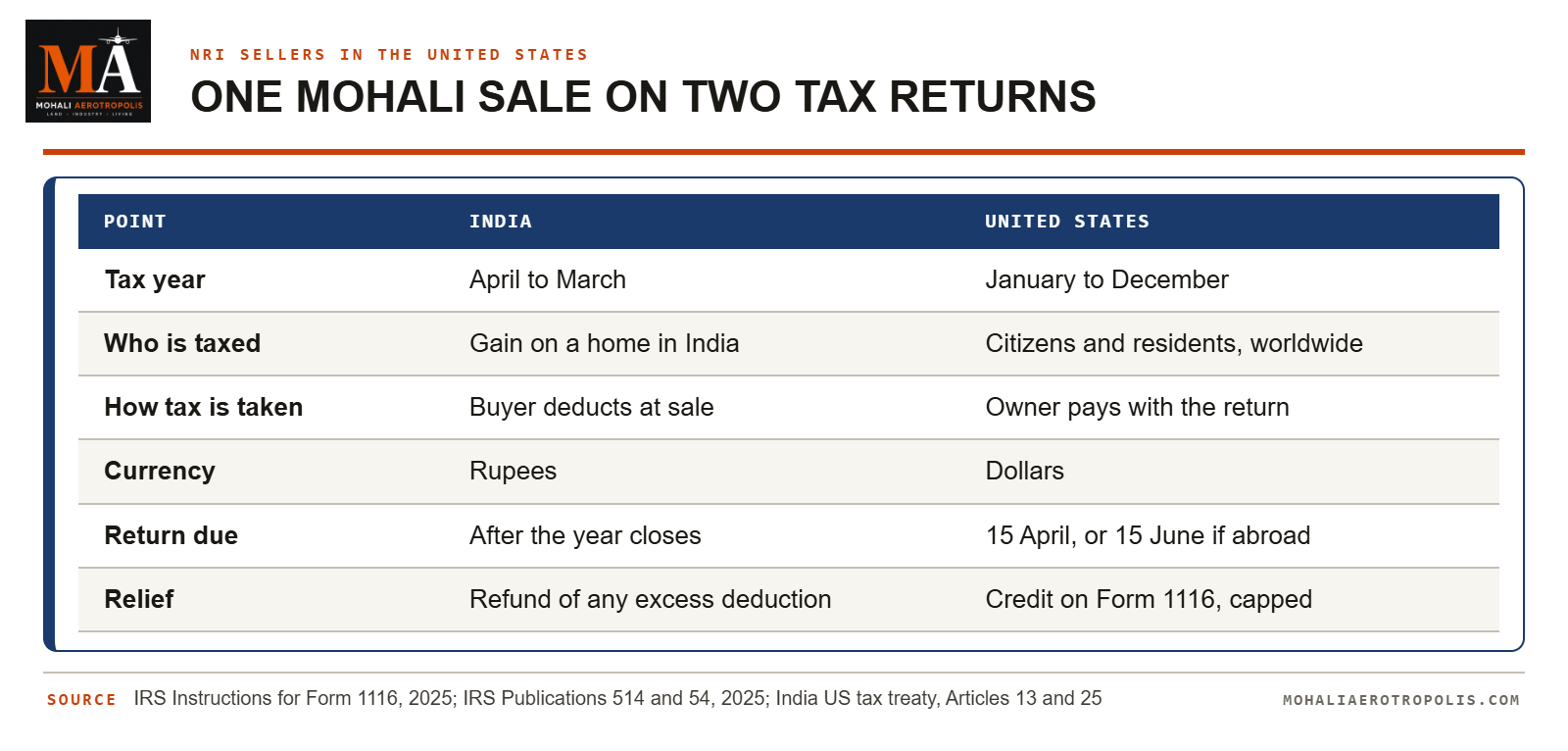
A Mohali flat sold by an owner who lives in California or New Jersey is taxed on two returns. India takes its share first, through the tax the buyer deducts from the price before the money is paid. The United States then counts the same gain on the owner's federal return. It taxes its citizens and green card holders on income from anywhere in the world. The relief that keeps the gain from being taxed in full twice is the foreign tax credit, claimed on Form 1116.
The credit works. It just does not line up neatly with the Indian side. The two countries run different tax years and measure the gain in different currencies, and those gaps decide how much of the Indian tax an owner in America can set against the American bill in the year of the sale.
The treaty leaves both countries free to tax
India and the United States have a tax treaty, and its article on capital gains is short. Each country "may tax capital gains in accordance with the provisions of its domestic law". India keeps its full right to tax the sale of a home or plot inside India. The United States keeps its right to tax its own citizens and residents on the same sale.
The relief comes in a later article on double taxation. There the United States agrees to allow its citizens and residents a credit against American tax for the income tax paid to India, subject to the limits of American law. The treaty sets the principle. The working rules sit in the IRS instructions for Form 1116 and in the IRS guide to the foreign tax credit, both revised for the returns now being prepared for the current year.
None of this touches a seller who lives in Mohali. A resident files a single Indian return and the question never comes up. It is the seller's American citizenship or residence that brings in the second return, and with it the second set of rules.
India's share is taken at the sale
When the seller is a non-resident, the buyer deducts tax from the price before paying it over. Since the first of October that deduction is reported on a new statement filed with the buyer's PAN, and it is credited against the seller's Indian tax. Our report on [the new filing rule for buyers](/article/348-selling-a-mohali-property-from-abroad-the-new-tds-filing-rule-for-buyers) covers how the buyer's side works.
The deduction is an estimate. The buyer works it out without the seller's full computation, and often on more than the true gain when no certificate for a lower deduction has been obtained. The seller's real Indian tax is settled only when an Indian return is filed for the year. Our piece on [a Mohali home sold from abroad](/article/407-mohali-home-sold-from-abroad-gets-no-indexation-choice) explains why a non-resident selling a long-held home now pays the flat rate with no indexation choice.
That gap between the deduction and the real tax matters on the American return. The Form 1116 instructions exclude any foreign tax the taxpayer does not legally owe, and they say that includes amounts eligible for refund. If the buyer in Mohali deducted more than the Indian tax finally due, the excess is a refund claim in India. It does not count toward the credit even if the refund is never claimed.
The American return counts in dollars
Every figure on the American return is in dollars. The IRS guide for citizens and residents abroad says amounts in a foreign currency have to be converted, and that the method depends on the taxpayer's functional currency, which for most individuals is the dollar. For a Mohali home bought years ago, the purchase cost and the sale price are each turned into dollars, so the gain in dollars can differ from the gain in rupees that India taxes.
The Indian tax is converted too. A tax claimed when it is paid is converted at the exchange rate on the day of payment. A tax claimed on the accrual basis generally uses the average exchange rate for the tax year it relates to. On a large sale, the choice of method alone can move the credit.
Two tax years that do not match
India's tax year runs from April to March. The American year is the calendar year. A Mohali sale in February falls in an Indian year that closes at the end of March, while the American return for that calendar year is due in April. Citizens living abroad get an automatic two months more, to the fifteenth of June, though interest still runs on any tax paid after the April date.
The IRS guide is clear about which year governs. Its tax year means the year of the American return, and it notes that accrued foreign taxes generally arise at the close of the foreign tax year.
The timing problem follows from there. An owner on the cash method takes the Indian tax in the year it is paid, which for the deducted part is the year of the sale. A balance paid later with the Indian return, or a refund that comes back, changes the Indian figure after the American return is in. The instructions treat that as a foreign tax redetermination, and they generally require an amended American return when it happens. On the accrual method the tax belongs to the year it relates to, and an accrued tax that stays unpaid for twenty four months has to come back off the credit.
The credit has a ceiling
The credit can never exceed the American tax on the foreign income. The IRS guide puts the limit in one line: the credit "cannot reduce U.S. taxes on U.S. source income". When India's tax on the gain is higher than the American tax on the same gain, the extra is carried back one year first and then forward to the ten years that follow.
Carrying it forward only helps if there is room to use it. The instructions sort foreign income into categories, and they state that "Capital gains not related to the active conduct of a trade or business are also generally passive income." A Mohali flat held as an investment, or left locked while the family lives abroad, sits in that passive category. The Indian tax on its sale can then be set only against American tax on passive foreign income, such as interest from an NRO account in the same years.
There is a second squeeze. Gains taxed at the lower American rates for long-held assets are scaled down before the limit is worked out, which shrinks the room for the credit in the year of sale.
The other route is to deduct the Indian tax as an itemised deduction instead of taking the credit. The IRS guide allows either for a given year and suggests working out the tax both ways.
When the Mohali home was the main home
A smaller group of owners can keep part of the gain off the American return altogether. The exclusion for the sale of a main home asks that the home was owned for at least twenty four months out of the five years before the sale and lived in for a total of the same length, which need not be continuous. It covers the first two hundred and fifty thousand dollars of gain, or five hundred thousand dollars for a married couple filing jointly.
The publication frames these tests around ownership and residence and does not limit them to homes inside the United States. Few owners who moved to America long ago pass the residence test on a flat they left behind in Sector Seventy or Aerocity. Some who came back to live in it for a stretch before selling may. The test turns on days of residence, and the record of those days is the owner's own.
The papers come from India
The credit rests on proof of the Indian tax. That proof starts with the buyer's certificate for the tax deducted and the seller's own Indian return showing the final tax for the year. The American return does not ask India for anything directly. It relies on what the seller can show.
The sale money itself is a separate matter. Moving it out of an NRO account follows India's foreign exchange rules, set out in our piece on [taking Mohali sale money abroad](/article/356-taking-mohali-sale-money-abroad-how-nri-repatriation-works-now). While it sits in that account, it also counts for the American bank account report covered in our report on [Mohali rent in an NRO account and FBAR](/article/397-mohali-rent-in-an-nro-account-must-be-reported-on-fbar).
The open point
On a sale made this winter, the Indian tax will often not be final until the Indian return is filed after March. The American return for the same calendar year is due by April, or by the middle of June for those abroad. Many sellers will file in America before the Indian figure is settled and then amend once it is. Which way the credit moves turns on the Indian computation, and the IRS instructions set no separate rule for the sale of a home abroad.
Sources: The sources we use are listed on our Editorial Sources page.
This piece explains how the American foreign tax credit treats Indian tax on the sale of a Mohali home. It gives no tax or legal advice, and the tax on any sale turns on the seller's own facts and filings in both countries.
कैलिफ़ोर्निया या न्यू जर्सी में रहने वाले मालिक का मोहाली वाला फ़्लैट बिकता है तो उस पर दो रिटर्न में टैक्स लगता है। भारत अपना हिस्सा पहले लेता है, उस टैक्स के ज़रिए जो खरीदार पैसा देने से पहले कीमत में से काट लेता है। फिर अमेरिका वही मुनाफ़ा मालिक के फ़ेडरल रिटर्न में गिनता है। वह अपने नागरिकों और ग्रीन कार्ड धारकों पर दुनिया में कहीं की भी कमाई का टैक्स लगाता है। मुनाफ़े पर पूरा टैक्स दो बार लगने से जो राहत बचाती है, वह फ़ॉरेन टैक्स क्रेडिट है, जिसका दावा Form 1116 पर होता है।
क्रेडिट काम करता है। बस भारतीय पक्ष से इसका मेल आसानी से नहीं बैठता। दोनों देशों के टैक्स साल अलग हैं और मुनाफ़ा अलग मुद्राओं में नापा जाता है, और यही फ़ासले तय करते हैं कि अमेरिका में रहने वाला मालिक बिक्री के साल में भारतीय टैक्स का कितना हिस्सा अमेरिकी बिल के सामने रख पाएगा।
संधि दोनों देशों को टैक्स लगाने की छूट देती है
भारत और अमेरिका के बीच टैक्स संधि है, और उसमें कैपिटल गेन वाला अनुच्छेद छोटा है। हर देश "may tax capital gains in accordance with the provisions of its domestic law"। भारत के पास भारत के भीतर किसी मकान या प्लॉट की बिक्री पर टैक्स लगाने का पूरा हक़ रहता है। अमेरिका के पास उसी बिक्री पर अपने नागरिकों और निवासियों पर टैक्स लगाने का हक़ रहता है।
राहत दोहरे टैक्स वाले एक बाद के अनुच्छेद में आती है। वहाँ अमेरिका अपने नागरिकों और निवासियों को भारत में चुकाए गए इनकम टैक्स के बदले अमेरिकी टैक्स में क्रेडिट देने पर सहमत होता है, अमेरिकी कानून की सीमाओं के अधीन। संधि सिद्धांत तय करती है। काम के नियम IRS के Form 1116 के निर्देशों और फ़ॉरेन टैक्स क्रेडिट पर IRS की गाइड में हैं, और दोनों इस साल के लिए तैयार हो रहे रिटर्न के हिसाब से संशोधित हैं।
मोहाली में रहने वाले विक्रेता पर इसमें से कुछ भी लागू नहीं होता। निवासी एक ही भारतीय रिटर्न भरता है और यह सवाल कभी उठता ही नहीं। विक्रेता की अमेरिकी नागरिकता या निवास ही दूसरा रिटर्न लाता है, और उसके साथ नियमों का दूसरा सेट भी।
भारत का हिस्सा बिक्री के समय लिया जाता है
जब विक्रेता अनिवासी होता है, तो खरीदार भुगतान करने से पहले कीमत में से टैक्स काटता है। पहली अक्टूबर से यह कटौती खरीदार के PAN के साथ भरे जाने वाले एक नए स्टेटमेंट पर दिखाई जाती है, और इसे विक्रेता के भारतीय टैक्स के सामने जमा माना जाता है। [खरीदारों के लिए नए फ़ाइलिंग नियम](/article/348-selling-a-mohali-property-from-abroad-the-new-tds-filing-rule-for-buyers) पर हमारी रिपोर्ट बताती है कि खरीदार का हिस्सा कैसे चलता है।
यह कटौती एक अनुमान है। खरीदार इसे विक्रेता की पूरी गणना के बिना निकालता है, और कम कटौती का सर्टिफ़िकेट न लिया गया हो तो अक्सर असली मुनाफ़े से ज़्यादा रकम पर। विक्रेता का असली भारतीय टैक्स तभी तय होता है जब साल का भारतीय रिटर्न भरा जाता है। [विदेश से बेचे गए मोहाली के मकान](/article/407-mohali-home-sold-from-abroad-gets-no-indexation-choice) पर हमारा लेख बताता है कि लंबे समय से रखा मकान बेचने वाला अनिवासी अब इंडेक्सेशन के विकल्प के बिना फ़्लैट दर क्यों चुकाता है।
कटौती और असली टैक्स के बीच का यह फ़र्क अमेरिकी रिटर्न पर मायने रखता है। Form 1116 के निर्देश ऐसे किसी भी विदेशी टैक्स को बाहर रखते हैं जो करदाता पर कानूनन बकाया नहीं है, और कहते हैं कि इसमें रिफ़ंड के योग्य रकम भी शामिल है। अगर मोहाली के खरीदार ने आख़िर में बनने वाले भारतीय टैक्स से ज़्यादा काटा, तो अतिरिक्त रकम भारत में रिफ़ंड का दावा है। रिफ़ंड कभी न माँगा जाए तब भी वह क्रेडिट में नहीं गिनी जाती।
अमेरिकी रिटर्न डॉलर में गिनता है
अमेरिकी रिटर्न का हर आँकड़ा डॉलर में होता है। विदेश में रहने वाले नागरिकों और निवासियों के लिए IRS की गाइड कहती है कि विदेशी मुद्रा की रकम बदलनी होती है, और तरीका करदाता की फ़ंक्शनल करेंसी पर टिका है, जो ज़्यादातर लोगों के लिए डॉलर है। बरसों पहले खरीदे गए मोहाली के मकान में खरीद की लागत और बिक्री की कीमत, दोनों अलग-अलग डॉलर में बदली जाती हैं, इसलिए डॉलर में बना मुनाफ़ा रुपये के उस मुनाफ़े से अलग हो सकता है जिस पर भारत टैक्स लगाता है।
भारतीय टैक्स भी बदला जाता है। भुगतान के समय दावा किया गया टैक्स भुगतान वाले दिन की विनिमय दर पर बदला जाता है। एक्रूअल आधार पर दावा किया गया टैक्स आम तौर पर उस टैक्स साल की औसत विनिमय दर लेता है जिससे वह जुड़ा है। बड़ी बिक्री पर सिर्फ़ तरीके का चुनाव ही क्रेडिट को खिसका सकता है।
दो टैक्स साल जो मेल नहीं खाते
भारत का टैक्स साल अप्रैल से मार्च तक चलता है। अमेरिकी साल कैलेंडर साल है। फ़रवरी में हुई मोहाली की बिक्री उस भारतीय साल में आती है जो मार्च के अंत में बंद होता है, जबकि उस कैलेंडर साल का अमेरिकी रिटर्न अप्रैल में बनता है। विदेश में रहने वाले नागरिकों को अपने आप दो महीने और मिलते हैं, पंद्रह जून तक, हालाँकि अप्रैल की तारीख के बाद चुकाए गए टैक्स पर ब्याज चलता रहता है।
IRS की गाइड साफ़ है कि कौन सा साल माना जाएगा। उसमें टैक्स साल का मतलब अमेरिकी रिटर्न का साल है, और वह कहती है कि एक्रू हुए विदेशी टैक्स आम तौर पर विदेशी टैक्स साल के अंत में बनते हैं।
समय की दिक्कत यहीं से निकलती है। कैश मेथड वाला मालिक भारतीय टैक्स उस साल में लेता है जब वह चुकाया गया, जो कटे हुए हिस्से के लिए बिक्री का साल है। बाद में भारतीय रिटर्न के साथ चुकाई गई बाकी रकम, या लौटकर आया रिफ़ंड, अमेरिकी रिटर्न भर जाने के बाद भारतीय आँकड़ा बदल देता है। निर्देश इसे फ़ॉरेन टैक्स रीडिटर्मिनेशन मानते हैं, और ऐसा होने पर आम तौर पर संशोधित अमेरिकी रिटर्न माँगते हैं। एक्रूअल मेथड में टैक्स उस साल का होता है जिससे वह जुड़ा है, और जो एक्रू हुआ टैक्स चौबीस महीने तक न चुकाया जाए, उसे क्रेडिट से वापस घटाना पड़ता है।
क्रेडिट की एक छत है
क्रेडिट कभी भी विदेशी आमदनी पर बनने वाले अमेरिकी टैक्स से ज़्यादा नहीं हो सकता। IRS की गाइड यह सीमा एक पंक्ति में रखती है: क्रेडिट "cannot reduce U.S. taxes on U.S. source income"। जब मुनाफ़े पर भारत का टैक्स उसी मुनाफ़े पर बनने वाले अमेरिकी टैक्स से ज़्यादा हो, तो अतिरिक्त हिस्सा पहले एक साल पीछे ले जाया जाता है और फिर अगले दस सालों तक आगे।
आगे ले जाना तभी काम आता है जब उसे इस्तेमाल करने की जगह हो। निर्देश विदेशी आमदनी को श्रेणियों में बाँटते हैं, और कहते हैं कि "Capital gains not related to the active conduct of a trade or business are also generally passive income."। निवेश के तौर पर रखा गया, या परिवार के विदेश में रहते बंद पड़ा मोहाली का फ़्लैट इसी पैसिव श्रेणी में आता है। तब उसकी बिक्री पर भारतीय टैक्स सिर्फ़ पैसिव विदेशी आमदनी पर बने अमेरिकी टैक्स के सामने रखा जा सकता है, जैसे उन्हीं सालों में NRO खाते का ब्याज।
एक दूसरी तंगी भी है। लंबे समय तक रखी संपत्ति पर कम अमेरिकी दरों से टैक्स होने वाला मुनाफ़ा सीमा निकालने से पहले घटाकर गिना जाता है, जिससे बिक्री के साल में क्रेडिट की जगह सिकुड़ जाती है।
दूसरा रास्ता यह है कि क्रेडिट लेने के बजाय भारतीय टैक्स को आइटमाइज़्ड डिडक्शन के रूप में घटाया जाए। IRS की गाइड किसी एक साल के लिए दोनों में से कोई भी चुनने देती है और दोनों तरह से टैक्स निकालकर देखने का सुझाव देती है।
जब मोहाली का मकान मुख्य घर था
मालिकों का एक छोटा समूह मुनाफ़े का एक हिस्सा अमेरिकी रिटर्न से पूरी तरह बाहर रख सकता है। मुख्य घर की बिक्री वाली छूट माँगती है कि मकान बिक्री से पहले के पाँच सालों में कम से कम चौबीस महीने मालिक के नाम रहा हो और कुल उतने ही समय उसमें रहा गया हो, जो लगातार होना ज़रूरी नहीं। यह मुनाफ़े के पहले ढाई लाख डॉलर को कवर करती है, या साथ में रिटर्न भरने वाले शादीशुदा जोड़े के लिए पाँच लाख डॉलर को।
प्रकाशन ये शर्तें मालिकाना हक़ और निवास के इर्द-गिर्द रखता है और इन्हें अमेरिका के भीतर के घरों तक सीमित नहीं करता। बहुत पहले अमेरिका जा बसे कम ही मालिक सेक्टर सत्तर या एयरोसिटी में छोड़े गए फ़्लैट पर निवास की शर्त पूरी करते हैं। जो बेचने से पहले कुछ समय उसमें रहने लौटे, उनमें से कुछ कर सकते हैं। शर्त निवास के दिनों पर टिकी है, और उन दिनों का रिकॉर्ड मालिक का अपना है।
काग़ज़ भारत से आते हैं
क्रेडिट भारतीय टैक्स के सबूत पर टिका है। यह सबूत काटे गए टैक्स के खरीदार के सर्टिफ़िकेट और साल का आख़िरी टैक्स दिखाने वाले विक्रेता के अपने भारतीय रिटर्न से शुरू होता है। अमेरिकी रिटर्न भारत से सीधे कुछ नहीं माँगता। वह उस पर टिका है जो विक्रेता दिखा सके।
बिक्री का पैसा अपने आप में अलग मामला है। उसे NRO खाते से बाहर ले जाना भारत के विदेशी मुद्रा नियमों के तहत होता है, जो [मोहाली की बिक्री का पैसा विदेश ले जाने](/article/356-taking-mohali-sale-money-abroad-how-nri-repatriation-works-now) पर हमारे लेख में हैं। जब तक वह उस खाते में है, वह उस अमेरिकी बैंक खाता रिपोर्ट में भी गिना जाता है जिसका ज़िक्र [NRO खाते में मोहाली के किराये और FBAR](/article/397-mohali-rent-in-an-nro-account-must-be-reported-on-fbar) पर हमारी रिपोर्ट में है।
खुला सवाल
इस सर्दी में हुई बिक्री पर भारतीय टैक्स अक्सर तब तक अंतिम नहीं होगा जब तक मार्च के बाद भारतीय रिटर्न न भरा जाए। उसी कैलेंडर साल का अमेरिकी रिटर्न अप्रैल तक बनता है, या विदेश में रहने वालों के लिए जून के बीच तक। बहुत से विक्रेता भारतीय आँकड़ा तय होने से पहले अमेरिका में रिटर्न भरेंगे और फिर तय होने पर संशोधन करेंगे। क्रेडिट किस ओर जाएगा, यह भारतीय गणना पर टिका है, और IRS के निर्देश विदेश में मकान की बिक्री के लिए कोई अलग नियम तय नहीं करते।
स्रोत: हम जिन स्रोतों का इस्तेमाल करते हैं, वे हमारे Editorial Sources पेज पर सूचीबद्ध हैं।
यह लेख बताता है कि अमेरिकी फ़ॉरेन टैक्स क्रेडिट मोहाली के मकान की बिक्री पर भारतीय टैक्स को कैसे देखता है। यह कोई टैक्स या कानूनी सलाह नहीं देता, और किसी भी बिक्री का टैक्स दोनों देशों में विक्रेता के अपने तथ्यों और फ़ाइलिंग पर टिका होता है।
ਕੈਲੀਫ਼ੋਰਨੀਆ ਜਾਂ ਨਿਊ ਜਰਸੀ ਵਿੱਚ ਰਹਿੰਦੇ ਮਾਲਕ ਦਾ ਮੋਹਾਲੀ ਵਾਲਾ ਫ਼ਲੈਟ ਵਿਕਦਾ ਹੈ ਤਾਂ ਉਸ ਉੱਤੇ ਦੋ ਰਿਟਰਨਾਂ ਵਿੱਚ ਟੈਕਸ ਲੱਗਦਾ ਹੈ। ਭਾਰਤ ਆਪਣਾ ਹਿੱਸਾ ਪਹਿਲਾਂ ਲੈਂਦਾ ਹੈ, ਉਸ ਟੈਕਸ ਰਾਹੀਂ ਜੋ ਖ਼ਰੀਦਦਾਰ ਪੈਸਾ ਦੇਣ ਤੋਂ ਪਹਿਲਾਂ ਕੀਮਤ ਵਿੱਚੋਂ ਕੱਟ ਲੈਂਦਾ ਹੈ। ਫਿਰ ਅਮਰੀਕਾ ਉਹੀ ਮੁਨਾਫ਼ਾ ਮਾਲਕ ਦੀ ਫ਼ੈਡਰਲ ਰਿਟਰਨ ਵਿੱਚ ਗਿਣਦਾ ਹੈ। ਉਹ ਆਪਣੇ ਨਾਗਰਿਕਾਂ ਅਤੇ ਗ੍ਰੀਨ ਕਾਰਡ ਧਾਰਕਾਂ ਉੱਤੇ ਦੁਨੀਆ ਵਿੱਚ ਕਿਤੋਂ ਦੀ ਵੀ ਕਮਾਈ ਦਾ ਟੈਕਸ ਲਾਉਂਦਾ ਹੈ। ਮੁਨਾਫ਼ੇ ਉੱਤੇ ਪੂਰਾ ਟੈਕਸ ਦੋ ਵਾਰ ਲੱਗਣ ਤੋਂ ਜੋ ਰਾਹਤ ਬਚਾਉਂਦੀ ਹੈ, ਉਹ ਫ਼ੌਰਨ ਟੈਕਸ ਕ੍ਰੈਡਿਟ ਹੈ, ਜਿਸ ਦਾ ਦਾਅਵਾ Form 1116 ਉੱਤੇ ਹੁੰਦਾ ਹੈ।
ਕ੍ਰੈਡਿਟ ਕੰਮ ਕਰਦਾ ਹੈ। ਬੱਸ ਭਾਰਤੀ ਪਾਸੇ ਨਾਲ ਇਸ ਦਾ ਮੇਲ ਸੌਖਿਆਂ ਨਹੀਂ ਬੈਠਦਾ। ਦੋਵਾਂ ਦੇਸ਼ਾਂ ਦੇ ਟੈਕਸ ਸਾਲ ਵੱਖਰੇ ਹਨ ਅਤੇ ਮੁਨਾਫ਼ਾ ਵੱਖਰੀਆਂ ਕਰੰਸੀਆਂ ਵਿੱਚ ਮਿਣਿਆ ਜਾਂਦਾ ਹੈ, ਅਤੇ ਇਹੀ ਪਾੜੇ ਤੈਅ ਕਰਦੇ ਹਨ ਕਿ ਅਮਰੀਕਾ ਵਿੱਚ ਰਹਿੰਦਾ ਮਾਲਕ ਵਿਕਰੀ ਦੇ ਸਾਲ ਵਿੱਚ ਭਾਰਤੀ ਟੈਕਸ ਦਾ ਕਿੰਨਾ ਹਿੱਸਾ ਅਮਰੀਕੀ ਬਿੱਲ ਦੇ ਸਾਹਮਣੇ ਰੱਖ ਸਕੇਗਾ।
ਸੰਧੀ ਦੋਵਾਂ ਦੇਸ਼ਾਂ ਨੂੰ ਟੈਕਸ ਲਾਉਣ ਦੀ ਖੁੱਲ੍ਹ ਦਿੰਦੀ ਹੈ
ਭਾਰਤ ਅਤੇ ਅਮਰੀਕਾ ਵਿਚਕਾਰ ਟੈਕਸ ਸੰਧੀ ਹੈ, ਅਤੇ ਉਸ ਵਿੱਚ ਕੈਪੀਟਲ ਗੇਨ ਵਾਲਾ ਅਨੁਛੇਦ ਛੋਟਾ ਹੈ। ਹਰ ਦੇਸ਼ "may tax capital gains in accordance with the provisions of its domestic law"। ਭਾਰਤ ਕੋਲ ਭਾਰਤ ਅੰਦਰ ਕਿਸੇ ਮਕਾਨ ਜਾਂ ਪਲਾਟ ਦੀ ਵਿਕਰੀ ਉੱਤੇ ਟੈਕਸ ਲਾਉਣ ਦਾ ਪੂਰਾ ਹੱਕ ਰਹਿੰਦਾ ਹੈ। ਅਮਰੀਕਾ ਕੋਲ ਉਸੇ ਵਿਕਰੀ ਉੱਤੇ ਆਪਣੇ ਨਾਗਰਿਕਾਂ ਅਤੇ ਵਸਨੀਕਾਂ ਉੱਤੇ ਟੈਕਸ ਲਾਉਣ ਦਾ ਹੱਕ ਰਹਿੰਦਾ ਹੈ।
ਰਾਹਤ ਦੋਹਰੇ ਟੈਕਸ ਵਾਲੇ ਇੱਕ ਬਾਅਦ ਦੇ ਅਨੁਛੇਦ ਵਿੱਚ ਆਉਂਦੀ ਹੈ। ਉੱਥੇ ਅਮਰੀਕਾ ਆਪਣੇ ਨਾਗਰਿਕਾਂ ਅਤੇ ਵਸਨੀਕਾਂ ਨੂੰ ਭਾਰਤ ਵਿੱਚ ਭਰੇ ਇਨਕਮ ਟੈਕਸ ਬਦਲੇ ਅਮਰੀਕੀ ਟੈਕਸ ਵਿੱਚ ਕ੍ਰੈਡਿਟ ਦੇਣ ਲਈ ਸਹਿਮਤ ਹੁੰਦਾ ਹੈ, ਅਮਰੀਕੀ ਕਾਨੂੰਨ ਦੀਆਂ ਹੱਦਾਂ ਦੇ ਅਧੀਨ। ਸੰਧੀ ਸਿਧਾਂਤ ਤੈਅ ਕਰਦੀ ਹੈ। ਕੰਮ ਦੇ ਨਿਯਮ IRS ਦੀਆਂ Form 1116 ਹਦਾਇਤਾਂ ਅਤੇ ਫ਼ੌਰਨ ਟੈਕਸ ਕ੍ਰੈਡਿਟ ਬਾਰੇ IRS ਦੀ ਗਾਈਡ ਵਿੱਚ ਹਨ, ਅਤੇ ਦੋਵੇਂ ਇਸ ਸਾਲ ਲਈ ਤਿਆਰ ਹੋ ਰਹੀਆਂ ਰਿਟਰਨਾਂ ਮੁਤਾਬਕ ਸੋਧੀਆਂ ਗਈਆਂ ਹਨ।
ਮੋਹਾਲੀ ਵਿੱਚ ਰਹਿੰਦੇ ਵਿਕਰੇਤਾ ਉੱਤੇ ਇਸ ਵਿੱਚੋਂ ਕੁਝ ਵੀ ਲਾਗੂ ਨਹੀਂ ਹੁੰਦਾ। ਵਸਨੀਕ ਇੱਕੋ ਭਾਰਤੀ ਰਿਟਰਨ ਭਰਦਾ ਹੈ ਅਤੇ ਇਹ ਸਵਾਲ ਕਦੇ ਉੱਠਦਾ ਹੀ ਨਹੀਂ। ਵਿਕਰੇਤਾ ਦੀ ਅਮਰੀਕੀ ਨਾਗਰਿਕਤਾ ਜਾਂ ਰਿਹਾਇਸ਼ ਹੀ ਦੂਜੀ ਰਿਟਰਨ ਲਿਆਉਂਦੀ ਹੈ, ਅਤੇ ਉਸ ਨਾਲ ਨਿਯਮਾਂ ਦਾ ਦੂਜਾ ਸੈੱਟ ਵੀ।
ਭਾਰਤ ਦਾ ਹਿੱਸਾ ਵਿਕਰੀ ਵੇਲੇ ਲਿਆ ਜਾਂਦਾ ਹੈ
ਜਦੋਂ ਵਿਕਰੇਤਾ ਗ਼ੈਰ-ਨਿਵਾਸੀ ਹੁੰਦਾ ਹੈ, ਤਾਂ ਖ਼ਰੀਦਦਾਰ ਭੁਗਤਾਨ ਕਰਨ ਤੋਂ ਪਹਿਲਾਂ ਕੀਮਤ ਵਿੱਚੋਂ ਟੈਕਸ ਕੱਟਦਾ ਹੈ। ਪਹਿਲੀ ਅਕਤੂਬਰ ਤੋਂ ਇਹ ਕਟੌਤੀ ਖ਼ਰੀਦਦਾਰ ਦੇ PAN ਨਾਲ ਭਰੀ ਜਾਣ ਵਾਲੀ ਇੱਕ ਨਵੀਂ ਸਟੇਟਮੈਂਟ ਉੱਤੇ ਦਿਖਾਈ ਜਾਂਦੀ ਹੈ, ਅਤੇ ਇਸ ਨੂੰ ਵਿਕਰੇਤਾ ਦੇ ਭਾਰਤੀ ਟੈਕਸ ਦੇ ਸਾਹਮਣੇ ਜਮ੍ਹਾਂ ਮੰਨਿਆ ਜਾਂਦਾ ਹੈ। [ਖ਼ਰੀਦਦਾਰਾਂ ਲਈ ਨਵੇਂ ਫ਼ਾਈਲਿੰਗ ਨਿਯਮ](/article/348-selling-a-mohali-property-from-abroad-the-new-tds-filing-rule-for-buyers) ਬਾਰੇ ਸਾਡੀ ਰਿਪੋਰਟ ਦੱਸਦੀ ਹੈ ਕਿ ਖ਼ਰੀਦਦਾਰ ਵਾਲਾ ਪਾਸਾ ਕਿਵੇਂ ਚੱਲਦਾ ਹੈ।
ਇਹ ਕਟੌਤੀ ਇੱਕ ਅੰਦਾਜ਼ਾ ਹੈ। ਖ਼ਰੀਦਦਾਰ ਇਸ ਨੂੰ ਵਿਕਰੇਤਾ ਦੀ ਪੂਰੀ ਗਿਣਤੀ ਤੋਂ ਬਿਨਾਂ ਕੱਢਦਾ ਹੈ, ਅਤੇ ਘੱਟ ਕਟੌਤੀ ਦਾ ਸਰਟੀਫ਼ਿਕੇਟ ਨਾ ਲਿਆ ਹੋਵੇ ਤਾਂ ਅਕਸਰ ਅਸਲ ਮੁਨਾਫ਼ੇ ਤੋਂ ਵੱਧ ਰਕਮ ਉੱਤੇ। ਵਿਕਰੇਤਾ ਦਾ ਅਸਲ ਭਾਰਤੀ ਟੈਕਸ ਉਦੋਂ ਹੀ ਤੈਅ ਹੁੰਦਾ ਹੈ ਜਦੋਂ ਸਾਲ ਦੀ ਭਾਰਤੀ ਰਿਟਰਨ ਭਰੀ ਜਾਂਦੀ ਹੈ। [ਵਿਦੇਸ਼ ਤੋਂ ਵੇਚੇ ਮੋਹਾਲੀ ਦੇ ਮਕਾਨ](/article/407-mohali-home-sold-from-abroad-gets-no-indexation-choice) ਬਾਰੇ ਸਾਡਾ ਲੇਖ ਦੱਸਦਾ ਹੈ ਕਿ ਲੰਮੇ ਸਮੇਂ ਤੋਂ ਰੱਖਿਆ ਮਕਾਨ ਵੇਚਣ ਵਾਲਾ ਗ਼ੈਰ-ਨਿਵਾਸੀ ਹੁਣ ਇੰਡੈਕਸੇਸ਼ਨ ਦੇ ਵਿਕਲਪ ਤੋਂ ਬਿਨਾਂ ਫ਼ਲੈਟ ਦਰ ਕਿਉਂ ਭਰਦਾ ਹੈ।
ਕਟੌਤੀ ਅਤੇ ਅਸਲ ਟੈਕਸ ਵਿਚਲਾ ਇਹ ਫ਼ਰਕ ਅਮਰੀਕੀ ਰਿਟਰਨ ਉੱਤੇ ਮਾਇਨੇ ਰੱਖਦਾ ਹੈ। Form 1116 ਦੀਆਂ ਹਦਾਇਤਾਂ ਅਜਿਹੇ ਕਿਸੇ ਵੀ ਵਿਦੇਸ਼ੀ ਟੈਕਸ ਨੂੰ ਬਾਹਰ ਰੱਖਦੀਆਂ ਹਨ ਜੋ ਕਰਦਾਤਾ ਸਿਰ ਕਾਨੂੰਨੀ ਤੌਰ ਉੱਤੇ ਬਕਾਇਆ ਨਹੀਂ, ਅਤੇ ਕਹਿੰਦੀਆਂ ਹਨ ਕਿ ਇਸ ਵਿੱਚ ਰਿਫ਼ੰਡ ਦੇ ਯੋਗ ਰਕਮ ਵੀ ਸ਼ਾਮਲ ਹੈ। ਜੇ ਮੋਹਾਲੀ ਦੇ ਖ਼ਰੀਦਦਾਰ ਨੇ ਅਖ਼ੀਰ ਵਿੱਚ ਬਣਨ ਵਾਲੇ ਭਾਰਤੀ ਟੈਕਸ ਤੋਂ ਵੱਧ ਕੱਟਿਆ, ਤਾਂ ਵਾਧੂ ਰਕਮ ਭਾਰਤ ਵਿੱਚ ਰਿਫ਼ੰਡ ਦਾ ਦਾਅਵਾ ਹੈ। ਰਿਫ਼ੰਡ ਕਦੇ ਨਾ ਮੰਗਿਆ ਜਾਵੇ ਤਾਂ ਵੀ ਉਹ ਕ੍ਰੈਡਿਟ ਵਿੱਚ ਨਹੀਂ ਗਿਣੀ ਜਾਂਦੀ।
ਅਮਰੀਕੀ ਰਿਟਰਨ ਡਾਲਰਾਂ ਵਿੱਚ ਗਿਣਦੀ ਹੈ
ਅਮਰੀਕੀ ਰਿਟਰਨ ਦਾ ਹਰ ਅੰਕੜਾ ਡਾਲਰਾਂ ਵਿੱਚ ਹੁੰਦਾ ਹੈ। ਵਿਦੇਸ਼ ਵਿੱਚ ਰਹਿੰਦੇ ਨਾਗਰਿਕਾਂ ਅਤੇ ਵਸਨੀਕਾਂ ਲਈ IRS ਦੀ ਗਾਈਡ ਕਹਿੰਦੀ ਹੈ ਕਿ ਵਿਦੇਸ਼ੀ ਕਰੰਸੀ ਦੀ ਰਕਮ ਬਦਲਣੀ ਪੈਂਦੀ ਹੈ, ਅਤੇ ਤਰੀਕਾ ਕਰਦਾਤਾ ਦੀ ਫ਼ੰਕਸ਼ਨਲ ਕਰੰਸੀ ਉੱਤੇ ਟਿਕਿਆ ਹੈ, ਜੋ ਜ਼ਿਆਦਾਤਰ ਲੋਕਾਂ ਲਈ ਡਾਲਰ ਹੈ। ਸਾਲਾਂ ਪਹਿਲਾਂ ਖ਼ਰੀਦੇ ਮੋਹਾਲੀ ਦੇ ਮਕਾਨ ਵਿੱਚ ਖ਼ਰੀਦ ਦੀ ਲਾਗਤ ਅਤੇ ਵਿਕਰੀ ਦੀ ਕੀਮਤ, ਦੋਵੇਂ ਵੱਖੋ-ਵੱਖ ਡਾਲਰਾਂ ਵਿੱਚ ਬਦਲੀਆਂ ਜਾਂਦੀਆਂ ਹਨ, ਇਸ ਲਈ ਡਾਲਰਾਂ ਵਿੱਚ ਬਣਿਆ ਮੁਨਾਫ਼ਾ ਰੁਪਏ ਦੇ ਉਸ ਮੁਨਾਫ਼ੇ ਤੋਂ ਵੱਖਰਾ ਹੋ ਸਕਦਾ ਹੈ ਜਿਸ ਉੱਤੇ ਭਾਰਤ ਟੈਕਸ ਲਾਉਂਦਾ ਹੈ।
ਭਾਰਤੀ ਟੈਕਸ ਵੀ ਬਦਲਿਆ ਜਾਂਦਾ ਹੈ। ਭੁਗਤਾਨ ਵੇਲੇ ਦਾਅਵਾ ਕੀਤਾ ਟੈਕਸ ਭੁਗਤਾਨ ਵਾਲੇ ਦਿਨ ਦੀ ਵਟਾਂਦਰਾ ਦਰ ਉੱਤੇ ਬਦਲਿਆ ਜਾਂਦਾ ਹੈ। ਐਕਰੂਅਲ ਆਧਾਰ ਉੱਤੇ ਦਾਅਵਾ ਕੀਤਾ ਟੈਕਸ ਆਮ ਤੌਰ ਉੱਤੇ ਉਸ ਟੈਕਸ ਸਾਲ ਦੀ ਔਸਤ ਵਟਾਂਦਰਾ ਦਰ ਲੈਂਦਾ ਹੈ ਜਿਸ ਨਾਲ ਉਹ ਜੁੜਿਆ ਹੈ। ਵੱਡੀ ਵਿਕਰੀ ਉੱਤੇ ਸਿਰਫ਼ ਤਰੀਕੇ ਦੀ ਚੋਣ ਹੀ ਕ੍ਰੈਡਿਟ ਨੂੰ ਖਿਸਕਾ ਸਕਦੀ ਹੈ।
ਦੋ ਟੈਕਸ ਸਾਲ ਜੋ ਮੇਲ ਨਹੀਂ ਖਾਂਦੇ
ਭਾਰਤ ਦਾ ਟੈਕਸ ਸਾਲ ਅਪ੍ਰੈਲ ਤੋਂ ਮਾਰਚ ਤੱਕ ਚੱਲਦਾ ਹੈ। ਅਮਰੀਕੀ ਸਾਲ ਕੈਲੰਡਰ ਸਾਲ ਹੈ। ਫ਼ਰਵਰੀ ਵਿੱਚ ਹੋਈ ਮੋਹਾਲੀ ਦੀ ਵਿਕਰੀ ਉਸ ਭਾਰਤੀ ਸਾਲ ਵਿੱਚ ਆਉਂਦੀ ਹੈ ਜੋ ਮਾਰਚ ਦੇ ਅੰਤ ਵਿੱਚ ਬੰਦ ਹੁੰਦਾ ਹੈ, ਜਦਕਿ ਉਸ ਕੈਲੰਡਰ ਸਾਲ ਦੀ ਅਮਰੀਕੀ ਰਿਟਰਨ ਅਪ੍ਰੈਲ ਵਿੱਚ ਬਣਦੀ ਹੈ। ਵਿਦੇਸ਼ ਵਿੱਚ ਰਹਿੰਦੇ ਨਾਗਰਿਕਾਂ ਨੂੰ ਆਪਣੇ ਆਪ ਦੋ ਮਹੀਨੇ ਹੋਰ ਮਿਲਦੇ ਹਨ, ਪੰਦਰਾਂ ਜੂਨ ਤੱਕ, ਹਾਲਾਂਕਿ ਅਪ੍ਰੈਲ ਦੀ ਤਾਰੀਖ਼ ਤੋਂ ਬਾਅਦ ਭਰੇ ਟੈਕਸ ਉੱਤੇ ਵਿਆਜ ਚੱਲਦਾ ਰਹਿੰਦਾ ਹੈ।
IRS ਦੀ ਗਾਈਡ ਸਾਫ਼ ਹੈ ਕਿ ਕਿਹੜਾ ਸਾਲ ਮੰਨਿਆ ਜਾਵੇਗਾ। ਉਸ ਵਿੱਚ ਟੈਕਸ ਸਾਲ ਦਾ ਮਤਲਬ ਅਮਰੀਕੀ ਰਿਟਰਨ ਦਾ ਸਾਲ ਹੈ, ਅਤੇ ਉਹ ਕਹਿੰਦੀ ਹੈ ਕਿ ਐਕਰੂ ਹੋਏ ਵਿਦੇਸ਼ੀ ਟੈਕਸ ਆਮ ਤੌਰ ਉੱਤੇ ਵਿਦੇਸ਼ੀ ਟੈਕਸ ਸਾਲ ਦੇ ਅੰਤ ਉੱਤੇ ਬਣਦੇ ਹਨ।
ਸਮੇਂ ਦੀ ਦਿੱਕਤ ਇੱਥੋਂ ਹੀ ਨਿਕਲਦੀ ਹੈ। ਕੈਸ਼ ਮੈਥਡ ਵਾਲਾ ਮਾਲਕ ਭਾਰਤੀ ਟੈਕਸ ਉਸ ਸਾਲ ਵਿੱਚ ਲੈਂਦਾ ਹੈ ਜਦੋਂ ਉਹ ਭਰਿਆ ਗਿਆ, ਜੋ ਕੱਟੇ ਹਿੱਸੇ ਲਈ ਵਿਕਰੀ ਦਾ ਸਾਲ ਹੈ। ਬਾਅਦ ਵਿੱਚ ਭਾਰਤੀ ਰਿਟਰਨ ਨਾਲ ਭਰੀ ਬਾਕੀ ਰਕਮ, ਜਾਂ ਮੁੜ ਕੇ ਆਇਆ ਰਿਫ਼ੰਡ, ਅਮਰੀਕੀ ਰਿਟਰਨ ਭਰੀ ਜਾਣ ਤੋਂ ਬਾਅਦ ਭਾਰਤੀ ਅੰਕੜਾ ਬਦਲ ਦਿੰਦਾ ਹੈ। ਹਦਾਇਤਾਂ ਇਸ ਨੂੰ ਫ਼ੌਰਨ ਟੈਕਸ ਰੀਡਿਟਰਮੀਨੇਸ਼ਨ ਮੰਨਦੀਆਂ ਹਨ, ਅਤੇ ਅਜਿਹਾ ਹੋਣ ਉੱਤੇ ਆਮ ਤੌਰ ਉੱਤੇ ਸੋਧੀ ਅਮਰੀਕੀ ਰਿਟਰਨ ਮੰਗਦੀਆਂ ਹਨ। ਐਕਰੂਅਲ ਮੈਥਡ ਵਿੱਚ ਟੈਕਸ ਉਸ ਸਾਲ ਦਾ ਹੁੰਦਾ ਹੈ ਜਿਸ ਨਾਲ ਉਹ ਜੁੜਿਆ ਹੈ, ਅਤੇ ਜੋ ਐਕਰੂ ਹੋਇਆ ਟੈਕਸ ਚੌਵੀ ਮਹੀਨਿਆਂ ਤੱਕ ਨਾ ਭਰਿਆ ਜਾਵੇ, ਉਸ ਨੂੰ ਕ੍ਰੈਡਿਟ ਵਿੱਚੋਂ ਵਾਪਸ ਘਟਾਉਣਾ ਪੈਂਦਾ ਹੈ।
ਕ੍ਰੈਡਿਟ ਦੀ ਇੱਕ ਛੱਤ ਹੈ
ਕ੍ਰੈਡਿਟ ਕਦੇ ਵੀ ਵਿਦੇਸ਼ੀ ਆਮਦਨ ਉੱਤੇ ਬਣਦੇ ਅਮਰੀਕੀ ਟੈਕਸ ਤੋਂ ਵੱਧ ਨਹੀਂ ਹੋ ਸਕਦਾ। IRS ਦੀ ਗਾਈਡ ਇਹ ਹੱਦ ਇੱਕ ਸਤਰ ਵਿੱਚ ਰੱਖਦੀ ਹੈ: ਕ੍ਰੈਡਿਟ "cannot reduce U.S. taxes on U.S. source income"। ਜਦੋਂ ਮੁਨਾਫ਼ੇ ਉੱਤੇ ਭਾਰਤ ਦਾ ਟੈਕਸ ਉਸੇ ਮੁਨਾਫ਼ੇ ਉੱਤੇ ਬਣਦੇ ਅਮਰੀਕੀ ਟੈਕਸ ਤੋਂ ਵੱਧ ਹੋਵੇ, ਤਾਂ ਵਾਧੂ ਹਿੱਸਾ ਪਹਿਲਾਂ ਇੱਕ ਸਾਲ ਪਿੱਛੇ ਲਿਜਾਇਆ ਜਾਂਦਾ ਹੈ ਅਤੇ ਫਿਰ ਅਗਲੇ ਦਸ ਸਾਲਾਂ ਤੱਕ ਅੱਗੇ।
ਅੱਗੇ ਲਿਜਾਣਾ ਉਦੋਂ ਹੀ ਕੰਮ ਆਉਂਦਾ ਹੈ ਜਦੋਂ ਉਸ ਨੂੰ ਵਰਤਣ ਦੀ ਥਾਂ ਹੋਵੇ। ਹਦਾਇਤਾਂ ਵਿਦੇਸ਼ੀ ਆਮਦਨ ਨੂੰ ਸ਼੍ਰੇਣੀਆਂ ਵਿੱਚ ਵੰਡਦੀਆਂ ਹਨ, ਅਤੇ ਕਹਿੰਦੀਆਂ ਹਨ ਕਿ "Capital gains not related to the active conduct of a trade or business are also generally passive income."। ਨਿਵੇਸ਼ ਵਜੋਂ ਰੱਖਿਆ, ਜਾਂ ਪਰਿਵਾਰ ਦੇ ਵਿਦੇਸ਼ ਰਹਿੰਦਿਆਂ ਬੰਦ ਪਿਆ ਮੋਹਾਲੀ ਦਾ ਫ਼ਲੈਟ ਇਸੇ ਪੈਸਿਵ ਸ਼੍ਰੇਣੀ ਵਿੱਚ ਆਉਂਦਾ ਹੈ। ਫਿਰ ਉਸ ਦੀ ਵਿਕਰੀ ਉੱਤੇ ਭਾਰਤੀ ਟੈਕਸ ਸਿਰਫ਼ ਪੈਸਿਵ ਵਿਦੇਸ਼ੀ ਆਮਦਨ ਉੱਤੇ ਬਣੇ ਅਮਰੀਕੀ ਟੈਕਸ ਦੇ ਸਾਹਮਣੇ ਰੱਖਿਆ ਜਾ ਸਕਦਾ ਹੈ, ਜਿਵੇਂ ਉਨ੍ਹਾਂ ਹੀ ਸਾਲਾਂ ਵਿੱਚ NRO ਖਾਤੇ ਦਾ ਵਿਆਜ।
ਇੱਕ ਦੂਜੀ ਤੰਗੀ ਵੀ ਹੈ। ਲੰਮੇ ਸਮੇਂ ਤੱਕ ਰੱਖੀ ਜਾਇਦਾਦ ਉੱਤੇ ਘੱਟ ਅਮਰੀਕੀ ਦਰਾਂ ਨਾਲ ਟੈਕਸ ਹੋਣ ਵਾਲਾ ਮੁਨਾਫ਼ਾ ਹੱਦ ਕੱਢਣ ਤੋਂ ਪਹਿਲਾਂ ਘਟਾ ਕੇ ਗਿਣਿਆ ਜਾਂਦਾ ਹੈ, ਜਿਸ ਨਾਲ ਵਿਕਰੀ ਦੇ ਸਾਲ ਵਿੱਚ ਕ੍ਰੈਡਿਟ ਦੀ ਥਾਂ ਸੁੰਗੜ ਜਾਂਦੀ ਹੈ।
ਦੂਜਾ ਰਾਹ ਇਹ ਹੈ ਕਿ ਕ੍ਰੈਡਿਟ ਲੈਣ ਦੀ ਥਾਂ ਭਾਰਤੀ ਟੈਕਸ ਨੂੰ ਆਈਟਮਾਈਜ਼ਡ ਡਿਡਕਸ਼ਨ ਵਜੋਂ ਘਟਾਇਆ ਜਾਵੇ। IRS ਦੀ ਗਾਈਡ ਕਿਸੇ ਇੱਕ ਸਾਲ ਲਈ ਦੋਵਾਂ ਵਿੱਚੋਂ ਕੋਈ ਵੀ ਚੁਣਨ ਦਿੰਦੀ ਹੈ ਅਤੇ ਦੋਵੇਂ ਤਰੀਕਿਆਂ ਨਾਲ ਟੈਕਸ ਕੱਢ ਕੇ ਦੇਖਣ ਦਾ ਸੁਝਾਅ ਦਿੰਦੀ ਹੈ।
ਜਦੋਂ ਮੋਹਾਲੀ ਦਾ ਮਕਾਨ ਮੁੱਖ ਘਰ ਸੀ
ਮਾਲਕਾਂ ਦਾ ਇੱਕ ਛੋਟਾ ਸਮੂਹ ਮੁਨਾਫ਼ੇ ਦਾ ਇੱਕ ਹਿੱਸਾ ਅਮਰੀਕੀ ਰਿਟਰਨ ਤੋਂ ਪੂਰੀ ਤਰ੍ਹਾਂ ਬਾਹਰ ਰੱਖ ਸਕਦਾ ਹੈ। ਮੁੱਖ ਘਰ ਦੀ ਵਿਕਰੀ ਵਾਲੀ ਛੋਟ ਮੰਗਦੀ ਹੈ ਕਿ ਮਕਾਨ ਵਿਕਰੀ ਤੋਂ ਪਹਿਲਾਂ ਦੇ ਪੰਜ ਸਾਲਾਂ ਵਿੱਚ ਘੱਟੋ-ਘੱਟ ਚੌਵੀ ਮਹੀਨੇ ਮਾਲਕ ਦੇ ਨਾਂ ਰਿਹਾ ਹੋਵੇ ਅਤੇ ਕੁੱਲ ਓਨਾ ਹੀ ਸਮਾਂ ਉਸ ਵਿੱਚ ਰਿਹਾ ਗਿਆ ਹੋਵੇ, ਜੋ ਲਗਾਤਾਰ ਹੋਣਾ ਜ਼ਰੂਰੀ ਨਹੀਂ। ਇਹ ਮੁਨਾਫ਼ੇ ਦੇ ਪਹਿਲੇ ਢਾਈ ਲੱਖ ਡਾਲਰ ਨੂੰ ਕਵਰ ਕਰਦੀ ਹੈ, ਜਾਂ ਇਕੱਠੀ ਰਿਟਰਨ ਭਰਨ ਵਾਲੇ ਵਿਆਹੁਤਾ ਜੋੜੇ ਲਈ ਪੰਜ ਲੱਖ ਡਾਲਰ ਨੂੰ।
ਪ੍ਰਕਾਸ਼ਨ ਇਹ ਸ਼ਰਤਾਂ ਮਾਲਕੀ ਅਤੇ ਰਿਹਾਇਸ਼ ਦੇ ਦੁਆਲੇ ਰੱਖਦਾ ਹੈ ਅਤੇ ਇਨ੍ਹਾਂ ਨੂੰ ਅਮਰੀਕਾ ਅੰਦਰਲੇ ਘਰਾਂ ਤੱਕ ਸੀਮਤ ਨਹੀਂ ਕਰਦਾ। ਬਹੁਤ ਪਹਿਲਾਂ ਅਮਰੀਕਾ ਜਾ ਵਸੇ ਘੱਟ ਹੀ ਮਾਲਕ ਸੈਕਟਰ ਸੱਤਰ ਜਾਂ ਏਅਰੋਸਿਟੀ ਵਿੱਚ ਛੱਡੇ ਫ਼ਲੈਟ ਉੱਤੇ ਰਿਹਾਇਸ਼ ਦੀ ਸ਼ਰਤ ਪੂਰੀ ਕਰਦੇ ਹਨ। ਜੋ ਵੇਚਣ ਤੋਂ ਪਹਿਲਾਂ ਕੁਝ ਸਮਾਂ ਉਸ ਵਿੱਚ ਰਹਿਣ ਮੁੜੇ, ਉਨ੍ਹਾਂ ਵਿੱਚੋਂ ਕੁਝ ਕਰ ਸਕਦੇ ਹਨ। ਸ਼ਰਤ ਰਿਹਾਇਸ਼ ਦੇ ਦਿਨਾਂ ਉੱਤੇ ਟਿਕੀ ਹੈ, ਅਤੇ ਉਨ੍ਹਾਂ ਦਿਨਾਂ ਦਾ ਰਿਕਾਰਡ ਮਾਲਕ ਦਾ ਆਪਣਾ ਹੈ।
ਕਾਗ਼ਜ਼ ਭਾਰਤ ਤੋਂ ਆਉਂਦੇ ਹਨ
ਕ੍ਰੈਡਿਟ ਭਾਰਤੀ ਟੈਕਸ ਦੇ ਸਬੂਤ ਉੱਤੇ ਟਿਕਿਆ ਹੈ। ਇਹ ਸਬੂਤ ਕੱਟੇ ਟੈਕਸ ਦੇ ਖ਼ਰੀਦਦਾਰ ਦੇ ਸਰਟੀਫ਼ਿਕੇਟ ਅਤੇ ਸਾਲ ਦਾ ਆਖ਼ਰੀ ਟੈਕਸ ਦਿਖਾਉਂਦੀ ਵਿਕਰੇਤਾ ਦੀ ਆਪਣੀ ਭਾਰਤੀ ਰਿਟਰਨ ਤੋਂ ਸ਼ੁਰੂ ਹੁੰਦਾ ਹੈ। ਅਮਰੀਕੀ ਰਿਟਰਨ ਭਾਰਤ ਤੋਂ ਸਿੱਧਾ ਕੁਝ ਨਹੀਂ ਮੰਗਦੀ। ਉਹ ਉਸ ਉੱਤੇ ਟਿਕੀ ਹੈ ਜੋ ਵਿਕਰੇਤਾ ਦਿਖਾ ਸਕੇ।
ਵਿਕਰੀ ਦਾ ਪੈਸਾ ਆਪਣੇ ਆਪ ਵਿੱਚ ਵੱਖਰਾ ਮਾਮਲਾ ਹੈ। ਉਸ ਨੂੰ NRO ਖਾਤੇ ਤੋਂ ਬਾਹਰ ਲਿਜਾਣਾ ਭਾਰਤ ਦੇ ਵਿਦੇਸ਼ੀ ਮੁਦਰਾ ਨਿਯਮਾਂ ਹੇਠ ਹੁੰਦਾ ਹੈ, ਜੋ [ਮੋਹਾਲੀ ਦੀ ਵਿਕਰੀ ਦਾ ਪੈਸਾ ਵਿਦੇਸ਼ ਲਿਜਾਣ](/article/356-taking-mohali-sale-money-abroad-how-nri-repatriation-works-now) ਬਾਰੇ ਸਾਡੇ ਲੇਖ ਵਿੱਚ ਹਨ। ਜਦੋਂ ਤੱਕ ਉਹ ਉਸ ਖਾਤੇ ਵਿੱਚ ਹੈ, ਉਹ ਉਸ ਅਮਰੀਕੀ ਬੈਂਕ ਖਾਤਾ ਰਿਪੋਰਟ ਵਿੱਚ ਵੀ ਗਿਣਿਆ ਜਾਂਦਾ ਹੈ ਜਿਸ ਦਾ ਜ਼ਿਕਰ [NRO ਖਾਤੇ ਵਿੱਚ ਮੋਹਾਲੀ ਦੇ ਕਿਰਾਏ ਅਤੇ FBAR](/article/397-mohali-rent-in-an-nro-account-must-be-reported-on-fbar) ਬਾਰੇ ਸਾਡੀ ਰਿਪੋਰਟ ਵਿੱਚ ਹੈ।
ਖੁੱਲ੍ਹਾ ਸਵਾਲ
ਇਸ ਸਰਦੀ ਵਿੱਚ ਹੋਈ ਵਿਕਰੀ ਉੱਤੇ ਭਾਰਤੀ ਟੈਕਸ ਅਕਸਰ ਉਦੋਂ ਤੱਕ ਅੰਤਿਮ ਨਹੀਂ ਹੋਵੇਗਾ ਜਦੋਂ ਤੱਕ ਮਾਰਚ ਤੋਂ ਬਾਅਦ ਭਾਰਤੀ ਰਿਟਰਨ ਨਾ ਭਰੀ ਜਾਵੇ। ਉਸੇ ਕੈਲੰਡਰ ਸਾਲ ਦੀ ਅਮਰੀਕੀ ਰਿਟਰਨ ਅਪ੍ਰੈਲ ਤੱਕ ਬਣਦੀ ਹੈ, ਜਾਂ ਵਿਦੇਸ਼ ਵਿੱਚ ਰਹਿਣ ਵਾਲਿਆਂ ਲਈ ਜੂਨ ਦੇ ਅੱਧ ਤੱਕ। ਬਹੁਤ ਸਾਰੇ ਵਿਕਰੇਤਾ ਭਾਰਤੀ ਅੰਕੜਾ ਤੈਅ ਹੋਣ ਤੋਂ ਪਹਿਲਾਂ ਅਮਰੀਕਾ ਵਿੱਚ ਰਿਟਰਨ ਭਰਨਗੇ ਅਤੇ ਫਿਰ ਤੈਅ ਹੋਣ ਉੱਤੇ ਸੋਧ ਕਰਨਗੇ। ਕ੍ਰੈਡਿਟ ਕਿਸ ਪਾਸੇ ਜਾਵੇਗਾ, ਇਹ ਭਾਰਤੀ ਗਿਣਤੀ ਉੱਤੇ ਟਿਕਿਆ ਹੈ, ਅਤੇ IRS ਦੀਆਂ ਹਦਾਇਤਾਂ ਵਿਦੇਸ਼ ਵਿੱਚ ਮਕਾਨ ਦੀ ਵਿਕਰੀ ਲਈ ਕੋਈ ਵੱਖਰਾ ਨਿਯਮ ਤੈਅ ਨਹੀਂ ਕਰਦੀਆਂ।
ਸਰੋਤ: ਅਸੀਂ ਜਿਨ੍ਹਾਂ ਸਰੋਤਾਂ ਦੀ ਵਰਤੋਂ ਕਰਦੇ ਹਾਂ, ਉਹ ਸਾਡੇ Editorial Sources ਪੰਨੇ ਉੱਤੇ ਦਰਜ ਹਨ।
ਇਹ ਲੇਖ ਦੱਸਦਾ ਹੈ ਕਿ ਅਮਰੀਕੀ ਫ਼ੌਰਨ ਟੈਕਸ ਕ੍ਰੈਡਿਟ ਮੋਹਾਲੀ ਦੇ ਮਕਾਨ ਦੀ ਵਿਕਰੀ ਉੱਤੇ ਭਾਰਤੀ ਟੈਕਸ ਨੂੰ ਕਿਵੇਂ ਦੇਖਦਾ ਹੈ। ਇਹ ਕੋਈ ਟੈਕਸ ਜਾਂ ਕਾਨੂੰਨੀ ਸਲਾਹ ਨਹੀਂ ਦਿੰਦਾ, ਅਤੇ ਕਿਸੇ ਵੀ ਵਿਕਰੀ ਦਾ ਟੈਕਸ ਦੋਵਾਂ ਦੇਸ਼ਾਂ ਵਿੱਚ ਵਿਕਰੇਤਾ ਦੇ ਆਪਣੇ ਤੱਥਾਂ ਅਤੇ ਫ਼ਾਈਲਿੰਗ ਉੱਤੇ ਟਿਕਿਆ ਹੁੰਦਾ ਹੈ।