

Reorganisation of Housing Ministry 2026: Why Should Punjab Care and What is Means for India's Housing Sector.
What Did Happen?
The Government of India issued a gazette notification in the last week of July 2026 amending the Government of India (Allocation of Business) Rules, 1961. The effect was to split the Ministry of Housing and Urban Affairs (MoHUA) into two separate departments: the Department of Capital Development (DoCD) and the Department of Urban Development (DoUD).
MoHUA, formed in its current configuration in 2017, had been the single ministry responsible for urban affairs across all of India — from Delhi's planning to Mohali's AMRUT grants to Punjab's RERA framework. That single-ministry structure is now replaced by two departments with different mandates, different secretaries, and different administrative focuses.
Cabinet Minister Manohar Lal Khattar and Minister of State Tokhan Sahu continue to lead the umbrella ministry. The administrative split below the ministerial level is what has changed.
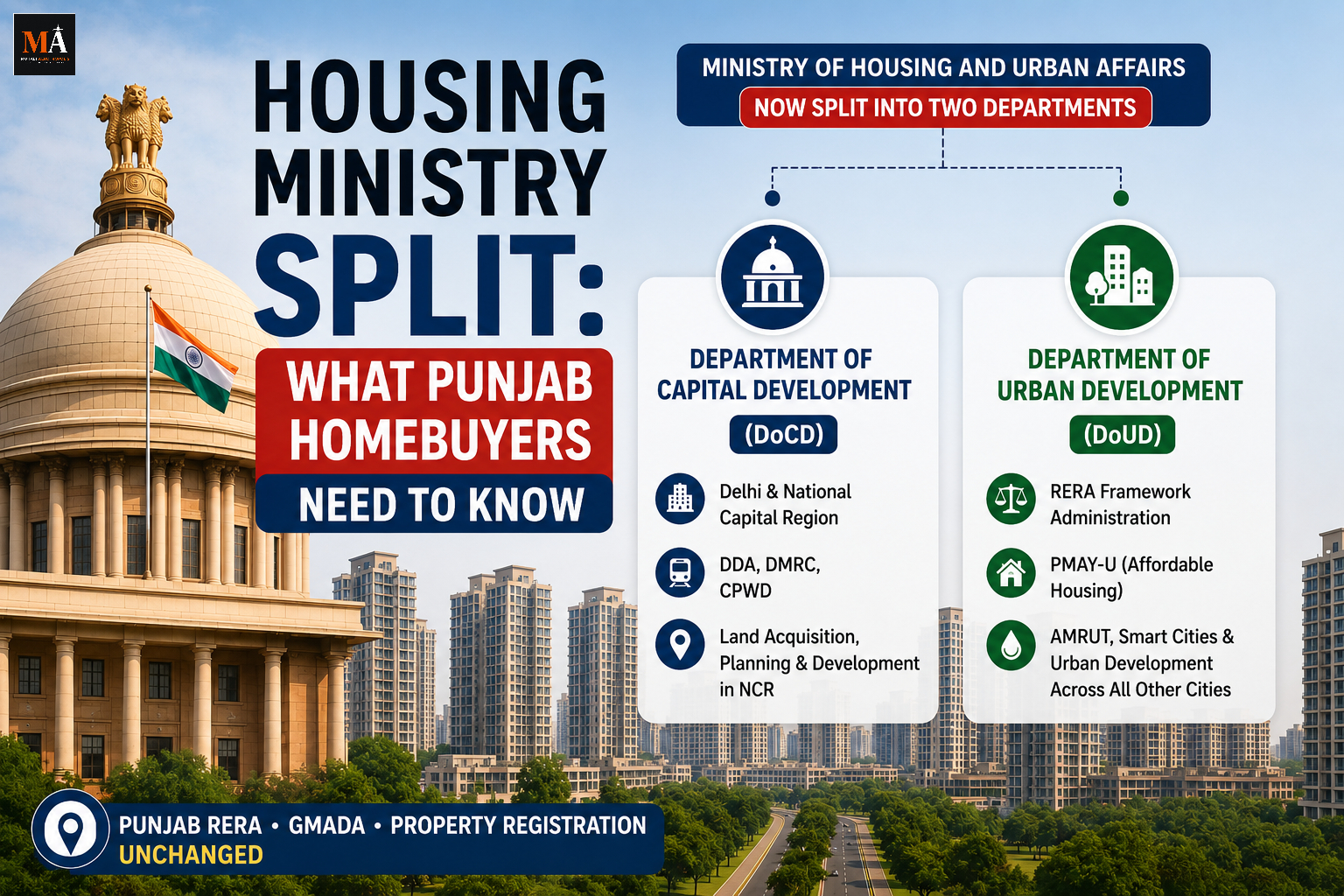
The Two Departments: What Each Controls
Department of Capital Development (DoCD)
The DoCD has a geographically specific mandate: Delhi and the National Capital Region. Its responsibilities include:
- Delhi Development Authority (DDA) — land acquisition, development, and housing schemes in Delhi
- Delhi Metro Rail Corporation (DMRC)
- Central Public Works Department (CPWD) — construction and maintenance of central government buildings
- Government estates and buildings in Delhi
- Land acquisition and development in the National Capital Territory
- Planning for the National Capital Region
The DoCD's mandate is essentially: manage the national capital's physical infrastructure and real estate. It is a specialised department for a specialised problem — Delhi's overlapping jurisdictions, multiple planning authorities, and unique central-state governance dynamics have historically required different handling than the rest of India's cities.
Secretary DoCD: D. Thara (IAS, Gujarat 1995), previously the additional secretary in MoHUA handling the Delhi division.
Department of Urban Development (DoUD)
The DoUD is the national urban development department — the body responsible for housing, infrastructure, and urban development policy across all of India's cities outside the capital. Its responsibilities include:
- Real Estate (Regulation and Development) Act, 2016 (RERA) — central administration of the regulatory framework
- Pradhan Mantri Awas Yojana Urban (PMAY-U) — the central government's flagship affordable housing scheme
- AMRUT (Atal Mission for Rejuvenation and Urban Transformation) — urban infrastructure grants to cities
- Smart Cities Mission — digital and physical infrastructure for designated smart cities
- Urban transport coordination — bus rapid transit, metro rail expansion outside Delhi, multimodal hubs
- Street Vendors Act administration
Secretary DoUD: Singh (was additional secretary in the Cabinet Secretariat).
The DoUD is effectively the old MoHUA minus the Delhi-specific functions. For every city in India outside the NCT — including every city in Punjab — the DoUD is the relevant central body.
Why the Government Did This
The official rationale centres on administrative focus. Delhi's urban governance is genuinely different from Chandigarh's or Mohali's. The national capital has the DDA, DMRC, NDMC, and multiple other bodies operating in overlapping jurisdictions with a governance structure that involves central government oversight in ways that other cities do not require. The argument is that dedicating a separate department to Delhi allows faster decision-making on capital-specific issues without those decisions getting caught in the queue of national policy priorities.
The second rationale is that separating Delhi management from national urban programmes allows the DoUD to give greater focused attention to RERA enforcement, PMAY-U delivery, and AMRUT implementation across India's 4,000-plus urban local bodies without the Delhi division competing for bandwidth.
The criticism is pointed. The Print noted that the split "comes at cost to its philosophy of minimum government-maximum governance." Metro Rail News raised the question of institutional coordination where urban planning, transport, and housing intersect — and they always intersect. A metro line from Delhi into Haryana, for example, would involve DoCD for the Delhi portion and DoUD for the Haryana portion, creating the kind of inter-departmental coordination complexity the restructuring was supposedly designed to reduce.
Why RERA's Placement Matters
The most consequential assignment in the split for real estate buyers and developers is the placement of RERA under the DoUD.
The Real Estate (Regulation and Development) Act, 2016 is a central law implemented through state-level regulatory authorities. Punjab RERA operates under the Act's framework. The central body — now the DoUD — sets the regulatory architecture that state RERAs operate within. Any changes to the model RERA rules, any clarifications of the Act's provisions, any amendments to the regulatory framework, and any guidance on appellate processes will now come from the DoUD rather than the combined MoHUA.
The significance for Mohali buyers is indirect but real. Every RERA enforcement action in Punjab — the recovery certificates against GMADA, the interest awards against developers, the resale restraints on stalled projects — operates within a central framework that is now the DoUD's responsibility to maintain and evolve. If the DoUD prioritises RERA enforcement capacity, strengthens the model appellate tribunal framework, or issues new consumer protection guidance, Punjab RERA's effectiveness improves with it. If the DoUD is slow to address gaps in the RERA framework, those gaps remain at the state level.
[For buyers, nothing is likely to change immediately. The real impact will be seen only if the new department helps improve how RERA works in the coming years.]
PMAY-U and Punjab's Affordable Housing
The Pradhan Mantri Awas Yojana Urban is the central government's housing for all scheme — providing subsidies, grants, and technical support for affordable housing construction in urban areas. Punjab's cities receive PMAY-U funding for housing projects targeting the economically weaker sections and lower-income groups.
The DoUD will now administer PMAY-U nationally. For Punjab, this means the state's affordable housing project approvals, subsidy disbursements, and completion reporting all flow through a department with a more specifically urban development focus than the combined ministry had. In theory, this should produce faster processing and more focused technical support.
The practical significance for Mohali's property market is in the affordable supply pipeline. PMAY-U housing in Mohali's lower-income belt — the type of supply that competes with the Rs 40 to Rs 60 lakh entry-level apartment market — is determined by how actively the central programme is being pushed. A DoUD with dedicated urban bandwidth, not diluted by Delhi's infrastructure management, could accelerate this pipeline.
AMRUT and Mohali's Infrastructure Funding
AMRUT — the Atal Mission for Rejuvenation and Urban Transformation — is the central scheme that funds urban infrastructure: sewerage, drainage, water supply, parks, and non-motorised transport in Indian cities. Mohali Municipal Corporation and other Punjab urban local bodies receive AMRUT funding.
Every article this session has documented the Mohali MC's infrastructure gap — the waterlogging that one hour of monsoon rain exposes, the Rs 200 crore drainage programme that has been discussed across three budget cycles without funding, the roads dug up for infrastructure works and left mid-repair. The AMRUT funding pipeline is part of what can address these gaps structurally rather than with incremental repair orders.
Under the DoUD's focused mandate, AMRUT implementation will be one of the department's primary responsibilities — not a subdivision of a ministry also managing the Delhi Metro and DDA land allotments. Whether this produces faster disbursement and stronger monitoring of AMRUT projects in Punjab cities is the key implementation question that will only be answered over the coming year.
The NCR Dimension for Panchkula
One aspect of the reorganisation that has a specific Tricity relevance: the National Capital Region planning extends to Panchkula in Haryana. The NCR encompasses 23 districts across Haryana, Uttar Pradesh, and Rajasthan, including Panchkula.
The DoCD, which now has specific responsibility for NCR planning, will oversee the Regional Plan for the NCR — a document that influences land use and development controls in Panchkula even though Panchkula is in Haryana. Buyers evaluating Panchkula property — or Tricity real estate that sits near the Haryana border — should track DoCD's NCR planning guidance as it evolves.
What Does Not Change
Several things commonly assumed to be affected by the reorganisation are not:
Punjab RERA's operational independence is unchanged. Punjab RERA operates under a state-appointed chairperson and members. Its day-to-day enforcement powers, recovery certificate mechanisms, and adjudication processes are governed by the state regulatory authority and the RERA Act. The DoUD's oversight of the central framework does not change what Punjab RERA can do or how quickly it acts.
GMADA's governance is unchanged. GMADA operates under Punjab's Department of Housing and Urban Development — a state department. The central Ministry's reorganisation has no direct effect on how GMADA acquires land, conducts auctions, manages Aerotropolis, or grants CLUs. Punjab's urban development remains a state function.
Property registration and stamp duty remain state subjects. The Sub-Registrar, the collector rate, and stamp duty are Punjab Revenue Department territory. The DoUD has no role in these.
The Chandigarh Metro's unresolved status is unchanged. The Tricity Metro has been in planning for over 15 years. Its uncertainty predates MoHUA and will not be resolved by MoHUA's reorganisation. The DoUD will coordinate urban transport nationally, but the Chandigarh Metro's specific obstacles — state cost sharing, RITES alignment, and political will — are not reorganisation problems.
The Honest Assessment
Administrative reorganisations are announced with high ambitions and implemented with variable results. India's urban governance literature is full of restructurings — ministry mergers, department splits, scheme consolidations — that produced less change on the ground than the gazette notification suggested.
The MoHUA split is structurally rational. Separating Delhi's complex multi-agency governance from national urban policy makes administrative sense. The DoUD's specific focus on RERA, PMAY-U, AMRUT, and urban transport is a cleaner mandate than the combined ministry had.
Whether it produces faster RERA guidance, better PMAY-U delivery, or stronger AMRUT monitoring in Punjab cities depends on the quality of the DoUD's leadership, the adequacy of its staffing, and whether the inter-departmental coordination mechanisms between DoCD and DoUD are designed carefully enough to avoid the fragmentation that the restructuring was supposed to cure.
For Punjab buyers, developers, and municipal administrators, the most useful posture is: understand what changed, watch the DoUD's early decisions on RERA guidance and AMRUT implementation, and do not assume that an administrative reorganisation at the centre automatically translates into faster decisions on the ground. It might. But the gazette notification is the beginning of that possibility, not the evidence of its realisation.
What Punjab Should Track
RERA model rules updates: Any DoUD guidance or amendments to the model RERA rules will affect Punjab RERA's framework. Watch the DoUD's notifications at mohua.gov.in.
AMRUT 2.0 project approvals for Punjab cities: AMRUT 2.0's project approvals and disbursements for Mohali, Ludhiana, Amritsar, and Jalandhar will now come through DoUD. The department's disbursement pace will affect how quickly municipal infrastructure projects can proceed.
PMAY-U housing project approvals in Punjab: Central approval and subsidy release for affordable housing projects under PMAY-U in Punjab's urban areas flows through DoUD.
NCR planning updates (for Panchkula and Tricity border areas): DoCD's NCR Regional Plan guidance affects Panchkula. Watch the National Capital Region Planning Board's publications.
[From a Mohali point of view, this decision is unlikely to have an immediate impact. Projects like Aerotropolis, GMADA land auctions, and Punjab RERA will continue to be managed by the Punjab Government and state authorities. The bigger impact, if any, will become clear over the next few years as the new Department of Urban Development starts shaping housing policies and urban schemes. Until then, it's better to see this as an administrative change rather than something that will change the property market overnight.]
---
Sources
- The Print — Modi govt carves housing ministry into two new departments, one with sole focus on Delhi-NCR, July 2026
- Hindustan Times — Centre splits MoHUA into capital, urban development departments, July 2026
- Metro Rail News — MoHUA's Bifurcation: Will administrative reform improve urban governance or create coordination challenges?, July 2026
- PropNewsTime — Centre restructures Housing Ministry, creates separate departments for Delhi and urban development, July 2026
- Government of India Gazette — Amendment to Allocation of Business Rules 1961, July 2026
- Ministry of Housing and Urban Affairs — www.mohua.gov.in; Annual budget Rs 85,552 crore 2026-27
- Mohali Aerotropolis — RERA enforcement, AMRUT, Punjab urban development coverage, July 2026
आवास मंत्रालय का पुनर्गठन 2026: पंजाब के होमबायर्स को इसकी परवाह क्यों होनी चाहिए और भारत के आवास क्षेत्र के लिए इसका क्या अर्थ है
वास्तव में क्या हुआ?
भारत सरकार ने जुलाई 2026 के अंतिम सप्ताह में Government of India (Allocation of Business) Rules, 1961 में संशोधन करते हुए एक राजपत्र अधिसूचना जारी की। इसका प्रभाव आवास और शहरी कार्य मंत्रालय (MoHUA) को दो अलग-अलग विभागों में विभाजित करना था: राजधानी विकास विभाग (DoCD) और शहरी विकास विभाग (DoUD)।
MoHUA, जो 2017 में अपने वर्तमान स्वरूप में गठित हुआ था, पूरे भारत में शहरी मामलों के लिए एकमात्र मंत्रालय था — दिल्ली की योजना से लेकर मोहाली के AMRUT अनुदान और पंजाब के RERA ढांचे तक। उस एकल-मंत्रालय संरचना को अब दो विभागों द्वारा बदल दिया गया है जिनके अलग-अलग अधिदेश, अलग-अलग सचिव और अलग-अलग प्रशासनिक फोकस हैं।
कैबिनेट मंत्री मनोहर लाल खट्टर और राज्य मंत्री तोखन साहू छत्र मंत्रालय का नेतृत्व करना जारी रखते हैं। मंत्रिस्तरीय स्तर से नीचे प्रशासनिक विभाजन वह है जो बदल गया है।
दो विभाग: प्रत्येक क्या नियंत्रित करता है
राजधानी विकास विभाग (DoCD)
DoCD का भौगोलिक रूप से विशिष्ट अधिदेश है: दिल्ली और राष्ट्रीय राजधानी क्षेत्र। इसकी जिम्मेदारियों में शामिल हैं:
- दिल्ली विकास प्राधिकरण (DDA) — दिल्ली में भूमि अधिग्रहण, विकास और आवास योजनाएं
- दिल्ली मेट्रो रेल कॉर्पोरेशन (DMRC)
- केंद्रीय लोक निर्माण विभाग (CPWD) — केंद्र सरकार के भवनों का निर्माण और रखरखाव
- दिल्ली में सरकारी सम्पदा और भवन
- राष्ट्रीय राजधानी क्षेत्र में भूमि अधिग्रहण और विकास
- राष्ट्रीय राजधानी क्षेत्र के लिए योजना
DoCD का अधिदेश मूल रूप से है: राष्ट्रीय राजधानी के भौतिक बुनियादी ढांचे और रियल एस्टेट का प्रबंधन करना। यह एक विशेष समस्या के लिए एक विशेष विभाग है — दिल्ली के अतिव्यापी अधिकार क्षेत्र, कई योजना प्राधिकरण, और अद्वितीय केंद्र-राज्य शासन गतिशीलता ने ऐतिहासिक रूप से भारत के अन्य शहरों की तुलना में अलग हैंडलिंग की आवश्यकता है।
DoCD के सचिव: डी. थारा (IAS, गुजरात 1995), जो पहले MoHUA में दिल्ली प्रभाग संभालने वाले अतिरिक्त सचिव थे।
शहरी विकास विभाग (DoUD)
DoUD राष्ट्रीय शहरी विकास विभाग है — वह निकाय जो राजधानी के बाहर भारत के सभी शहरों में आवास, बुनियादी ढांचे और शहरी विकास नीति के लिए जिम्मेदार है। इसकी जिम्मेदारियों में शामिल हैं:
- रियल एस्टेट (विनियमन और विकास) अधिनियम, 2016 (RERA) — नियामक ढांचे का केंद्रीय प्रशासन
- प्रधानमंत्री आवास योजना शहरी (PMAY-U) — केंद्र सरकार की प्रमुख किफायती आवास योजना
- AMRUT (अटल मिशन फॉर रेजुवेनेशन एंड अर्बन ट्रांसफॉर्मेशन) — शहरों को शहरी बुनियादी ढांचा अनुदान
- स्मार्ट सिटीज मिशन — नामित स्मार्ट शहरों के लिए डिजिटल और भौतिक बुनियादी ढांचा
- शहरी परिवहन समन्वय — बस रैपिड ट्रांजिट, दिल्ली के बाहर मेट्रो रेल विस्तार, मल्टीमॉडल हब
- स्ट्रीट वेंडर्स एक्ट प्रशासन
DoUD के सचिव: सिंह (कैबिनेट सचिवालय में पूर्व अतिरिक्त सचिव)।
DoUD प्रभावी रूप से दिल्ली-विशिष्ट कार्यों को छोड़कर पुराना MoHUA है। NCT के बाहर भारत के हर शहर के लिए — जिसमें पंजाब का हर शहर शामिल है — DoUD प्रासंगिक केंद्रीय निकाय है।
सरकार ने ऐसा क्यों किया
आधिकारिक तर्क प्रशासनिक फोकस पर केंद्रित है। दिल्ली का शहरी शासन वास्तव में चंडीगढ़ या मोहाली से अलग है। राष्ट्रीय राजधानी में DDA, DMRC, NDMC और कई अन्य निकाय अतिव्यापी अधिकार क्षेत्र में काम कर रहे हैं, जिसमें एक शासन संरचना है जिसमें केंद्र सरकार की निगरानी इस तरह से शामिल है जैसा अन्य शहरों में नहीं है। तर्क यह है कि दिल्ली के लिए एक अलग विभाग समर्पित करने से राजधानी-विशिष्ट मुद्दों पर तेजी से निर्णय लेने की अनुमति मिलती है, बिना उन निर्णयों के राष्ट्रीय नीति प्राथमिकताओं की कतार में फंसने के।
दूसरा तर्क यह है कि दिल्ली प्रबंधन को राष्ट्रीय शहरी कार्यक्रमों से अलग करने से DoUD को भारत के 4,000 से अधिक शहरी स्थानीय निकायों में RERA प्रवर्तन, PMAY-U वितरण और AMRUT कार्यान्वयन पर अधिक केंद्रित ध्यान देने की अनुमति मिलती है, बिना दिल्ली प्रभाग के संसाधनों के लिए प्रतिस्पर्धा किए।
आलोचना सीधी है। The Print ने नोट किया कि विभाजन "न्यूनतम सरकार-अधिकतम शासन के दर्शन की कीमत पर आता है।" Metro Rail News ने संस्थागत समन्वय का सवाल उठाया जहां शहरी योजना, परिवहन और आवास एक-दूसरे से जुड़ते हैं — और वे हमेशा जुड़ते हैं। उदाहरण के लिए, दिल्ली से हरियाणा में एक मेट्रो लाइन में दिल्ली भाग के लिए DoCD और हरियाणा भाग के लिए DoUD शामिल होगा, जो अंतर-विभागीय समन्वय जटिलता पैदा करेगा जिसे पुनर्गठन कम करने के लिए माना जाता था।
RERA का स्थान क्यों मायने रखता है
रियल एस्टेट खरीदारों और डेवलपर्स के लिए विभाजन में सबसे परिणामी असाइनमेंट DoUD के तहत RERA का स्थान है।
रियल एस्टेट (विनियमन और विकास) अधिनियम, 2016 एक केंद्रीय कानून है जो राज्य-स्तरीय नियामक प्राधिकरणों के माध्यम से लागू किया जाता है। पंजाब RERA अधिनियम के ढांचे के तहत काम करता है। केंद्रीय निकाय — अब DoUD — नियामक संरचना निर्धारित करता है जिसके भीतर राज्य RERA काम करते हैं। मॉडल RERA नियमों में कोई भी बदलाव, अधिनियम के प्रावधानों का कोई भी स्पष्टीकरण, नियामक ढांचे में कोई भी संशोधन और अपीलीय प्रक्रियाओं पर कोई भी मार्गदर्शन अब संयुक्त MoHUA के बजाय DoUD से आएगा।
मोहाली खरीदारों के लिए महत्व अप्रत्यक्ष लेकिन वास्तविक है। पंजाब में हर RERA प्रवर्तन कार्रवाई — GMADA के खिलाफ वसूली प्रमाणपत्र, डेवलपर्स के खिलाफ ब्याज पुरस्कार, अटकी परियोजनाओं पर पुनर्विक्रय प्रतिबंध — एक केंद्रीय ढांचे के भीतर काम करता है जो अब DoUD की जिम्मेदारी है कि वह इसे बनाए रखे और विकसित करे। यदि DoUD RERA प्रवर्तन क्षमता को प्राथमिकता देता है, मॉडल अपीलीय न्यायाधिकरण ढांचे को मजबूत करता है, या नई उपभोक्ता संरक्षण मार्गदर्शन जारी करता है, तो पंजाब RERA की प्रभावशीलता में सुधार होता है। यदि DoUD RERA ढांचे में अंतराल को दूर करने में धीमा है, तो वे अंतराल राज्य स्तर पर बने रहते हैं।
[खरीदारों के लिए, तत्काल कुछ भी बदलने की संभावना नहीं है। वास्तविक प्रभाव तभी दिखाई देगा जब नया विभाग आने वाले वर्षों में RERA के काम करने के तरीके को बेहतर बनाने में मदद करेगा।]
PMAY-U और पंजाब का किफायती आवास
प्रधानमंत्री आवास योजना शहरी केंद्र सरकार की सबके लिए आवास योजना है — शहरी क्षेत्रों में किफायती आवास निर्माण के लिए सब्सिडी, अनुदान और तकनीकी सहायता प्रदान करना। पंजाब के शहरों को आर्थिक रूप से कमजोर वर्गों और निचली आय समूहों को लक्षित करने वाली आवास परियोजनाओं के लिए PMAY-U फंडिंग प्राप्त होती है।
DoUD अब राष्ट्रीय स्तर पर PMAY-U का प्रशासन करेगा। पंजाब के लिए, इसका मतलब है कि राज्य की किफायती आवास परियोजना अनुमोदन, सब्सिडी वितरण और पूर्णता रिपोर्टिंग सभी एक ऐसे विभाग के माध्यम से प्रवाहित होते हैं जिसका संयुक्त मंत्रालय की तुलना में अधिक विशिष्ट शहरी विकास फोकस है। सिद्धांत रूप में, इससे तेज प्रसंस्करण और अधिक केंद्रित तकनीकी सहायता मिलनी चाहिए।
मोहाली के संपत्ति बाजार के लिए व्यावहारिक महत्व किफायती आपूर्ति पाइपलाइन में है। मोहाली की निचली आय पट्टी में PMAY-U आवास — उस प्रकार की आपूर्ति जो Rs 40 से Rs 60 लाख की प्रवेश-स्तर अपार्टमेंट बाजार के साथ प्रतिस्पर्धा करती है — यह निर्धारित करती है कि केंद्रीय कार्यक्रम को कितनी सक्रियता से आगे बढ़ाया जा रहा है। एक DoUD जिसके पास समर्पित शहरी बैंडविड्थ है, जो दिल्ली के बुनियादी ढांचे प्रबंधन से पतला नहीं है, इस पाइपलाइन को गति दे सकता है।
AMRUT और मोहाली का बुनियादी ढांचा वित्तपोषण
AMRUT — अटल मिशन फॉर रेजुवेनेशन एंड अर्बन ट्रांसफॉर्मेशन — केंद्रीय योजना है जो शहरी बुनियादी ढांचे को वित्तपोषित करती है: भारतीय शहरों में सीवरेज, जल निकासी, जल आपूर्ति, पार्क और गैर-मोटर चालित परिवहन। मोहाली नगर निगम और अन्य पंजाब शहरी स्थानीय निकायों को AMRUT फंडिंग प्राप्त होती है।
इस सत्र के हर लेख ने मोहाली MC के बुनियादी ढांचे के अंतर को दर्ज किया है — जलभराव जो एक घंटे की मानसूनी बारिश उजागर करती है, Rs 200 करोड़ का जल निकासी कार्यक्रम जिस पर तीन बजट चक्रों में बिना फंडिंग के चर्चा हुई है, बुनियादी ढांचे के कामों के लिए खोदी गई और आधी मरम्मत छोड़ी गई सड़कें। AMRUT फंडिंग पाइपलाइन उस हिस्से का हिस्सा है जो इन अंतरालों को वृद्धिशील मरम्मत आदेशों के बजाय संरचनात्मक रूप से संबोधित कर सकता है।
DoUD के केंद्रित अधिदेश के तहत, AMRUT कार्यान्वयन विभाग की प्राथमिक जिम्मेदारियों में से एक होगा — न कि दिल्ली मेट्रो और DDA भूमि आवंटन का प्रबंधन करने वाले मंत्रालय का उप-विभाग। क्या इससे पंजाब के शहरों में AMRUT परियोजनाओं का तेजी से वितरण और मजबूत निगरानी होगी, यह मुख्य कार्यान्वयन प्रश्न है जिसका उत्तर आने वाले वर्ष में ही मिलेगा।
पंचकूला के लिए NCR आयाम
पुनर्गठन का एक पहलू जिसका एक विशिष्ट ट्राइसिटी प्रासंगिकता है: राष्ट्रीय राजधानी क्षेत्र योजना हरियाणा में पंचकूला तक फैली हुई है। NCR में हरियाणा, उत्तर प्रदेश और राजस्थान के 23 जिले शामिल हैं, जिसमें पंचकूला भी शामिल है।
DoCD, जिसकी अब NCR योजना की विशिष्ट जिम्मेदारी है, NCR के लिए क्षेत्रीय योजना की देखरेख करेगा — एक दस्तावेज जो पंचकूला में भूमि उपयोग और विकास नियंत्रण को प्रभावित करता है, भले ही पंचकूला हरियाणा में है। पंचकूला संपत्ति — या हरियाणा सीमा के पास स्थित ट्राइसिटी रियल एस्टेट — का मूल्यांकन करने वाले खरीदारों को DoCD के NCR योजना मार्गदर्शन पर नज़र रखनी चाहिए क्योंकि यह विकसित होता है।
क्या नहीं बदलता है
पुनर्गठन से प्रभावित होने वाली कई चीजें सामान्यतः मान ली जाती हैं, वे नहीं हैं:
पंजाब RERA की परिचालन स्वतंत्रता अपरिवर्तित है। पंजाब RERA एक राज्य-नियुक्त अध्यक्ष और सदस्यों के तहत काम करता है। इसकी दिन-प्रतिदिन की प्रवर्तन शक्तियां, वसूली प्रमाणपत्र तंत्र और निर्णय प्रक्रियाएं राज्य नियामक प्राधिकरण और RERA अधिनियम द्वारा शासित होती हैं। DoUD का केंद्रीय ढांचे का पर्यवेक्षण यह नहीं बदलता कि पंजाब RERA क्या कर सकता है या कितनी जल्दी कार्य करता है।
GMADA का शासन अपरिवर्तित है। GMADA पंजाब के आवास और शहरी विकास विभाग — एक राज्य विभाग — के तहत काम करता है। केंद्रीय मंत्रालय के पुनर्गठन का GMADA द्वारा भूमि अधिग्रहण, नीलामी आयोजित करने, Aerotropolis प्रबंधन या CLU प्रदान करने के तरीके पर कोई सीधा प्रभाव नहीं पड़ता है। पंजाब का शहरी विकास एक राज्य कार्य बना हुआ है।
संपत्ति पंजीकरण और स्टांप शुल्क राज्य के विषय बने हुए हैं। उप-पंजीयक, कलेक्टर दर और स्टांप शुल्क पंजाब राजस्व विभाग का क्षेत्र है। DoUD की इनमें कोई भूमिका नहीं है।
चंडीगढ़ मेट्रो की अनसुलझी स्थिति अपरिवर्तित है। ट्राइसिटी मेट्रो 15 वर्षों से अधिक समय से योजना में है। इसकी अनिश्चितता MoHUA से पहले की है और MoHUA के पुनर्गठन से हल नहीं होगी। DoUD राष्ट्रीय स्तर पर शहरी परिवहन का समन्वय करेगा, लेकिन चंडीगढ़ मेट्रो की विशिष्ट बाधाएं — राज्य लागत साझाकरण, RITES संरेखण और राजनीतिक इच्छाशक्ति — पुनर्गठन की समस्याएं नहीं हैं।
ईमानदार मूल्यांकन
प्रशासनिक पुनर्गठन की घोषणा उच्च महत्वाकांक्षाओं के साथ की जाती है और परिवर्तनशील परिणामों के साथ लागू की जाती है। भारत का शहरी शासन साहित्य पुनर्गठनों से भरा है — मंत्रालय विलय, विभाग विभाजन, योजना समेकन — जिन्होंने जमीन पर राजपत्र अधिसूचना के सुझाव से कम बदलाव उत्पन्न किया।
MoHUA विभाजन संरचनात्मक रूप से तर्कसंगत है। दिल्ली के जटिल बहु-एजेंसी शासन को राष्ट्रीय शहरी नीति से अलग करना प्रशासनिक रूप से समझ में आता है। RERA, PMAY-U, AMRUT और शहरी परिवहन पर DoUD का विशिष्ट फोकस संयुक्त मंत्रालय की तुलना में एक स्वच्छ अधिदेश है।
क्या यह पंजाब के शहरों में तेज RERA मार्गदर्शन, बेहतर PMAY-U वितरण या मजबूत AMRUT निगरानी उत्पन्न करता है, यह DoUD के नेतृत्व की गुणवत्ता, इसके स्टाफिंग की पर्याप्तता और क्या DoCD और DoUD के बीच अंतर-विभागीय समन्वय तंत्र को उस विखंडन से बचने के लिए पर्याप्त रूप से डिजाइन किया गया है जिसे पुनर्गठन ठीक करने वाला था, पर निर्भर करता है।
पंजाब के खरीदारों, डेवलपर्स और नगर प्रशासकों के लिए, सबसे उपयोगी रुख है: समझें कि क्या बदला, DoUD के RERA मार्गदर्शन और AMRUT कार्यान्वयन पर शुरुआती निर्णयों पर नज़र रखें, और यह न मानें कि केंद्र में एक प्रशासनिक पुनर्गठन स्वचालित रूप से जमीन पर तेज निर्णयों में तब्दील हो जाता है। यह हो सकता है। लेकिन राजपत्र अधिसूचना उस संभावना की शुरुआत है, न कि इसकी प्राप्ति का प्रमाण।
पंजाब को क्या ट्रैक करना चाहिए
RERA मॉडल नियम अद्यतन: मॉडल RERA नियमों पर कोई भी DoUD मार
ਰਿਹਾਇਸ਼ ਮੰਤਰਾਲੇ ਦੀ ਮੁੜ ਸੰਗਠਨ 2026: ਪੰਜਾਬ ਨੂੰ ਕਿਉਂ ਪਰਵਾਹ ਕਰਨੀ ਚਾਹੀਦੀ ਹੈ ਅਤੇ ਭਾਰਤ ਦੇ ਰਿਹਾਇਸ਼ ਸੈਕਟਰ ਲਈ ਇਸਦਾ ਕੀ ਮਤਲਬ ਹੈ।
ਕੀ ਹੋਇਆ ਸੀ?
ਭਾਰਤ ਸਰਕਾਰ ਨੇ ਜੁਲਾਈ 2026 ਦੇ ਆਖਰੀ ਹਫ਼ਤੇ ਇੱਕ ਗਜ਼ਟ ਨੋਟੀਫਿਕੇਸ਼ਨ ਜਾਰੀ ਕਰਕੇ ਭਾਰਤ ਸਰਕਾਰ (ਕਾਰੋਬਾਰ ਦੀ ਵੰਡ) ਨਿਯਮ, 1961 ਵਿੱਚ ਸੋਧ ਕੀਤੀ। ਇਸਦਾ ਪ੍ਰਭਾਵ ਰਿਹਾਇਸ਼ ਅਤੇ ਸ਼ਹਿਰੀ ਮਾਮਲਿਆਂ ਦੇ ਮੰਤਰਾਲੇ (MoHUA) ਨੂੰ ਦੋ ਵੱਖ-ਵੱਖ ਵਿਭਾਗਾਂ ਵਿੱਚ ਵੰਡਣਾ ਸੀ: ਰਾਜਧਾਨੀ ਵਿਕਾਸ ਵਿਭਾਗ (DoCD) ਅਤੇ ਸ਼ਹਿਰੀ ਵਿਕਾਸ ਵਿਭਾਗ (DoUD)।
MoHUA, ਜੋ 2017 ਵਿੱਚ ਆਪਣੇ ਮੌਜੂਦਾ ਰੂਪ ਵਿੱਚ ਬਣਾਇਆ ਗਿਆ ਸੀ, ਪੂਰੇ ਭਾਰਤ ਵਿੱਚ ਸ਼ਹਿਰੀ ਮਾਮਲਿਆਂ ਲਈ ਇੱਕੋ ਇੱਕ ਮੰਤਰਾਲਾ ਸੀ — ਦਿੱਲੀ ਦੀ ਯੋਜਨਾਬੰਦੀ ਤੋਂ ਲੈ ਕੇ ਮੋਹਾਲੀ ਦੇ AMRUT ਗ੍ਰਾਂਟਾਂ ਤੱਕ, ਅਤੇ ਪੰਜਾਬ ਦੇ RERA ਢਾਂਚੇ ਤੱਕ। ਉਸ ਇੱਕ-ਮੰਤਰਾਲੇ ਦੇ ਢਾਂਚੇ ਦੀ ਥਾਂ ਹੁਣ ਦੋ ਵਿਭਾਗਾਂ ਨੇ ਲੈ ਲਈ ਹੈ, ਜਿਨ੍ਹਾਂ ਦੇ ਵੱਖ-ਵੱਖ ਅਧਿਕਾਰ ਖੇਤਰ, ਵੱਖ-ਵੱਖ ਸਕੱਤਰ, ਅਤੇ ਵੱਖ-ਵੱਖ ਪ੍ਰਸ਼ਾਸਕੀ ਫੋਕਸ ਹਨ।
ਕੈਬਨਿਟ ਮੰਤਰੀ ਮਨੋਹਰ ਲਾਲ ਖੱਟਰ ਅਤੇ ਰਾਜ ਮੰਤਰੀ ਤੋਖਨ ਸਾਹੂ ਅਜੇ ਵੀ ਛਤਰੀ ਮੰਤਰਾਲੇ ਦੀ ਅਗਵਾਈ ਕਰਨਗੇ। ਮੰਤਰੀ ਪੱਧਰ ਤੋਂ ਹੇਠਾਂ ਪ੍ਰਸ਼ਾਸਕੀ ਵੰਡ ਹੀ ਬਦਲੀ ਹੈ।
ਦੋ ਵਿਭਾਗ: ਹਰ ਇੱਕ ਕੀ ਨਿਯੰਤਰਿਤ ਕਰਦਾ ਹੈ
ਰਾਜਧਾਨੀ ਵਿਕਾਸ ਵਿਭਾਗ (DoCD)
DoCD ਦਾ ਭੂਗੋਲਿਕ ਤੌਰ 'ਤੇ ਖਾਸ ਅਧਿਕਾਰ ਖੇਤਰ ਹੈ: ਦਿੱਲੀ ਅਤੇ ਰਾਸ਼ਟਰੀ ਰਾਜਧਾਨੀ ਖੇਤਰ (NCR)। ਇਸਦੀਆਂ ਜ਼ਿੰਮੇਵਾਰੀਆਂ ਵਿੱਚ ਸ਼ਾਮਲ ਹਨ:
- ਦਿੱਲੀ ਵਿਕਾਸ ਅਥਾਰਟੀ (DDA) — ਦਿੱਲੀ ਵਿੱਚ ਜ਼ਮੀਨ ਪ੍ਰਾਪਤੀ, ਵਿਕਾਸ, ਅਤੇ ਰਿਹਾਇਸ਼ ਸਕੀਮਾਂ
- ਦਿੱਲੀ ਮੈਟਰੋ ਰੇਲ ਕਾਰਪੋਰੇਸ਼ਨ (DMRC)
- ਕੇਂਦਰੀ ਲੋਕ ਨਿਰਮਾਣ ਵਿਭਾਗ (CPWD) — ਕੇਂਦਰ ਸਰਕਾਰ ਦੀਆਂ ਇਮਾਰਤਾਂ ਦਾ ਨਿਰਮਾਣ ਅਤੇ ਰੱਖ-ਰਖਾਅ
- ਦਿੱਲੀ ਵਿੱਚ ਸਰਕਾਰੀ ਜਾਇਦਾਦਾਂ ਅਤੇ ਇਮਾਰਤਾਂ
- ਰਾਸ਼ਟਰੀ ਰਾਜਧਾਨੀ ਖੇਤਰ ਵਿੱਚ ਜ਼ਮੀਨ ਪ੍ਰਾਪਤੀ ਅਤੇ ਵਿਕਾਸ
- ਰਾਸ਼ਟਰੀ ਰਾਜਧਾਨੀ ਖੇਤਰ ਲਈ ਯੋਜਨਾਬੰਦੀ
DoCD ਦਾ ਅਧਿਕਾਰ ਖੇਤਰ ਮੂਲ ਰੂਪ ਵਿੱਚ ਹੈ: ਰਾਸ਼ਟਰੀ ਰਾਜਧਾਨੀ ਦੇ ਭੌਤਿਕ ਬੁਨਿਆਦੀ ਢਾਂਚੇ ਅਤੇ ਰਿਅਲ ਅਸਟੇਟ ਦਾ ਪ੍ਰਬੰਧਨ ਕਰਨਾ। ਇਹ ਇੱਕ ਵਿਸ਼ੇਸ਼ ਸਮੱਸਿਆ ਲਈ ਇੱਕ ਵਿਸ਼ੇਸ਼ ਵਿਭਾਗ ਹੈ — ਦਿੱਲੀ ਦੇ ਓਵਰਲੈਪਿੰਗ ਅਧਿਕਾਰ ਖੇਤਰ, ਕਈ ਯੋਜਨਾ ਅਥਾਰਟੀਆਂ, ਅਤੇ ਵਿਲੱਖਣ ਕੇਂਦਰ-ਰਾਜ ਸ਼ਾਸਨ ਗਤੀਸ਼ੀਲਤਾ ਨੇ ਇਤਿਹਾਸਕ ਤੌਰ 'ਤੇ ਭਾਰਤ ਦੇ ਬਾਕੀ ਸ਼ਹਿਰਾਂ ਨਾਲੋਂ ਵੱਖਰੀ ਸੰਭਾਲ ਦੀ ਮੰਗ ਕੀਤੀ ਹੈ।
DoCD ਸਕੱਤਰ: ਡੀ. ਠਾਰਾ (IAS, ਗੁਜਰਾਤ 1995), ਪਹਿਲਾਂ MoHUA ਵਿੱਚ ਦਿੱਲੀ ਡਿਵੀਜ਼ਨ ਨੂੰ ਸੰਭਾਲਣ ਵਾਲੇ ਵਾਧੂ ਸਕੱਤਰ ਸਨ।
ਸ਼ਹਿਰੀ ਵਿਕਾਸ ਵਿਭਾਗ (DoUD)
DoUD ਰਾਸ਼ਟਰੀ ਸ਼ਹਿਰੀ ਵਿਕਾਸ ਵਿਭਾਗ ਹੈ — ਉਹ ਸੰਸਥਾ ਜੋ ਰਾਜਧਾਨੀ ਤੋਂ ਬਾਹਰ ਭਾਰਤ ਦੇ ਸਾਰੇ ਸ਼ਹਿਰਾਂ ਵਿੱਚ ਰਿਹਾਇਸ਼, ਬੁਨਿਆਦੀ ਢਾਂਚੇ, ਅਤੇ ਸ਼ਹਿਰੀ ਵਿਕਾਸ ਨੀਤੀ ਲਈ ਜ਼ਿੰਮੇਵਾਰ ਹੈ। ਇਸਦੀਆਂ ਜ਼ਿੰਮੇਵਾਰੀਆਂ ਵਿੱਚ ਸ਼ਾਮਲ ਹਨ:
- ਰਿਅਲ ਅਸਟੇਟ (ਰੈਗੂਲੇਸ਼ਨ ਅਤੇ ਵਿਕਾਸ) ਐਕਟ, 2016 (RERA) — ਰੈਗੂਲੇਟਰੀ ਢਾਂਚੇ ਦਾ ਕੇਂਦਰੀ ਪ੍ਰਸ਼ਾਸਨ
- ਪ੍ਰਧਾਨ ਮੰਤਰੀ ਆਵਾਸ ਯੋਜਨਾ ਸ਼ਹਿਰੀ (PMAY-U) — ਕੇਂਦਰ ਸਰਕਾਰ ਦੀ ਫਲੈਗਸ਼ਿਪ ਕਿਫਾਇਤੀ ਰਿਹਾਇਸ਼ ਸਕੀਮ
- AMRUT (ਅਟਲ ਮਿਸ਼ਨ ਫਾਰ ਰਿਜੁਵੀਨੇਸ਼ਨ ਐਂਡ ਅਰਬਨ ਟ੍ਰਾਂਸਫਾਰਮੇਸ਼ਨ) — ਸ਼ਹਿਰਾਂ ਨੂੰ ਸ਼ਹਿਰੀ ਬੁਨਿਆਦੀ ਢਾਂਚਾ ਗ੍ਰਾਂਟਾਂ
- ਸਮਾਰਟ ਸਿਟੀਜ਼ ਮਿਸ਼ਨ — ਨਿਰਧਾਰਤ ਸਮਾਰਟ ਸ਼ਹਿਰਾਂ ਲਈ ਡਿਜੀਟਲ ਅਤੇ ਭੌਤਿਕ ਬੁਨਿਆਦੀ ਢਾਂਚਾ
- ਸ਼ਹਿਰੀ ਟਰਾਂਸਪੋਰਟ ਤਾਲਮੇਲ — ਬੱਸ ਰੈਪਿਡ ਟ੍ਰਾਂਜ਼ਿਟ, ਦਿੱਲੀ ਤੋਂ ਬਾਹਰ ਮੈਟਰੋ ਰੇਲ ਦਾ ਵਿਸਥਾਰ, ਮਲਟੀਮੋਡਲ ਹੱਬ
- ਸਟ੍ਰੀਟ ਵੈਂਡਰਜ਼ ਐਕਟ ਪ੍ਰਸ਼ਾਸਨ
DoUD ਸਕੱਤਰ: ਸਿੰਘ (ਕੈਬਨਿਟ ਸਕੱਤਰੇਤ ਵਿੱਚ ਵਾਧੂ ਸਕੱਤਰ ਸਨ)।
DoUD ਪ੍ਰਭਾਵਸ਼ਾਲੀ ਢੰਗ ਨਾਲ ਪੁਰਾਣਾ MoHUA ਹੈ, ਜਿਸ ਵਿੱਚੋਂ ਦਿੱਲੀ-ਵਿਸ਼ੇਸ਼ ਕਾਰਜ ਹਟਾ ਦਿੱਤੇ ਗਏ ਹਨ। NCT ਤੋਂ ਬਾਹਰ ਭਾਰਤ ਦੇ ਹਰ ਸ਼ਹਿਰ ਲਈ — ਜਿਸ ਵਿੱਚ ਪੰਜਾਬ ਦੇ ਹਰ ਸ਼ਹਿਰ ਸ਼ਾਮਲ ਹਨ — DoUD ਸੰਬੰਧਿਤ ਕੇਂਦਰੀ ਸੰਸਥਾ ਹੈ।
ਸਰਕਾਰ ਨੇ ਅਜਿਹਾ ਕਿਉਂ ਕੀਤਾ
ਅਧਿਕਾਰਤ ਤਰਕ ਪ੍ਰਸ਼ਾਸਕੀ ਫੋਕਸ 'ਤੇ ਕੇਂਦਰਿਤ ਹੈ। ਦਿੱਲੀ ਦੀ ਸ਼ਹਿਰੀ ਸ਼ਾਸਨ ਪ੍ਰਣਾਲੀ ਸੱਚਮੁੱਚ ਚੰਡੀਗੜ੍ਹ ਜਾਂ ਮੋਹਾਲੀ ਨਾਲੋਂ ਵੱਖਰੀ ਹੈ। ਰਾਸ਼ਟਰੀ ਰਾਜਧਾਨੀ ਵਿੱਚ DDA, DMRC, NDMC, ਅਤੇ ਕਈ ਹੋਰ ਸੰਸਥਾਵਾਂ ਓਵਰਲੈਪਿੰਗ ਅਧਿਕਾਰ ਖੇਤਰਾਂ ਵਿੱਚ ਕੰਮ ਕਰ ਰਹੀਆਂ ਹਨ, ਇੱਕ ਸ਼ਾਸਨ ਢਾਂਚੇ ਦੇ ਨਾਲ ਜਿਸ ਵਿੱਚ ਅਜਿਹੇ ਤਰੀਕਿਆਂ ਨਾਲ ਕੇਂਦਰ ਸਰਕਾਰ ਦੀ ਨਿਗਰਾਨੀ ਸ਼ਾਮਲ ਹੈ ਜਿਸਦੀ ਹੋਰ ਸ਼ਹਿਰਾਂ ਨੂੰ ਲੋੜ ਨਹੀਂ ਹੈ। ਦਲੀਲ ਇਹ ਹੈ ਕਿ ਦਿੱਲੀ ਲਈ ਇੱਕ ਵੱਖਰਾ ਵਿਭਾਗ ਸਮਰਪਿਤ ਕਰਨ ਨਾਲ ਰਾਜਧਾਨੀ-ਵਿਸ਼ੇਸ਼ ਮੁੱਦਿਆਂ 'ਤੇ ਤੇਜ਼ੀ ਨਾਲ ਫੈਸਲੇ ਲੈਣ ਦੀ ਆਗਿਆ ਮਿਲਦੀ ਹੈ, ਬਿਨਾਂ ਉਹਨਾਂ ਫੈਸਲਿਆਂ ਦੇ ਰਾਸ਼ਟਰੀ ਨੀਤੀ ਤਰਜੀਹਾਂ ਦੀ ਕਤਾਰ ਵਿੱਚ ਫਸਣ ਦੇ।
ਦੂਜਾ ਤਰਕ ਇਹ ਹੈ ਕਿ ਦਿੱਲੀ ਪ੍ਰਬੰਧਨ ਨੂੰ ਰਾਸ਼ਟਰੀ ਸ਼ਹਿਰੀ ਪ੍ਰੋਗਰਾਮਾਂ ਤੋਂ ਵੱਖ ਕਰਨ ਨਾਲ DoUD ਨੂੰ RERA ਲਾਗੂਕਰਨ, PMAY-U ਡਿਲਿਵਰੀ, ਅਤੇ AMRUT ਲਾਗੂਕਰਨ 'ਤੇ ਭਾਰਤ ਦੀਆਂ 4,000 ਤੋਂ ਵੱਧ ਸ਼ਹਿਰੀ ਸਥਾਨਕ ਸੰਸਥਾਵਾਂ ਵਿੱਚ ਵਧੇਰੇ ਧਿਆਨ ਕੇਂਦਰਿਤ ਕਰਨ ਦੀ ਆਗਿਆ ਮਿਲਦੀ ਹੈ, ਬਿਨਾਂ ਦਿੱਲੀ ਡਿਵੀਜ਼ਨ ਦੇ ਬੈਂਡਵਿਡਥ ਲਈ ਮੁਕਾਬਲਾ ਕਰਨ ਦੇ।
ਆਲੋਚਨਾ ਨੁਕਤੇਦਾਰ ਹੈ। The Print ਨੇ ਨੋਟ ਕੀਤਾ ਕਿ ਵੰਡ "ਘੱਟ ਤੋਂ ਘੱਟ ਸਰਕਾਰ-ਵੱਧ ਤੋਂ ਵੱਧ ਸ਼ਾਸਨ ਦੇ ਇਸਦੇ ਦਰਸ਼ਨ ਦੀ ਕੀਮਤ 'ਤੇ ਆਉਂਦੀ ਹੈ।" Metro Rail News ਨੇ ਸੰਸਥਾਗਤ ਤਾਲਮੇਲ ਦਾ ਸਵਾਲ ਉਠਾਇਆ ਜਿੱਥੇ ਸ਼ਹਿਰੀ ਯੋਜਨਾਬੰਦੀ, ਟਰਾਂਸਪੋਰਟ, ਅਤੇ ਰਿਹਾਇਸ਼ ਆਪਸ ਵਿੱਚ ਜੁੜਦੇ ਹਨ — ਅਤੇ ਉਹ ਹਮੇਸ਼ਾ ਜੁੜਦੇ ਹਨ। ਦਿੱਲੀ ਤੋਂ ਹਰਿਆਣਾ ਤੱਕ ਇੱਕ ਮੈਟਰੋ ਲਾਈਨ, ਉਦਾਹਰਣ ਲਈ, ਦਿੱਲੀ ਹਿੱਸੇ ਲਈ DoCD ਅਤੇ ਹਰਿਆਣਾ ਹਿੱਸੇ ਲਈ DoUD ਨੂੰ ਸ਼ਾਮਲ ਕਰੇਗੀ, ਉਸ ਕਿਸਮ ਦੀ ਅੰਤਰ-ਵਿਭਾਗੀ ਤਾਲਮੇਲ ਜਟਿਲਤਾ ਪੈਦਾ ਕਰਦੀ ਹੈ ਜਿਸਨੂੰ ਘਟਾਉਣ ਲਈ ਮੁੜ ਸੰਗਠਨ ਮੰਨਿਆ ਜਾਂਦਾ ਸੀ।
RERA ਦੀ ਨਿਯੁਕਤੀ ਕਿਉਂ ਮਾਇਨੇ ਰੱਖਦੀ ਹੈ
ਰਿਅਲ ਅਸਟੇਟ ਖਰੀਦਦਾਰਾਂ ਅਤੇ ਡਿਵੈਲਪਰਾਂ ਲਈ ਵੰਡ ਵਿੱਚ ਸਭ ਤੋਂ ਮਹੱਤਵਪੂਰਨ ਨਿਯੁਕਤੀ DoUD ਦੇ ਅਧੀਨ RERA ਦੀ ਨਿਯੁਕਤੀ ਹੈ।
ਰਿਅਲ ਅਸਟੇਟ (ਰੈਗੂਲੇਸ਼ਨ ਅਤੇ ਵਿਕਾਸ) ਐਕਟ, 2016 ਇੱਕ ਕੇਂਦਰੀ ਕਾਨੂੰਨ ਹੈ ਜੋ ਰਾਜ ਪੱਧਰੀ ਰੈਗੂਲੇਟਰੀ ਅਥਾਰਟੀਆਂ ਰਾਹੀਂ ਲਾਗੂ ਕੀਤਾ ਜਾਂਦਾ ਹੈ। ਪੰਜਾਬ RERA ਐਕਟ ਦੇ ਢਾਂਚੇ ਦੇ ਤਹਿਤ ਕੰਮ ਕਰਦਾ ਹੈ। ਕੇਂਦਰੀ ਸੰਸਥਾ — ਹੁਣ DoUD — ਉਹ ਰੈਗੂਲੇਟਰੀ ਆਰਕੀਟੈਕਚਰ ਸੈੱਟ ਕਰਦੀ ਹੈ ਜਿਸਦੇ ਅੰਦਰ ਰਾਜ RERA ਕੰਮ ਕਰਦੇ ਹਨ। ਮਾਡਲ RERA ਨਿਯਮਾਂ ਵਿੱਚ ਕੋਈ ਵੀ ਤਬਦੀਲੀ, ਐਕਟ ਦੇ ਉਪਬੰਧਾਂ ਦੀ ਕੋਈ ਵੀ ਸਪੱਸ਼ਟੀਕਰਨ, ਰੈਗੂਲੇਟਰੀ ਢਾਂਚੇ ਵਿੱਚ ਕੋਈ ਵੀ ਸੋਧ, ਅਤੇ ਅਪੀਲੀ ਪ੍ਰਕਿਰਿਆਵਾਂ 'ਤੇ ਕੋਈ ਵੀ ਮਾਰਗਦਰਸ਼ਨ ਹੁਣ ਸੰਯੁਕਤ MoHUA ਦੀ ਬਜਾਏ DoUD ਤੋਂ ਆਵੇਗਾ।
ਮੋਹਾਲੀ ਖਰੀਦਦਾਰਾਂ ਲਈ ਮਹੱਤਵ ਅਸਿੱਧੇ ਪਰ ਅਸਲ ਹੈ। ਪੰਜਾਬ ਵਿੱਚ ਹਰ RERA ਲਾਗੂਕਰਨ ਕਾਰਵਾਈ — GMADA ਦੇ ਖਿਲਾਫ ਰਿਕਵਰੀ ਸਰਟੀਫਿਕੇਟ, ਡਿਵੈਲਪਰਾਂ ਦੇ ਖਿਲਾਫ ਵਿਆਜ ਪੁਰਸਕਾਰ, ਰੁਕੇ ਹੋਏ ਪ੍ਰੋਜੈਕਟਾਂ 'ਤੇ ਪੁਨਰ-ਵਿਕਰੀ ਪਾਬੰਦੀਆਂ — ਇੱਕ ਕੇਂਦਰੀ ਢਾਂਚੇ ਦੇ ਅੰਦਰ ਕੰਮ ਕਰਦੀ ਹੈ ਜੋ ਹੁਣ DoUD ਦੀ ਜ਼ਿੰਮੇਵਾਰੀ ਹੈ ਕਿ ਇਸਨੂੰ ਕਾਇਮ ਰੱਖੇ ਅਤੇ ਵਿਕਸਤ ਕਰੇ। ਜੇਕਰ DoUD RERA ਲਾਗੂਕਰਨ ਸਮਰੱਥਾ ਨੂੰ ਤਰਜੀਹ ਦਿੰਦਾ ਹੈ, ਮਾਡਲ ਅਪੀਲੀ ਟ੍ਰਿਬਿਊਨਲ ਢਾਂਚੇ ਨੂੰ ਮਜ਼ਬੂਤ ਕਰਦਾ ਹੈ, ਜਾਂ ਨਵੀਂ ਖਪਤਕਾਰ ਸੁਰੱਖਿਆ ਮਾਰਗਦਰਸ਼ਨ ਜਾਰੀ ਕਰਦਾ ਹੈ, ਤਾਂ ਪੰਜਾਬ RERA ਦੀ ਪ੍ਰਭਾਵਸ਼ੀਲਤਾ ਇਸਦੇ ਨਾਲ ਸੁਧਰਦੀ ਹੈ। ਜੇਕਰ DoUD RERA ਢਾਂਚੇ ਵਿੱਚ ਪਾੜੇ ਨੂੰ ਹੱਲ ਕਰਨ ਵਿੱਚ ਹੌਲੀ ਹੈ, ਤਾਂ ਉਹ ਪਾੜੇ ਰਾਜ ਪੱਧਰ 'ਤੇ ਬਣੇ ਰਹਿੰਦੇ ਹਨ।
[ਖਰੀਦਦਾਰਾਂ ਲਈ, ਤੁਰੰਤ ਕੁਝ ਵੀ ਬਦਲਣ ਦੀ ਸੰਭਾਵਨਾ ਨਹੀਂ ਹੈ। ਅਸਲ ਪ੍ਰਭਾਵ ਉਦੋਂ ਹੀ ਦੇਖਿਆ ਜਾਵੇਗਾ ਜਦੋਂ ਨਵਾਂ ਵਿਭਾਗ ਆਉਣ ਵਾਲੇ ਸਾਲਾਂ ਵਿੱਚ RERA ਦੇ ਕੰਮ ਕਰਨ ਦੇ ਤਰੀਕੇ ਨੂੰ ਬਿਹਤਰ ਬਣਾਉਣ ਵਿੱਚ ਮਦਦ ਕਰਦਾ ਹੈ।]
PMAY-U ਅਤੇ ਪੰਜਾਬ ਦੀ ਕਿਫਾਇਤੀ ਰਿਹਾਇਸ਼
ਪ੍ਰਧਾਨ ਮੰਤਰੀ ਆਵਾਸ ਯੋਜਨਾ ਸ਼ਹਿਰੀ ਕੇਂਦਰ ਸਰਕਾਰ ਦੀ ਸਭ ਲਈ ਰਿਹਾਇਸ਼ ਸਕੀਮ ਹੈ — ਸ਼ਹਿਰੀ ਖੇਤਰਾਂ ਵਿੱਚ ਕਿਫਾਇਤੀ ਰਿਹਾਇਸ਼ ਨਿਰਮਾਣ ਲਈ ਸਬਸਿਡੀਆਂ, ਗ੍ਰਾਂਟਾਂ, ਅਤੇ ਤਕਨੀਕੀ ਸਹਾਇਤਾ ਪ੍ਰਦਾਨ ਕਰਦੀ ਹੈ। ਪੰਜਾਬ ਦੇ ਸ਼ਹਿਰਾਂ ਨੂੰ ਆਰਥਿਕ ਤੌਰ 'ਤੇ ਕਮਜ਼ੋਰ ਵਰਗਾਂ ਅਤੇ ਹੇਠਲੇ ਆਮਦਨ ਸਮੂਹਾਂ ਨੂੰ ਨਿਸ਼ਾਨਾ ਬਣਾਉਣ ਵਾਲੇ ਰਿਹਾਇਸ਼ ਪ੍ਰੋਜੈਕਟਾਂ ਲਈ PMAY-U ਫੰਡਿੰਗ ਮਿਲਦੀ ਹੈ।
DoUD ਹੁਣ ਰਾਸ਼ਟਰੀ ਪੱਧਰ 'ਤੇ PMAY-U ਦਾ ਪ੍ਰਸ਼ਾਸਨ ਕਰੇਗਾ। ਪੰਜਾਬ ਲਈ, ਇਸਦਾ ਮਤਲਬ ਹੈ ਕਿ ਰਾਜ ਦੇ ਕਿਫਾਇਤੀ ਰਿਹਾਇਸ਼ ਪ੍ਰੋਜੈਕਟ ਮਨਜ਼ੂਰੀਆਂ, ਸਬਸਿਡੀ ਭੁਗਤਾਨ, ਅਤੇ ਸੰਪੂਰਨਤਾ ਰਿਪੋਰਟਿੰਗ ਸਾਰੇ ਇੱਕ ਅਜਿਹੇ ਵਿਭਾਗ ਰਾਹੀਂ ਪ੍ਰਵਾਹਿਤ ਹੁੰਦੇ ਹਨ ਜਿਸਦਾ ਸੰਯੁਕਤ ਮੰਤਰਾਲੇ ਨਾਲੋਂ ਵਧੇਰੇ ਖਾਸ ਸ਼ਹਿਰੀ ਵਿਕਾਸ ਫੋਕਸ ਹੈ। ਸਿਧਾਂਤ ਵਿੱਚ, ਇਸਨੂੰ ਤੇਜ਼ ਪ੍ਰੋਸੈਸਿੰਗ ਅਤੇ ਵਧੇਰੇ ਕੇਂਦਰਿਤ ਤਕਨੀਕੀ ਸਹਾਇਤਾ ਪੈਦਾ ਕਰਨੀ ਚਾਹੀਦੀ ਹੈ।
ਮੋਹਾਲੀ ਦੇ ਪ੍ਰਾਪਰਟੀ ਮਾਰਕੀਟ ਲਈ ਵਿਹਾਰਕ ਮਹੱਤਵ ਕਿਫਾਇਤੀ ਸਪਲਾਈ ਪਾਈਪਲਾਈਨ ਵਿੱਚ ਹੈ। ਮੋਹਾਲੀ ਦੇ ਹੇਠਲੇ ਆਮਦਨੀ ਬੈਲਟ ਵਿੱਚ PMAY-U ਰਿਹਾਇਸ਼ — ਉਸ ਕਿਸਮ ਦੀ ਸਪਲਾਈ ਜੋ ₹40 ਤੋਂ ₹60 ਲੱਖ ਦੇ ਐਂਟਰੀ-ਲੈਵਲ ਅਪਾਰਟਮੈਂਟ ਮਾਰਕੀਟ ਨਾਲ ਮੁਕਾਬਲਾ ਕਰਦੀ ਹੈ — ਇਹ ਨਿਰਧਾਰਤ ਕੀਤਾ ਜਾਂਦਾ ਹੈ ਕਿ ਕੇਂਦਰੀ ਪ੍ਰੋਗਰਾਮ ਨੂੰ ਕਿੰਨੀ ਸਰਗਰਮੀ ਨਾਲ ਅੱਗੇ ਵਧਾਇਆ ਜਾ ਰਿਹਾ ਹੈ। ਦਿੱਲੀ ਦੇ ਬੁਨਿਆਦੀ ਢਾਂਚੇ ਪ੍ਰਬੰਧਨ ਦੁਆਰਾ ਪਤਲਾ ਨਾ ਕੀਤਾ ਗਿਆ, ਸਮਰਪਿਤ ਸ਼ਹਿਰੀ ਬੈਂਡਵਿਡਥ ਵਾਲਾ DoUD, ਇਸ ਪਾਈਪਲਾਈਨ ਨੂੰ ਤੇਜ਼ ਕਰ ਸਕਦਾ ਹੈ।
AMRUT ਅਤੇ ਮੋਹਾਲੀ ਦੀ ਬੁਨਿਆਦੀ ਢਾਂਚਾ ਫੰਡਿੰਗ
AMRUT — ਅਟਲ ਮਿਸ਼ਨ ਫਾਰ ਰਿਜੁਵੀਨੇਸ਼ਨ ਐਂਡ ਅਰਬਨ ਟ੍ਰਾਂਸਫਾਰਮੇਸ਼ਨ — ਕੇਂਦਰੀ ਸਕੀਮ ਹੈ ਜੋ ਸ਼ਹਿਰੀ ਬੁਨਿਆਦੀ ਢਾਂਚੇ ਨੂੰ ਫੰਡ ਦਿੰਦੀ ਹੈ: ਸੀਵਰੇਜ, ਡਰੇਨੇਜ, ਪਾਣੀ ਦੀ ਸਪਲਾਈ, ਪਾਰਕ, ਅਤੇ ਭਾਰਤੀ ਸ਼ਹਿਰਾਂ ਵਿੱਚ ਗੈਰ-ਮੋਟਰਾਈਜ਼ਡ ਟਰਾਂਸਪੋਰਟ। ਮੋਹਾਲੀ ਨਗਰ ਨਿਗਮ ਅਤੇ ਹੋਰ ਪੰਜਾਬ ਸ਼ਹਿਰੀ ਸਥਾਨਕ ਸੰਸਥਾਵਾਂ ਨੂੰ AMRUT ਫੰਡਿ