

A family in Brampton bought a Mohali flat years ago. Aerocity was still filling up then, and so were the sectors along the airport road. Now they want to sell. Since the start of October the buyer of a home from a seller who lives abroad reports the tax deducted with a PAN on Form 141, and that change has sent many owners abroad back to a question the paperwork does not answer: how much tax does India actually charge on the gain?
The answer depends on where the seller lives in the year of the sale. A resident seller of a home bought before the July cut-off of the year the new flat rate began can still compare two calculations and pay the lower one. A seller who is a non-resident in the year of sale gets one calculation only.
One flat rate now applies to every seller
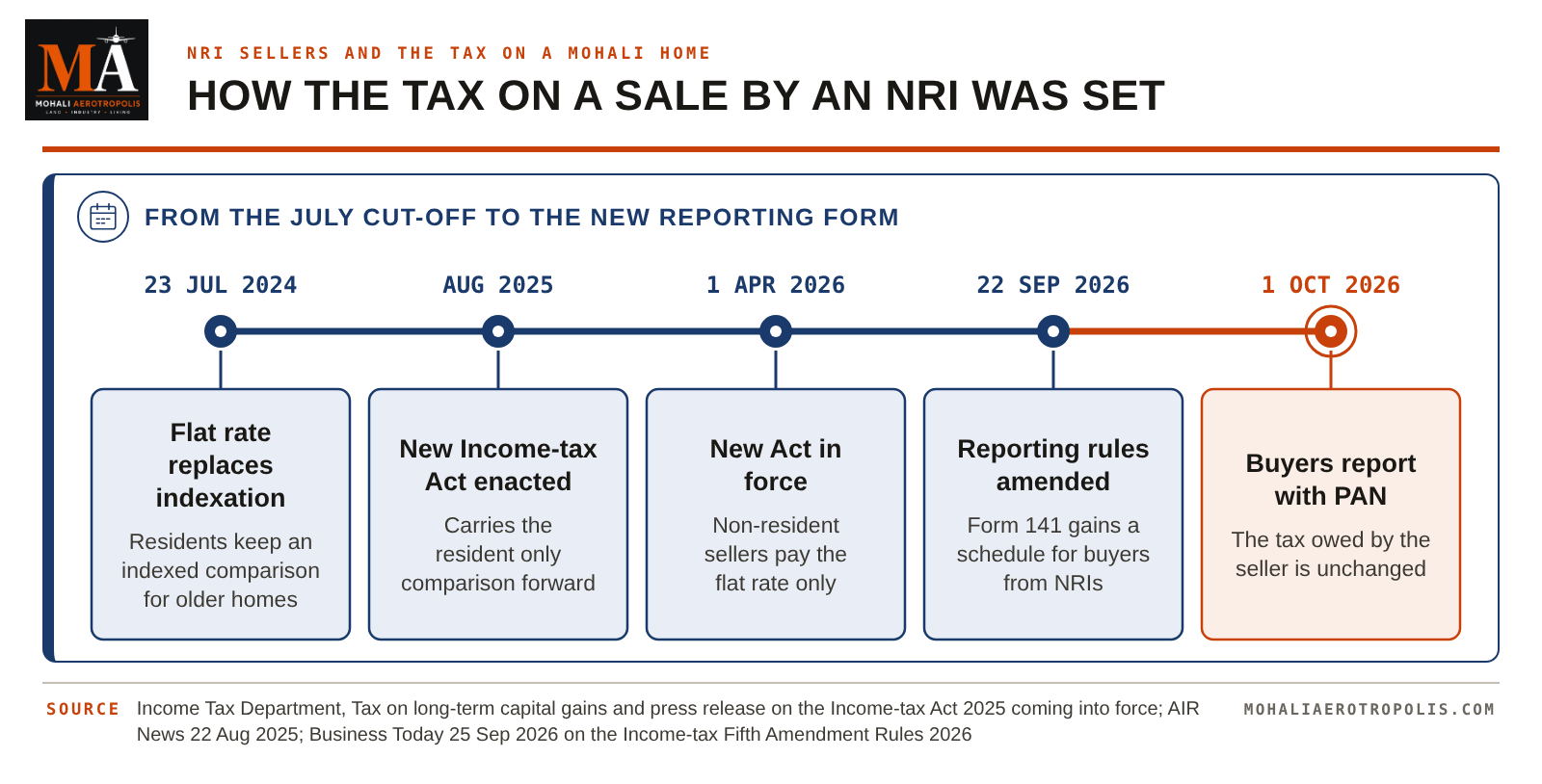
Before the change, the law worked out a long-term gain on land or a building by raising the original purchase cost with the official inflation index and then taxing the smaller gain at a higher rate. The Finance Act passed that summer removed the inflation adjustment for transfers from the July cut-off onward and brought in a lower flat rate on the plain gain.
The new Income-tax Act, which replaced the old law this April, keeps the same structure. Its section on long-term capital gains taxes a gain on land or a building at the flat rate, worked out on the actual purchase price with no index applied.
For a Mohali home held for many years, this means the whole rise in value is taxed. A flat bought for a modest sum early in the life of a sector and sold today carries a large plain gain, and the flat rate applies to all of it.
Residents kept a second calculation for older homes
When the change was made, Parliament softened it for one group. The income tax department explains on its page on long-term capital gains that resident individuals and resident Hindu undivided families may still apply indexation to land or a building acquired before the cut-off, and pay tax at the old rate if the new law would produce a higher bill.
The new Act carries this forward in a separate sub-section. It works by comparison. The tax at the flat rate on the plain gain is set against the tax at the old rate on the indexed gain, and any excess above the second figure is ignored. The seller pays whichever is lower.
The sub-section opens with the words that decide who can use it: an individual or a Hindu undivided family, being a resident. A seller who is a non-resident for that tax year falls outside those words. For that seller there is no comparison. The flat rate on the plain gain is the tax.
Residence in the year of sale decides it
The test looks at the seller's status for the tax year in which the sale takes place. It does not ask where the seller lived when the home was bought, or where the money came from.
This catches many Mohali owners in a way they do not expect. A couple who bought a plot in the Aerotropolis while living in Punjab, and then moved to Canada, may have owned the same plot for years as residents. If they sell after they have become non-residents, the older calculation is no longer open to them, even though the plot was bought well before the cut-off.
The reverse also happens. An owner who returns to India and is a resident under the Act's residence rules in the year of sale comes back inside the sub-section for that year. Residence under the Act turns on days spent in India and a few related tests, so the status for any one year is a fact to be established for that year alone.
Joint owners can end up in different positions. Where a brother in Mohali and a sister in California sell a family flat together, each pays tax on their own share of the gain. The brother may compare both calculations. The sister cannot.
When the difference matters
The gap between the two routes depends on how far the price has risen against the official inflation index.
Where a home's value has climbed far faster than inflation, the flat rate on the plain gain often works out lower anyway. The lost comparison then costs a non-resident seller little. Where the price has crept up slowly, or barely kept pace with inflation, the indexed route can produce a much smaller taxable gain, and that is where a non-resident seller loses most.
Many Mohali properties fall into the second group. Plots in schemes that took years to develop have often risen slowly. So have flats bought at launch in projects that were later delayed. Owners abroad holding these are the sellers most likely to find that a resident neighbour selling a similar home pays less tax on a similar gain.
The buyer's deduction follows the same rule
When a resident buys a Mohali home from a non-resident, the buyer deducts tax from the price and deposits it. That deduction is worked out for a non-resident seller, and the resident comparison plays no part in it.
The October change to Form 141 altered how the buyer reports the deduction. It did not change the tax the seller finally owes. A seller who thinks the amount deducted is higher than the tax due on the actual gain can apply to the tax department for a certificate allowing a lower deduction before the sale, or claim the excess back in an Indian return after it. Neither route brings back the resident comparison.
The country of residence looks at the same sale
India's tax treaties with the United States and Canada, like its treaty with the United Kingdom, leave India free to tax a gain on a home situated in India. Each of those countries then asks the people it taxes to report the same sale and gives relief for the Indian tax under its own rules.
That relief is measured against the Indian tax actually paid. A non-resident seller who paid the flat rate on the plain gain carries that figure into the foreign return. MA has covered the separate reporting rules for Mohali homes held from [Canada](/article/394-mohali-home-rented-out-counts-toward-canada-s-t1135-limit) and for rent taxed in [the United Kingdom](/article/401-mohali-rent-kept-in-india-is-still-taxed-in-the-uk). How each country treats the sale itself turns on its own law and the seller's own figures.
What stays the same for a non-resident seller
The rest of a sale works as it did before. The registered value of the deed and the collector rate still set a floor for the price used in the calculation. The rules on taking sale money abroad, including the rule that lets the sale money of no more than two homes go abroad by that route, sit in India's foreign exchange law and are untouched by the tax change.
What has changed is narrow. A seller abroad holding a Mohali home bought before the cut-off is taxed under one formula, and a resident holding the same home may use two. For an owner weighing when and from where to sell, that difference is now written into the new Act in plain words.
Related reading
- [Selling A Mohali Property From Abroad: The New TDS Filing Rule For Buyers](/article/348-selling-a-mohali-property-from-abroad-the-new-tds-filing-rule-for-buyers)
- [Remitting Sale Money From A Mohali Home Abroad: Why Only Two Residential Properties Qualify](/article/388-remitting-sale-money-from-a-mohali-home-abroad-why-only-two-residential-properties-qualify)
- [Mohali Home Bought Before Moving Abroad Can Still Be Kept](/article/391-mohali-home-bought-before-moving-abroad-can-still-be-kept)
- [Mohali's Collector Rates Go More Than A Year Without Revision](/article/381-mohali-s-collector-rates-go-more-than-a-year-without-revision-what-the-current-rates-still-decide)
Sources: The sources we use are listed on our Editorial Sources page.
This piece explains how the tax law treats a sale by a non-resident. It gives no tax or legal advice. The tax on any sale turns on the seller's residence for that year and on the facts of that sale.
ब्रैम्पटन में रहने वाले एक परिवार ने बरसों पहले मोहाली में एक फ़्लैट खरीदा था। तब एयरोसिटी बस रही थी, और एयरपोर्ट रोड के साथ के सेक्टर भी। अब वे उसे बेचना चाहते हैं। अक्टूबर की शुरुआत से, विदेश में रहने वाले विक्रेता से घर खरीदने वाला व्यक्ति काटा गया टैक्स PAN के साथ Form 141 पर दर्ज करता है, और इस बदलाव ने विदेश में बसे कई मालिकों को फिर उस सवाल पर ला खड़ा किया है जिसका जवाब कागज़ों में नहीं मिलता: भारत मुनाफ़े पर असल में कितना टैक्स लेता है?
जवाब इस पर टिका है कि बिक्री वाले वर्ष में विक्रेता कहाँ का निवासी है। जिस वर्ष नई फ़्लैट दर शुरू हुई, उस वर्ष की जुलाई की कट-ऑफ़ से पहले खरीदे गए घर का निवासी विक्रेता आज भी दो हिसाब मिलाकर कम वाला चुन सकता है। बिक्री वाले वर्ष में अनिवासी विक्रेता को सिर्फ़ एक हिसाब मिलता है।
अब हर विक्रेता पर एक ही फ़्लैट दर
बदलाव से पहले, कानून ज़मीन या इमारत पर लंबी अवधि का मुनाफ़ा इस तरह निकालता था: मूल खरीद लागत को सरकारी महँगाई सूचकांक से बढ़ाया जाता और फिर छोटे मुनाफ़े पर ऊँची दर से टैक्स लगता। उस गर्मी में पास हुए फ़ाइनेंस एक्ट ने जुलाई की कट-ऑफ़ के बाद होने वाली बिक्री के लिए महँगाई वाला समायोजन हटा दिया और सीधे मुनाफ़े पर एक कम फ़्लैट दर ला दी।
नया इनकम-टैक्स एक्ट, जिसने इस अप्रैल पुराने कानून की जगह ली, यही ढाँचा बनाए रखता है। लंबी अवधि के कैपिटल गेन वाली उसकी धारा ज़मीन या इमारत के मुनाफ़े पर फ़्लैट दर से टैक्स लगाती है, जो असल खरीद कीमत पर निकाला जाता है और उस पर कोई सूचकांक नहीं लगता।
कई बरसों से रखे मोहाली के घर के लिए इसका मतलब है कि कीमत की पूरी बढ़त पर टैक्स लगता है। किसी सेक्टर के शुरुआती दौर में कम रकम में खरीदा गया और आज बेचा गया फ़्लैट बड़ा सीधा मुनाफ़ा दिखाता है, और पूरे मुनाफ़े पर फ़्लैट दर लगती है।
पुराने घरों के लिए निवासियों के पास दूसरा हिसाब बचा
बदलाव करते समय संसद ने एक वर्ग के लिए इसे नरम किया। आयकर विभाग लंबी अवधि के कैपिटल गेन वाले अपने पेज पर बताता है कि निवासी व्यक्ति और निवासी हिंदू अविभाजित परिवार कट-ऑफ़ से पहले खरीदी गई ज़मीन या इमारत पर अब भी इंडेक्सेशन लगा सकते हैं, और अगर नया कानून ज़्यादा टैक्स बनाता है तो पुरानी दर से टैक्स चुका सकते हैं।
नया एक्ट इसे एक अलग उप-धारा में आगे ले जाता है। यह तुलना से काम करती है। सीधे मुनाफ़े पर फ़्लैट दर वाले टैक्स को इंडेक्स किए गए मुनाफ़े पर पुरानी दर वाले टैक्स से मिलाया जाता है, और दूसरे आँकड़े से ऊपर की कोई भी अधिकता नज़रअंदाज़ कर दी जाती है। विक्रेता उनमें से कम वाला चुकाता है।
उप-धारा उन शब्दों से शुरू होती है जो तय करते हैं कि इसका इस्तेमाल कौन कर सकता है: कोई व्यक्ति या हिंदू अविभाजित परिवार, जो निवासी हो। जो विक्रेता उस टैक्स वर्ष में अनिवासी है, वह इन शब्दों से बाहर रहता है। ऐसे विक्रेता के लिए कोई तुलना नहीं होती। सीधे मुनाफ़े पर फ़्लैट दर ही टैक्स है।
फ़ैसला बिक्री वाले वर्ष की रिहाइश से होता है
यह कसौटी उस टैक्स वर्ष में विक्रेता की स्थिति देखती है जिसमें बिक्री होती है। यह नहीं पूछती कि घर खरीदते समय विक्रेता कहाँ रहता था, या पैसा कहाँ से आया था।
इससे मोहाली के कई मालिक ऐसे फँसते हैं जिसकी उन्हें उम्मीद नहीं होती। जिस दंपती ने पंजाब में रहते हुए एयरोट्रोपोलिस में प्लॉट खरीदा और फिर कनाडा चला गया, वह बरसों तक निवासी के तौर पर वही प्लॉट रख सकता है। अगर वे अनिवासी बनने के बाद बेचते हैं, तो पुराना हिसाब उनके लिए खुला नहीं रहता, भले ही प्लॉट कट-ऑफ़ से काफ़ी पहले खरीदा गया हो।
उल्टा भी होता है। जो मालिक भारत लौट आता है और बिक्री वाले वर्ष में एक्ट के रिहाइश नियमों के तहत निवासी है, वह उस वर्ष के लिए फिर से उप-धारा के दायरे में आ जाता है। एक्ट के तहत रिहाइश भारत में बिताए दिनों और कुछ जुड़ी कसौटियों पर टिकी है, इसलिए किसी एक वर्ष की स्थिति उसी वर्ष के लिए अलग से तय होने वाला तथ्य है।
संयुक्त मालिक अलग-अलग स्थिति में पहुँच सकते हैं। जब मोहाली में रहने वाला भाई और कैलिफ़ोर्निया में रहने वाली बहन मिलकर परिवार का फ़्लैट बेचते हैं, तो हर कोई मुनाफ़े में अपने हिस्से पर टैक्स चुकाता है। भाई दोनों हिसाब मिला सकता है। बहन नहीं मिला सकती।
फ़र्क कब मायने रखता है
दोनों रास्तों के बीच का फ़ासला इस पर टिका है कि सरकारी महँगाई सूचकांक के मुकाबले कीमत कितनी बढ़ी है।
जहाँ घर की कीमत महँगाई से कहीं तेज़ी से बढ़ी है, वहाँ सीधे मुनाफ़े पर फ़्लैट दर अक्सर वैसे भी कम पड़ती है। तब छूटी हुई तुलना से अनिवासी विक्रेता का नुकसान थोड़ा होता है। जहाँ कीमत धीरे-धीरे बढ़ी है, या मुश्किल से महँगाई के बराबर रही है, वहाँ इंडेक्स वाला रास्ता काफ़ी छोटा टैक्स योग्य मुनाफ़ा दे सकता है, और वहीं अनिवासी विक्रेता का सबसे ज़्यादा नुकसान होता है।
मोहाली की कई संपत्तियाँ दूसरे वर्ग में आती हैं। जिन योजनाओं को विकसित होने में बरसों लगे, उनके प्लॉट अक्सर धीरे बढ़े हैं। बाद में लटके प्रोजेक्टों में लॉन्च पर खरीदे गए फ़्लैट भी। ऐसी संपत्ति रखने वाले विदेश में बसे मालिक ही सबसे ज़्यादा यह पा सकते हैं कि मिलता-जुलता घर बेचने वाला निवासी पड़ोसी मिलते-जुलते मुनाफ़े पर कम टैक्स चुकाता है।
खरीदार की कटौती भी इसी नियम पर चलती है
जब कोई निवासी किसी अनिवासी से मोहाली का घर खरीदता है, तो खरीदार कीमत में से टैक्स काटकर जमा करता है। यह कटौती अनिवासी विक्रेता के हिसाब से निकाली जाती है, और निवासी वाली तुलना का इसमें कोई हिस्सा नहीं होता।
अक्टूबर में Form 141 के बदलाव ने यह बदला कि खरीदार कटौती कैसे दर्ज करता है। इसने वह टैक्स नहीं बदला जो विक्रेता को आखिर में चुकाना है। जिस विक्रेता को लगता है कि काटी गई रकम असल मुनाफ़े पर बनने वाले टैक्स से ज़्यादा है, वह बिक्री से पहले कम कटौती की इजाज़त वाले प्रमाणपत्र के लिए आयकर विभाग में आवेदन कर सकता है, या बाद में भारतीय रिटर्न में अतिरिक्त रकम वापस माँग सकता है। इनमें से कोई भी रास्ता निवासी वाली तुलना वापस नहीं लाता।
रिहाइश वाला देश भी उसी बिक्री को देखता है
अमेरिका और कनाडा के साथ भारत की टैक्स संधियाँ, ब्रिटेन के साथ उसकी संधि की तरह, भारत में स्थित घर के मुनाफ़े पर टैक्स लगाने की छूट भारत को देती हैं। फिर इनमें से हर देश जिन लोगों पर टैक्स लगाता है उनसे वही बिक्री दर्ज करवाता है और अपने नियमों के तहत भारतीय टैक्स की राहत देता है।
यह राहत असल में चुकाए गए भारतीय टैक्स के हिसाब से तय होती है। सीधे मुनाफ़े पर फ़्लैट दर चुकाने वाला अनिवासी विक्रेता वही आँकड़ा विदेशी रिटर्न में ले जाता है। MA ने [कनाडा](/article/394-mohali-home-rented-out-counts-toward-canada-s-t1135-limit) से रखे मोहाली के घरों और [ब्रिटेन](/article/401-mohali-rent-kept-in-india-is-still-taxed-in-the-uk) में टैक्स होने वाले किराए पर अलग से रिपोर्टिंग नियम बताए हैं। हर देश बिक्री को कैसे देखता है, यह उसके अपने कानून और विक्रेता के अपने आँकड़ों पर टिका है।
अनिवासी विक्रेता के लिए क्या वैसा ही रहता है
बिक्री का बाकी हिस्सा पहले की तरह चलता है। डीड का रजिस्टर्ड मूल्य और कलेक्टर रेट अब भी हिसाब में लगने वाली कीमत की निचली सीमा तय करते हैं। बिक्री का पैसा विदेश ले जाने के नियम, जिनमें वह नियम भी है जो उस रास्ते से दो से ज़्यादा घरों का पैसा बाहर नहीं जाने देता, भारत के विदेशी मुद्रा कानून में हैं और टैक्स के बदलाव से अछूते हैं।
जो बदला है वह सीमित है। कट-ऑफ़ से पहले खरीदा मोहाली का घर रखने वाले विदेश में बसे विक्रेता पर एक फ़ॉर्मूले से टैक्स लगता है, और वही घर रखने वाला निवासी दो का इस्तेमाल कर सकता है। कब और कहाँ से बेचना है, यह तौल रहे मालिक के लिए यह फ़र्क अब नए एक्ट में साफ़ शब्दों में लिखा है।
संबंधित लेख
- [विदेश से मोहाली की संपत्ति बेचना: खरीदारों के लिए नया TDS दाखिल करने का नियम](/article/348-selling-a-mohali-property-from-abroad-the-new-tds-filing-rule-for-buyers)
- [विदेश से मोहाली के घर की बिक्री का पैसा भेजना: सिर्फ़ दो रिहायशी संपत्तियाँ ही क्यों योग्य हैं](/article/388-remitting-sale-money-from-a-mohali-home-abroad-why-only-two-residential-properties-qualify)
- [विदेश जाने से पहले खरीदा मोहाली का घर रखा जा सकता है](/article/391-mohali-home-bought-before-moving-abroad-can-still-be-kept)
- [मोहाली के कलेक्टर रेट एक साल से ज़्यादा समय से नहीं बदले](/article/381-mohali-s-collector-rates-go-more-than-a-year-without-revision-what-the-current-rates-still-decide)
स्रोत: हम जिन स्रोतों का इस्तेमाल करते हैं, वे हमारे Editorial Sources पेज पर सूचीबद्ध हैं।
यह लेख बताता है कि टैक्स कानून किसी अनिवासी की बिक्री को कैसे देखता है। यह टैक्स या कानूनी सलाह नहीं देता। किसी भी बिक्री का टैक्स उस वर्ष विक्रेता की रिहाइश और उस बिक्री के तथ्यों पर टिका है।
ਬਰੈਂਪਟਨ ਵਿੱਚ ਰਹਿੰਦੇ ਇੱਕ ਪਰਿਵਾਰ ਨੇ ਸਾਲਾਂ ਪਹਿਲਾਂ ਮੋਹਾਲੀ ਵਿੱਚ ਇੱਕ ਫਲੈਟ ਖਰੀਦਿਆ ਸੀ। ਉਦੋਂ ਏਅਰੋਸਿਟੀ ਅਜੇ ਵੱਸ ਰਹੀ ਸੀ, ਅਤੇ ਏਅਰਪੋਰਟ ਰੋਡ ਦੇ ਨਾਲ ਦੇ ਸੈਕਟਰ ਵੀ। ਹੁਣ ਉਹ ਇਸ ਨੂੰ ਵੇਚਣਾ ਚਾਹੁੰਦੇ ਹਨ। ਅਕਤੂਬਰ ਦੀ ਸ਼ੁਰੂਆਤ ਤੋਂ, ਵਿਦੇਸ਼ ਵਿੱਚ ਰਹਿੰਦੇ ਵੇਚਣ ਵਾਲੇ ਤੋਂ ਘਰ ਖਰੀਦਣ ਵਾਲਾ ਵਿਅਕਤੀ ਕੱਟਿਆ ਟੈਕਸ PAN ਨਾਲ Form 141 ਉੱਤੇ ਦਰਜ ਕਰਦਾ ਹੈ, ਅਤੇ ਇਸ ਬਦਲਾਅ ਨੇ ਵਿਦੇਸ਼ ਵੱਸੇ ਕਈ ਮਾਲਕਾਂ ਨੂੰ ਮੁੜ ਉਸ ਸਵਾਲ ਉੱਤੇ ਲਿਆ ਖੜ੍ਹਾ ਕੀਤਾ ਹੈ ਜਿਸ ਦਾ ਜਵਾਬ ਕਾਗਜ਼ਾਂ ਵਿੱਚ ਨਹੀਂ ਮਿਲਦਾ: ਭਾਰਤ ਮੁਨਾਫ਼ੇ ਉੱਤੇ ਅਸਲ ਵਿੱਚ ਕਿੰਨਾ ਟੈਕਸ ਲੈਂਦਾ ਹੈ?
ਜਵਾਬ ਇਸ ਗੱਲ ਉੱਤੇ ਟਿਕਿਆ ਹੈ ਕਿ ਵਿਕਰੀ ਵਾਲੇ ਸਾਲ ਵਿੱਚ ਵੇਚਣ ਵਾਲਾ ਕਿੱਥੋਂ ਦਾ ਵਸਨੀਕ ਹੈ। ਜਿਸ ਸਾਲ ਨਵੀਂ ਫਲੈਟ ਦਰ ਸ਼ੁਰੂ ਹੋਈ, ਉਸ ਸਾਲ ਦੀ ਜੁਲਾਈ ਦੀ ਕੱਟ-ਆਫ਼ ਤੋਂ ਪਹਿਲਾਂ ਖਰੀਦੇ ਘਰ ਦਾ ਵਸਨੀਕ ਵੇਚਣ ਵਾਲਾ ਅੱਜ ਵੀ ਦੋ ਹਿਸਾਬ ਮਿਲਾ ਕੇ ਘੱਟ ਵਾਲਾ ਚੁਣ ਸਕਦਾ ਹੈ। ਵਿਕਰੀ ਵਾਲੇ ਸਾਲ ਵਿੱਚ ਗ਼ੈਰ-ਵਸਨੀਕ ਵੇਚਣ ਵਾਲੇ ਨੂੰ ਸਿਰਫ਼ ਇੱਕ ਹਿਸਾਬ ਮਿਲਦਾ ਹੈ।
ਹੁਣ ਹਰ ਵੇਚਣ ਵਾਲੇ ਉੱਤੇ ਇੱਕੋ ਫਲੈਟ ਦਰ
ਬਦਲਾਅ ਤੋਂ ਪਹਿਲਾਂ, ਕਾਨੂੰਨ ਜ਼ਮੀਨ ਜਾਂ ਇਮਾਰਤ ਉੱਤੇ ਲੰਮੇ ਸਮੇਂ ਦਾ ਮੁਨਾਫ਼ਾ ਇਸ ਤਰ੍ਹਾਂ ਕੱਢਦਾ ਸੀ: ਮੂਲ ਖਰੀਦ ਲਾਗਤ ਨੂੰ ਸਰਕਾਰੀ ਮਹਿੰਗਾਈ ਸੂਚਕਾਂਕ ਨਾਲ ਵਧਾਇਆ ਜਾਂਦਾ ਅਤੇ ਫਿਰ ਛੋਟੇ ਮੁਨਾਫ਼ੇ ਉੱਤੇ ਉੱਚੀ ਦਰ ਨਾਲ ਟੈਕਸ ਲੱਗਦਾ। ਉਸ ਗਰਮੀ ਵਿੱਚ ਪਾਸ ਹੋਏ ਫਾਇਨਾਂਸ ਐਕਟ ਨੇ ਜੁਲਾਈ ਦੀ ਕੱਟ-ਆਫ਼ ਤੋਂ ਬਾਅਦ ਹੋਣ ਵਾਲੀ ਵਿਕਰੀ ਲਈ ਮਹਿੰਗਾਈ ਵਾਲਾ ਸਮਾਯੋਜਨ ਹਟਾ ਦਿੱਤਾ ਅਤੇ ਸਿੱਧੇ ਮੁਨਾਫ਼ੇ ਉੱਤੇ ਇੱਕ ਘੱਟ ਫਲੈਟ ਦਰ ਲਿਆਂਦੀ।
ਨਵਾਂ ਇਨਕਮ-ਟੈਕਸ ਐਕਟ, ਜਿਸ ਨੇ ਇਸ ਅਪ੍ਰੈਲ ਪੁਰਾਣੇ ਕਾਨੂੰਨ ਦੀ ਥਾਂ ਲਈ, ਇਹੀ ਢਾਂਚਾ ਕਾਇਮ ਰੱਖਦਾ ਹੈ। ਲੰਮੇ ਸਮੇਂ ਦੇ ਕੈਪੀਟਲ ਗੇਨ ਵਾਲੀ ਇਸ ਦੀ ਧਾਰਾ ਜ਼ਮੀਨ ਜਾਂ ਇਮਾਰਤ ਦੇ ਮੁਨਾਫ਼ੇ ਉੱਤੇ ਫਲੈਟ ਦਰ ਨਾਲ ਟੈਕਸ ਲਾਉਂਦੀ ਹੈ, ਜੋ ਅਸਲ ਖਰੀਦ ਕੀਮਤ ਉੱਤੇ ਕੱਢਿਆ ਜਾਂਦਾ ਹੈ ਅਤੇ ਇਸ ਉੱਤੇ ਕੋਈ ਸੂਚਕਾਂਕ ਨਹੀਂ ਲੱਗਦਾ।
ਕਈ ਸਾਲਾਂ ਤੋਂ ਰੱਖੇ ਮੋਹਾਲੀ ਦੇ ਘਰ ਲਈ ਇਸ ਦਾ ਮਤਲਬ ਹੈ ਕਿ ਕੀਮਤ ਦੇ ਪੂਰੇ ਵਾਧੇ ਉੱਤੇ ਟੈਕਸ ਲੱਗਦਾ ਹੈ। ਕਿਸੇ ਸੈਕਟਰ ਦੇ ਮੁੱਢਲੇ ਦੌਰ ਵਿੱਚ ਥੋੜ੍ਹੀ ਰਕਮ ਵਿੱਚ ਖਰੀਦਿਆ ਅਤੇ ਅੱਜ ਵੇਚਿਆ ਫਲੈਟ ਵੱਡਾ ਸਿੱਧਾ ਮੁਨਾਫ਼ਾ ਦਿਖਾਉਂਦਾ ਹੈ, ਅਤੇ ਪੂਰੇ ਮੁਨਾਫ਼ੇ ਉੱਤੇ ਫਲੈਟ ਦਰ ਲੱਗਦੀ ਹੈ।
ਪੁਰਾਣੇ ਘਰਾਂ ਲਈ ਵਸਨੀਕਾਂ ਕੋਲ ਦੂਜਾ ਹਿਸਾਬ ਬਚਿਆ
ਬਦਲਾਅ ਕਰਦਿਆਂ ਸੰਸਦ ਨੇ ਇੱਕ ਵਰਗ ਲਈ ਇਸ ਨੂੰ ਨਰਮ ਕੀਤਾ। ਆਮਦਨ ਕਰ ਵਿਭਾਗ ਲੰਮੇ ਸਮੇਂ ਦੇ ਕੈਪੀਟਲ ਗੇਨ ਵਾਲੇ ਆਪਣੇ ਪੰਨੇ ਉੱਤੇ ਦੱਸਦਾ ਹੈ ਕਿ ਵਸਨੀਕ ਵਿਅਕਤੀ ਅਤੇ ਵਸਨੀਕ ਹਿੰਦੂ ਅਣਵੰਡੇ ਪਰਿਵਾਰ ਕੱਟ-ਆਫ਼ ਤੋਂ ਪਹਿਲਾਂ ਖਰੀਦੀ ਜ਼ਮੀਨ ਜਾਂ ਇਮਾਰਤ ਉੱਤੇ ਹਾਲੇ ਵੀ ਇੰਡੈਕਸੇਸ਼ਨ ਲਾ ਸਕਦੇ ਹਨ, ਅਤੇ ਜੇ ਨਵਾਂ ਕਾਨੂੰਨ ਵੱਧ ਟੈਕਸ ਬਣਾਉਂਦਾ ਹੈ ਤਾਂ ਪੁਰਾਣੀ ਦਰ ਨਾਲ ਟੈਕਸ ਭਰ ਸਕਦੇ ਹਨ।
ਨਵਾਂ ਐਕਟ ਇਸ ਨੂੰ ਇੱਕ ਵੱਖਰੀ ਉਪ-ਧਾਰਾ ਵਿੱਚ ਅੱਗੇ ਲੈ ਜਾਂਦਾ ਹੈ। ਇਹ ਤੁਲਨਾ ਨਾਲ ਕੰਮ ਕਰਦੀ ਹੈ। ਸਿੱਧੇ ਮੁਨਾਫ਼ੇ ਉੱਤੇ ਫਲੈਟ ਦਰ ਵਾਲੇ ਟੈਕਸ ਨੂੰ ਇੰਡੈਕਸ ਕੀਤੇ ਮੁਨਾਫ਼ੇ ਉੱਤੇ ਪੁਰਾਣੀ ਦਰ ਵਾਲੇ ਟੈਕਸ ਨਾਲ ਮਿਲਾਇਆ ਜਾਂਦਾ ਹੈ, ਅਤੇ ਦੂਜੇ ਅੰਕੜੇ ਤੋਂ ਉੱਤੇ ਦਾ ਕੋਈ ਵੀ ਵਾਧਾ ਅਣਡਿੱਠਾ ਕਰ ਦਿੱਤਾ ਜਾਂਦਾ ਹੈ। ਵੇਚਣ ਵਾਲਾ ਇਨ੍ਹਾਂ ਵਿੱਚੋਂ ਘੱਟ ਵਾਲਾ ਭਰਦਾ ਹੈ।
ਉਪ-ਧਾਰਾ ਉਨ੍ਹਾਂ ਸ਼ਬਦਾਂ ਨਾਲ ਸ਼ੁਰੂ ਹੁੰਦੀ ਹੈ ਜੋ ਤੈਅ ਕਰਦੇ ਹਨ ਕਿ ਇਸ ਦੀ ਵਰਤੋਂ ਕੌਣ ਕਰ ਸਕਦਾ ਹੈ: ਕੋਈ ਵਿਅਕਤੀ ਜਾਂ ਹਿੰਦੂ ਅਣਵੰਡਿਆ ਪਰਿਵਾਰ, ਜੋ ਵਸਨੀਕ ਹੋਵੇ। ਜੋ ਵੇਚਣ ਵਾਲਾ ਉਸ ਟੈਕਸ ਸਾਲ ਵਿੱਚ ਗ਼ੈਰ-ਵਸਨੀਕ ਹੈ, ਉਹ ਇਨ੍ਹਾਂ ਸ਼ਬਦਾਂ ਤੋਂ ਬਾਹਰ ਰਹਿੰਦਾ ਹੈ। ਅਜਿਹੇ ਵੇਚਣ ਵਾਲੇ ਲਈ ਕੋਈ ਤੁਲਨਾ ਨਹੀਂ ਹੁੰਦੀ। ਸਿੱਧੇ ਮੁਨਾਫ਼ੇ ਉੱਤੇ ਫਲੈਟ ਦਰ ਹੀ ਟੈਕਸ ਹੈ।
ਫ਼ੈਸਲਾ ਵਿਕਰੀ ਵਾਲੇ ਸਾਲ ਦੀ ਰਿਹਾਇਸ਼ ਨਾਲ ਹੁੰਦਾ ਹੈ
ਇਹ ਕਸੌਟੀ ਉਸ ਟੈਕਸ ਸਾਲ ਵਿੱਚ ਵੇਚਣ ਵਾਲੇ ਦੀ ਸਥਿਤੀ ਦੇਖਦੀ ਹੈ ਜਿਸ ਵਿੱਚ ਵਿਕਰੀ ਹੁੰਦੀ ਹੈ। ਇਹ ਨਹੀਂ ਪੁੱਛਦੀ ਕਿ ਘਰ ਖਰੀਦਣ ਵੇਲੇ ਵੇਚਣ ਵਾਲਾ ਕਿੱਥੇ ਰਹਿੰਦਾ ਸੀ, ਜਾਂ ਪੈਸਾ ਕਿੱਥੋਂ ਆਇਆ ਸੀ।
ਇਸ ਨਾਲ ਮੋਹਾਲੀ ਦੇ ਕਈ ਮਾਲਕ ਇਸ ਤਰ੍ਹਾਂ ਫਸਦੇ ਹਨ ਜਿਸ ਦੀ ਉਨ੍ਹਾਂ ਨੂੰ ਉਮੀਦ ਨਹੀਂ ਹੁੰਦੀ। ਜਿਸ ਜੋੜੇ ਨੇ ਪੰਜਾਬ ਵਿੱਚ ਰਹਿੰਦਿਆਂ ਏਅਰੋਟ੍ਰੋਪੋਲਿਸ ਵਿੱਚ ਪਲਾਟ ਖਰੀਦਿਆ ਅਤੇ ਫਿਰ ਕੈਨੇਡਾ ਚਲਾ ਗਿਆ, ਉਹ ਸਾਲਾਂ ਤੱਕ ਵਸਨੀਕ ਵਜੋਂ ਉਹੀ ਪਲਾਟ ਰੱਖ ਸਕਦਾ ਹੈ। ਜੇ ਉਹ ਗ਼ੈਰ-ਵਸਨੀਕ ਬਣਨ ਤੋਂ ਬਾਅਦ ਵੇਚਦੇ ਹਨ, ਤਾਂ ਪੁਰਾਣਾ ਹਿਸਾਬ ਉਨ੍ਹਾਂ ਲਈ ਖੁੱਲ੍ਹਾ ਨਹੀਂ ਰਹਿੰਦਾ, ਭਾਵੇਂ ਪਲਾਟ ਕੱਟ-ਆਫ਼ ਤੋਂ ਕਾਫ਼ੀ ਪਹਿਲਾਂ ਖਰੀਦਿਆ ਗਿਆ ਹੋਵੇ।
ਉਲਟ ਵੀ ਹੁੰਦਾ ਹੈ। ਜੋ ਮਾਲਕ ਭਾਰਤ ਮੁੜ ਆਉਂਦਾ ਹੈ ਅਤੇ ਵਿਕਰੀ ਵਾਲੇ ਸਾਲ ਵਿੱਚ ਐਕਟ ਦੇ ਰਿਹਾਇਸ਼ ਨਿਯਮਾਂ ਹੇਠ ਵਸਨੀਕ ਹੈ, ਉਹ ਉਸ ਸਾਲ ਲਈ ਮੁੜ ਉਪ-ਧਾਰਾ ਦੇ ਘੇਰੇ ਵਿੱਚ ਆ ਜਾਂਦਾ ਹੈ। ਐਕਟ ਹੇਠ ਰਿਹਾਇਸ਼ ਭਾਰਤ ਵਿੱਚ ਬਿਤਾਏ ਦਿਨਾਂ ਅਤੇ ਕੁਝ ਜੁੜੀਆਂ ਕਸੌਟੀਆਂ ਉੱਤੇ ਟਿਕੀ ਹੈ, ਇਸ ਲਈ ਕਿਸੇ ਇੱਕ ਸਾਲ ਦੀ ਸਥਿਤੀ ਉਸੇ ਸਾਲ ਲਈ ਵੱਖਰੇ ਤੌਰ ਉੱਤੇ ਤੈਅ ਹੋਣ ਵਾਲਾ ਤੱਥ ਹੈ।
ਸਾਂਝੇ ਮਾਲਕ ਵੱਖ-ਵੱਖ ਸਥਿਤੀ ਵਿੱਚ ਪਹੁੰਚ ਸਕਦੇ ਹਨ। ਜਦੋਂ ਮੋਹਾਲੀ ਵਿੱਚ ਰਹਿੰਦਾ ਭਰਾ ਅਤੇ ਕੈਲੀਫੋਰਨੀਆ ਵਿੱਚ ਰਹਿੰਦੀ ਭੈਣ ਮਿਲ ਕੇ ਪਰਿਵਾਰ ਦਾ ਫਲੈਟ ਵੇਚਦੇ ਹਨ, ਤਾਂ ਹਰ ਕੋਈ ਮੁਨਾਫ਼ੇ ਵਿੱਚ ਆਪਣੇ ਹਿੱਸੇ ਉੱਤੇ ਟੈਕਸ ਭਰਦਾ ਹੈ। ਭਰਾ ਦੋਵੇਂ ਹਿਸਾਬ ਮਿਲਾ ਸਕਦਾ ਹੈ। ਭੈਣ ਨਹੀਂ ਮਿਲਾ ਸਕਦੀ।
ਫ਼ਰਕ ਕਦੋਂ ਮਾਇਨੇ ਰੱਖਦਾ ਹੈ
ਦੋਵਾਂ ਰਾਹਾਂ ਵਿਚਲਾ ਪਾੜਾ ਇਸ ਉੱਤੇ ਟਿਕਿਆ ਹੈ ਕਿ ਸਰਕਾਰੀ ਮਹਿੰਗਾਈ ਸੂਚਕਾਂਕ ਦੇ ਮੁਕਾਬਲੇ ਕੀਮਤ ਕਿੰਨੀ ਵਧੀ ਹੈ।
ਜਿੱਥੇ ਘਰ ਦੀ ਕੀਮਤ ਮਹਿੰਗਾਈ ਨਾਲੋਂ ਕਿਤੇ ਤੇਜ਼ੀ ਨਾਲ ਵਧੀ ਹੈ, ਉੱਥੇ ਸਿੱਧੇ ਮੁਨਾਫ਼ੇ ਉੱਤੇ ਫਲੈਟ ਦਰ ਅਕਸਰ ਉਂਝ ਵੀ ਘੱਟ ਪੈਂਦੀ ਹੈ। ਤਦ ਛੁੱਟੀ ਹੋਈ ਤੁਲਨਾ ਨਾਲ ਗ਼ੈਰ-ਵਸਨੀਕ ਵੇਚਣ ਵਾਲੇ ਦਾ ਨੁਕਸਾਨ ਥੋੜ੍ਹਾ ਹੁੰਦਾ ਹੈ। ਜਿੱਥੇ ਕੀਮਤ ਹੌਲੀ-ਹੌਲੀ ਵਧੀ ਹੈ, ਜਾਂ ਮਸਾਂ ਮਹਿੰਗਾਈ ਦੇ ਬਰਾਬਰ ਰਹੀ ਹੈ, ਉੱਥੇ ਇੰਡੈਕਸ ਵਾਲਾ ਰਾਹ ਕਾਫ਼ੀ ਛੋਟਾ ਟੈਕਸਯੋਗ ਮੁਨਾਫ਼ਾ ਦੇ ਸਕਦਾ ਹੈ, ਅਤੇ ਉੱਥੇ ਹੀ ਗ਼ੈਰ-ਵਸਨੀਕ ਵੇਚਣ ਵਾਲੇ ਦਾ ਸਭ ਤੋਂ ਵੱਧ ਨੁਕਸਾਨ ਹੁੰਦਾ ਹੈ।
ਮੋਹਾਲੀ ਦੀਆਂ ਕਈ ਜਾਇਦਾਦਾਂ ਦੂਜੇ ਵਰਗ ਵਿੱਚ ਆਉਂਦੀਆਂ ਹਨ। ਜਿਨ੍ਹਾਂ ਸਕੀਮਾਂ ਨੂੰ ਵਿਕਸਿਤ ਹੋਣ ਵਿੱਚ ਸਾਲ ਲੱਗੇ, ਉਨ੍ਹਾਂ ਦੇ ਪਲਾਟ ਅਕਸਰ ਹੌਲੀ ਵਧੇ ਹਨ। ਬਾਅਦ ਵਿੱਚ ਲਟਕੇ ਪ੍ਰੋਜੈਕਟਾਂ ਵਿੱਚ ਲਾਂਚ ਵੇਲੇ ਖਰੀਦੇ ਫਲੈਟ ਵੀ। ਅਜਿਹੀ ਜਾਇਦਾਦ ਰੱਖਣ ਵਾਲੇ ਵਿਦੇਸ਼ ਵੱਸੇ ਮਾਲਕ ਹੀ ਸਭ ਤੋਂ ਵੱਧ ਇਹ ਦੇਖ ਸਕਦੇ ਹਨ ਕਿ ਮਿਲਦਾ-ਜੁਲਦਾ ਘਰ ਵੇਚਣ ਵਾਲਾ ਵਸਨੀਕ ਗੁਆਂਢੀ ਮਿਲਦੇ-ਜੁਲਦੇ ਮੁਨਾਫ਼ੇ ਉੱਤੇ ਘੱਟ ਟੈਕਸ ਭਰਦਾ ਹੈ।
ਖਰੀਦਦਾਰ ਦੀ ਕਟੌਤੀ ਵੀ ਇਸੇ ਨਿਯਮ ਉੱਤੇ ਚੱਲਦੀ ਹੈ
ਜਦੋਂ ਕੋਈ ਵਸਨੀਕ ਕਿਸੇ ਗ਼ੈਰ-ਵਸਨੀਕ ਤੋਂ ਮੋਹਾਲੀ ਦਾ ਘਰ ਖਰੀਦਦਾ ਹੈ, ਤਾਂ ਖਰੀਦਦਾਰ ਕੀਮਤ ਵਿੱਚੋਂ ਟੈਕਸ ਕੱਟ ਕੇ ਜਮ੍ਹਾਂ ਕਰਵਾਉਂਦਾ ਹੈ। ਇਹ ਕਟੌਤੀ ਗ਼ੈਰ-ਵਸਨੀਕ ਵੇਚਣ ਵਾਲੇ ਦੇ ਹਿਸਾਬ ਨਾਲ ਕੱਢੀ ਜਾਂਦੀ ਹੈ, ਅਤੇ ਵਸਨੀਕ ਵਾਲੀ ਤੁਲਨਾ ਦਾ ਇਸ ਵਿੱਚ ਕੋਈ ਹਿੱਸਾ ਨਹੀਂ ਹੁੰਦਾ।
ਅਕਤੂਬਰ ਵਿੱਚ Form 141 ਦੇ ਬਦਲਾਅ ਨੇ ਇਹ ਬਦਲਿਆ ਕਿ ਖਰੀਦਦਾਰ ਕਟੌਤੀ ਕਿਵੇਂ ਦਰਜ ਕਰਦਾ ਹੈ। ਇਸ ਨੇ ਉਹ ਟੈਕਸ ਨਹੀਂ ਬਦਲਿਆ ਜੋ ਵੇਚਣ ਵਾਲੇ ਨੇ ਆਖ਼ਰ ਵਿੱਚ ਭਰਨਾ ਹੈ। ਜਿਸ ਵੇਚਣ ਵਾਲੇ ਨੂੰ ਲੱਗਦਾ ਹੈ ਕਿ ਕੱਟੀ ਰਕਮ ਅਸਲ ਮੁਨਾਫ਼ੇ ਉੱਤੇ ਬਣਦੇ ਟੈਕਸ ਨਾਲੋਂ ਵੱਧ ਹੈ, ਉਹ ਵਿਕਰੀ ਤੋਂ ਪਹਿਲਾਂ ਘੱਟ ਕਟੌਤੀ ਦੀ ਇਜਾਜ਼ਤ ਵਾਲੇ ਸਰਟੀਫਿਕੇਟ ਲਈ ਆਮਦਨ ਕਰ ਵਿਭਾਗ ਕੋਲ ਅਰਜ਼ੀ ਦੇ ਸਕਦਾ ਹੈ, ਜਾਂ ਬਾਅਦ ਵਿੱਚ ਭਾਰਤੀ ਰਿਟਰਨ ਵਿੱਚ ਵਾਧੂ ਰਕਮ ਵਾਪਸ ਮੰਗ ਸਕਦਾ ਹੈ। ਇਨ੍ਹਾਂ ਵਿੱਚੋਂ ਕੋਈ ਵੀ ਰਾਹ ਵਸਨੀਕ ਵਾਲੀ ਤੁਲਨਾ ਵਾਪਸ ਨਹੀਂ ਲਿਆਉਂਦਾ।
ਰਿਹਾਇਸ਼ ਵਾਲਾ ਦੇਸ਼ ਵੀ ਉਸੇ ਵਿਕਰੀ ਨੂੰ ਦੇਖਦਾ ਹੈ
ਅਮਰੀਕਾ ਅਤੇ ਕੈਨੇਡਾ ਨਾਲ ਭਾਰਤ ਦੀਆਂ ਟੈਕਸ ਸੰਧੀਆਂ, ਬਰਤਾਨੀਆ ਨਾਲ ਇਸ ਦੀ ਸੰਧੀ ਵਾਂਗ, ਭਾਰਤ ਵਿੱਚ ਸਥਿਤ ਘਰ ਦੇ ਮੁਨਾਫ਼ੇ ਉੱਤੇ ਟੈਕਸ ਲਾਉਣ ਦੀ ਖੁੱਲ੍ਹ ਭਾਰਤ ਨੂੰ ਦਿੰਦੀਆਂ ਹਨ। ਫਿਰ ਇਨ੍ਹਾਂ ਵਿੱਚੋਂ ਹਰ ਦੇਸ਼ ਜਿਨ੍ਹਾਂ ਲੋਕਾਂ ਉੱਤੇ ਟੈਕਸ ਲਾਉਂਦਾ ਹੈ ਉਨ੍ਹਾਂ ਤੋਂ ਉਹੀ ਵਿਕਰੀ ਦਰਜ ਕਰਵਾਉਂਦਾ ਹੈ ਅਤੇ ਆਪਣੇ ਨਿਯਮਾਂ ਹੇਠ ਭਾਰਤੀ ਟੈਕਸ ਦੀ ਰਾਹਤ ਦਿੰਦਾ ਹੈ।
ਇਹ ਰਾਹਤ ਅਸਲ ਵਿੱਚ ਭਰੇ ਭਾਰਤੀ ਟੈਕਸ ਦੇ ਹਿਸਾਬ ਨਾਲ ਤੈਅ ਹੁੰਦੀ ਹੈ। ਸਿੱਧੇ ਮੁਨਾਫ਼ੇ ਉੱਤੇ ਫਲੈਟ ਦਰ ਭਰਨ ਵਾਲਾ ਗ਼ੈਰ-ਵਸਨੀਕ ਵੇਚਣ ਵਾਲਾ ਉਹੀ ਅੰਕੜਾ ਵਿਦੇਸ਼ੀ ਰਿਟਰਨ ਵਿੱਚ ਲੈ ਜਾਂਦਾ ਹੈ। MA ਨੇ [ਕੈਨੇਡਾ](/article/394-mohali-home-rented-out-counts-toward-canada-s-t1135-limit) ਤੋਂ ਰੱਖੇ ਮੋਹਾਲੀ ਦੇ ਘਰਾਂ ਅਤੇ [ਬਰਤਾਨੀਆ](/article/401-mohali-rent-kept-in-india-is-still-taxed-in-the-uk) ਵਿੱਚ ਟੈਕਸ ਹੋਣ ਵਾਲੇ ਕਿਰਾਏ ਬਾਰੇ ਵੱਖਰੇ ਰਿਪੋਰਟਿੰਗ ਨਿਯਮ ਦੱਸੇ ਹਨ। ਹਰ ਦੇਸ਼ ਵਿਕਰੀ ਨੂੰ ਕਿਵੇਂ ਦੇਖਦਾ ਹੈ, ਇਹ ਉਸ ਦੇ ਆਪਣੇ ਕਾਨੂੰਨ ਅਤੇ ਵੇਚਣ ਵਾਲੇ ਦੇ ਆਪਣੇ ਅੰਕੜਿਆਂ ਉੱਤੇ ਟਿਕਿਆ ਹੈ।
ਗ਼ੈਰ-ਵਸਨੀਕ ਵੇਚਣ ਵਾਲੇ ਲਈ ਕੀ ਉਹੀ ਰਹਿੰਦਾ ਹੈ
ਵਿਕਰੀ ਦਾ ਬਾਕੀ ਹਿੱਸਾ ਪਹਿਲਾਂ ਵਾਂਗ ਚੱਲਦਾ ਹੈ। ਡੀਡ ਦਾ ਰਜਿਸਟਰਡ ਮੁੱਲ ਅਤੇ ਕੁਲੈਕਟਰ ਰੇਟ ਹਾਲੇ ਵੀ ਹਿਸਾਬ ਵਿੱਚ ਵਰਤੀ ਜਾਂਦੀ ਕੀਮਤ ਦੀ ਹੇਠਲੀ ਹੱਦ ਤੈਅ ਕਰਦੇ ਹਨ। ਵਿਕਰੀ ਦਾ ਪੈਸਾ ਵਿਦੇਸ਼ ਲਿਜਾਣ ਦੇ ਨਿਯਮ, ਜਿਨ੍ਹਾਂ ਵਿੱਚ ਉਹ ਨਿਯਮ ਵੀ ਹੈ ਜੋ ਉਸ ਰਾਹ ਰਾਹੀਂ ਦੋ ਤੋਂ ਵੱਧ ਘਰਾਂ ਦਾ ਪੈਸਾ ਬਾਹਰ ਨਹੀਂ ਜਾਣ ਦਿੰਦਾ, ਭਾਰਤ ਦੇ ਵਿਦੇਸ਼ੀ ਮੁਦਰਾ ਕਾਨੂੰਨ ਵਿੱਚ ਹਨ ਅਤੇ ਟੈਕਸ ਦੇ ਬਦਲਾਅ ਤੋਂ ਅਛੂਤੇ ਹਨ।
ਜੋ ਬਦਲਿਆ ਹੈ ਉਹ ਸੀਮਤ ਹੈ। ਕੱਟ-ਆਫ਼ ਤੋਂ ਪਹਿਲਾਂ ਖਰੀਦਿਆ ਮੋਹਾਲੀ ਦਾ ਘਰ ਰੱਖਣ ਵਾਲੇ ਵਿਦੇਸ਼ ਵੱਸੇ ਵੇਚਣ ਵਾਲੇ ਉੱਤੇ ਇੱਕ ਫ਼ਾਰਮੂਲੇ ਨਾਲ ਟੈਕਸ ਲੱਗਦਾ ਹੈ, ਅਤੇ ਉਹੀ ਘਰ ਰੱਖਣ ਵਾਲਾ ਵਸਨੀਕ ਦੋ ਵਰਤ ਸਕਦਾ ਹੈ। ਕਦੋਂ ਅਤੇ ਕਿੱਥੋਂ ਵੇਚਣਾ ਹੈ, ਇਹ ਤੋਲ ਰਹੇ ਮਾਲਕ ਲਈ ਇਹ ਫ਼ਰਕ ਹੁਣ ਨਵੇਂ ਐਕਟ ਵਿੱਚ ਸਾਫ਼ ਸ਼ਬਦਾਂ ਵਿੱਚ ਲਿਖਿਆ ਹੈ।
ਸਬੰਧਤ ਲੇਖ
- [ਵਿਦੇਸ਼ ਤੋਂ ਮੋਹਾਲੀ ਦੀ ਜਾਇਦਾਦ ਵੇਚਣਾ: ਖਰੀਦਦਾਰਾਂ ਲਈ ਨਵਾਂ TDS ਭਰਨ ਦਾ ਨਿਯਮ](/article/348-selling-a-mohali-property-from-abroad-the-new-tds-filing-rule-for-buyers)
- [ਵਿਦੇਸ਼ ਤੋਂ ਮੋਹਾਲੀ ਦੇ ਘਰ ਦੀ ਵਿਕਰੀ ਦਾ ਪੈਸਾ ਭੇਜਣਾ: ਸਿਰਫ਼ ਦੋ ਰਿਹਾਇਸ਼ੀ ਜਾਇਦਾਦਾਂ ਹੀ ਕਿਉਂ ਯੋਗ ਹਨ](/article/388-remitting-sale-money-from-a-mohali-home-abroad-why-only-two-residential-properties-qualify)
- [ਵਿਦੇਸ਼ ਜਾਣ ਤੋਂ ਪਹਿਲਾਂ ਖਰੀਦਿਆ ਮੋਹਾਲੀ ਦਾ ਘਰ ਰੱਖਿਆ ਜਾ ਸਕਦਾ ਹੈ](/article/391-mohali-home-bought-before-moving-abroad-can-still-be-kept)
- [ਮੋਹਾਲੀ ਦੇ ਕੁਲੈਕਟਰ ਰੇਟ ਇੱਕ ਸਾਲ ਤੋਂ ਵੱਧ ਸਮੇਂ ਤੋਂ ਨਹੀਂ ਬਦਲੇ](/article/381-mohali-s-collector-rates-go-more-than-a-year-without-revision-what-the-current-rates-still-decide)
ਸਰੋਤ: ਅਸੀਂ ਜਿਨ੍ਹਾਂ ਸਰੋਤਾਂ ਦੀ ਵਰਤੋਂ ਕਰਦੇ ਹਾਂ, ਉਹ ਸਾਡੇ Editorial Sources ਪੰਨੇ ਉੱਤੇ ਦਰਜ ਹਨ।
ਇਹ ਲੇਖ ਦੱਸਦਾ ਹੈ ਕਿ ਟੈਕਸ ਕਾਨੂੰਨ ਕਿਸੇ ਗ਼ੈਰ-ਵਸਨੀਕ ਦੀ ਵਿਕਰੀ ਨੂੰ ਕਿਵੇਂ ਦੇਖਦਾ ਹੈ। ਇਹ ਟੈਕਸ ਜਾਂ ਕਾਨੂੰਨੀ ਸਲਾਹ ਨਹੀਂ ਦਿੰਦਾ। ਕਿਸੇ ਵੀ ਵਿਕਰੀ ਦਾ ਟੈਕਸ ਉਸ ਸਾਲ ਵੇਚਣ ਵਾਲੇ ਦੀ ਰਿਹਾਇਸ਼ ਅਤੇ ਉਸ ਵਿਕਰੀ ਦੇ ਤੱਥਾਂ ਉੱਤੇ ਟਿਕਿਆ ਹੈ।