
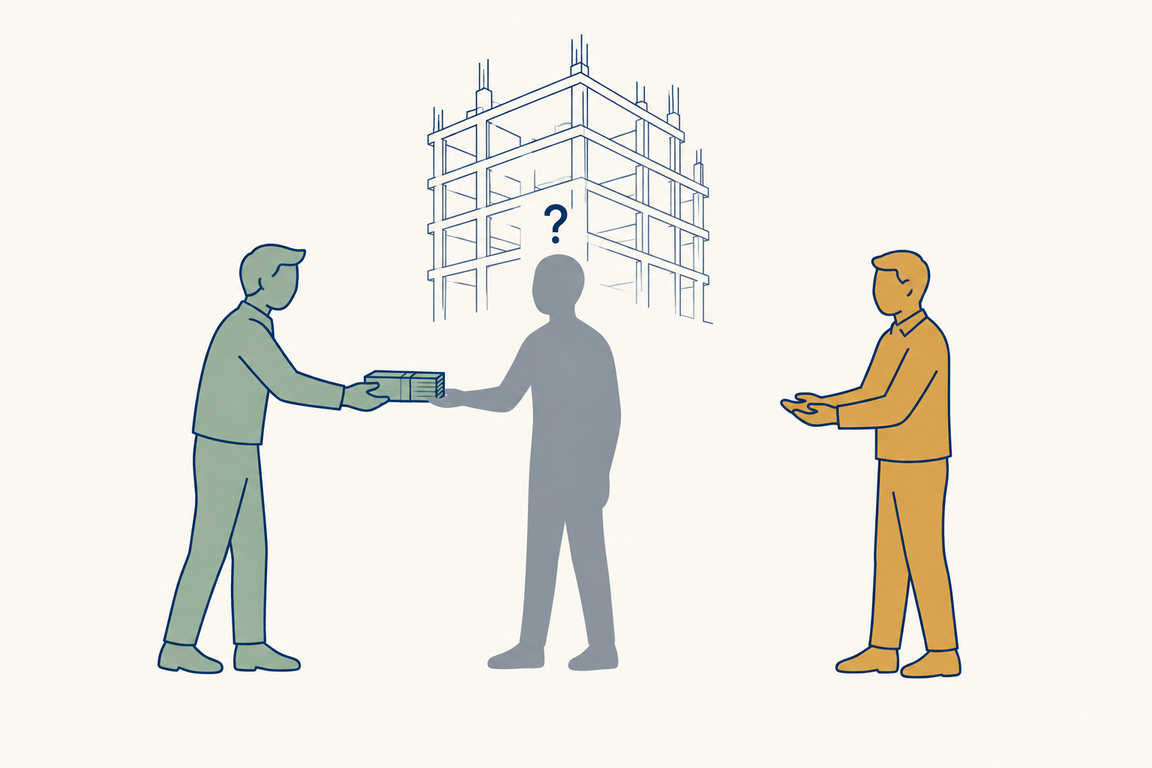
You pay a booking amount. Then instalments, for two or three years, against a building that does not exist yet. Somewhere in that period you will have handed over most of the price of the property and received nothing at all.
Where is that money?
It is a reasonable question and almost nobody asks it, because the answer feels like it should be obvious. It is not obvious, and more importantly it is not one answer. In this market the money goes to three completely different places depending on what you are buying, with three completely different levels of protection, and the difference only becomes visible when something goes wrong.
Route one: a registered project
If you are buying in a project registered with Punjab RERA, the law is specific about where your money goes.
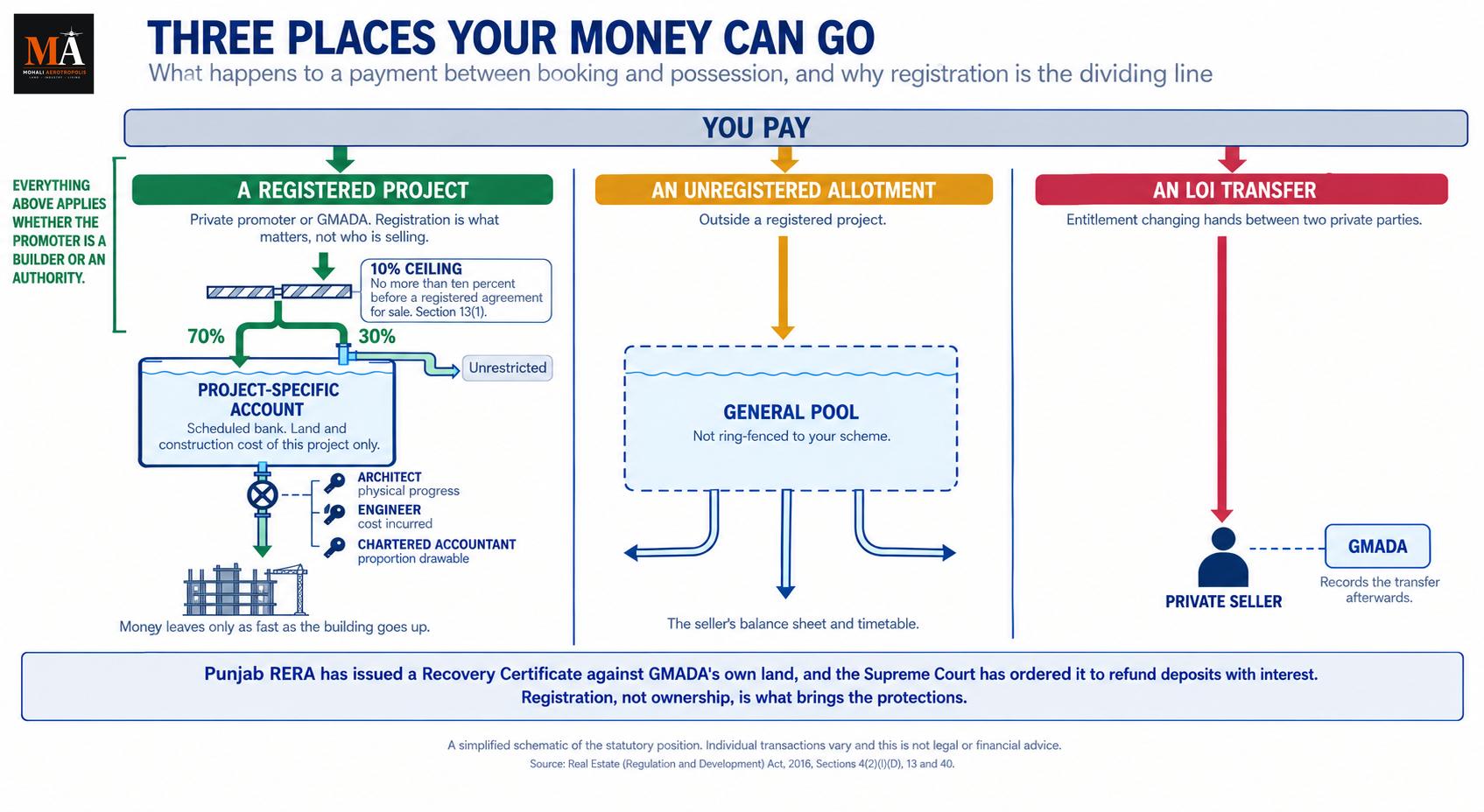
Under Section 4(2)(l)(D) of the Real Estate (Regulation and Development) Act, 2016, the promoter must file a declaration on affidavit that seventy percent of the amounts realised from allottees will be deposited in a separate account with a scheduled bank, to cover the cost of construction and the land cost, and used only for that purpose. The account is project-specific, which means receipts from one project cannot legally fund another. The remaining thirty percent is unrestricted.
What matters more than the seventy percent is how money leaves that account. Under the second proviso to the same section, the promoter can only withdraw in proportion to the percentage of completion, and only after three separate professionals certify it: an architect on the physical progress, an engineer on the cost actually incurred, and a chartered accountant in practice on the proportion that may be drawn.
Read what that does. A promoter cannot draw against flats that are sold but not built. Money comes out at the speed the building goes up, and three people have to sign to say so. The promoter is also required to have the accounts audited within six months of the end of each financial year, verifying that amounts collected for a project were used on that project.
That is the theory, and it is a good theory. Whether it happens is a question about enforcement rather than about the rule.
The rule you can enforce yourself, before you pay
Section 13(1) is the shortest useful provision in the Act. A promoter cannot accept more than ten percent of the cost of the apartment, plot or building as an advance payment or application fee without first entering into a written agreement for sale and registering it.
Ten percent. Not thirty, and not whatever the sales desk says is normal this quarter. The agreement has to be registered, not merely signed, before the eleventh percent can be demanded.
This is worth knowing because it is the one protection that operates before your money is anywhere at all. Authorities elsewhere have enforced it. In a Rajasthan case from 2020, a promoter had taken fifteen percent without executing an agreement and then issued a demand note for a further thirty-five percent. The Authority directed that an agreement be executed and registered before anything further could be demanded or accepted.
The detail worth noting is whose project it was. It was a Jaipur Development Authority project, registered with RERA, and the Authority held that all provisions of the Act, including Section 13, applied to it.
Which leads directly to the point most Mohali buyers get wrong.
Route two: a GMADA scheme, which is not outside the Act
The Act does not carve out development authorities. Section 2(zk)(iii) defines "promoter" to include any development authority or other public body, in respect of allottees of buildings or apartments it constructs, or plots it owns or that are placed at its disposal by the Government, for the purpose of selling.
That is GMADA, in plain statutory language, for both flats and plots.
So the money in a registered GMADA scheme is not simply sitting with the authority under its own rules. The separate account, the proportional drawdown, the certification chain, the ten percent ceiling and the delay interest all apply, and buyers have enforced them against the authority itself.
In Amandeep v. GMADA, a complainant who bought a 256 square yard plot in Sector 83 Alpha at a 2016 auction, with possession promised for 2017, obtained an order in February 2025. GMADA did not comply. The complainant filed an execution application in October 2025, and in January 2026 Punjab RERA issued a Recovery Certificate to the Mohali Deputy Commissioner for ₹25,89,659 under Section 40, recoverable as arrears of land revenue from GMADA's assets, with Jamabandi and Farad copies of the project land attached to enable the recovery. GMADA was named the judgment debtor and treated as a defaulter.
Above that sits the Supreme Court. In GMADA v. Anupam Garg, decided in June 2025 and arising from GMADA's Purab Premium Apartments scheme in Sector 88, allottees recovered their entire deposits with interest. The Court did trim what could be claimed, holding that a promoter is not obliged to separately reimburse interest a buyer paid on a personal home loan. But a public development authority received no concession that a private promoter would not have received.
So the risk in Route two is not that the money is unprotected. It is that the counterparty is a state authority whose acquisition programme, litigation and financing all bear on when your plot gets serviced, and which is capable of ignoring an order until a Recovery Certificate is issued against its own land.
The dividing line that actually matters here is not authority against private promoter. It is registered against unregistered. A registered scheme carries the full apparatus whoever runs it. An allotment or auction outside a registered project carries none of it, and the money goes into the authority's general pool rather than a ring-fenced account. Our comparison of GMADA, PUDA and RERA sets out which body does what.
Route three: an LOI resale, where there is no account at all
This is the one the market talks about least and it is where the most money moves with the least structure.
When an entitlement changes hands in the Aerotropolis pockets, the buyer pays a private seller. Not an escrow account, not a promoter's designated account, not the authority. The money goes directly to whoever held the instrument, and GMADA's involvement begins afterwards, when it processes the transfer and issues a fresh document in the new holder's name.
There is no seventy percent rule here because nobody is collecting for a registered project. There is no drawdown certification because there is no construction to certify against. There is no ten percent cap because Section 13 governs promoters, and a transfer between two private parties has none.
None of that makes an LOI transaction improper. It is a lawful, recognised transfer with its own procedure, which our guide to GMADA transfers sets out. What it means is that the protections people assume are in the background of any property purchase are simply not present in this one, and the safeguards have to come from the transaction itself: the ledger check, the encumbrance position, the litigation status of the parcel, and the sequencing of payment against the authority's transfer being recorded. Current rates in the pockets that trade sit on our LOI price tracker.
What the local record shows when this fails
Punjab has three documented illustrations, each at a different point on the scale.
Money paid, building not delivered. In the Punjab RERA order over a New Chandigarh flat, the buyers had paid ₹58,60,470 of a ₹72,18,480 consideration by July 2019, more than eighty percent, and possession never came. The Authority awarded delay interest running at over ₹52,000 a month until possession is handed over.
Money collected outside the structure entirely. In the ED's case concerning Suntec City, which we covered in our report on the CLU trail, the agency has alleged sales exceeding ₹200 crore before registration with and approval from the Authority, and that possession was handed over without completion or occupancy certificates. Membership of a society is not ownership of land, and a receipt is not a conveyance.
And money paid to a developer who ceased to exist. In Sectors 100 and 104, roughly 1,300 allottees had around ₹600 crore invested in a project whose promoter company was attached following a CBI investigation, and it took an order of the Supreme Court to name anybody responsible for developing the land, as our article on civic responsibility set out.
What you can actually establish
Four things, all checkable before the money moves.
Whether the project or scheme is registered, which determines whether any of the Act's protections apply. That is on the Punjab RERA portal along with the possession date on record, and it applies to a GMADA scheme exactly as it does to a private one.
Which account you are being asked to pay into, and whether it is the project's designated account. A promoter subject to Section 4(2)(l)(D) has one, and there is no reason not to be told what it is.
Whether the demand exceeds ten percent before a registered agreement for sale. If it does, the ceiling is statutory and refusing is not an unreasonable position to take.
And, for a resale or a transfer rather than a first sale, that your payment is sequenced against the authority actually recording the change. Our buyer's guide covers the document set.
The uncomfortable summary is that the protections vary enormously between things that look similar in a listing, and not along the line most buyers assume. A registered project has a statutory account, a certification chain and an audit, and that holds whether the promoter is a builder or a development authority. An unregistered allotment has the seller's balance sheet and its timetable. A transfer of an entitlement has whatever the two parties put in place themselves. Knowing which of the three you are in is not a technicality. It is the answer to where your money is.
None of the above is financial or legal advice, and the position in any particular transaction turns on its own facts.
---
Sources
- Real Estate (Regulation and Development) Act, 2016, India Code, for the text of Sections 2(zk), 4, 13, 18 and 40
- FinMin asks PSBs to ensure compliance in withdrawal from RERA accounts, Business Standard, March 2024, on the certification requirement and what each professional certifies
- Is Section 13 of the RERA Act a mandatory requirement?, SCC Online, on Rajasthan RERA complaint RAJ-RERA-C-2020-3622 decided 22 September 2020, and the application of Section 13 to a development authority project
- RERA attaches GMADA assets, orders recovery of Rs 25.89 lakh over delay in plot possession, The Tribune, 19 January 2026, on Amandeep v. GMADA, the Recovery Certificate, the Section 40 route and the attachment of GMADA's assets
- Greater Mohali Area Development Authority v. Anupam Garg, 2025 INSC 808, Supreme Court Observer, on the refund with interest in GMADA's Purab Premium Apartments scheme and the limits on claiming home loan interest
- RERA slaps Omaxe with Rs 34.81 lakh penalty for delay in handing New Chandigarh flat possession, Nitin Jain, The Tribune, 16 June 2026, for the amounts paid and the delay interest awarded
- ED arrests Punjab real estate businessman in land fraud case, ETV Bharat, 23 May 2026, on the alleged pre-registration sales
आप बुकिंग राशि का भुगतान करते हैं। फिर दो या तीन साल तक किस्तें, एक ऐसी इमारत के लिए जो अभी अस्तित्व में ही नहीं है। उस अवधि के किसी बिंदु पर आप संपत्ति की अधिकांश कीमत सौंप चुके होंगे और बदले में कुछ भी प्राप्त नहीं किया होगा।
वह पैसा कहाँ है?
यह एक उचित प्रश्न है और लगभग कोई इसे नहीं पूछता, क्योंकि उत्तर स्पष्ट प्रतीत होता है। यह स्पष्ट नहीं है, और इससे भी महत्वपूर्ण बात यह है कि यह एक ही उत्तर नहीं है। इस बाजार में पैसा तीन पूरी तरह से अलग स्थानों पर जाता है, यह इस बात पर निर्भर करता है कि आप क्या खरीद रहे हैं, और सुरक्षा के तीन पूरी तरह से अलग स्तरों के साथ, और यह अंतर केवल तभी दिखाई देता है जब कुछ गलत होता है।
रूट एक: एक पंजीकृत परियोजना
यदि आप पंजाब RERA में पंजीकृत परियोजना में खरीद रहे हैं, तो कानून इस बारे में विशिष्ट है कि आपका पैसा कहाँ जाता है।
वास्तविक (विनियमन और विकास) अधिनियम, 2016 की धारा 4(2)(l)(D) के तहत, प्रवर्तक को शपथ पत्र पर एक घोषणा दाखिल करनी होती है कि आवंटियों से प्राप्त राशियों का सत्तर प्रतिशत एक अनुसूचित बैंक में एक अलग खाते में जमा किया जाएगा, जो निर्माण की लागत और भूमि की लागत को कवर करेगा, और केवल उसी उद्देश्य के लिए उपयोग किया जाएगा। खाता परियोजना-विशिष्ट है, जिसका अर्थ है कि एक परियोजना से प्राप्तियाँ कानूनी रूप से दूसरी परियोजना को वित्तपोषित नहीं कर सकतीं। शेष तीस प्रतिशत अप्रतिबंधित है।
सत्तर प्रतिशत से अधिक महत्वपूर्ण यह है कि पैसा उस खाते से कैसे निकलता है। उसी धारा के दूसरे प्राविसो के तहत, प्रवर्तक केवल पूर्णता के प्रतिशत के अनुपात में धन निकाल सकता है, और केवल तीन अलग-अलग पेशेवरों द्वारा प्रमाणित करने के बाद: भौतिक प्रगति पर एक वास्तुकार, वास्तव में हुई लागत पर एक इंजीनियर, और निकाली जा सकने वाली राशि के अनुपात पर एक व्यवसाय में लगे प्रमाणित लेखाकार।
देखें कि यह क्या करता है। एक प्रवर्तक उन फ्लैटों के लिए पैसा नहीं निकाल सकता जो बिक चुके हैं लेकिन बने नहीं हैं। पैसा उस गति से निकलता है जिस गति से इमारत बनती है, और तीन लोगों को यह कहने के लिए हस्ताक्षर करने होते हैं। प्रवर्तक को प्रत्येक वित्तीय वर्ष की समाप्ति के छह महीने के भीतर खातों का लेखा-परीक्षण कराना भी आवश्यक है, यह सत्यापित करते हुए कि किसी परियोजना के लिए एकत्र की गई राशि उसी परियोजना पर खर्च की गई।
यह सिद्धांत है, और यह एक अच्छा सिद्धांत है। यह होता है या नहीं, यह प्रवर्तन का प्रश्न है, नियम का नहीं।
वह नियम जिसे आप भुगतान करने से पहले स्वयं लागू कर सकते हैं
धारा 13(1) अधिनियम में सबसे छोटा उपयोगी प्रावधान है। एक प्रवर्तक पहले बिक्री के लिखित अनुबंध में प्रवेश किए बिना और उसे पंजीकृत किए बिना अपार्टमेंट, प्लॉट या भवन की लागत के दस प्रतिशत से अधिक अग्रिम भुगतान या आवेदन शुल्क के रूप में स्वीकार नहीं कर सकता है।
दस प्रतिशत। तीस नहीं, और वह नहीं जो बिक्री कार्यालय इस तिमाही में सामान्य बताए। ग्यारहवें प्रतिशत की मांग करने से पहले अनुबंध को केवल हस्ताक्षरित नहीं, बल्कि पंजीकृत होना चाहिए।
यह जानने लायक है क्योंकि यह एकमात्र सुरक्षा है जो आपके पैसे के कहीं भी होने से पहले काम करती है। अन्यत्र अधिकारियों ने इसे लागू किया है। 2020 के एक राजस्थान मामले में, एक प्रवर्तक ने अनुबंध निष्पादित किए बिना पंद्रह प्रतिशत लिया था और फिर आगे पैंतीस प्रतिशत के लिए मांग पत्र जारी किया था। प्राधिकरण ने निर्देश दिया कि कुछ भी और मांगे या स्वीकार किए जाने से पहले एक अनुबंध निष्पादित और पंजीकृत किया जाए।
ध्यान देने योग्य विवरण यह है कि यह किसकी परियोजना थी। यह जयपुर विकास प्राधिकरण की परियोजना थी, जो RERA में पंजीकृत थी, और प्राधिकरण ने कहा कि अधिनियम के सभी प्रावधान, जिनमें धारा 13 भी शामिल है, उस पर लागू होते हैं।
जो सीधे उस बिंदु पर ले जाता है जिसे अधिकांश मोहाली खरीदार गलत समझते हैं।
रूट दो: एक GMADA स्कीम, जो अधिनियम के बाहर नहीं है
अधिनियम विकास प्राधिकरणों को छूट नहीं देता। धारा 2(zk)(iii) "प्रवर्तक" को किसी भी विकास प्राधिकरण या अन्य सार्वजनिक निकाय शामिल करने के लिए परिभाषित करती है, जो उसके द्वारा निर्मित भवनों या अपार्टमेंटों के आवंटियों के संबंध में, या उसके स्वामित्व वाले या सरकार द्वारा उसके निपटान में रखे गए प्लॉटों के संबंध में, बेचने के उद्देश्य से हो।
वह GMADA है, स्पष्ट वैधानिक भाषा में, फ्लैटों और प्लॉटों दोनों के लिए।
इसलिए एक पंजीकृत GMADA स्कीम में पैसा केवल प्राधिकरण के पास उसके अपने नियमों के तहत नहीं बैठा है। अलग खाता, आनुपातिक निकासी, प्रमाणन श्रृंखला, दस प्रतिशत की सीमा और विलंब ब्याज सभी लागू होते हैं, और खरीदारों ने उन्हें प्राधिकरण के विरुद्ध स्वयं लागू किया है।
Amandeep बनाम GMADA में, एक शिकायतकर्ता जिसने 2016 की नीलामी में सेक्टर 83 अल्फा में 256 वर्ग गज का प्लॉट खरीदा था, जिसका कब्जा 2017 के लिए वादा किया गया था, उसने फरवरी 2025 में एक आदेश प्राप्त किया। GMADA ने अनुपालन नहीं किया। शिकायतकर्ता ने अक्टूबर 2025 में एक निष्पादन आवेदन दायर किया, और जनवरी 2026 में पंजाब RERA ने धारा 40 के तहत मोहाली उपायुक्त को ₹25,89,659 के लिए एक वसूली प्रमाण पत्र जारी किया, जो GMADA की संपत्तियों से भू-राजस्व के बकाया के रूप में वसूली योग्य था, साथ ही वसूली को सक्षम करने के लिए परियोजना भूमि की जमाबंदी और फर्द प्रतियां संलग्न की गईं। GMADA को निर्णय-ऋणी नामित किया गया और एक डिफ़ॉल्टर के रूप में माना गया।
उसके ऊपर सर्वोच्च न्यायालय है। GMADA बनाम अनुपम गर्ग में, जो जून 2025 में तय हुआ और GMADA की सेक्टर 88 में पूरब प्रीमियम अपार्टमेंट स्कीम से उत्पन्न हुआ, आवंटियों ने ब्याज सहित अपनी पूरी जमा राशि वसूल की। अदालत ने निश्चित रूप से दावे में कटौती की, यह मानते हुए कि एक प्रवर्तक व्यक्तिगत गृह ऋण पर खरीदार द्वारा भुगतान किए गए ब्याज की अलग से प्रतिपूर्ति करने के लिए बाध्य नहीं है। लेकिन एक सार्वजनिक विकास प्राधिकरण को कोई रियायत नहीं मिली जो एक निजी प्रवर्तक को नहीं मिली होती।
इसलिए रूट दो में जोखिम यह नहीं है कि पैसा असुरक्षित है। यह है कि प्रतिपक्ष एक राज्य प्राधिकरण है जिसका अधिग्रहण कार्यक्रम, मुकदमेबाजी और वित्तपोषण सभी इस बात पर प्रभाव डालते हैं कि आपका प्लॉट कब विकसित होगा, और जो अपनी ही भूमि के विरुद्ध वसूली प्रमाण पत्र जारी होने तक आदेश की अनदेखी करने में सक्षम है।
यहाँ वास्तव में मायने रखने वाली विभाजन रेखा प्राधिकरण बनाम निजी प्रवर्तक नहीं है। यह पंजीकृत बनाम अपंजीकृत है। एक पंजीकृत स्कीम पूरी व्यवस्था लेकर आती है चाहे वह कोई भी चलाए। एक पंजीकृत परियोजना के बाहर एक आवंटन या नीलामी में उसका कुछ भी नहीं होता, और पैसा प्राधिकरण के सामान्य पूल में जाता है, न कि एक अलग से सुरक्षित खाते में। हमारी GMADA, PUDA और RERA की तुलना बताती है कि कौन सा निकाय क्या करता है।
रूट तीन: एक LOI पुनर्विक्रय, जहाँ कोई खाता ही नहीं है
यह वह है जिसके बारे में बाजार सबसे कम बात करता है और यह वह जगह है जहाँ सबसे अधिक पैसा सबसे कम संरचना के साथ चलता है।
जब एरोट्रोपोलिस पॉकेट्स में एक अधिकार हाथ बदलता है, तो खरीदार एक निजी विक्रेता को भुगतान करता है। एस्क्रो खाता नहीं, प्रवर्तक का नामित खाता नहीं, प्राधिकरण नहीं। पैसा सीधे उस व्यक्ति के पास जाता है जिसके पास वह दस्तावेज़ था, और GMADA की भागीदारी बाद में शुरू होती है, जब वह हस्तांतरण को संसाधित करता है और नए धारक के नाम पर एक नया दस्तावेज़ जारी करता है।
यहाँ कोई सत्तर प्रतिशत नियम नहीं है क्योंकि कोई भी किसी पंजीकृत परियोजना के लिए पैसा एकत्र नहीं कर रहा है। कोई निकासी प्रमाणन नहीं है क्योंकि प्रमाणित करने के लिए कोई निर्माण नहीं है। कोई दस प्रतिशत सीमा नहीं है क्योंकि धारा 13 प्रवर्तकों को नियंत्रित करती है, और दो निजी पक्षों के बीच हस्तांतरण में उनमें से कोई भी नहीं होता।
इनमें से कोई भी LOI लेनदेन को अनुचित नहीं बनाता। यह अपनी स्वयं की प्रक्रिया के साथ एक कानूनी, मान्यता प्राप्त हस्तांतरण है, जैसा कि हमारी GMADA ट्रांसफर गाइड में बताया गया है। इसका अर्थ यह है कि जो सुरक्षाएँ लोग मानते हैं कि किसी भी संपत्ति की खरीद में पृष्ठभूमि में होती हैं, वे केवल इस एक में मौजूद नहीं हैं, और सुरक्षा उपायों को लेनदेन से ही आना होता है: लेजर जाँच, भार/ग्रहण (encumbrance) की स्थिति, भूखंड की मुकदमेबाजी स्थिति, और प्राधिकरण के हस्तांतरण के दर्ज होने के विरुद्ध भुगतान का अनुक्रम। व्यापार होने वाले पॉकेट्स में मौजूदा दरें हमारे LOI मूल्य ट्रैकर पर हैं।
स्थानीय रिकॉर्ड क्या दिखाता है जब यह विफल होता है
पंजाब के पास तीन प्रलेखित उदाहरण हैं, प्रत्येक पैमाने पर एक अलग बिंदु पर।
पैसा चुकाया, भवन नहीं दिया गया। न्यू चंडीगढ़ फ्लैट पर पंजाब RERA आदेश में, खरीदारों ने जुलाई 2019 तक ₹72,18,480 की कीमत में से ₹58,60,470 का भुगतान किया था, जो अस्सी प्रतिशत से अधिक था, और कब्जा कभी नहीं मिला। प्राधिकरण ने कब्जा सौंपे जाने तक प्रति माह ₹52,000 से अधिक की विलंब ब्याज दी।
पैसा संरचना के बाहर पूरी तरह से एकत्र किया गया। सनटेक सिटी से संबंधित ED के मामले में, जिसे हमने CLU ट्रेल रिपोर्ट में कवर किया था, एजेंसी ने प्राधिकरण के साथ पंजीकरण और अनुमोदन से पहले ₹200 करोड़ से अधिक की बिक्री का आरोप लगाया है, और यह कि बिना पूर्णता या अधिभोग प्रमाण पत्र के कब्जा सौंप दिया गया। एक सोसायटी की सदस्यता भूमि का स्वामित्व नहीं है, और एक रसीद एक विक्रय पत्र नहीं है।
और पैसा एक ऐसे डेवलपर को दिया गया जो अस्तित्व में नहीं रहा। सेक्टर 100 और 104 में, लगभग 1,300 आवंटियों ने एक ऐसी परियोजना में लगभग ₹600 करोड़ का निवेश किया था, जिसकी प्रवर्तक कंपनी CBI जांच के बाद कुर्क की गई थी, और भूमि विकसित करने के लिए किसी को जिम्मेदार नामित करने के लिए सर्वोच्च न्यायालय के आदेश की आवश्यकता पड़ी, जैसा कि हमारे नागरिक जिम्मेदारी लेख में बताया गया है।
जो आप वास्तव में स्थापित कर सकते हैं
चार चीजें, सभी पैसा चलने से पहले जाँची जा सकती हैं।
क्या परियोजना या स्कीम पंजीकृत है, जो यह निर्धारित करता है कि अधिनियम की कोई भी सुरक्षा लागू होती है या नहीं। यह पंजाब RERA पोर्टल पर रिकॉर्ड पर कब्जे की तारीख के साथ है, और यह एक GMADA स्कीम पर ठीक उसी तरह लागू होता है जैसे निजी पर।
आपको किस खाते में भुगतान करने के लिए कहा जा रहा है, और क्या यह परियोजना का नामित खाता है। धारा 4(2)(l)(D) के अधीन एक प्रवर्तक के पास एक होता है, और यह न बताए जाने का कोई कारण नहीं है।
क्या मांग पंजीकृत बिक्री अनुबंध से पहले दस प्रतिशत से अधिक है। यदि ऐसा है, तो सीमा वैधानिक है और मना करना एक अनुचित स्थिति नहीं है।
और, पहली बिक्री के बजाय पुनर्विक्रय या हस्तांतरण के लिए, कि आपका भुगतान प्राधिकरण द्वारा वास्तव में परिवर्तन दर्ज करने के विरुद्ध अनुक्रमित है। हमारी खरीदार मार्गदर्शिका दस्तावेज़ सेट को कवर करती है।
असुविधाजनक सारांश यह है कि सुरक्षाएँ उन चीजों के बीच बहुत भिन्न होती हैं जो एक लिस्टिंग में समान दिखती हैं, और उस रेखा के साथ नहीं जो अधिकांश खरीदार मानते हैं। एक पंजीकृत परियोजना के पास एक वैधानिक खाता, एक प्रमाणन श्रृंखला और एक लेखा परीक्षा होती है, और यह तब भी मान्य है जब प्रवर्तक एक बिल्डर या विकास प्राधिकरण हो। एक अपंजीकृत आवंटन के पास विक्रेता की बैलेंस शीट और उसकी समय-सारणी होती है। एक अधिकार का हस्तांतरण वह होता है जो दोनों पक्ष स्वयं स्थापित करते हैं। यह जानना कि आप तीन में से किसमें हैं, एक तकनीकी बात नहीं है। यह इस सवाल का जवाब है कि आपका पैसा कहाँ है।
उपरोक्त में से कोई भी वित्तीय या कानूनी सलाह नहीं है, और किसी विशेष लेनदेन में स्थिति उसके अपने तथ्यों पर निर्भर करती है।
---
स्रोत
- वास्तविक (विनियमन और विकास) अधिनियम, 2016, इंडिया कोड, धारा 2(zk), 4, 13, 18 और 40 के पाठ के लिए
- FinMin ने PSBs से RERA खातों से निकासी में अनुपालन सुनिश्चित करने को कहा, बिज़नेस स्टैंडर्ड, मार्च 2024, प्रमाणन आवश्यकता और प्रत्येक पेशेवर क्या प्रमाणित करता है, पर
- क्या RERA अधिनियम की धारा 13 एक अनिवार्य आवश्यकता है?, SCC ऑनलाइन, राजस्थान RERA शिकायत RAJ-RERA-C-2020-3622 पर जो 22 सितंबर 2020 को तय हुई, और एक विकास प्राधिकरण परियोजना के लिए धारा 13 के आवेदन पर
- [RERA ने GMADA की संपत्तियां कुर्क कीं, प्लॉट कब्जे में देरी पर 25.89 लाख रुपये
ਤੁਸੀਂ ਬੁਕਿੰਗ ਰਕਮ ਅਦਾ ਕਰਦੇ ਹੋ। ਫਿਰ ਕਿਸ਼ਤਾਂ, ਦੋ ਜਾਂ ਤਿੰਨ ਸਾਲਾਂ ਲਈ, ਇੱਕ ਇਮਾਰਤ ਦੇ ਬਦਲੇ ਜੋ ਅਜੇ ਹੋਂਦ ਵਿੱਚ ਨਹੀਂ ਹੈ। ਉਸ ਸਮੇਂ ਦੌਰਾਨ ਕਿਸੇ ਮੋੜ 'ਤੇ ਤੁਸੀਂ ਜਾਇਦਾਦ ਦੀ ਕੀਮਤ ਦਾ ਜ਼ਿਆਦਾਤਰ ਹਿੱਸਾ ਸੌਂਪ ਚੁੱਕੇ ਹੋਵੋਗੇ ਅਤੇ ਬਦਲੇ ਵਿੱਚ ਕੁਝ ਵੀ ਪ੍ਰਾਪਤ ਨਹੀਂ ਕੀਤਾ ਹੋਵੇਗਾ।
ਉਹ ਪੈਸਾ ਕਿੱਥੇ ਹੈ?
ਇਹ ਇੱਕ ਵਾਜਬ ਸਵਾਲ ਹੈ ਅਤੇ ਲਗਭਗ ਕੋਈ ਵੀ ਇਹ ਨਹੀਂ ਪੁੱਛਦਾ, ਕਿਉਂਕਿ ਜਵਾਬ ਸਪੱਸ਼ਟ ਹੋਣਾ ਚਾਹੀਦਾ ਹੈ। ਇਹ ਸਪੱਸ਼ਟ ਨਹੀਂ ਹੈ, ਅਤੇ ਇਸ ਤੋਂ ਵੀ ਮਹੱਤਵਪੂਰਨ ਗੱਲ ਇਹ ਹੈ ਕਿ ਇਹ ਇੱਕ ਜਵਾਬ ਨਹੀਂ ਹੈ। ਇਸ ਬਾਜ਼ਾਰ ਵਿੱਚ ਪੈਸਾ ਤਿੰਨ ਬਿਲਕੁਲ ਵੱਖ-ਵੱਖ ਥਾਵਾਂ 'ਤੇ ਜਾਂਦਾ ਹੈ ਜੋ ਤੁਸੀਂ ਕੀ ਖਰੀਦ ਰਹੇ ਹੋ ਉਸ 'ਤੇ ਨਿਰਭਰ ਕਰਦਾ ਹੈ, ਤਿੰਨ ਬਿਲਕੁਲ ਵੱਖ-ਵੱਖ ਪੱਧਰਾਂ ਦੀ ਸੁਰੱਖਿਆ ਦੇ ਨਾਲ, ਅਤੇ ਫਰਕ ਸਿਰਫ ਉਦੋਂ ਦਿਖਾਈ ਦਿੰਦਾ ਹੈ ਜਦੋਂ ਕੁਝ ਗਲਤ ਹੁੰਦਾ ਹੈ।
ਰੂਟ ਇੱਕ: ਇੱਕ ਰਜਿਸਟਰਡ ਪ੍ਰੋਜੈਕਟ
ਜੇਕਰ ਤੁਸੀਂ ਪੰਜਾਬ RERA ਨਾਲ ਰਜਿਸਟਰਡ ਪ੍ਰੋਜੈਕਟ ਵਿੱਚ ਖਰੀਦ ਰਹੇ ਹੋ, ਤਾਂ ਕਾਨੂੰਨ ਇਸ ਬਾਰੇ ਖਾਸ ਹੈ ਕਿ ਤੁਹਾਡਾ ਪੈਸਾ ਕਿੱਥੇ ਜਾਂਦਾ ਹੈ।
ਰੀਅਲ ਐਸਟੇਟ (ਰੈਗੂਲੇਸ਼ਨ ਐਂਡ ਡਿਵੈਲਪਮੈਂਟ) ਐਕਟ, 2016 ਦੀ ਧਾਰਾ 4(2)(l)(D) ਦੇ ਤਹਿਤ, ਪ੍ਰਮੋਟਰ ਨੂੰ ਸਹੁੰ ਦੇ ਬਿਆਨ 'ਤੇ ਘੋਸ਼ਣਾ ਦਰਜ ਕਰਨੀ ਚਾਹੀਦੀ ਹੈ ਕਿ ਅਲਾਟੀਆਂ ਤੋਂ ਵਸੂਲ ਕੀਤੀਆਂ ਗਈਆਂ ਰਕਮਾਂ ਦਾ ਸੱਤਰ ਪ੍ਰਤੀਸ਼ਤ ਇੱਕ ਅਨੁਸੂਚਿਤ ਬੈਂਕ ਵਿੱਚ ਇੱਕ ਵੱਖਰੇ ਖਾਤੇ ਵਿੱਚ ਜਮ੍ਹਾ ਕੀਤਾ ਜਾਵੇਗਾ, ਜਿਸਦੀ ਵਰਤੋਂ ਉਸਾਰੀ ਦੀ ਲਾਗਤ ਅਤੇ ਜ਼ਮੀਨ ਦੀ ਲਾਗਤ ਨੂੰ ਪੂਰਾ ਕਰਨ ਲਈ ਕੀਤੀ ਜਾਵੇਗੀ। ਖਾਤਾ ਪ੍ਰੋਜੈਕਟ-ਵਿਸ਼ੇਸ਼ ਹੈ, ਜਿਸਦਾ ਮਤਲਬ ਹੈ ਕਿ ਇੱਕ ਪ੍ਰੋਜੈਕਟ ਤੋਂ ਪ੍ਰਾਪਤੀਆਂ ਕਾਨੂੰਨੀ ਤੌਰ 'ਤੇ ਦੂਜੇ ਪ੍ਰੋਜੈਕਟ ਨੂੰ ਫੰਡ ਨਹੀਂ ਕਰ ਸਕਦੀਆਂ। ਬਾਕੀ ਤੀਹ ਪ੍ਰਤੀਸ਼ਤ 'ਤੇ ਕੋਈ ਪਾਬੰਦੀ ਨਹੀਂ ਹੈ।
ਸੱਤਰ ਪ੍ਰਤੀਸ਼ਤ ਨਾਲੋਂ ਵੱਧ ਮਹੱਤਵਪੂਰਨ ਗੱਲ ਇਹ ਹੈ ਕਿ ਪੈਸਾ ਉਸ ਖਾਤੇ ਤੋਂ ਕਿਵੇਂ ਬਾਹਰ ਨਿਕਲਦਾ ਹੈ। ਉਸੇ ਧਾਰਾ ਦੀ ਦੂਜੀ ਸ਼ਰਤ ਦੇ ਤਹਿਤ, ਪ੍ਰਮੋਟਰ ਸਿਰਫ ਪੂਰਾ ਹੋਣ ਦੇ ਪ੍ਰਤੀਸ਼ਤ ਦੇ ਅਨੁਪਾਤ ਵਿੱਚ ਹੀ ਪੈਸੇ ਕਢਵਾ ਸਕਦਾ ਹੈ, ਅਤੇ ਸਿਰਫ ਤਿੰਨ ਵੱਖ-ਵੱਖ ਪੇਸ਼ੇਵਰਾਂ ਦੇ ਪ੍ਰਮਾਣੀਕਰਨ ਤੋਂ ਬਾਅਦ: ਇੱਕ ਆਰਕੀਟੈਕਟ ਭੌਤਿਕ ਤਰੱਕੀ 'ਤੇ, ਇੱਕ ਇੰਜੀਨੀਅਰ ਅਸਲ ਵਿੱਚ ਹੋਈ ਲਾਗਤ 'ਤੇ, ਅਤੇ ਇੱਕ ਚਾਰਟਰਡ ਅਕਾਉਂਟੈਂਟ ਉਸ ਅਨੁਪਾਤ 'ਤੇ ਜੋ ਕਢਵਾਇਆ ਜਾ ਸਕਦਾ ਹੈ।
ਦੇਖੋ ਇਹ ਕੀ ਕਰਦਾ ਹੈ। ਇੱਕ ਪ੍ਰਮੋਟਰ ਵੇਚੇ ਗਏ ਪਰ ਨਾ ਬਣੇ ਫਲੈਟਾਂ ਦੇ ਮੁਕਾਬਲੇ ਪੈਸੇ ਨਹੀਂ ਕਢਵਾ ਸਕਦਾ। ਪੈਸਾ ਉਸ ਗਤੀ ਨਾਲ ਬਾਹਰ ਆਉਂਦਾ ਹੈ ਜਿਸ ਗਤੀ ਨਾਲ ਇਮਾਰਤ ਉੱਪਰ ਉੱਠਦੀ ਹੈ, ਅਤੇ ਤਿੰਨ ਲੋਕਾਂ ਨੂੰ ਇਹ ਕਹਿਣ ਲਈ ਹਸਤਾਖਰ ਕਰਨੇ ਪੈਂਦੇ ਹਨ। ਪ੍ਰਮੋਟਰ ਨੂੰ ਹਰ ਵਿੱਤੀ ਸਾਲ ਦੇ ਅੰਤ ਦੇ ਛੇ ਮਹੀਨਿਆਂ ਦੇ ਅੰਦਰ ਖਾਤਿਆਂ ਦਾ ਆਡਿਟ ਕਰਵਾਉਣਾ ਵੀ ਲਾਜ਼ਮੀ ਹੈ, ਇਹ ਤਸਦੀਕ ਕਰਦੇ ਹੋਏ ਕਿ ਕਿਸੇ ਪ੍ਰੋਜੈਕਟ ਲਈ ਇਕੱਠੀ ਕੀਤੀ ਗਈ ਰਕਮ ਉਸੇ ਪ੍ਰੋਜੈਕਟ 'ਤੇ ਖਰਚ ਕੀਤੀ ਗਈ ਸੀ।
ਇਹ ਸਿਧਾਂਤ ਹੈ, ਅਤੇ ਇਹ ਇੱਕ ਚੰਗਾ ਸਿਧਾਂਤ ਹੈ। ਇਹ ਵਾਪਰਦਾ ਹੈ ਜਾਂ ਨਹੀਂ ਇਹ ਨਿਯਮ ਦੀ ਬਜਾਏ ਲਾਗੂ ਕਰਨ ਦਾ ਸਵਾਲ ਹੈ।
ਉਹ ਨਿਯਮ ਜੋ ਤੁਸੀਂ ਭੁਗਤਾਨ ਕਰਨ ਤੋਂ ਪਹਿਲਾਂ ਖੁਦ ਲਾਗੂ ਕਰ ਸਕਦੇ ਹੋ
ਧਾਰਾ 13(1) ਐਕਟ ਵਿੱਚ ਸਭ ਤੋਂ ਛੋਟਾ ਉਪਯੋਗੀ ਪ੍ਰਾਵਧਾਨ ਹੈ। ਇੱਕ ਪ੍ਰਮੋਟਰ ਪਹਿਲਾਂ ਵਿਕਰੀ ਲਈ ਇੱਕ ਲਿਖਤੀ ਸਮਝੌਤਾ ਕੀਤੇ ਅਤੇ ਰਜਿਸਟਰ ਕੀਤੇ ਬਿਨਾਂ ਅਪਾਰਟਮੈਂਟ, ਪਲਾਟ ਜਾਂ ਇਮਾਰਤ ਦੀ ਲਾਗਤ ਦੇ ਦਸ ਪ੍ਰਤੀਸ਼ਤ ਤੋਂ ਵੱਧ ਐਡਵਾਂਸ ਭੁਗਤਾਨ ਜਾਂ ਅਰਜ਼ੀ ਫੀਸ ਵਜੋਂ ਸਵੀਕਾਰ ਨਹੀਂ ਕਰ ਸਕਦਾ।
ਦਸ ਪ੍ਰਤੀਸ਼ਤ। ਤੀਹ ਨਹੀਂ, ਅਤੇ ਨਾ ਹੀ ਜੋ ਵੀ ਸੇਲਸ ਡੈਸਕ ਇਸ ਤਿਮਾਹੀ ਵਿੱਚ ਆਮ ਕਹਿੰਦਾ ਹੈ। ਗਿਆਰ੍ਹਵਾਂ ਪ੍ਰਤੀਸ਼ਤ ਮੰਗੇ ਜਾਣ ਤੋਂ ਪਹਿਲਾਂ ਸਮਝੌਤਾ ਰਜਿਸਟਰਡ ਹੋਣਾ ਲਾਜ਼ਮੀ ਹੈ, ਸਿਰਫ ਹਸਤਾਖਰਿਤ ਨਹੀਂ।
ਇਹ ਜਾਣਨਾ ਮਹੱਤਵਪੂਰਨ ਹੈ ਕਿਉਂਕਿ ਇਹ ਇੱਕੋ ਇੱਕ ਸੁਰੱਖਿਆ ਹੈ ਜੋ ਤੁਹਾਡੇ ਪੈਸੇ ਦੇ ਕਿਤੇ ਵੀ ਹੋਣ ਤੋਂ ਪਹਿਲਾਂ ਕੰਮ ਕਰਦੀ ਹੈ। ਅਧਿਕਾਰੀਆਂ ਨੇ ਇਸਨੂੰ ਹੋਰ ਥਾਵਾਂ 'ਤੇ ਲਾਗੂ ਕੀਤਾ ਹੈ। 2020 ਦੇ ਇੱਕ ਰਾਜਸਥਾਨ ਕੇਸ ਵਿੱਚ, ਇੱਕ ਪ੍ਰਮੋਟਰ ਨੇ ਸਮਝੌਤਾ ਕੀਤੇ ਬਿਨਾਂ ਪੰਦਰਾਂ ਪ੍ਰਤੀਸ਼ਤ ਲਿਆ ਸੀ ਅਤੇ ਫਿਰ ਹੋਰ ਪੈਂਤੀ ਪ੍ਰਤੀਸ਼ਤ ਦੀ ਮੰਗ ਦਾ ਨੋਟਿਸ ਜਾਰੀ ਕੀਤਾ ਸੀ। ਅਥਾਰਟੀ ਨੇ ਨਿਰਦੇਸ਼ ਦਿੱਤਾ ਕਿ ਹੋਰ ਕੁਝ ਵੀ ਮੰਗੇ ਜਾਂ ਸਵੀਕਾਰ ਕੀਤੇ ਜਾਣ ਤੋਂ ਪਹਿਲਾਂ ਇੱਕ ਸਮਝੌਤਾ ਕੀਤਾ ਅਤੇ ਰਜਿਸਟਰ ਕੀਤਾ ਜਾਵੇ।
ਧਿਆਨ ਦੇਣ ਯੋਗ ਵੇਰਵਾ ਇਹ ਹੈ ਕਿ ਇਹ ਕਿਸ ਦਾ ਪ੍ਰੋਜੈਕਟ ਸੀ। ਇਹ ਜੈਪੁਰ ਡਿਵੈਲਪਮੈਂਟ ਅਥਾਰਟੀ ਦਾ ਪ੍ਰੋਜੈਕਟ ਸੀ, ਜੋ RERA ਨਾਲ ਰਜਿਸਟਰਡ ਸੀ, ਅਤੇ ਅਥਾਰਟੀ ਨੇ ਕਿਹਾ ਕਿ ਐਕਟ ਦੇ ਸਾਰੇ ਪ੍ਰਾਵਧਾਨ, ਜਿਸ ਵਿੱਚ ਧਾਰਾ 13 ਵੀ ਸ਼ਾਮਲ ਹੈ, ਇਸ 'ਤੇ ਲਾਗੂ ਹੁੰਦੇ ਹਨ।
ਜੋ ਸਿੱਧਾ ਉਸ ਬਿੰਦੂ ਵੱਲ ਲੈ ਜਾਂਦਾ ਹੈ ਜੋ ਜ਼ਿਆਦਾਤਰ ਮੁਹਾਲੀ ਖਰੀਦਦਾਰ ਗਲਤ ਸਮਝਦੇ ਹਨ।
ਰੂਟ ਦੋ: ਇੱਕ GMADA ਸਕੀਮ, ਜੋ ਐਕਟ ਤੋਂ ਬਾਹਰ ਨਹੀਂ ਹੈ
ਐਕਟ ਡਿਵੈਲਪਮੈਂਟ ਅਥਾਰਟੀਆਂ ਨੂੰ ਛੋਟ ਨਹੀਂ ਦਿੰਦਾ। ਧਾਰਾ 2(zk)(iii) "ਪ੍ਰਮੋਟਰ" ਨੂੰ ਪਰਿਭਾਸ਼ਿਤ ਕਰਦੀ ਹੈ ਜਿਸ ਵਿੱਚ ਕੋਈ ਵੀ ਡਿਵੈਲਪਮੈਂਟ ਅਥਾਰਟੀ ਜਾਂ ਹੋਰ ਜਨਤਕ ਨਿਕਾਇ ਸ਼ਾਮਲ ਹੈ, ਉਹਨਾਂ ਇਮਾਰਤਾਂ ਜਾਂ ਅਪਾਰਟਮੈਂਟਾਂ ਦੇ ਅਲਾਟੀਆਂ ਦੇ ਸਬੰਧ ਵਿੱਚ ਜੋ ਇਹ ਉਸਾਰਦਾ ਹੈ, ਜਾਂ ਪਲਾਟਾਂ ਦੇ ਜੋ ਇਸਦੇ ਮਾਲਕ ਹਨ ਜਾਂ ਸਰਕਾਰ ਦੁਆਰਾ ਇਸਦੇ ਨਿਪਟਾਰੇ ਵਿੱਚ ਰੱਖੇ ਗਏ ਹਨ, ਵੇਚਣ ਦੇ ਉਦੇਸ਼ ਲਈ।
ਇਹ GMADA ਹੈ, ਸਾਦੀ ਵਿਧਾਨਕ ਭਾਸ਼ਾ ਵਿੱਚ, ਫਲੈਟਾਂ ਅਤੇ ਪਲਾਟਾਂ ਦੋਵਾਂ ਲਈ।
ਇਸ ਲਈ ਇੱਕ ਰਜਿਸਟਰਡ GMADA ਸਕੀਮ ਵਿੱਚ ਪੈਸਾ ਸਿਰਫ ਅਥਾਰਟੀ ਦੇ ਆਪਣੇ ਨਿਯਮਾਂ ਅਧੀਨ ਨਹੀਂ ਬੈਠਾ ਹੁੰਦਾ। ਵੱਖਰਾ ਖਾਤਾ, ਅਨੁਪਾਤਕ ਕਢਵਾਉਣਾ, ਪ੍ਰਮਾਣੀਕਰਨ ਲੜੀ, ਦਸ ਪ੍ਰਤੀਸ਼ਤ ਦੀ ਸੀਮਾ ਅਤੇ ਦੇਰੀ ਦਾ ਵਿਆਜ ਸਭ ਲਾਗੂ ਹੁੰਦੇ ਹਨ, ਅਤੇ ਖਰੀਦਦਾਰਾਂ ਨੇ ਇਹਨਾਂ ਨੂੰ ਅਥਾਰਟੀ ਦੇ ਵਿਰੁੱਧ ਹੀ ਲਾਗੂ ਕੀਤਾ ਹੈ।
ਅਮਨਦੀਪ ਬਨਾਮ GMADA ਵਿੱਚ, ਇੱਕ ਸ਼ਿਕਾਇਤਕਰਤਾ ਜਿਸਨੇ 2016 ਦੀ ਨੀਲਾਮੀ ਵਿੱਚ ਸੈਕਟਰ 83 ਅਲਫ਼ਾ ਵਿੱਚ 256 ਵਰਗ ਗਜ਼ ਦਾ ਪਲਾਟ ਖਰੀਦਿਆ ਸੀ, ਜਿਸਦਾ ਕਬਜ਼ਾ 2017 ਲਈ ਵਾਅਦਾ ਕੀਤਾ ਗਿਆ ਸੀ, ਨੂੰ ਫਰਵਰੀ 2025 ਵਿੱਚ ਇੱਕ ਆਦੇਸ਼ ਮਿਲਿਆ। GMADA ਨੇ ਪਾਲਣਾ ਨਹੀਂ ਕੀਤੀ। ਸ਼ਿਕਾਇਤਕਰਤਾ ਨੇ ਅਕਤੂਬਰ 2025 ਵਿੱਚ ਇੱਕ ਅਮਲ ਅਰਜ਼ੀ ਦਾਇਰ ਕੀਤੀ, ਅਤੇ ਜਨਵਰੀ 2026 ਵਿੱਚ ਪੰਜਾਬ RERA ਨੇ ਧਾਰਾ 40 ਦੇ ਤਹਿਤ ਮੁਹਾਲੀ ਡਿਪਟੀ ਕਮਿਸ਼ਨਰ ਨੂੰ ₹25,89,659 ਲਈ ਇੱਕ ਰਿਕਵਰੀ ਸਰਟੀਫਿਕੇਟ ਜਾਰੀ ਕੀਤਾ, ਜੋ GMADA ਦੀਆਂ ਜਾਇਦਾਦਾਂ ਤੋਂ ਜ਼ਮੀਨ ਮਾਲੀਏ ਦੇ ਬਕਾਏ ਵਜੋਂ ਵਸੂਲਣ ਯੋਗ ਸੀ, ਰਿਕਵਰੀ ਨੂੰ ਸਮਰੱਥ ਬਣਾਉਣ ਲਈ ਪ੍ਰੋਜੈਕਟ ਜ਼ਮੀਨ ਦੀਆਂ ਜਮਾਬੰਦੀ ਅਤੇ ਫਰਦ ਕਾਪੀਆਂ ਨਾਲ। GMADA ਨੂੰ ਨਿਰਣੇ ਦਾ ਕਰਜ਼ਦਾਰ ਨਾਮਜ਼ਦ ਕੀਤਾ ਗਿਆ ਸੀ ਅਤੇ ਇੱਕ ਡਿਫਾਲਟਰ ਵਜੋਂ ਮੰਨਿਆ ਗਿਆ ਸੀ।
ਇਸਦੇ ਉੱਪਰ ਸੁਪਰੀਮ ਕੋਰਟ ਹੈ। GMADA ਬਨਾਮ ਅਨੁਪਮ ਗਰਗ ਵਿੱਚ, ਜੂਨ 2025 ਵਿੱਚ ਫੈਸਲਾ ਕੀਤਾ ਗਿਆ ਅਤੇ GMADA ਦੀ ਸੈਕਟਰ 88 ਵਿੱਚ ਪੂਰਬ ਪ੍ਰੀਮੀਅਮ ਅਪਾਰਟਮੈਂਟਸ ਸਕੀਮ ਤੋਂ ਪੈਦਾ ਹੋਇਆ, ਅਲਾਟੀਆਂ ਨੇ ਵਿਆਜ ਸਮੇਤ ਆਪਣੀਆਂ ਪੂਰੀਆਂ ਜਮ੍ਹਾਂ ਰਕਮਾਂ ਵਾਪਸ ਪ੍ਰਾਪਤ ਕੀਤੀਆਂ। ਅਦਾਲਤ ਨੇ ਇਹ ਕਹਿ ਕੇ ਦਾਅਵੇ ਨੂੰ ਘਟਾ ਦਿੱਤਾ ਕਿ ਇੱਕ ਪ੍ਰਮੋਟਰ ਖਰੀਦਦਾਰ ਦੁਆਰਾ ਨਿੱਜੀ ਘਰ ਕਰਜ਼ੇ 'ਤੇ ਅਦਾ ਕੀਤੇ ਵਿਆਜ ਦੀ ਵੱਖਰੇ ਤੌਰ 'ਤੇ ਮੁੜ ਅਦਾਇਗੀ ਕਰਨ ਲਈ ਜ਼ਿੰਮੇਵਾਰ ਨਹੀਂ ਹੈ। ਪਰ ਇੱਕ ਜਨਤਕ ਡਿਵੈਲਪਮੈਂਟ ਅਥਾਰਟੀ ਨੂੰ ਕੋਈ ਛੋਟ ਨਹੀਂ ਮਿਲੀ ਜੋ ਇੱਕ ਨਿੱਜੀ ਪ੍ਰਮੋਟਰ ਨੂੰ ਨਾ ਮਿਲੀ ਹੁੰਦੀ।
ਇਸ ਲਈ ਰੂਟ ਦੋ ਵਿੱਚ ਜੋਖਮ ਇਹ ਨਹੀਂ ਹੈ ਕਿ ਪੈਸਾ ਅਸੁਰੱਖਿਅਤ ਹੈ। ਇਹ ਹੈ ਕਿ ਦੂਜੀ ਧਿਰ ਇੱਕ ਰਾਜ ਅਥਾਰਟੀ ਹੈ ਜਿਸਦਾ ਅਧਿਗ੍ਰਹਿਣ ਪ੍ਰੋਗਰਾਮ, ਮੁਕੱਦਮੇਬਾਜ਼ੀ ਅਤੇ ਵਿੱਤ ਸਭ ਇਸ ਗੱਲ 'ਤੇ ਅਸਰ ਪਾਉਂਦੇ ਹਨ ਕਿ ਤੁਹਾਡਾ ਪਲਾਟ ਕਦੋਂ ਵਿਕਸਤ ਹੁੰਦਾ ਹੈ, ਅਤੇ ਜੋ ਆਪਣੀ ਜ਼ਮੀਨ ਦੇ ਵਿਰੁੱਧ ਰਿਕਵਰੀ ਸਰਟੀਫਿਕੇਟ ਜਾਰੀ ਹੋਣ ਤੱਕ ਆਦੇਸ਼ ਨੂੰ ਅਣਦੇਖਾ ਕਰਨ ਦੇ ਯੋਗ ਹੈ।
ਅਸਲ ਵਿੱਚ ਮਹੱਤਵਪੂਰਨ ਵੰਡ ਰੇਖਾ ਇੱਥੇ ਅਥਾਰਟੀ ਬਨਾਮ ਨਿੱਜੀ ਪ੍ਰਮੋਟਰ ਨਹੀਂ ਹੈ। ਇਹ ਰਜਿਸਟਰਡ ਬਨਾਮ ਗ਼ੈਰ-ਰਜਿਸਟਰਡ ਹੈ। ਇੱਕ ਰਜਿਸਟਰਡ ਸਕੀਮ ਪੂਰੀ ਵਿਧੀ ਨਾਲ ਆਉਂਦੀ ਹੈ ਭਾਵੇਂ ਇਸਨੂੰ ਕੋਈ ਵੀ ਚਲਾਉਂਦਾ ਹੈ। ਇੱਕ ਰਜਿਸਟਰਡ ਪ੍ਰੋਜੈਕਟ ਤੋਂ ਬਾਹਰ ਇੱਕ ਅਲਾਟਮੈਂਟ ਜਾਂ ਨੀਲਾਮੀ ਵਿੱਚ ਇਸ ਵਿੱਚੋਂ ਕੁਝ ਵੀ ਨਹੀਂ ਹੁੰਦਾ, ਅਤੇ ਪੈਸਾ ਇੱਕ ਰਿੰਗ-ਫੈਂਸਡ ਖਾਤੇ ਦੀ ਬਜਾਏ ਅਥਾਰਟੀ ਦੇ ਆਮ ਪੂਲ ਵਿੱਚ ਜਾਂਦਾ ਹੈ। GMADA, PUDA ਅਤੇ RERA ਦੀ ਸਾਡੀ ਤੁਲਨਾ ਦੱਸਦੀ ਹੈ ਕਿ ਕਿਹੜਾ ਨਿਕਾਇ ਕੀ ਕਰਦਾ ਹੈ।
ਰੂਟ ਤਿੰਨ: ਇੱਕ LOI ਮੁੜ-ਵਿਕਰੀ, ਜਿੱਥੇ ਕੋਈ ਖਾਤਾ ਹੀ ਨਹੀਂ ਹੈ
ਇਹ ਉਹ ਹੈ ਜਿਸ ਬਾਰੇ ਬਾਜ਼ਾਰ ਸਭ ਤੋਂ ਘੱਟ ਗੱਲ ਕਰਦਾ ਹੈ ਅਤੇ ਇਹ ਉਹ ਥਾਂ ਹੈ ਜਿੱਥੇ ਸਭ ਤੋਂ ਵੱਧ ਪੈਸਾ ਘੱਟ ਤੋਂ ਘੱਟ ਢਾਂਚੇ ਨਾਲ ਚਲਦਾ ਹੈ।
ਜਦੋਂ ਏਰੋਟ੍ਰੋਪੋਲਿਸ ਕਲੱਸਟਰਾਂ ਵਿੱਚ ਕੋਈ ਹੱਕ ਇੱਕ ਹੱਥੋਂ ਦੂਜੇ ਹੱਥ ਬਦਲਦਾ ਹੈ, ਤਾਂ ਖਰੀਦਦਾਰ ਇੱਕ ਨਿੱਜੀ ਵਿਕਰੇਤਾ ਨੂੰ ਭੁਗਤਾਨ ਕਰਦਾ ਹੈ। ਨਾ ਐਸਕ੍ਰੋ ਖਾਤਾ, ਨਾ ਪ੍ਰਮੋਟਰ ਦਾ ਨਾਮਜ਼ਦ ਖਾਤਾ, ਨਾ ਅਥਾਰਟੀ। ਪੈਸਾ ਸਿੱਧਾ ਉਸ ਵਿਅਕਤੀ ਕੋਲ ਜਾਂਦਾ ਹੈ ਜਿਸ ਕੋਲ ਦਸਤਾਵੇਜ਼ ਸੀ, ਅਤੇ GMADA ਦੀ ਭਾਗੀਦਾਰੀ ਬਾਅਦ ਵਿੱਚ ਸ਼ੁਰੂ ਹੁੰਦੀ ਹੈ, ਜਦੋਂ ਇਹ ਤਬਾਦਲੇ ਦੀ ਪ੍ਰਕਿਰਿਆ ਕਰਦਾ ਹੈ ਅਤੇ ਨਵੇਂ ਧਾਰਕ ਦੇ ਨਾਮ ਵਿੱਚ ਇੱਕ ਨਵਾਂ ਦਸਤਾਵੇਜ਼ ਜਾਰੀ ਕਰਦਾ ਹੈ।
ਇੱਥੇ ਕੋਈ ਸੱਤਰ ਪ੍ਰਤੀਸ਼ਤ ਨਿਯਮ ਨਹੀਂ ਹੈ ਕਿਉਂਕਿ ਕੋਈ ਵੀ ਰਜਿਸਟਰਡ ਪ੍ਰੋਜੈਕਟ ਲਈ ਪੈਸਾ ਇਕੱਠਾ ਨਹੀਂ ਕਰ ਰਿਹਾ। ਕੋਈ ਕਢਵਾਉਣ ਦਾ ਪ੍ਰਮਾਣੀਕਰਨ ਨਹੀਂ ਹੈ ਕਿਉਂਕਿ ਪ੍ਰਮਾਣਿਤ ਕਰਨ ਲਈ ਕੋਈ ਉਸਾਰੀ ਨਹੀਂ ਹੈ। ਕੋਈ ਦਸ ਪ੍ਰਤੀਸ਼ਤ ਸੀਮਾ ਨਹੀਂ ਹੈ ਕਿਉਂਕਿ ਧਾਰਾ 13 ਪ੍ਰਮੋਟਰਾਂ ਨੂੰ ਨਿਯੰਤ੍ਰਿਤ ਕਰਦੀ ਹੈ, ਅਤੇ ਦੋ ਨਿੱਜੀ ਧਿਰਾਂ ਵਿਚਕਾਰ ਤਬਾਦਲੇ ਵਿੱਚ ਕੋਈ ਵੀ ਨਹੀਂ ਹੈ।
ਇਸ ਵਿੱਚੋਂ ਕੋਈ ਵੀ LOI ਲੈਣ-ਦੇਣ ਨੂੰ ਗੈਰ-ਕਾਨੂੰਨੀ ਨਹੀਂ ਬਣਾਉਂਦਾ। ਇਹ ਇੱਕ ਕਾਨੂੰਨੀ, ਮਾਨਤਾ ਪ੍ਰਾਪਤ ਤਬ