
Taking the keys to a flat in Mohali closes one chapter of a purchase. It does not close the builder's responsibility for how the flat was built. Seepage in a bathroom wall, a crack that widens over a monsoon, a lift that was promised and never installed: the central real estate law keeps the promoter answerable for defects like these for years after possession. A Mohali consumer order reported this week shows the same idea at work in a district forum.
The Sector Sixty Six A order
The Times of India reported on Thursday that the district consumer disputes redressal commission in Mohali ruled for a homebuyer in a Sector Sixty Six A apartment project. Hindustan Times, reporting the same case, named the project as Galaxy Heights and dated the order the fifth of October.
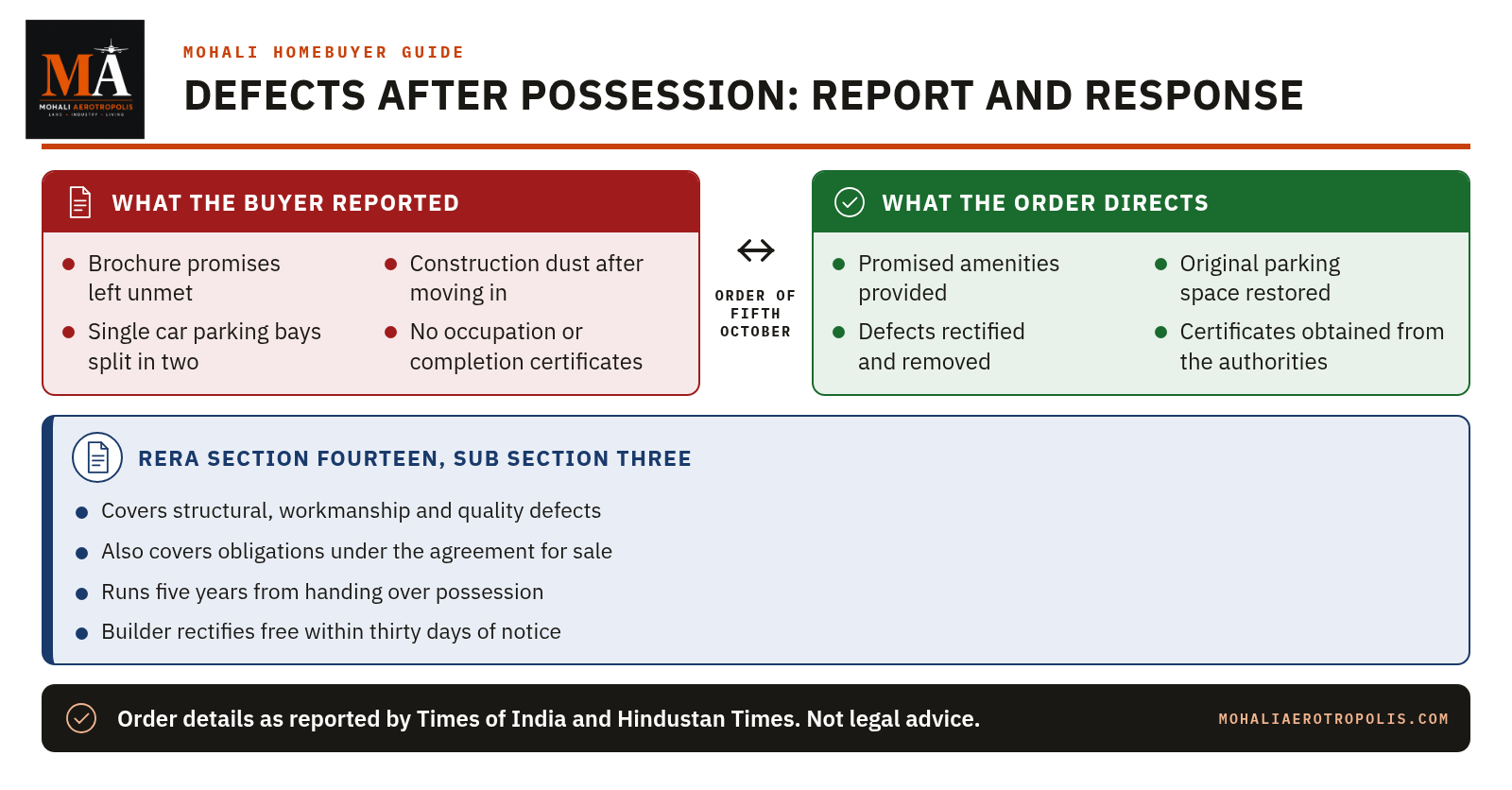
According to the Times of India, the buyer took the flat through a re-allotment. Possession was offered years after the promised date, and the buyer took it under financial pressure. After moving in, the buyer found brochure promises unmet and single car parking bays split in two. The report adds that construction dust aggravated a health condition.
Hindustan Times quoted the operative direction. The builder was told to "provide all the basic amenities and facilities as promised in the brochure and the agreements", a direction that, as quoted, expressly includes rectifying and removing defects alongside obtaining occupation and completion certificates. The builder was given three months from receipt of a certified copy of the order. Both reports say the order directs the builder to restore the original parking space. It also awards interest on the deposit and a single sum towards compensation and litigation costs. The Times of India also reports a finding that brochures form an integral part of the service contract.
The certificate side of the order, and why an offer of possession without those papers may not count, was covered in an earlier MA piece linked below. This article stays with the defects.
What Section Fourteen of the RERA Act says
The Real Estate Regulation and Development Act sets the rule in Section Fourteen, sub section three. It reads: "In case any structural defect or any other defect in workmanship, quality or provision of services or any other obligations of the promoter as per the agreement for sale relating to such development is brought to the notice of the promoter within a period of five years by the allottee from the date of handing over possession, it shall be the duty of the promoter to rectify such defects without further charge, within thirty days, and in the event of promoter's failure to rectify such defects within such time, the aggrieved allottees shall be entitled to receive appropriate compensation in the manner as provided under this Act."
Four points in that sentence carry most of the weight.
The clock starts at possession. The five year period runs from the date the flat is handed over, so the date on the possession letter or handover record is the date that counts.
The scope is wide. Structural defects sit alongside defects in workmanship and quality. The clause then adds "provision of services" and "any other obligations of the promoter as per the agreement for sale". On a plain reading, a missing amenity written into the agreement can fall inside the same duty as a leaking slab.
The trigger is notice. The duty arises once the allottee brings the defect to the promoter's notice within the five years. The Act does not prescribe a form for that notice. A dated written record of what was reported, and when, is the kind of evidence a forum can later rely on.
The remedy has a deadline. The promoter is to rectify "without further charge, within thirty days". If that does not happen, the clause gives the allottee a right to "appropriate compensation" under the Act.
Where a defect claim can be taken
The RERA Act offers one route. Section Thirty One lets "any aggrieved person" file a complaint with the Authority or the adjudicating officer for a violation of the Act or its rules. In Punjab the Authority is the Real Estate Regulatory Authority, Punjab. Section Seventy One provides for an adjudicating officer of District Judge rank. That officer adjudges compensation under several sections. Section Fourteen is one of them.
The consumer forums are a second route. The Consumer Protection Act treats a fault in the quality or manner of a service as a deficiency, and the district, state and national commissions hear such complaints according to the value of the claim. The Sector Sixty Six A order came through this route. Section Seventy Nine of the RERA Act bars civil courts from matters the Authority decides, and Section Eighty Eight says the Act is in addition to other laws. In Imperia Structures v Anil Patni, decided in November two thousand and twenty, the Supreme Court held that Section Seventy Nine does not bar a consumer forum from hearing such a complaint. The judgment reads that with Section Eighty Eight and says "a choice or discretion is given to the allottee" between the consumer law and the RERA Act.
Which route suits a given claim turns on its own facts and on the remedy sought. This article does not compare outcomes between the two.
What a defect claim usually rests on
Neither the Act nor the reports set out a list of required papers, but the Sector Sixty Six A case shows the kind of record that featured in it. The Times of India reports that the forum reviewed photographs of the squeezed parking bay and noted that the builder did not produce a sanctioned parking plan to justify the division. The brochure was treated as part of the contract.
Read with Section Fourteen, that points to a short set of records in most defect disputes. The first is the agreement for sale and any brochure, since the clause ties the promoter's obligations to the agreement. The second is the possession date, because the five year period runs from it. The third is the written notice of each defect and its date, because the thirty day period runs from notice. The last is evidence of the defect itself, such as dated photographs.
Where the law stops
Section Fourteen speaks of the promoter's obligations under the agreement for sale. Wear from normal use, or changes an owner makes after possession, are matters the clause does not address in terms, and builders often raise them in reply. A forum decides that question on the evidence in each case.
Common areas raise a separate point. Once a residents' association takes over maintenance, a dispute can arise over who holds a defect claim for a shared roof or basement. The clause speaks of "the allottees", and the reports on the Sector Sixty Six A case concern one buyer's own flat and parking.
What happens if a builder ignores an order once it is passed is a separate subject, covered in the MA piece on enforcement linked below.
What the record shows so far
The central Act keeps a builder responsible for structural and workmanship defects, and for unmet obligations under the agreement, for five years after possession. Once a defect is reported in that window, the text gives the builder thirty days to fix it free of charge. After that it opens the door to compensation. The Sector Sixty Six A order shows a Mohali forum directing defect rectification and promised amenities in the same breath as interest and parking. It is one order known through two press reports, and the order text itself was not available to MA.
Related reading
- Offer of possession without occupancy and completion certificates: what counts
- When a Mohali builder ignores a consumer commission order: how enforcement works
Sources: The sources we use are listed on our Editorial Sources page.
This summary of Section Fourteen of the Real Estate Regulation and Development Act draws on press reports of one consumer case and is not legal advice. Any defect claim turns on its own agreement and facts.
मोहाली में फ्लैट की चाबी लेना खरीदारी के एक अध्याय को बंद करता है। यह इस बात के लिए बिल्डर की जिम्मेदारी को बंद नहीं करता कि फ्लैट कैसे बना था। बाथरूम की दीवार में सीपेज, मानसून में बढ़ती दरार, वह लिफ्ट जिसका वादा किया गया था और कभी लगाई ही नहीं गई: केंद्रीय रियल एस्टेट कानून प्रमोटर को कब्जे के वर्षों बाद तक ऐसे दोषों के लिए जवाबदेह बनाए रखता है। इस सप्ताह रिपोर्ट किया गया एक मोहाली उपभोक्ता आदेश जिला फोरम में इसी विचार को काम करते हुए दिखाता है।
सेक्टर साठ-छह ए का आदेश
द टाइम्स ऑफ इंडिया ने गुरुवार को रिपोर्ट किया कि मोहाली में जिला उपभोक्ता विवाद निवारण आयोग ने सेक्टर साठ-छह ए के एक अपार्टमेंट प्रोजेक्ट में एक गृह खरीदार के पक्ष में फैसला सुनाया। हिंदुस्तान टाइम्स ने उसी मामले की रिपोर्ट करते हुए प्रोजेक्ट का नाम गैलेक्सी हाइट्स बताया और आदेश की तारीख पाँच अक्टूबर बताई।
द टाइम्स ऑफ इंडिया के अनुसार, खरीदार ने फ्लैट री-अलॉटमेंट के जरिए लिया। वादे की तारीख से वर्षों बाद कब्जा दिया गया, और खरीदार ने वित्तीय दबाव में इसे ले लिया। शिफ्ट होने के बाद, खरीदार ने पाया कि ब्रोशर के वादे पूरे नहीं हुए और सिंगल कार पार्किंग बे को दो हिस्सों में बाँट दिया गया। रिपोर्ट में यह भी कहा गया है कि निर्माण की धूल ने एक स्वास्थ्य समस्या को बढ़ा दिया।
हिंदुस्तान टाइम्स ने मुख्य निर्देश का हवाला दिया। बिल्डर से कहा गया कि वह "ब्रोशर और समझौतों में वादा की गई सभी बुनियादी सुविधाएँ और सुविधाएँ प्रदान करे", यह निर्देश, जैसा उद्धृत किया गया है, स्पष्ट रूप से ऑक्यूपेशन और कम्पलीशन सर्टिफिकेट प्राप्त करने के साथ-साथ दोषों को सुधारने और हटाने को भी शामिल करता है। बिल्डर को आदेश की प्रमाणित प्रति प्राप्त होने से तीन महीने का समय दिया गया। दोनों रिपोर्टें कहती हैं कि आदेश बिल्डर को मूल पार्किंग स्थान बहाल करने का निर्देश देता है। यह जमा राशि पर ब्याज और मुआवजे तथा मुकदमेबाजी के खर्चों के लिए एकमुश्त राशि भी देता है। द टाइम्स ऑफ इंडिया ने यह भी रिपोर्ट किया कि ब्रोशर सेवा अनुबंध का अभिन्न अंग हैं।
आदेश का सर्टिफिकेट पक्ष, और क्यों उन कागजातों के बिना कब्जे का प्रस्ताव मान्य नहीं हो सकता, इस पर एमए के एक पहले लेख में चर्चा की गई थी जिसका लिंक नीचे दिया गया है। यह लेख दोषों पर ही केंद्रित है।
RERA अधिनियम की धारा चौदह क्या कहती है
रियल एस्टेट रेगुलेशन एंड डेवलपमेंट एक्ट धारा चौदह, उप-धारा तीन में नियम निर्धारित करता है। इसमें लिखा है: "यदि किसी संरचनात्मक दोष या कारीगरी, गुणवत्ता या सेवाओं के प्रावधान में कोई अन्य दोष या ऐसे विकास से संबंधित बिक्री समझौते के अनुसार प्रमोटर के किसी अन्य दायित्व को कब्जा सौंपने की तारीख से पाँच वर्ष की अवधि के भीतर आवंटी द्वारा प्रमोटर के ध्यान में लाया जाता है, तो प्रमोटर का कर्तव्य होगा कि वह तीस दिनों के भीतर बिना किसी अतिरिक्त शुल्क के ऐसे दोषों को सुधारे, और यदि प्रमोटर ऐसी अवधि के भीतर ऐसे दोषों को सुधारने में विफल रहता है, तो व्यथित आवंटी इस अधिनियम के तहत प्रदान किए गए तरीके से उचित मुआवजा प्राप्त करने का हकदार होगा।"
उस वाक्य में चार बिंदु सबसे अधिक महत्व रखते हैं।
घड़ी कब्जे से शुरू होती है। पाँच वर्ष की अवधि उस तारीख से चलती है जिस दिन फ्लैट सौंपा जाता है, इसलिए कब्जा पत्र या हैंडओवर रिकॉर्ड पर जो तारीख है, वही तारीख मायने रखती है।
दायरा व्यापक है। संरचनात्मक दोष कारीगरी और गुणवत्ता के दोषों के साथ-साथ हैं। फिर खंड "सेवाओं के प्रावधान" और "बिक्री समझौते के अनुसार प्रमोटर के किसी अन्य दायित्व" को जोड़ता है। साधारण पठन पर, समझौते में लिखी गई एक गायब सुविधा भी रिसती स्लैब जैसे उसी कर्तव्य के दायरे में आ सकती है।
ट्रिगर सूचना है। यह कर्तव्य तब उत्पन्न होता है जब आवंटी पाँच वर्ष के भीतर दोष को प्रमोटर के ध्यान में लाता है। अधिनियम उस सूचना के लिए कोई प्रपत्र निर्धारित नहीं करता। क्या रिपोर्ट किया गया और कब, इसका तारीखांकित लिखित रिकॉर्ड वह सबूत है जिस पर फोरम बाद में भरोसा कर सकता है।
उपाय की एक समयसीमा है। प्रमोटर को "बिना किसी अतिरिक्त शुल्क के, तीस दिनों के भीतर" सुधार करना है। यदि ऐसा नहीं होता है, तो खंड आवंटी को अधिनियम के तहत "उचित मुआवजा" का अधिकार देता है।
दोष दावा कहाँ ले जाया जा सकता है
RERA अधिनियम एक रास्ता प्रदान करता है। धारा इकतीस "किसी भी व्यथित व्यक्ति" को अधिनियम या उसके नियमों के उल्लंघन के लिए प्राधिकरण या न्यायनिर्णायक अधिकारी के समक्ष शिकायत दर्ज करने की अनुमति देती है। पंजाब में प्राधिकरण रियल एस्टेट रेगुलेटरी अथॉरिटी, पंजाब है। धारा इकहत्तर जिला न्यायाधीश रैंक के न्यायनिर्णायक अधिकारी का प्रावधान करती है। वह अधिकारी कई धाराओं के तहत मुआवजे का निर्णय करता है। धारा चौदह उनमें से एक है।
उपभोक्ता फोरम दूसरा रास्ता हैं। उपभोक्ता संरक्षण अधिनियम किसी सेवा की गुणवत्ता या तरीके में खोट को कमी मानता है, और जिला, राज्य तथा राष्ट्रीय आयोग दावे के मूल्य के अनुसार ऐसी शिकायतों की सुनवाई करते हैं। सेक्टर साठ-छह ए का आदेश इसी रास्ते से आया। RERA अधिनियम की धारा उनासी सिविल अदालतों को उन मामलों से रोकती है जिनका निर्णय प्राधिकरण करता है, और धारा अठासी कहती है कि यह अधिनियम अन्य कानूनों के अतिरिक्त है। इम्पीरिया स्ट्रक्चर्स बनाम अनिल पत्नी में, जो नवंबर दो हजार बीस में तय हुआ, सर्वोच्च न्यायालय ने माना कि धारा उनासी उपभोक्ता फोरम को ऐसी शिकायत सुनने से नहीं रोकती। निर्णय धारा अठासी के साथ पढ़ता है और कहता है कि उपभोक्ता कानून और RERA अधिनियम के बीच "आवंटी को एक विकल्प या विवेक दिया गया है"।
किसी दावे के लिए कौन सा रास्ता उपयुक्त है, यह उसके अपने तथ्यों और मांगे गए उपाय पर निर्भर करता है। यह लेख दोनों के परिणामों की तुलना नहीं करता।
दोष दावा आमतौर पर किस पर टिकता है
न तो अधिनियम और न ही रिपोर्टें आवश्यक कागजात की सूची देती हैं, लेकिन सेक्टर साठ-छह ए का मामला उस तरह का रिकॉर्ड दिखाता है जो उसमें शामिल था। द टाइम्स ऑफ इंडिया रिपोर्ट करता है कि फोरम ने सिकुड़ी हुई पार्किंग बे की तस्वीरों की समीक्षा की और नोट किया कि बिल्डर ने विभाजन को उचित ठहराने के लिए कोई स्वीकृत पार्किंग प्लान प्रस्तुत नहीं किया। ब्रोशर को अनुबंध का हिस्सा माना गया।
धारा चौदह के साथ पढ़ने पर, यह अधिकांश दोष विवादों में रिकॉर्ड के एक छोटे से समूह की ओर इशारा करता है। पहला है बिक्री समझौता और कोई भी ब्रोशर, क्योंकि खंड प्रमोटर के दायित्वों को समझौते से जोड़ता है। दूसरा है कब्जे की तारीख, क्योंकि पाँच वर्ष की अवधि उसी से चलती है। तीसरा है प्रत्येक दोष की लिखित सूचना और उसकी तारीख, क्योंकि तीस दिन की अवधि सूचना से चलती है। अंतिम है दोष का स्वयं सबूत, जैसे तारीखांकित तस्वीरें।
कानून कहाँ रुकता है
धारा चौदह बिक्री समझौते के तहत प्रमोटर के दायित्वों की बात करती है। सामान्य उपयोग से होने वाली टूट-फूट, या कब्जे के बाद मालिक द्वारा किए गए बदलाव, ऐसे मामले हैं जिन्हें यह खंड शब्दों में संबोधित नहीं करता, और बिल्डर अक्सर जवाब में इन्हें उठाते हैं। फोरम प्रत्येक मामले में सबूतों के आधार पर इस प्रश्न का निर्णय करता है।
सामान्य क्षेत्र एक अलग मुद्दा उठाते हैं। एक बार जब निवासी संघ रखरखाव संभाल लेता है, तो साझा छत या तहखाने के लिए दोष दावा किसके पास है, इस पर विवाद उठ सकता है। खंड "आवंटियों" की बात करता है, और सेक्टर साठ-छह ए मामले की रिपोर्टें एक खरीदार के अपने फ्लैट और पार्किंग से संबंधित हैं।
यदि कोई बिल्डर आदेश पारित होने के बाद उसे अनदेखा करता है तो क्या होता है, यह एक अलग विषय है, जिसे प्रवर्तन पर एमए के लेख में शामिल किया गया है जिसका लिंक नीचे दिया गया है।
अब तक रिकॉर्ड क्या दिखाता है
केंद्रीय अधिनियम बिल्डर को कब्जे के पाँच वर्ष बाद तक संरचनात्मक और कारीगरी के दोषों, तथा समझौते के तहत अपूर्ण दायित्वों के लिए जिम्मेदार बनाए रखता है। उस अवधि के भीतर दोष की सूचना मिलने पर, पाठ बिल्डर को इसे मुफ्त में ठीक करने के लिए तीस दिन देता है। उसके बाद यह मुआवजे का द्वार खोलता है। सेक्टर साठ-छह ए का आदेश दिखाता है कि एक मोहाली फोरम ने ब्याज और पार्किंग के साथ-साथ दोष सुधार और वादा की गई सुविधाओं का निर्देश दिया। यह एक आदेश है जो दो प्रेस रिपोर्टों के माध्यम से ज्ञात है, और आदेश का पाठ स्वयं एमए के लिए उपलब्ध नहीं था।
संबंधित पठन
- ऑक्यूपेंसी और कम्पलीशन सर्टिफिकेट के बिना कब्जे का प्रस्ताव: क्या मान्य होता है
- जब एक मोहाली बिल्डर उपभोक्ता आयोग के आदेश को अनदेखा करता है: प्रवर्तन कैसे काम करता है
स्रोत: हम जिन स्रोतों का उपयोग करते हैं, वे हमारे Editorial Sources पृष्ठ पर सूचीबद्ध हैं।
रियल एस्टेट रेगुलेशन एंड डेवलपमेंट एक्ट की धारा चौदह का यह सारांश एक उपभोक्ता मामले की प्रेस रिपोर्टों पर आधारित है और कानूनी सलाह नहीं है। कोई भी दोष दावा अपने स्वयं के समझौते और तथ्यों पर निर्भर करता है।
ਮੋਹਾਲੀ ਵਿੱਚ ਇੱਕ ਫਲੈਟ ਦੀਆਂ ਚਾਬੀਆਂ ਲੈਣ ਨਾਲ ਖਰੀਦ ਦਾ ਇੱਕ ਅਧਿਆਇ ਬੰਦ ਹੋ ਜਾਂਦਾ ਹੈ। ਇਸ ਨਾਲ ਫਲੈਟ ਕਿਵੇਂ ਬਣਾਇਆ ਗਿਆ, ਇਸ ਲਈ ਬਿਲਡਰ ਦੀ ਜ਼ਿੰਮੇਵਾਰੀ ਖ਼ਤਮ ਨਹੀਂ ਹੁੰਦੀ। ਬਾਥਰੂਮ ਦੀ ਕੰਧ ਵਿੱਚ ਸੀਪੇਜ, ਮੌਨਸੂਨ ਨਾਲ ਚੌੜੀ ਹੁੰਦੀ ਦਰਾੜ, ਵਾਅਦਾ ਕੀਤੀ ਪਰ ਕਦੇ ਨਾ ਲੱਗੀ ਲਿਫਟ: ਕੇਂਦਰੀ ਰੀਅਲ ਐਸਟੇਟ ਕਾਨੂੰਨ ਪ੍ਰਮੋਟਰ ਨੂੰ ਕਬਜ਼ੇ ਤੋਂ ਸਾਲਾਂ ਬਾਅਦ ਵੀ ਅਜਿਹੇ ਨੁਕਸਾਂ ਲਈ ਜਵਾਬਦੇਹ ਰੱਖਦਾ ਹੈ। ਇਸ ਹਫ਼ਤੇ ਰਿਪੋਰਟ ਹੋਇਆ ਇੱਕ ਮੋਹਾਲੀ ਖਪਤਕਾਰ ਆਦੇਸ਼ ਜ਼ਿਲ੍ਹਾ ਫੋਰਮ ਵਿੱਚ ਇਹੀ ਵਿਚਾਰ ਕੰਮ ਕਰਦਾ ਦਿਖਾਉਂਦਾ ਹੈ।
Sector Sixty Six A ਦਾ ਆਦੇਸ਼
The Times of India ਨੇ ਵੀਰਵਾਰ ਨੂੰ ਰਿਪੋਰਟ ਕੀਤਾ ਕਿ ਮੋਹਾਲੀ ਵਿੱਚ ਜ਼ਿਲ੍ਹਾ ਖਪਤਕਾਰ ਵਿਵਾਦ ਨਿਵਾਰਣ ਕਮਿਸ਼ਨ ਨੇ Sector Sixty Six A ਦੇ ਇੱਕ ਅਪਾਰਟਮੈਂਟ ਪ੍ਰੋਜੈਕਟ ਵਿੱਚ ਇੱਕ ਘਰ ਖਰੀਦਣ ਵਾਲੇ ਦੇ ਹੱਕ ਵਿੱਚ ਫ਼ੈਸਲਾ ਸੁਣਾਇਆ। Hindustan Times ਨੇ ਇਸੇ ਕੇਸ ਦੀ ਰਿਪੋਰਟ ਕਰਦਿਆਂ ਪ੍ਰੋਜੈਕਟ ਦਾ ਨਾਮ Galaxy Heights ਦੱਸਿਆ ਅਤੇ ਆਦੇਸ਼ ਦੀ ਤਾਰੀਖ਼ ਪੰਜ ਅਕਤੂਬਰ ਦੱਸੀ।
The Times of India ਦੇ ਅਨੁਸਾਰ, ਖਰੀਦਦਾਰ ਨੇ ਫਲੈਟ ਰੀ-ਅਲਾਟਮੈਂਟ ਰਾਹੀਂ ਲਿਆ। ਵਾਅਦੇ ਕੀਤੀ ਤਾਰੀਖ਼ ਤੋਂ ਸਾਲਾਂ ਬਾਅਦ ਕਬਜ਼ਾ ਪੇਸ਼ ਕੀਤਾ ਗਿਆ, ਅਤੇ ਖਰੀਦਦਾਰ ਨੇ ਇਹ ਵਿੱਤੀ ਦਬਾਅ ਹੇਠ ਲਿਆ। ਰਹਿਣ ਲੱਗਣ ਤੋਂ ਬਾਅਦ, ਖਰੀਦਦਾਰ ਨੇ ਬਰੋਸ਼ਰ ਦੇ ਵਾਅਦੇ ਪੂਰੇ ਨਾ ਹੋਣ ਅਤੇ ਇੱਕ ਕਾਰ ਪਾਰਕਿੰਗ ਬੇਅ ਦੋ ਹਿੱਸਿਆਂ ਵਿੱਚ ਵੰਡੇ ਜਾਣ ਦਾ ਪਤਾ ਲਗਾਇਆ। ਰਿਪੋਰਟ ਵਿੱਚ ਇਹ ਵੀ ਕਿਹਾ ਗਿਆ ਕਿ ਉਸਾਰੀ ਦੀ ਧੂੜ ਨੇ ਸਿਹਤ ਦੀ ਸਥਿਤੀ ਨੂੰ ਵਿਗਾੜ ਦਿੱਤਾ।
Hindustan Times ਨੇ ਮੁੱਖ ਨਿਰਦੇਸ਼ ਦਾ ਹਵਾਲਾ ਦਿੱਤਾ। ਬਿਲਡਰ ਨੂੰ ਕਿਹਾ ਗਿਆ ਕਿ ਉਹ "ਬਰੋਸ਼ਰ ਅਤੇ ਸਮਝੌਤਿਆਂ ਵਿੱਚ ਵਾਅਦਾ ਕੀਤੀਆਂ ਸਾਰੀਆਂ ਮੁੱਢਲੀਆਂ ਸੁਵਿਧਾਵਾਂ ਅਤੇ ਸਹੂਲਤਾਂ ਪ੍ਰਦਾਨ ਕਰੇ", ਇੱਕ ਨਿਰਦੇਸ਼ ਜੋ, ਜਿਵੇਂ ਹਵਾਲਾ ਦਿੱਤਾ ਗਿਆ, ਸਪਸ਼ਟ ਤੌਰ 'ਤੇ occupation ਅਤੇ completion certificates ਪ੍ਰਾਪਤ ਕਰਨ ਦੇ ਨਾਲ-ਨਾਲ ਨੁਕਸਾਂ ਦੀ ਮੁਰੰਮਤ ਅਤੇ ਉਨ੍ਹਾਂ ਨੂੰ ਦੂਰ ਕਰਨ ਨੂੰ ਵੀ ਸ਼ਾਮਲ ਕਰਦਾ ਹੈ। ਬਿਲਡਰ ਨੂੰ ਆਦੇਸ਼ ਦੀ ਸਰਟੀਫਾਈਡ ਕਾਪੀ ਮਿਲਣ ਤੋਂ ਤਿੰਨ ਮਹੀਨੇ ਦਿੱਤੇ ਗਏ। ਦੋਵੇਂ ਰਿਪੋਰਟਾਂ ਕਹਿੰਦੀਆਂ ਹਨ ਕਿ ਆਦੇਸ਼ ਵਿੱਚ ਬਿਲਡਰ ਨੂੰ ਅਸਲ ਪਾਰਕਿੰਗ ਥਾਂ ਬਹਾਲ ਕਰਨ ਦਾ ਨਿਰਦੇਸ਼ ਦਿੱਤਾ ਗਿਆ ਹੈ। ਇਸ ਵਿੱਚ ਜਮ੍ਹਾਂ ਰਕਮ 'ਤੇ ਵਿਆਜ ਅਤੇ ਮੁਆਵਜ਼ੇ ਅਤੇ ਮੁਕੱਦਮੇ ਦੇ ਖ਼ਰਚਿਆਂ ਲਈ ਇੱਕ ਇਕਮੁਸ਼ਤ ਰਕਮ ਵੀ ਦਿੱਤੀ ਗਈ ਹੈ। The Times of India ਨੇ ਇਹ ਵੀ ਰਿਪੋਰਟ ਕੀਤਾ ਕਿ ਬਰੋਸ਼ਰ ਸੇਵਾ ਇਕਰਾਰਨਾਮੇ ਦਾ ਅਨਿੱਖੜਵਾਂ ਅੰਗ ਬਣਦੇ ਹਨ।
ਆਦੇਸ਼ ਦਾ ਸਰਟੀਫਿਕੇਟ ਵਾਲਾ ਪੱਖ, ਅਤੇ ਇਹ ਕਿ ਉਨ੍ਹਾਂ ਕਾਗਜ਼ਾਂ ਤੋਂ ਬਿਨਾਂ ਕਬਜ਼ੇ ਦੀ ਪੇਸ਼ਕਸ਼ ਕਿਉਂ ਨਹੀਂ ਗਿਣੀ ਜਾ ਸਕਦੀ, ਇਸ ਨੂੰ ਹੇਠਾਂ ਲਿੰਕ ਕੀਤੇ ਗਏ ਪਹਿਲੇ MA ਲੇਖ ਵਿੱਚ ਕਵਰ ਕੀਤਾ ਗਿਆ ਸੀ। ਇਹ ਲੇਖ ਨੁਕਸਾਂ 'ਤੇ ਹੀ ਕੇਂਦ੍ਰਿਤ ਹੈ।
RERA Act ਦੀ ਧਾਰਾ ਚੌਦਾਂ ਕੀ ਕਹਿੰਦੀ ਹੈ
Real Estate Regulation and Development Act ਨਿਯਮ ਧਾਰਾ ਚੌਦਾਂ, ਉਪ-ਧਾਰਾ ਤਿੰਨ ਵਿੱਚ ਨਿਰਧਾਰਤ ਕਰਦਾ ਹੈ। ਇਹ ਪੜ੍ਹਦੀ ਹੈ: "ਜੇ ਕਿਸੇ ਸੰਰਚਨਾਤਮਕ ਨੁਕਸ ਜਾਂ ਕੰਮ ਦੀ ਕਾਰੀਗਰੀ, ਗੁਣਵੱਤਾ ਜਾਂ ਸੇਵਾਵਾਂ ਦੀ ਪ੍ਰਦਾਨਗੀ ਵਿੱਚ ਕੋਈ ਹੋਰ ਨੁਕਸ ਜਾਂ ਅਜਿਹੇ ਵਿਕਾਸ ਨਾਲ ਸਬੰਧਤ ਵਿਕਰੀ ਸਮਝੌਤੇ ਅਨੁਸਾਰ ਪ੍ਰਮੋਟਰ ਦੀਆਂ ਕੋਈ ਹੋਰ ਜ਼ਿੰਮੇਵਾਰੀਆਂ, ਕਬਜ਼ਾ ਸੌਂਪਣ ਦੀ ਤਾਰੀਖ਼ ਤੋਂ ਅਲਾਟੀ ਵੱਲੋਂ ਪੰਜ ਸਾਲ ਦੀ ਮਿਆਦ ਦੇ ਅੰਦਰ ਪ੍ਰਮੋਟਰ ਦੇ ਧਿਆਨ ਵਿੱਚ ਲਿਆਂਦੀ ਜਾਂਦੀ ਹੈ, ਤਾਂ ਪ੍ਰਮੋਟਰ ਦਾ ਫ਼ਰਜ਼ ਹੋਵੇਗਾ ਕਿ ਉਹ ਅਜਿਹੇ ਨੁਕਸਾਂ ਦੀ ਤੀਹ ਦਿਨਾਂ ਦੇ ਅੰਦਰ ਬਿਨਾਂ ਕਿਸੇ ਵਾਧੂ ਖ਼ਰਚ ਦੇ ਮੁਰੰਮਤ ਕਰੇ, ਅਤੇ ਜੇ ਪ੍ਰਮੋਟਰ ਅਜਿਹੇ ਸਮੇਂ ਵਿੱਚ ਅਜਿਹੇ ਨੁਕਸਾਂ ਦੀ ਮੁਰੰਮਤ ਕਰਨ ਵਿੱਚ ਅਸਫਲ ਰਹਿੰਦਾ ਹੈ, ਤਾਂ ਪੀੜਿਤ ਅਲਾਟੀ ਇਸ Act ਅਧੀਨ ਦਿੱਤੇ ਗਏ ਤਰੀਕੇ ਨਾਲ ਢੁਕਵਾਂ ਮੁਆਵਜ਼ਾ ਪ੍ਰਾਪਤ ਕਰਨ ਦੇ ਹੱਕਦਾਰ ਹੋਣਗੇ।"
ਉਸ ਵਾਕ ਵਿੱਚ ਚਾਰ ਨੁਕਤੇ ਸਭ ਤੋਂ ਵੱਧ ਭਾਰ ਚੁੱਕਦੇ ਹਨ।
ਘੜੀ ਕਬਜ਼ੇ ਤੋਂ ਸ਼ੁਰੂ ਹੁੰਦੀ ਹੈ। ਪੰਜ ਸਾਲ ਦੀ ਮਿਆਦ ਫਲੈਟ ਸੌਂਪਣ ਦੀ ਤਾਰੀਖ਼ ਤੋਂ ਚੱਲਦੀ ਹੈ, ਇਸ ਲਈ ਕਬਜ਼ਾ ਪੱਤਰ ਜਾਂ ਹੈਂਡਓਵਰ ਰਿਕਾਰਡ 'ਤੇ ਲਿਖੀ ਤਾਰੀਖ਼ ਹੀ ਗਿਣੀ ਜਾਂਦੀ ਹੈ।
ਦਾਇਰਾ ਵਿਸ਼ਾਲ ਹੈ। ਸੰਰਚਨਾਤਮਕ ਨੁਕਸ ਕਾਰੀਗਰੀ ਅਤੇ ਗੁਣਵੱਤਾ ਦੇ ਨੁਕਸਾਂ ਦੇ ਨਾਲ-ਨਾਲ ਹਨ। ਫਿਰ ਕਲਾਜ਼ ਵਿੱਚ "ਸੇਵਾਵਾਂ ਦੀ ਪ੍ਰਦਾਨਗੀ" ਅਤੇ "ਵਿਕਰੀ ਸਮਝੌਤੇ ਅਨੁਸਾਰ ਪ੍ਰਮੋਟਰ ਦੀਆਂ ਕੋਈ ਹੋਰ ਜ਼ਿੰਮੇਵਾਰੀਆਂ" ਸ਼ਾਮਲ ਕੀਤੀਆਂ ਗਈਆਂ ਹਨ। ਸਿੱਧੇ ਪਾਠ 'ਤੇ, ਸਮਝੌਤੇ ਵਿੱਚ ਲਿਖੀ ਗਈ ਗੁੰਮ ਸੁਵਿਧਾ ਵੀ ਲੀਕ ਹੋ ਰਹੀ ਸਲੈਬ ਵਾਂਗ ਇਸੇ ਫ਼ਰਜ਼ ਅੰਦਰ ਆ ਸਕਦੀ ਹੈ।
ਟ੍ਰਿਗਰ ਨੋਟਿਸ ਹੈ। ਫ਼ਰਜ਼ ਉਦੋਂ ਪੈਦਾ ਹੁੰਦਾ ਹੈ ਜਦੋਂ ਅਲਾਟੀ ਪੰਜ ਸਾਲਾਂ ਦੇ ਅੰਦਰ ਨੁਕਸ ਪ੍ਰਮੋਟਰ ਦੇ ਧਿਆਨ ਵਿੱਚ ਲਿਆਉਂਦਾ ਹੈ। Act ਉਸ ਨੋਟਿਸ ਲਈ ਕੋਈ ਫਾਰਮ ਨਿਰਧਾਰਤ ਨਹੀਂ ਕਰਦਾ। ਕੀ ਰਿਪੋਰਟ ਕੀਤਾ ਗਿਆ ਅਤੇ ਕਦੋਂ, ਇਸ ਦਾ ਤਾਰੀਖ਼ ਵਾਲਾ ਲਿਖਤੀ ਰਿਕਾਰਡ ਉਹ ਸਬੂਤ ਹੈ ਜਿਸ 'ਤੇ ਫੋਰਮ ਬਾਅਦ ਵਿੱਚ ਭਰੋਸਾ ਕਰ ਸਕਦਾ ਹੈ।
ਉਪਾਅ ਦੀ ਇੱਕ ਸਮਾਂ-ਸੀਮਾ ਹੈ। ਪ੍ਰਮੋਟਰ ਨੂੰ "ਬਿਨਾਂ ਕਿਸੇ ਵਾਧੂ ਖ਼ਰਚ ਦੇ, ਤੀਹ ਦਿਨਾਂ ਦੇ ਅੰਦਰ" ਮੁਰੰਮਤ ਕਰਨੀ ਹੈ। ਜੇ ਅਜਿਹਾ ਨਹੀਂ ਹੁੰਦਾ, ਤਾਂ ਕਲਾਜ਼ ਅਲਾਟੀ ਨੂੰ Act ਅਧੀਨ "ਢੁਕਵੇਂ ਮੁਆਵਜ਼ੇ" ਦਾ ਹੱਕ ਦਿੰਦਾ ਹੈ।
ਨੁਕਸ ਦਾ ਦਾਅਵਾ ਕਿੱਥੇ ਲਿਜਾਇਆ ਜਾ ਸਕਦਾ ਹੈ
RERA Act ਇੱਕ ਰਾਹ ਦਿੰਦਾ ਹੈ। ਧਾਰਾ ਇਕੱਤੀ "ਕਿਸੇ ਵੀ ਪੀੜਿਤ ਵਿਅਕਤੀ" ਨੂੰ Act ਜਾਂ ਇਸਦੇ ਨਿਯਮਾਂ ਦੀ ਉਲੰਘਣਾ ਲਈ Authority ਜਾਂ adjudicating officer ਕੋਲ ਸ਼ਿਕਾਇਤ ਦਾਇਰ ਕਰਨ ਦੀ ਆਗਿਆ ਦਿੰਦੀ ਹੈ। ਪੰਜਾਬ ਵਿੱਚ Authority Real Estate Regulatory Authority, Punjab ਹੈ। ਧਾਰਾ ਇਕਹੱਤਰ District Judge ਦਰਜੇ ਦੇ adjudicating officer ਦੀ ਵਿਵਸਥਾ ਕਰਦੀ ਹੈ। ਉਹ ਅਫ਼ਸਰ ਕਈ ਧਾਰਾਵਾਂ ਅਧੀਨ ਮੁਆਵਜ਼ੇ ਦਾ ਫ਼ੈਸਲਾ ਕਰਦਾ ਹੈ। ਧਾਰਾ ਚੌਦਾਂ ਉਨ੍ਹਾਂ ਵਿੱਚੋਂ ਇੱਕ ਹੈ।
ਖਪਤਕਾਰ ਫੋਰਮ ਦੂਜਾ ਰਾਹ ਹਨ। Consumer Protection Act ਸੇਵਾ ਦੀ ਗੁਣਵੱਤਾ ਜਾਂ ਤਰੀਕੇ ਵਿੱਚ ਕਿਸੇ falt ਨੂੰ ਕਮੀ ਮੰਨਦਾ ਹੈ, ਅਤੇ ਜ਼ਿਲ੍ਹਾ, ਰਾਜ ਅਤੇ ਰਾਸ਼ਟਰੀ ਕਮਿਸ਼ਨਾਂ ਦਾਅਵੇ ਦੇ ਮੁੱਲ ਅਨੁਸਾਰ ਅਜਿਹੀਆਂ ਸ਼ਿਕਾਇਤਾਂ ਸੁਣਦੇ ਹਨ। Sector Sixty Six A ਦਾ ਆਦੇਸ਼ ਇਸੇ ਰਾਹ ਰਾਹੀਂ ਆਇਆ। RERA Act ਦੀ ਧਾਰਾ ਉਨਾਸੀ ਸਿਵਲ ਅਦਾਲਤਾਂ ਨੂੰ ਉਨ੍ਹਾਂ ਮਾਮਲਿਆਂ ਤੋਂ ਰੋਕਦੀ ਹੈ ਜਿਨ੍ਹਾਂ ਦਾ ਫ਼ੈਸਲਾ Authority ਕਰਦੀ ਹੈ, ਅਤੇ ਧਾਰਾ ਅਠਾਸੀ ਕਹਿੰਦੀ ਹੈ ਕਿ Act ਹੋਰ ਕਾਨੂੰਨਾਂ ਤੋਂ ਇਲਾਵਾ ਹੈ। Imperia Structures v Anil Patni ਵਿੱਚ, ਜੋ ਨਵੰਬਰ ਦੋ ਹਜ਼ਾਰ ਵੀਹ ਵਿੱਚ ਫ਼ੈਸਲਾ ਹੋਇਆ, ਸੁਪਰੀਮ ਕੋਰਟ ਨੇ ਫ਼ੈਸਲਾ ਦਿੱਤਾ ਕਿ ਧਾਰਾ ਉਨਾਸੀ ਖਪਤਕਾਰ ਫੋਰਮ ਨੂੰ ਅਜਿਹੀ ਸ਼ਿਕਾਇਤ ਸੁਣਨ ਤੋਂ ਨਹੀਂ ਰੋਕਦੀ। ਫ਼ੈਸਲਾ ਧਾਰਾ ਅਠਾਸੀ ਨਾਲ ਪੜ੍ਹਦਾ ਹੈ ਅਤੇ ਕਹਿੰਦਾ ਹੈ ਕਿ "ਅਲਾਟੀ ਨੂੰ ਖਪਤਕਾਰ ਕਾਨੂੰਨ ਅਤੇ RERA Act ਵਿਚਕਾਰ ਇੱਕ ਚੋਣ ਜਾਂ ਵਿਵੇਕ ਦਿੱਤਾ ਗਿਆ ਹੈ"।
ਕਿਹੜਾ ਰਾਹ ਕਿਸੇ ਖ਼ਾਸ ਦਾਅਵੇ ਲਈ ਢੁਕਵਾਂ ਹੈ, ਇਹ ਉਸਦੇ ਆਪਣੇ ਤੱਥਾਂ ਅਤੇ ਮੰਗੇ ਗਏ ਉਪਾਅ 'ਤੇ ਨਿਰਭਰ ਕਰਦਾ ਹੈ। ਇਹ ਲੇਖ ਦੋਵਾਂ ਵਿਚਕਾਰ ਨਤੀਜਿਆਂ ਦੀ ਤੁਲਨਾ ਨਹੀਂ ਕਰਦਾ।
ਨੁਕਸ ਦਾ ਦਾਅਵਾ ਆਮ ਤੌਰ 'ਤੇ ਕਿਸ 'ਤੇ ਟਿਕਦਾ ਹੈ
ਨਾ ਹੀ Act ਅਤੇ ਨਾ ਹੀ ਰਿਪੋਰਟਾਂ ਲੋੜੀਂਦੇ ਕਾਗਜ਼ਾਂ ਦੀ ਸੂਚੀ ਦਿੰਦੀਆਂ ਹਨ, ਪਰ Sector Sixty Six A ਕੇਸ ਦਿਖਾਉਂਦਾ ਹੈ ਕਿ ਕਿਸ ਕਿਸਮ ਦਾ ਰਿਕਾਰਡ ਇਸ ਵਿੱਚ ਸ਼ਾਮਲ ਸੀ। The Times of India ਰਿਪੋਰਟ ਕਰਦਾ ਹੈ ਕਿ ਫੋਰਮ ਨੇ ਸੁੰਗੜੀ ਪਾਰਕਿੰਗ ਬੇਅ ਦੀਆਂ ਫ਼ੋਟੋਆਂ ਦੀ ਸਮੀਖਿਆ ਕੀਤੀ ਅਤੇ ਨੋਟ ਕੀਤਾ ਕਿ ਬਿਲਡਰ ਨੇ ਵੰਡ ਨੂੰ ਜਾਇਜ਼ ਠਹਿਰਾਉਣ ਲਈ ਕੋਈ ਮਨਜ਼ੂਰਸ਼ੁਦਾ ਪਾਰਕਿੰਗ ਪਲਾਨ ਪੇਸ਼ ਨਹੀਂ ਕੀਤਾ। ਬਰੋਸ਼ਰ ਨੂੰ ਇਕਰਾਰਨਾਮੇ ਦਾ ਹਿੱਸਾ ਮੰਨਿਆ ਗਿਆ।
ਧਾਰਾ ਚੌਦਾਂ ਨਾਲ ਪੜ੍ਹਨ 'ਤੇ, ਇਹ ਜ਼ਿਆਦਾਤਰ ਨੁਕਸ ਵਿਵਾਦਾਂ ਵਿੱਚ ਥੋੜ੍ਹੇ ਜਿਹੇ ਰਿਕਾਰਡਾਂ ਵੱਲ ਇਸ਼ਾਰਾ ਕਰਦਾ ਹੈ। ਪਹਿਲਾ ਵਿਕਰੀ ਸਮਝੌਤਾ ਅਤੇ ਕੋਈ ਵੀ ਬਰੋਸ਼ਰ ਹੈ, ਕਿਉਂਕਿ ਕਲਾਜ਼ ਪ੍ਰਮੋਟਰ ਦੀਆਂ ਜ਼ਿੰਮੇਵਾਰੀਆਂ ਨੂੰ ਸਮਝੌਤੇ ਨਾਲ ਜੋੜਦਾ ਹੈ। ਦੂਜਾ ਕਬਜ਼ੇ ਦੀ ਤਾਰੀਖ਼ ਹੈ, ਕਿਉਂਕਿ ਪੰਜ ਸਾਲ ਦੀ ਮਿਆਦ ਇਸ ਤੋਂ ਚੱਲਦੀ ਹੈ। ਤੀਜਾ ਹਰ ਨੁਕਸ ਦਾ ਲਿਖਤੀ ਨੋਟਿਸ ਅਤੇ ਉਸਦੀ ਤਾਰੀਖ਼ ਹੈ, ਕਿਉਂਕਿ ਤੀਹ ਦਿਨਾਂ ਦੀ ਮਿਆਦ ਨੋਟਿਸ ਤੋਂ ਚੱਲਦੀ ਹੈ। ਆਖ਼ਰੀ ਨੁਕਸ ਦਾ ਆਪਣਾ ਸਬੂਤ ਹੈ, ਜਿਵੇਂ ਤਾਰੀਖ਼ ਵਾਲੀਆਂ ਫ਼ੋਟੋਆਂ।
ਕਾਨੂੰਨ ਕਿੱਥੇ ਰੁਕਦਾ ਹੈ
ਧਾਰਾ ਚੌਦਾਂ ਵਿਕਰੀ ਸਮਝੌਤੇ ਅਨੁਸਾਰ ਪ੍ਰਮੋਟਰ ਦੀਆਂ ਜ਼ਿੰਮੇਵਾਰੀਆਂ ਦੀ ਗੱਲ ਕਰਦੀ ਹੈ। ਆਮ ਵਰਤੋਂ ਨਾਲ ਹੋਣ ਵਾਲਾ ਘਸਾਰਾ, ਜਾਂ ਕਬਜ਼ੇ ਤੋਂ ਬਾਅਦ ਮਾਲਕ ਵੱਲੋਂ ਕੀਤੀਆਂ ਤਬਦੀਲੀਆਂ, ਉਹ ਮਾਮਲੇ ਹਨ ਜਿਨ੍ਹਾਂ ਨੂੰ ਕਲਾਜ਼ ਸ਼ਬਦਾਂ ਵਿੱਚ ਸੰਬੋਧਿਤ ਨਹੀਂ ਕਰਦਾ, ਅਤੇ ਬਿਲਡਰ ਅਕਸਰ ਜਵਾਬ ਵਿੱਚ ਇਨ੍ਹਾਂ ਨੂੰ ਉਠਾਉਂਦੇ ਹਨ। ਫੋਰਮ ਹਰ ਕੇਸ ਵਿੱਚ ਸਬੂਤਾਂ 'ਤੇ ਇਸ ਸਵਾਲ ਦਾ ਫ਼ੈਸਲਾ ਕਰਦਾ ਹੈ।
ਸਾਂਝੇ ਖੇਤਰ ਇੱਕ ਵੱਖਰਾ ਨੁਕਤਾ ਉਠਾਉਂਦੇ ਹਨ। ਇੱਕ ਵਾਰ ਰਿਹਾਇਸ਼ੀ ਐਸੋਸੀਏਸ਼ਨ ਸਾਂਭ-ਸੰਭਾਲ ਸੰਭਾਲ ਲੈਂਦੀ ਹੈ, ਤਾਂ ਸਾਂਝੀ ਛੱਤ ਜਾਂ ਬੇਸਮੈਂਟ ਲਈ ਨੁਕਸ ਦਾ ਦਾਅਵਾ ਕੌਣ ਰੱਖਦਾ ਹੈ, ਇਸ 'ਤੇ ਵਿਵਾਦ ਪੈਦਾ ਹੋ ਸਕਦਾ ਹੈ। ਕਲਾਜ਼ "ਅਲਾਟੀਆਂ" ਦੀ ਗੱਲ ਕਰਦਾ ਹੈ, ਅਤੇ Sector Sixty Six A ਕੇਸ ਦੀਆਂ ਰਿਪੋਰਟਾਂ ਇੱਕ ਖਰੀਦਦਾਰ ਦੇ ਆਪਣੇ ਫਲੈਟ ਅਤੇ ਪਾਰਕਿੰਗ ਨਾਲ ਸਬੰਧਤ ਹਨ।
ਜੇ ਕੋਈ ਬਿਲਡਰ ਆਦੇਸ਼ ਪਾਸ ਹੋਣ ਤੋਂ ਬਾਅਦ ਉਸਨੂੰ ਨਜ਼ਰਅੰਦਾਜ਼ ਕਰਦਾ ਹੈ ਤਾਂ ਕੀ ਹੁੰਦਾ ਹੈ, ਇਹ ਇੱਕ ਵੱਖਰਾ ਵਿਸ਼ਾ ਹੈ, ਜੋ ਹੇਠਾਂ ਲਿੰਕ ਕੀਤੇ ਗਏ ਲਾਗੂਕਰਨ ਬਾਰੇ MA ਲੇਖ ਵਿੱਚ ਕਵਰ ਕੀਤਾ ਗਿਆ ਹੈ।
ਹੁਣ ਤੱਕ ਰਿਕਾਰਡ ਕੀ ਦਿਖਾਉਂਦਾ ਹੈ
ਕੇਂਦਰੀ Act ਬਿਲਡਰ ਨੂੰ ਸੰਰਚਨਾਤਮਕ ਅਤੇ ਕਾਰੀਗਰੀ ਦੇ ਨੁਕਸਾਂ ਲਈ, ਅਤੇ ਸਮਝੌਤੇ ਅਨੁਸਾਰ ਅਧੂਰੀਆਂ ਜ਼ਿੰਮੇਵਾਰੀਆਂ ਲਈ, ਕਬਜ਼ੇ ਤੋਂ ਪੰਜ ਸਾਲ ਬਾਅਦ ਤੱਕ ਜ਼ਿੰਮੇਵਾਰ ਰੱਖਦਾ ਹੈ। ਇੱਕ ਵਾਰ ਉਸ ਵਿੰਡੋ ਵਿੱਚ ਨੁਕਸ ਰਿਪੋਰਟ ਹੋ ਜਾਣ 'ਤੇ, ਪਾਠ ਬਿਲਡਰ ਨੂੰ ਇਸਨੂੰ ਮੁਫ਼ਤ ਵਿੱਚ ਠੀਕ ਕਰਨ ਲਈ ਤੀਹ ਦਿਨ ਦਿੰਦਾ ਹੈ। ਇਸ ਤੋਂ ਬਾਅਦ ਇਹ ਮੁਆਵਜ਼ੇ ਦਾ ਦਰਵਾਜ਼ਾ ਖੋਲ੍ਹਦਾ ਹੈ। Sector Sixty Six A ਦਾ ਆਦੇਸ਼ ਦਿਖਾਉਂਦਾ ਹੈ ਕਿ ਇੱਕ ਮੋਹਾਲੀ ਫੋਰਮ ਨੇ ਨੁਕਸ ਦੀ ਮੁਰੰਮਤ ਅਤੇ ਵਾਅਦਾ ਕੀਤੀਆਂ ਸੁਵਿਧਾਵਾਂ ਦਾ ਨਿਰਦੇਸ਼ ਵਿਆਜ ਅਤੇ ਪਾਰਕਿੰਗ ਦੇ ਨਾਲ-ਨਾਲ ਦਿੱਤਾ। ਇਹ ਇੱਕ ਆਦੇਸ਼ ਹੈ ਜੋ ਦੋ ਪ੍ਰੈੱਸ ਰਿਪੋਰਟਾਂ ਰਾਹੀਂ ਜਾਣਿਆ ਜਾਂਦਾ ਹੈ, ਅਤੇ ਆਦੇਸ਼ ਦਾ ਪਾਠ ਆਪਣੇ-ਆਪ ਵਿੱਚ MA ਲਈ ਉਪਲਬਧ ਨਹੀਂ ਸੀ।
ਸਬੰਧਤ ਪੜ੍ਹਤ
- [Offer of possession without occupancy and completion certificates: what counts