

An owner who lives abroad and wants to sell or buy a Mohali property has two broad routes. One is to give someone in India a power of attorney and let that person sign. The other is to sign the deed itself overseas and send it home. This piece looks at the second route. The rules that govern it sit in the Registration Act of nineteen hundred and eight and the Indian Stamp Act of eighteen ninety nine. They exist only because the document was signed outside India. A buyer or seller living in Mohali never meets them.
Why a deed signed abroad is a separate case
Most deeds are signed in front of the sub-registrar, or shortly before the visit to the office. The Registration Act sets a clock for that. Section twenty three says that a document other than a will is accepted for registration only if it is presented "within four months from the date of its execution".
A deed signed abroad can take longer than that to reach India. Couriers are slow. The owner may also be waiting on a buyer or a bank. The Act deals with this in section twenty six, which is headed "Documents executed out of India".
What section twenty six allows
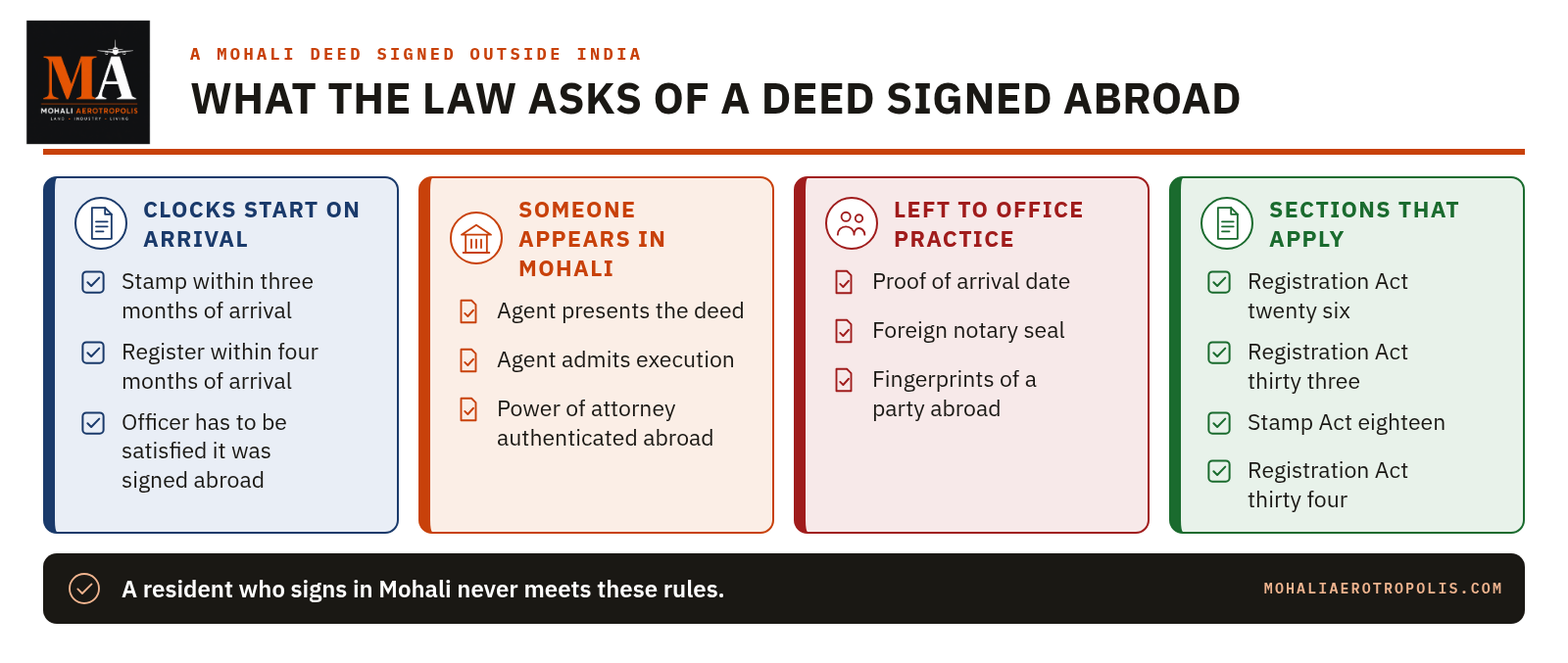
Section twenty six applies when a document "purporting to have been executed by all or any of the parties out of India" is not presented within the normal time. The registering officer may accept it on payment of the proper fee if satisfied of two things. The first is "that the instrument was so executed". The second is "that it has been presented for registration within four months after its arrival in India".
So the four months run from arrival, not from signature. The section gives the officer a discretion and does not create a right. The officer has to be satisfied that the deed really was signed abroad and that it reached India within the window. That makes the date of arrival something the party presenting the deed may be asked to show. Courier records, passport stamps of a person carrying the deed and the date on which stamp duty was paid can all bear on it.
The section also covers a deed signed abroad by only some of the parties. A sale where the seller signs overseas and the buyer signs in Mohali falls inside it. Section twenty four separately allows a deed signed by several people at different times to be presented within four months of each signature.
Stamp duty on a deed signed abroad
Stamp duty is a separate question from registration. Section eighteen of the Indian Stamp Act, which Punjab applies with its own schedule of rates, deals with instruments executed only out of India. It says such an instrument "may be stamped within three months after it has been first received in India".
That clock is shorter than the registration window and starts at the same moment. A deed that arrives in India has to be stamped within three months of arrival and presented for registration within four. Where a party in India has signed the deed as well, the ordinary rule applies to that signature. Duty is then due before or at the time of execution in India.
In Punjab duty and registration fees are now paid online as part of the Easy Registry process before the appointment at the office. The portal records the date of payment, which then sits alongside the arrival date on the file.
Signing is not the same as admitting
Registration in India is more than receiving a signed paper. Section thirty four of the Act says a document is registered only after the persons executing it or their agents appear before the registering officer. Section thirty five then deals with the admission of execution. The officer registers the deed once the executants admit that they signed it.
A seller who signed in London or Toronto is not in the room in Mohali. Someone has to appear and admit execution on that seller's behalf, and the Act allows an agent to do so only if the agent holds a power of attorney of the right kind.
Section thirty two A adds another layer. It requires every person presenting a document at the office to affix a passport size photograph and fingerprints to it, and it requires the same of the buyer and the seller of immovable property. Easy Registry captures photographs at the counter. The section does not say how the fingerprints of a seller who is abroad are to be supplied, and practice in Punjab offices on this point is not set out in any published circular we could find.
The power of attorney the Act asks for
Section thirty three lists the powers of attorney that count for presenting a document and admitting execution. For a principal who "does not reside in India" at the time, it recognises a power of attorney "executed before and authenticated by a Notary Public, or any Court, Judge, Magistrate, Indian Consul or Vice-Consul, or representative of the Central Government".
So the deed signed abroad still leans on a power of attorney in most sales. The difference from the first route is that the agent's job is narrow. The agent presents the deed and admits execution. The agent does not choose the buyer or sign the sale.
Apostille and consular attestation
India joined the Hague Convention that abolished the need for consular legalisation of foreign public documents, and the Ministry of External Affairs issues and recognises apostilles under it. A deed or power of attorney notarised in a convention country can carry an apostille from that country's designated authority.
Section thirty three, on its own wording, accepts a notarised power of attorney without saying anything about an apostille. Section eighty five of the Evidence Act and the matching provision of the Bharatiya Sakshya Adhiniyam raise a presumption about powers of attorney executed before and authenticated by a notary or consul. How a Punjab sub-registrar treats a foreign notary's seal without an apostille or Indian consular attestation is a matter of office practice, and the published Easy Registry guidance we read does not address it.
Where the Mohali owner abroad stands
The legal framework gives a seller abroad a workable path. A deed can be signed overseas, stamped within three months of arrival and registered within four. The seller's agent can then present it and admit execution under a suitable power of attorney.
What the framework does not do is remove the need for someone to appear in Mohali. It also leaves several practical points to the discretion of the registering officer. These include proof of the date of arrival and the treatment of a foreign notary's seal. The fingerprint requirement for a party who is abroad is another.
How this differs from the power of attorney route
Under the first route, the agent in India signs the sale deed as attorney. The deed is executed in India. Section twenty six and section eighteen of the Stamp Act do not come into it. The risk sits with the breadth of the power, which earlier pieces on this site describe.
Under the second route, the owner signs the deed personally. The power of attorney is limited to presentation and admission. Both routes depend on a power of attorney authenticated in the way section thirty three describes.
What this piece does not cover
It does not deal with income tax on the sale or the tax deducted by the buyer. It also does not deal with taking the sale money abroad. Both are covered elsewhere on this site. It also does not cover gifts or wills, which follow their own rules.
Related reading
- Protecting a Mohali property from a forged power of attorney while living abroad
- Can a Mohali property be registered online or at any sub-registrar office
Sources: The sources we use are listed on our Editorial Sources page.
This piece describes the published text of the Registration Act and the Indian Stamp Act as they apply to deeds signed outside India. Nothing here is legal advice, and any sale or purchase turns on its own papers and facts.
विदेश में रहने वाला कोई मालिक अगर मोहाली की संपत्ति बेचना या ख़रीदना चाहे, तो उसके पास दो मोटे रास्ते हैं। एक, भारत में किसी को पावर ऑफ़ अटॉर्नी देकर उससे साइन करवाना। दूसरा, डीड ख़ुद विदेश में साइन करके भारत भेजना। यह लेख दूसरे रास्ते को देखता है। इसके नियम रजिस्ट्रेशन एक्ट उन्नीस सौ आठ और इंडियन स्टांप एक्ट अठारह सौ निन्यानबे में हैं। ये नियम केवल इसलिए हैं कि दस्तावेज़ भारत के बाहर साइन हुआ। मोहाली में रहने वाला ख़रीदार या विक्रेता इनसे कभी नहीं गुज़रता।
विदेश में साइन डीड अलग मामला क्यों है
ज़्यादातर डीड सब-रजिस्ट्रार के सामने, या दफ़्तर जाने से कुछ पहले साइन होती हैं। रजिस्ट्रेशन एक्ट इसके लिए एक घड़ी तय करता है। धारा तेईस कहती है कि वसीयत के अलावा कोई दस्तावेज़ रजिस्ट्रेशन के लिए तभी लिया जाता है जब वह "within four months from the date of its execution" पेश हो।
विदेश में साइन डीड को भारत पहुँचने में इससे ज़्यादा समय लग सकता है। कूरियर धीमे होते हैं। मालिक किसी ख़रीदार या बैंक का इंतज़ार भी कर रहा हो सकता है। एक्ट इसे धारा छब्बीस में संभालता है, जिसका शीर्षक "Documents executed out of India" है।
धारा छब्बीस क्या अनुमति देती है
धारा छब्बीस तब लागू होती है जब कोई दस्तावेज़ "purporting to have been executed by all or any of the parties out of India" सामान्य समय में पेश नहीं होता। रजिस्ट्रेशन अधिकारी उचित फ़ीस लेकर उसे स्वीकार कर सकता है, अगर दो बातों से संतुष्ट हो। पहली, "that the instrument was so executed"। दूसरी, "that it has been presented for registration within four months after its arrival in India"।
यानी चार महीने साइन से नहीं, भारत पहुँचने से गिने जाते हैं। धारा अधिकारी को विवेक देती है, कोई अधिकार नहीं बनाती। अधिकारी को संतुष्ट होना होता है कि डीड सचमुच विदेश में साइन हुई और समय-सीमा में भारत पहुँची। इसलिए डीड पेश करने वाले से पहुँचने की तारीख़ दिखाने को कहा जा सकता है। कूरियर रिकॉर्ड, डीड लाने वाले व्यक्ति के पासपोर्ट की मुहरें और स्टांप ड्यूटी चुकाने की तारीख़ इस पर रोशनी डाल सकती हैं।
यह धारा उस डीड पर भी लागू होती है जिसे कुछ ही पक्षों ने विदेश में साइन किया हो। ऐसी बिक्री, जिसमें विक्रेता विदेश में और ख़रीदार मोहाली में साइन करे, इसके दायरे में आती है। धारा चौबीस अलग से यह अनुमति देती है कि कई लोगों द्वारा अलग-अलग समय पर साइन की गई डीड हर साइन के चार महीने के भीतर पेश की जा सकती है।
विदेश में साइन डीड पर स्टांप ड्यूटी
स्टांप ड्यूटी रजिस्ट्रेशन से अलग सवाल है। इंडियन स्टांप एक्ट की धारा अठारह, जिसे पंजाब अपनी दरों की अनुसूची के साथ लागू करता है, केवल भारत के बाहर निष्पादित दस्तावेज़ों से संबंधित है। वह कहती है कि ऐसा दस्तावेज़ "may be stamped within three months after it has been first received in India"।
यह घड़ी रजिस्ट्रेशन की अवधि से छोटी है और उसी क्षण शुरू होती है। भारत पहुँची डीड पर पहुँचने के तीन महीने में स्टांप लगना और चार महीने में रजिस्ट्रेशन के लिए पेश होना ज़रूरी है। जहाँ भारत में किसी पक्ष ने भी डीड साइन की हो, वहाँ उस साइन पर सामान्य नियम लागू होता है। तब ड्यूटी भारत में निष्पादन से पहले या उसी समय देय होती है।
पंजाब में अब ड्यूटी और रजिस्ट्रेशन फ़ीस Easy Registry प्रक्रिया के तहत दफ़्तर की अपॉइंटमेंट से पहले ऑनलाइन चुकाई जाती है। पोर्टल भुगतान की तारीख़ दर्ज करता है, जो फ़ाइल पर पहुँचने की तारीख़ के साथ रहती है।
साइन करना और स्वीकार करना एक नहीं
भारत में रजिस्ट्रेशन किसी साइन किए काग़ज़ को ले लेने से ज़्यादा है। एक्ट की धारा चौंतीस कहती है कि दस्तावेज़ तभी रजिस्टर होता है जब उसे निष्पादित करने वाले व्यक्ति या उनके एजेंट रजिस्ट्रेशन अधिकारी के सामने हाज़िर हों। धारा पैंतीस फिर निष्पादन की स्वीकृति से संबंधित है। निष्पादक यह स्वीकार कर लें कि उन्होंने साइन किया, तो अधिकारी डीड रजिस्टर करता है।
लंदन या टोरंटो में साइन करने वाला विक्रेता मोहाली के कमरे में मौजूद नहीं होता। किसी को उसकी ओर से हाज़िर होकर निष्पादन स्वीकार करना होता है, और एक्ट एजेंट को ऐसा तभी करने देता है जब उसके पास सही प्रकार की पावर ऑफ़ अटॉर्नी हो।
धारा बत्तीस ए एक और परत जोड़ती है। यह दफ़्तर में दस्तावेज़ पेश करने वाले हर व्यक्ति से उस पर पासपोर्ट साइज़ फ़ोटो और उंगलियों के निशान लगाने को कहती है, और अचल संपत्ति के ख़रीदार और विक्रेता से भी यही चाहती है। Easy Registry काउंटर पर फ़ोटो लेती है। धारा यह नहीं बताती कि विदेश में बैठे विक्रेता के उंगलियों के निशान कैसे दिए जाएँ, और इस बिंदु पर पंजाब के दफ़्तरों का व्यवहार किसी प्रकाशित परिपत्र में हमें नहीं मिला।
एक्ट कैसी पावर ऑफ़ अटॉर्नी माँगता है
धारा तैंतीस उन पावर ऑफ़ अटॉर्नी की सूची देती है जो दस्तावेज़ पेश करने और निष्पादन स्वीकार करने के लिए मान्य हैं। जो प्रिंसिपल उस समय "does not reside in India", उसके लिए यह ऐसी पावर ऑफ़ अटॉर्नी को मान्यता देती है जो "executed before and authenticated by a Notary Public, or any Court, Judge, Magistrate, Indian Consul or Vice-Consul, or representative of the Central Government" हो।
इसलिए विदेश में साइन डीड भी ज़्यादातर बिक्री में पावर ऑफ़ अटॉर्नी पर टिकती है। पहले रास्ते से फ़र्क़ यह है कि एजेंट का काम सीमित है। एजेंट डीड पेश करता है और निष्पादन स्वीकार करता है। एजेंट ख़रीदार नहीं चुनता और बिक्री पर साइन नहीं करता।
अपोस्टिल और कॉन्सुलर सत्यापन
भारत उस हेग कन्वेंशन में शामिल है जिसने विदेशी सार्वजनिक दस्तावेज़ों के कॉन्सुलर लीगलाइज़ेशन की ज़रूरत ख़त्म की, और विदेश मंत्रालय इसके तहत अपोस्टिल जारी करता और मानता है। कन्वेंशन वाले देश में नोटरी कराई गई डीड या पावर ऑफ़ अटॉर्नी पर उस देश के नामित प्राधिकारी का अपोस्टिल लग सकता है।
धारा तैंतीस अपने शब्दों में नोटरी कराई गई पावर ऑफ़ अटॉर्नी को अपोस्टिल का कोई ज़िक्र किए बिना स्वीकार करती है। एविडेंस एक्ट की धारा पचासी और भारतीय साक्ष्य अधिनियम का मिलता-जुलता प्रावधान नोटरी या कॉन्सुल के सामने निष्पादित और प्रमाणित पावर ऑफ़ अटॉर्नी के बारे में एक अनुमान बनाते हैं। अपोस्टिल या भारतीय कॉन्सुलर सत्यापन के बिना विदेशी नोटरी की मुहर को पंजाब का सब-रजिस्ट्रार कैसे देखता है, यह दफ़्तर के व्यवहार का मामला है, और हमने जो Easy Registry मार्गदर्शन पढ़ा वह इस पर कुछ नहीं कहता।
विदेश में रहने वाला मोहाली मालिक कहाँ खड़ा है
क़ानूनी ढाँचा विदेश में बैठे विक्रेता को एक चलने लायक रास्ता देता है। डीड विदेश में साइन हो सकती है, पहुँचने के तीन महीने में स्टांप हो सकती है और चार महीने में रजिस्टर हो सकती है। विक्रेता का एजेंट फिर उपयुक्त पावर ऑफ़ अटॉर्नी के तहत उसे पेश कर सकता है और निष्पादन स्वीकार कर सकता है।
ढाँचा जो नहीं करता, वह है मोहाली में किसी की हाज़िरी की ज़रूरत ख़त्म करना। वह कई व्यावहारिक बिंदु भी रजिस्ट्रेशन अधिकारी के विवेक पर छोड़ता है। इनमें पहुँचने की तारीख़ का सबूत और विदेशी नोटरी की मुहर का व्यवहार शामिल है। विदेश में बैठे पक्ष के उंगलियों के निशान की ज़रूरत एक और बिंदु है।
यह पावर ऑफ़ अटॉर्नी वाले रास्ते से कैसे अलग है
पहले रास्ते में भारत में एजेंट अटॉर्नी के रूप में सेल डीड साइन करता है। डीड भारत में निष्पादित होती है। धारा छब्बीस और स्टांप एक्ट की धारा अठारह इसमें नहीं आतीं। जोखिम पावर की व्यापकता में होता है, जिसका वर्णन इस साइट के पहले के लेख करते हैं।
दूसरे रास्ते में मालिक ख़ुद डीड साइन करता है। पावर ऑफ़ अटॉर्नी केवल पेश करने और स्वीकार करने तक सीमित रहती है। दोनों रास्ते धारा तैंतीस में बताए तरीक़े से प्रमाणित पावर ऑफ़ अटॉर्नी पर निर्भर हैं।
यह लेख किन बातों को नहीं छूता
यह बिक्री पर इनकम टैक्स या ख़रीदार द्वारा काटे गए टैक्स से संबंधित नहीं है। यह बिक्री का पैसा विदेश ले जाने से भी संबंधित नहीं है। दोनों इस साइट पर अलग से कवर हैं। यह गिफ़्ट या वसीयत को भी नहीं छूता, जिनके अपने नियम हैं।
संबंधित लेख
- Protecting a Mohali property from a forged power of attorney while living abroad
- Can a Mohali property be registered online or at any sub-registrar office
स्रोत: हम जिन स्रोतों का उपयोग करते हैं, वे हमारे Editorial Sources पेज पर दिए गए हैं।
यह लेख भारत के बाहर साइन डीड पर लागू रजिस्ट्रेशन एक्ट और इंडियन स्टांप एक्ट के प्रकाशित पाठ का विवरण देता है। इसमें कुछ भी क़ानूनी सलाह नहीं है, और हर बिक्री या ख़रीद अपने काग़ज़ों और तथ्यों पर निर्भर करती है।
ਵਿਦੇਸ਼ ਵਿੱਚ ਰਹਿਣ ਵਾਲਾ ਕੋਈ ਮਾਲਕ ਜੇ ਮੋਹਾਲੀ ਦੀ ਜਾਇਦਾਦ ਵੇਚਣਾ ਜਾਂ ਖ਼ਰੀਦਣਾ ਚਾਹੇ, ਤਾਂ ਉਸ ਕੋਲ ਦੋ ਮੋਟੇ ਰਾਹ ਹਨ। ਇੱਕ, ਭਾਰਤ ਵਿੱਚ ਕਿਸੇ ਨੂੰ ਪਾਵਰ ਆਫ਼ ਅਟਾਰਨੀ ਦੇ ਕੇ ਉਸ ਤੋਂ ਸਾਈਨ ਕਰਵਾਉਣਾ। ਦੂਜਾ, ਡੀਡ ਖ਼ੁਦ ਵਿਦੇਸ਼ ਵਿੱਚ ਸਾਈਨ ਕਰਕੇ ਭਾਰਤ ਭੇਜਣਾ। ਇਹ ਲੇਖ ਦੂਜੇ ਰਾਹ ਨੂੰ ਦੇਖਦਾ ਹੈ। ਇਸ ਦੇ ਨਿਯਮ ਰਜਿਸਟ੍ਰੇਸ਼ਨ ਐਕਟ ਉੱਨੀ ਸੌ ਅੱਠ ਅਤੇ ਇੰਡੀਅਨ ਸਟੈਂਪ ਐਕਟ ਅਠਾਰਾਂ ਸੌ ਨੜਿੱਨਵੇਂ ਵਿੱਚ ਹਨ। ਇਹ ਨਿਯਮ ਸਿਰਫ਼ ਇਸ ਲਈ ਹਨ ਕਿ ਦਸਤਾਵੇਜ਼ ਭਾਰਤ ਤੋਂ ਬਾਹਰ ਸਾਈਨ ਹੋਇਆ। ਮੋਹਾਲੀ ਵਿੱਚ ਰਹਿਣ ਵਾਲਾ ਖ਼ਰੀਦਦਾਰ ਜਾਂ ਵਿਕਰੇਤਾ ਇਨ੍ਹਾਂ ਨਾਲ ਕਦੇ ਨਹੀਂ ਵਾਹ ਪਾਉਂਦਾ।
ਵਿਦੇਸ਼ ਵਿੱਚ ਸਾਈਨ ਡੀਡ ਵੱਖਰਾ ਮਾਮਲਾ ਕਿਉਂ ਹੈ
ਬਹੁਤੀਆਂ ਡੀਡਾਂ ਸਬ-ਰਜਿਸਟਰਾਰ ਸਾਹਮਣੇ, ਜਾਂ ਦਫ਼ਤਰ ਜਾਣ ਤੋਂ ਕੁਝ ਪਹਿਲਾਂ ਸਾਈਨ ਹੁੰਦੀਆਂ ਹਨ। ਰਜਿਸਟ੍ਰੇਸ਼ਨ ਐਕਟ ਇਸ ਲਈ ਇੱਕ ਘੜੀ ਤੈਅ ਕਰਦਾ ਹੈ। ਧਾਰਾ ਤੇਈ ਕਹਿੰਦੀ ਹੈ ਕਿ ਵਸੀਅਤ ਤੋਂ ਇਲਾਵਾ ਕੋਈ ਦਸਤਾਵੇਜ਼ ਰਜਿਸਟ੍ਰੇਸ਼ਨ ਲਈ ਤਾਂ ਹੀ ਲਿਆ ਜਾਂਦਾ ਹੈ ਜੇ ਉਹ "within four months from the date of its execution" ਪੇਸ਼ ਹੋਵੇ।
ਵਿਦੇਸ਼ ਵਿੱਚ ਸਾਈਨ ਡੀਡ ਨੂੰ ਭਾਰਤ ਪਹੁੰਚਣ ਵਿੱਚ ਇਸ ਤੋਂ ਵੱਧ ਸਮਾਂ ਲੱਗ ਸਕਦਾ ਹੈ। ਕੋਰੀਅਰ ਹੌਲੀ ਹੁੰਦੇ ਹਨ। ਮਾਲਕ ਕਿਸੇ ਖ਼ਰੀਦਦਾਰ ਜਾਂ ਬੈਂਕ ਦੀ ਉਡੀਕ ਵੀ ਕਰ ਰਿਹਾ ਹੋ ਸਕਦਾ ਹੈ। ਐਕਟ ਇਸ ਨੂੰ ਧਾਰਾ ਛੱਬੀ ਵਿੱਚ ਸੰਭਾਲਦਾ ਹੈ, ਜਿਸ ਦਾ ਸਿਰਲੇਖ "Documents executed out of India" ਹੈ।
ਧਾਰਾ ਛੱਬੀ ਕੀ ਇਜਾਜ਼ਤ ਦਿੰਦੀ ਹੈ
ਧਾਰਾ ਛੱਬੀ ਉਦੋਂ ਲਾਗੂ ਹੁੰਦੀ ਹੈ ਜਦੋਂ ਕੋਈ ਦਸਤਾਵੇਜ਼ "purporting to have been executed by all or any of the parties out of India" ਆਮ ਸਮੇਂ ਵਿੱਚ ਪੇਸ਼ ਨਹੀਂ ਹੁੰਦਾ। ਰਜਿਸਟ੍ਰੇਸ਼ਨ ਅਧਿਕਾਰੀ ਬਣਦੀ ਫ਼ੀਸ ਲੈ ਕੇ ਇਸ ਨੂੰ ਮੰਨ ਸਕਦਾ ਹੈ, ਜੇ ਦੋ ਗੱਲਾਂ ਤੋਂ ਤਸੱਲੀ ਹੋਵੇ। ਪਹਿਲੀ, "that the instrument was so executed"। ਦੂਜੀ, "that it has been presented for registration within four months after its arrival in India"।
ਯਾਨੀ ਚਾਰ ਮਹੀਨੇ ਸਾਈਨ ਤੋਂ ਨਹੀਂ, ਭਾਰਤ ਪਹੁੰਚਣ ਤੋਂ ਗਿਣੇ ਜਾਂਦੇ ਹਨ। ਧਾਰਾ ਅਧਿਕਾਰੀ ਨੂੰ ਵਿਵੇਕ ਦਿੰਦੀ ਹੈ, ਕੋਈ ਹੱਕ ਨਹੀਂ ਬਣਾਉਂਦੀ। ਅਧਿਕਾਰੀ ਦੀ ਤਸੱਲੀ ਹੋਣੀ ਚਾਹੀਦੀ ਹੈ ਕਿ ਡੀਡ ਸੱਚਮੁੱਚ ਵਿਦੇਸ਼ ਵਿੱਚ ਸਾਈਨ ਹੋਈ ਅਤੇ ਸਮੇਂ ਅੰਦਰ ਭਾਰਤ ਪਹੁੰਚੀ। ਇਸ ਲਈ ਡੀਡ ਪੇਸ਼ ਕਰਨ ਵਾਲੇ ਤੋਂ ਪਹੁੰਚਣ ਦੀ ਤਾਰੀਖ਼ ਦਿਖਾਉਣ ਲਈ ਕਿਹਾ ਜਾ ਸਕਦਾ ਹੈ। ਕੋਰੀਅਰ ਰਿਕਾਰਡ, ਡੀਡ ਲਿਆਉਣ ਵਾਲੇ ਵਿਅਕਤੀ ਦੇ ਪਾਸਪੋਰਟ ਦੀਆਂ ਮੋਹਰਾਂ ਅਤੇ ਸਟੈਂਪ ਡਿਊਟੀ ਭਰਨ ਦੀ ਤਾਰੀਖ਼ ਇਸ ਉੱਤੇ ਚਾਨਣ ਪਾ ਸਕਦੀਆਂ ਹਨ।
ਇਹ ਧਾਰਾ ਉਸ ਡੀਡ ਉੱਤੇ ਵੀ ਲਾਗੂ ਹੁੰਦੀ ਹੈ ਜਿਸ ਨੂੰ ਕੁਝ ਹੀ ਧਿਰਾਂ ਨੇ ਵਿਦੇਸ਼ ਵਿੱਚ ਸਾਈਨ ਕੀਤਾ ਹੋਵੇ। ਅਜਿਹੀ ਵਿਕਰੀ, ਜਿਸ ਵਿੱਚ ਵਿਕਰੇਤਾ ਵਿਦੇਸ਼ ਵਿੱਚ ਅਤੇ ਖ਼ਰੀਦਦਾਰ ਮੋਹਾਲੀ ਵਿੱਚ ਸਾਈਨ ਕਰੇ, ਇਸ ਦੇ ਘੇਰੇ ਵਿੱਚ ਆਉਂਦੀ ਹੈ। ਧਾਰਾ ਚੌਵੀ ਵੱਖਰੇ ਤੌਰ ਉੱਤੇ ਇਜਾਜ਼ਤ ਦਿੰਦੀ ਹੈ ਕਿ ਕਈ ਲੋਕਾਂ ਵੱਲੋਂ ਵੱਖ ਵੱਖ ਸਮੇਂ ਸਾਈਨ ਕੀਤੀ ਡੀਡ ਹਰ ਸਾਈਨ ਦੇ ਚਾਰ ਮਹੀਨਿਆਂ ਅੰਦਰ ਪੇਸ਼ ਹੋ ਸਕਦੀ ਹੈ।
ਵਿਦੇਸ਼ ਵਿੱਚ ਸਾਈਨ ਡੀਡ ਉੱਤੇ ਸਟੈਂਪ ਡਿਊਟੀ
ਸਟੈਂਪ ਡਿਊਟੀ ਰਜਿਸਟ੍ਰੇਸ਼ਨ ਤੋਂ ਵੱਖਰਾ ਸਵਾਲ ਹੈ। ਇੰਡੀਅਨ ਸਟੈਂਪ ਐਕਟ ਦੀ ਧਾਰਾ ਅਠਾਰਾਂ, ਜਿਸ ਨੂੰ ਪੰਜਾਬ ਆਪਣੀਆਂ ਦਰਾਂ ਦੀ ਅਨੁਸੂਚੀ ਨਾਲ ਲਾਗੂ ਕਰਦਾ ਹੈ, ਸਿਰਫ਼ ਭਾਰਤ ਤੋਂ ਬਾਹਰ ਲਿਖੇ ਦਸਤਾਵੇਜ਼ਾਂ ਨਾਲ ਸੰਬੰਧਿਤ ਹੈ। ਉਹ ਕਹਿੰਦੀ ਹੈ ਕਿ ਅਜਿਹਾ ਦਸਤਾਵੇਜ਼ "may be stamped within three months after it has been first received in India"।
ਇਹ ਘੜੀ ਰਜਿਸਟ੍ਰੇਸ਼ਨ ਦੀ ਮਿਆਦ ਤੋਂ ਛੋਟੀ ਹੈ ਅਤੇ ਉਸੇ ਪਲ ਸ਼ੁਰੂ ਹੁੰਦੀ ਹੈ। ਭਾਰਤ ਪਹੁੰਚੀ ਡੀਡ ਉੱਤੇ ਪਹੁੰਚਣ ਦੇ ਤਿੰਨ ਮਹੀਨਿਆਂ ਵਿੱਚ ਸਟੈਂਪ ਲੱਗਣਾ ਅਤੇ ਚਾਰ ਮਹੀਨਿਆਂ ਵਿੱਚ ਰਜਿਸਟ੍ਰੇਸ਼ਨ ਲਈ ਪੇਸ਼ ਹੋਣਾ ਲਾਜ਼ਮੀ ਹੈ। ਜਿੱਥੇ ਭਾਰਤ ਵਿੱਚ ਕਿਸੇ ਧਿਰ ਨੇ ਵੀ ਡੀਡ ਸਾਈਨ ਕੀਤੀ ਹੋਵੇ, ਉੱਥੇ ਉਸ ਸਾਈਨ ਉੱਤੇ ਆਮ ਨਿਯਮ ਲਾਗੂ ਹੁੰਦਾ ਹੈ। ਤਦ ਡਿਊਟੀ ਭਾਰਤ ਵਿੱਚ ਲਿਖਤ ਤੋਂ ਪਹਿਲਾਂ ਜਾਂ ਉਸੇ ਵੇਲੇ ਬਣਦੀ ਹੈ।
ਪੰਜਾਬ ਵਿੱਚ ਹੁਣ ਡਿਊਟੀ ਅਤੇ ਰਜਿਸਟ੍ਰੇਸ਼ਨ ਫ਼ੀਸ Easy Registry ਪ੍ਰਕਿਰਿਆ ਅਧੀਨ ਦਫ਼ਤਰ ਦੀ ਮੁਲਾਕਾਤ ਤੋਂ ਪਹਿਲਾਂ ਆਨਲਾਈਨ ਭਰੀ ਜਾਂਦੀ ਹੈ। ਪੋਰਟਲ ਅਦਾਇਗੀ ਦੀ ਤਾਰੀਖ਼ ਦਰਜ ਕਰਦਾ ਹੈ, ਜੋ ਫ਼ਾਈਲ ਉੱਤੇ ਪਹੁੰਚਣ ਦੀ ਤਾਰੀਖ਼ ਦੇ ਨਾਲ ਰਹਿੰਦੀ ਹੈ।
ਸਾਈਨ ਕਰਨਾ ਅਤੇ ਮੰਨਣਾ ਇੱਕੋ ਗੱਲ ਨਹੀਂ
ਭਾਰਤ ਵਿੱਚ ਰਜਿਸਟ੍ਰੇਸ਼ਨ ਕਿਸੇ ਸਾਈਨ ਕੀਤੇ ਕਾਗ਼ਜ਼ ਨੂੰ ਲੈ ਲੈਣ ਤੋਂ ਵੱਧ ਹੈ। ਐਕਟ ਦੀ ਧਾਰਾ ਚੌਂਤੀ ਕਹਿੰਦੀ ਹੈ ਕਿ ਦਸਤਾਵੇਜ਼ ਤਾਂ ਹੀ ਰਜਿਸਟਰ ਹੁੰਦਾ ਹੈ ਜਦੋਂ ਉਸ ਨੂੰ ਲਿਖਣ ਵਾਲੇ ਵਿਅਕਤੀ ਜਾਂ ਉਨ੍ਹਾਂ ਦੇ ਏਜੰਟ ਰਜਿਸਟ੍ਰੇਸ਼ਨ ਅਧਿਕਾਰੀ ਸਾਹਮਣੇ ਪੇਸ਼ ਹੋਣ। ਧਾਰਾ ਪੈਂਤੀ ਫਿਰ ਲਿਖਤ ਦੇ ਇਕਬਾਲ ਨਾਲ ਸੰਬੰਧਿਤ ਹੈ। ਲਿਖਣ ਵਾਲੇ ਮੰਨ ਲੈਣ ਕਿ ਉਨ੍ਹਾਂ ਨੇ ਸਾਈਨ ਕੀਤਾ, ਤਾਂ ਅਧਿਕਾਰੀ ਡੀਡ ਰਜਿਸਟਰ ਕਰਦਾ ਹੈ।
ਲੰਡਨ ਜਾਂ ਟੋਰਾਂਟੋ ਵਿੱਚ ਸਾਈਨ ਕਰਨ ਵਾਲਾ ਵਿਕਰੇਤਾ ਮੋਹਾਲੀ ਦੇ ਕਮਰੇ ਵਿੱਚ ਮੌਜੂਦ ਨਹੀਂ ਹੁੰਦਾ। ਕਿਸੇ ਨੂੰ ਉਸ ਵੱਲੋਂ ਪੇਸ਼ ਹੋ ਕੇ ਲਿਖਤ ਮੰਨਣੀ ਪੈਂਦੀ ਹੈ, ਅਤੇ ਐਕਟ ਏਜੰਟ ਨੂੰ ਇਹ ਤਾਂ ਹੀ ਕਰਨ ਦਿੰਦਾ ਹੈ ਜੇ ਉਸ ਕੋਲ ਸਹੀ ਕਿਸਮ ਦੀ ਪਾਵਰ ਆਫ਼ ਅਟਾਰਨੀ ਹੋਵੇ।
ਧਾਰਾ ਬੱਤੀ ਏ ਇੱਕ ਹੋਰ ਪਰਤ ਜੋੜਦੀ ਹੈ। ਇਹ ਦਫ਼ਤਰ ਵਿੱਚ ਦਸਤਾਵੇਜ਼ ਪੇਸ਼ ਕਰਨ ਵਾਲੇ ਹਰ ਵਿਅਕਤੀ ਤੋਂ ਉਸ ਉੱਤੇ ਪਾਸਪੋਰਟ ਸਾਈਜ਼ ਫ਼ੋਟੋ ਅਤੇ ਉਂਗਲਾਂ ਦੇ ਨਿਸ਼ਾਨ ਲਗਾਉਣ ਲਈ ਕਹਿੰਦੀ ਹੈ, ਅਤੇ ਅਚੱਲ ਜਾਇਦਾਦ ਦੇ ਖ਼ਰੀਦਦਾਰ ਅਤੇ ਵਿਕਰੇਤਾ ਤੋਂ ਵੀ ਇਹੀ ਮੰਗਦੀ ਹੈ। Easy Registry ਕਾਊਂਟਰ ਉੱਤੇ ਫ਼ੋਟੋ ਲੈਂਦੀ ਹੈ। ਧਾਰਾ ਇਹ ਨਹੀਂ ਦੱਸਦੀ ਕਿ ਵਿਦੇਸ਼ ਬੈਠੇ ਵਿਕਰੇਤਾ ਦੇ ਉਂਗਲਾਂ ਦੇ ਨਿਸ਼ਾਨ ਕਿਵੇਂ ਦਿੱਤੇ ਜਾਣ, ਅਤੇ ਇਸ ਨੁਕਤੇ ਉੱਤੇ ਪੰਜਾਬ ਦੇ ਦਫ਼ਤਰਾਂ ਦਾ ਅਮਲ ਸਾਨੂੰ ਕਿਸੇ ਛਪੇ ਸਰਕੂਲਰ ਵਿੱਚ ਨਹੀਂ ਮਿਲਿਆ।
ਐਕਟ ਕਿਹੋ ਜਿਹੀ ਪਾਵਰ ਆਫ਼ ਅਟਾਰਨੀ ਮੰਗਦਾ ਹੈ
ਧਾਰਾ ਤੇਤੀ ਉਨ੍ਹਾਂ ਪਾਵਰ ਆਫ਼ ਅਟਾਰਨੀਆਂ ਦੀ ਸੂਚੀ ਦਿੰਦੀ ਹੈ ਜੋ ਦਸਤਾਵੇਜ਼ ਪੇਸ਼ ਕਰਨ ਅਤੇ ਲਿਖਤ ਮੰਨਣ ਲਈ ਮੰਨੀਆਂ ਜਾਂਦੀਆਂ ਹਨ। ਜੋ ਪ੍ਰਿੰਸੀਪਲ ਉਸ ਵੇਲੇ "does not reside in India", ਉਸ ਲਈ ਇਹ ਅਜਿਹੀ ਪਾਵਰ ਆਫ਼ ਅਟਾਰਨੀ ਨੂੰ ਮਾਨਤਾ ਦਿੰਦੀ ਹੈ ਜੋ "executed before and authenticated by a Notary Public, or any Court, Judge, Magistrate, Indian Consul or Vice-Consul, or representative of the Central Government" ਹੋਵੇ।
ਇਸ ਲਈ ਵਿਦੇਸ਼ ਵਿੱਚ ਸਾਈਨ ਡੀਡ ਵੀ ਬਹੁਤੀਆਂ ਵਿਕਰੀਆਂ ਵਿੱਚ ਪਾਵਰ ਆਫ਼ ਅਟਾਰਨੀ ਉੱਤੇ ਟਿਕਦੀ ਹੈ। ਪਹਿਲੇ ਰਾਹ ਨਾਲੋਂ ਫ਼ਰਕ ਇਹ ਹੈ ਕਿ ਏਜੰਟ ਦਾ ਕੰਮ ਸੀਮਤ ਹੈ। ਏਜੰਟ ਡੀਡ ਪੇਸ਼ ਕਰਦਾ ਹੈ ਅਤੇ ਲਿਖਤ ਮੰਨਦਾ ਹੈ। ਏਜੰਟ ਖ਼ਰੀਦਦਾਰ ਨਹੀਂ ਚੁਣਦਾ ਅਤੇ ਵਿਕਰੀ ਉੱਤੇ ਸਾਈਨ ਨਹੀਂ ਕਰਦਾ।
ਅਪੋਸਟਿਲ ਅਤੇ ਕੌਂਸਲਰ ਤਸਦੀਕ
ਭਾਰਤ ਉਸ ਹੇਗ ਕਨਵੈਨਸ਼ਨ ਵਿੱਚ ਸ਼ਾਮਲ ਹੈ ਜਿਸ ਨੇ ਵਿਦੇਸ਼ੀ ਜਨਤਕ ਦਸਤਾਵੇਜ਼ਾਂ ਦੇ ਕੌਂਸਲਰ ਲੀਗਲਾਈਜ਼ੇਸ਼ਨ ਦੀ ਲੋੜ ਖ਼ਤਮ ਕੀਤੀ, ਅਤੇ ਵਿਦੇਸ਼ ਮੰਤਰਾਲਾ ਇਸ ਅਧੀਨ ਅਪੋਸਟਿਲ ਜਾਰੀ ਕਰਦਾ ਅਤੇ ਮੰਨਦਾ ਹੈ। ਕਨਵੈਨਸ਼ਨ ਵਾਲੇ ਦੇਸ਼ ਵਿੱਚ ਨੋਟਰੀ ਕਰਾਈ ਡੀਡ ਜਾਂ ਪਾਵਰ ਆਫ਼ ਅਟਾਰਨੀ ਉੱਤੇ ਉਸ ਦੇਸ਼ ਦੀ ਨਾਮਜ਼ਦ ਅਥਾਰਟੀ ਦਾ ਅਪੋਸਟਿਲ ਲੱਗ ਸਕਦਾ ਹੈ।
ਧਾਰਾ ਤੇਤੀ ਆਪਣੇ ਸ਼ਬਦਾਂ ਵਿੱਚ ਨੋਟਰੀ ਕਰਾਈ ਪਾਵਰ ਆਫ਼ ਅਟਾਰਨੀ ਨੂੰ ਅਪੋਸਟਿਲ ਦਾ ਕੋਈ ਜ਼ਿਕਰ ਕੀਤੇ ਬਿਨਾਂ ਮੰਨਦੀ ਹੈ। ਐਵੀਡੈਂਸ ਐਕਟ ਦੀ ਧਾਰਾ ਪਚਾਸੀ ਅਤੇ ਭਾਰਤੀ ਸਾਕਸ਼ਯ ਅਧਿਨਿਯਮ ਦੀ ਮਿਲਦੀ ਜੁਲਦੀ ਵਿਵਸਥਾ ਨੋਟਰੀ ਜਾਂ ਕੌਂਸਲ ਸਾਹਮਣੇ ਲਿਖੀ ਅਤੇ ਤਸਦੀਕ ਕੀਤੀ ਪਾਵਰ ਆਫ਼ ਅਟਾਰਨੀ ਬਾਰੇ ਇੱਕ ਅਨੁਮਾਨ ਬਣਾਉਂਦੀਆਂ ਹਨ। ਅਪੋਸਟਿਲ ਜਾਂ ਭਾਰਤੀ ਕੌਂਸਲਰ ਤਸਦੀਕ ਤੋਂ ਬਿਨਾਂ ਵਿਦੇਸ਼ੀ ਨੋਟਰੀ ਦੀ ਮੋਹਰ ਨੂੰ ਪੰਜਾਬ ਦਾ ਸਬ-ਰਜਿਸਟਰਾਰ ਕਿਵੇਂ ਦੇਖਦਾ ਹੈ, ਇਹ ਦਫ਼ਤਰ ਦੇ ਅਮਲ ਦਾ ਮਾਮਲਾ ਹੈ, ਅਤੇ ਅਸੀਂ ਜੋ Easy Registry ਸੇਧ ਪੜ੍ਹੀ ਉਹ ਇਸ ਬਾਰੇ ਕੁਝ ਨਹੀਂ ਕਹਿੰਦੀ।
ਵਿਦੇਸ਼ ਰਹਿੰਦਾ ਮੋਹਾਲੀ ਮਾਲਕ ਕਿੱਥੇ ਖੜ੍ਹਾ ਹੈ
ਕਾਨੂੰਨੀ ਢਾਂਚਾ ਵਿਦੇਸ਼ ਬੈਠੇ ਵਿਕਰੇਤਾ ਨੂੰ ਇੱਕ ਚੱਲਣਯੋਗ ਰਾਹ ਦਿੰਦਾ ਹੈ। ਡੀਡ ਵਿਦੇਸ਼ ਵਿੱਚ ਸਾਈਨ ਹੋ ਸਕਦੀ ਹੈ, ਪਹੁੰਚਣ ਦੇ ਤਿੰਨ ਮਹੀਨਿਆਂ ਵਿੱਚ ਸਟੈਂਪ ਹੋ ਸਕਦੀ ਹੈ ਅਤੇ ਚਾਰ ਮਹੀਨਿਆਂ ਵਿੱਚ ਰਜਿਸਟਰ ਹੋ ਸਕਦੀ ਹੈ। ਵਿਕਰੇਤਾ ਦਾ ਏਜੰਟ ਫਿਰ ਢੁਕਵੀਂ ਪਾਵਰ ਆਫ਼ ਅਟਾਰਨੀ ਅਧੀਨ ਇਸ ਨੂੰ ਪੇਸ਼ ਕਰ ਸਕਦਾ ਹੈ ਅਤੇ ਲਿਖਤ ਮੰਨ ਸਕਦਾ ਹੈ।
ਢਾਂਚਾ ਜੋ ਨਹੀਂ ਕਰਦਾ, ਉਹ ਹੈ ਮੋਹਾਲੀ ਵਿੱਚ ਕਿਸੇ ਦੀ ਹਾਜ਼ਰੀ ਦੀ ਲੋੜ ਖ਼ਤਮ ਕਰਨਾ। ਉਹ ਕਈ ਅਮਲੀ ਨੁਕਤੇ ਵੀ ਰਜਿਸਟ੍ਰੇਸ਼ਨ ਅਧਿਕਾਰੀ ਦੇ ਵਿਵੇਕ ਉੱਤੇ ਛੱਡਦਾ ਹੈ। ਇਨ੍ਹਾਂ ਵਿੱਚ ਪਹੁੰਚਣ ਦੀ ਤਾਰੀਖ਼ ਦਾ ਸਬੂਤ ਅਤੇ ਵਿਦੇਸ਼ੀ ਨੋਟਰੀ ਦੀ ਮੋਹਰ ਨਾਲ ਵਿਹਾਰ ਸ਼ਾਮਲ ਹੈ। ਵਿਦੇਸ਼ ਬੈਠੀ ਧਿਰ ਦੇ ਉਂਗਲਾਂ ਦੇ ਨਿਸ਼ਾਨਾਂ ਦੀ ਲੋੜ ਇੱਕ ਹੋਰ ਨੁਕਤਾ ਹੈ।
ਇਹ ਪਾਵਰ ਆਫ਼ ਅਟਾਰਨੀ ਵਾਲੇ ਰਾਹ ਤੋਂ ਕਿਵੇਂ ਵੱਖਰਾ ਹੈ
ਪਹਿਲੇ ਰਾਹ ਵਿੱਚ ਭਾਰਤ ਵਿੱਚ ਏਜੰਟ ਅਟਾਰਨੀ ਵਜੋਂ ਸੇਲ ਡੀਡ ਸਾਈਨ ਕਰਦਾ ਹੈ। ਡੀਡ ਭਾਰਤ ਵਿੱਚ ਲਿਖੀ ਜਾਂਦੀ ਹੈ। ਧਾਰਾ ਛੱਬੀ ਅਤੇ ਸਟੈਂਪ ਐਕਟ ਦੀ ਧਾਰਾ ਅਠਾਰਾਂ ਇਸ ਵਿੱਚ ਨਹੀਂ ਆਉਂਦੀਆਂ। ਜੋਖਮ ਪਾਵਰ ਦੀ ਚੌੜਾਈ ਵਿੱਚ ਹੁੰਦਾ ਹੈ, ਜਿਸ ਦਾ ਵੇਰਵਾ ਇਸ ਸਾਈਟ ਦੇ ਪਹਿਲੇ ਲੇਖ ਦਿੰਦੇ ਹਨ।
ਦੂਜੇ ਰਾਹ ਵਿੱਚ ਮਾਲਕ ਖ਼ੁਦ ਡੀਡ ਸਾਈਨ ਕਰਦਾ ਹੈ। ਪਾਵਰ ਆਫ਼ ਅਟਾਰਨੀ ਸਿਰਫ਼ ਪੇਸ਼ ਕਰਨ ਅਤੇ ਮੰਨਣ ਤੱਕ ਸੀਮਤ ਰਹਿੰਦੀ ਹੈ। ਦੋਵੇਂ ਰਾਹ ਧਾਰਾ ਤੇਤੀ ਵਿੱਚ ਦੱਸੇ ਤਰੀਕੇ ਨਾਲ ਤਸਦੀਕ ਕੀਤੀ ਪਾਵਰ ਆਫ਼ ਅਟਾਰਨੀ ਉੱਤੇ ਨਿਰਭਰ ਹਨ।
ਇਹ ਲੇਖ ਕਿਹੜੀਆਂ ਗੱਲਾਂ ਨਹੀਂ ਛੂੰਹਦਾ
ਇਹ ਵਿਕਰੀ ਉੱਤੇ ਇਨਕਮ ਟੈਕਸ ਜਾਂ ਖ਼ਰੀਦਦਾਰ ਵੱਲੋਂ ਕੱਟੇ ਟੈਕਸ ਨਾਲ ਸੰਬੰਧਿਤ ਨਹੀਂ। ਇਹ ਵਿਕਰੀ ਦਾ ਪੈਸਾ ਵਿਦੇਸ਼ ਲਿਜਾਣ ਨਾਲ ਵੀ ਸੰਬੰਧਿਤ ਨਹੀਂ। ਦੋਵੇਂ ਇਸ ਸਾਈਟ ਉੱਤੇ ਵੱਖਰੇ ਤੌਰ ਉੱਤੇ ਕਵਰ ਹਨ। ਇਹ ਤੋਹਫ਼ੇ ਜਾਂ ਵਸੀਅਤ ਨੂੰ ਵੀ ਨਹੀਂ ਛੂੰਹਦਾ, ਜਿਨ੍ਹਾਂ ਦੇ ਆਪਣੇ ਨਿਯਮ ਹਨ।
ਸੰਬੰਧਿਤ ਲੇਖ
- Protecting a Mohali property from a forged power of attorney while living abroad
- Can a Mohali property be registered online or at any sub-registrar office
ਸਰੋਤ: ਅਸੀਂ ਜਿਹੜੇ ਸਰੋਤ ਵਰਤਦੇ ਹਾਂ, ਉਹ ਸਾਡੇ Editorial Sources ਪੰਨੇ ਉੱਤੇ ਦਿੱਤੇ ਗਏ ਹਨ।
ਇਹ ਲੇਖ ਭਾਰਤ ਤੋਂ ਬਾਹਰ ਸਾਈਨ ਡੀਡਾਂ ਉੱਤੇ ਲਾਗੂ ਰਜਿਸਟ੍ਰੇਸ਼ਨ ਐਕਟ ਅਤੇ ਇੰਡੀਅਨ ਸਟੈਂਪ ਐਕਟ ਦੇ ਛਪੇ ਪਾਠ ਦਾ ਵੇਰਵਾ ਦਿੰਦਾ ਹੈ। ਇਸ ਵਿੱਚ ਕੁਝ ਵੀ ਕਾਨੂੰਨੀ ਸਲਾਹ ਨਹੀਂ ਹੈ, ਅਤੇ ਹਰ ਵਿਕਰੀ ਜਾਂ ਖ਼ਰੀਦ ਆਪਣੇ ਕਾਗ਼ਜ਼ਾਂ ਅਤੇ ਤੱਥਾਂ ਉੱਤੇ ਨਿਰਭਰ ਕਰਦੀ ਹੈ।