

A Mohali allotment dispute that began with a food court site auctioned in Sector Sixty Two has reached the final rung of GMADA's appeal ladder. According to a report in The New Indian Express on the seventeenth of October, the Punjab Department of Housing and Urban Development has withdrawn concessions worth nearly forty crore rupees that GMADA had granted to the allottee, a Delhi based builder. The report credits its account to sources and to a written order. For anyone who holds a GMADA plot or site on instalments, the case shows how the appeal and revision route in the Punjab Regional and Town Planning and Development Act works when dues fall behind.
What the report says was decided
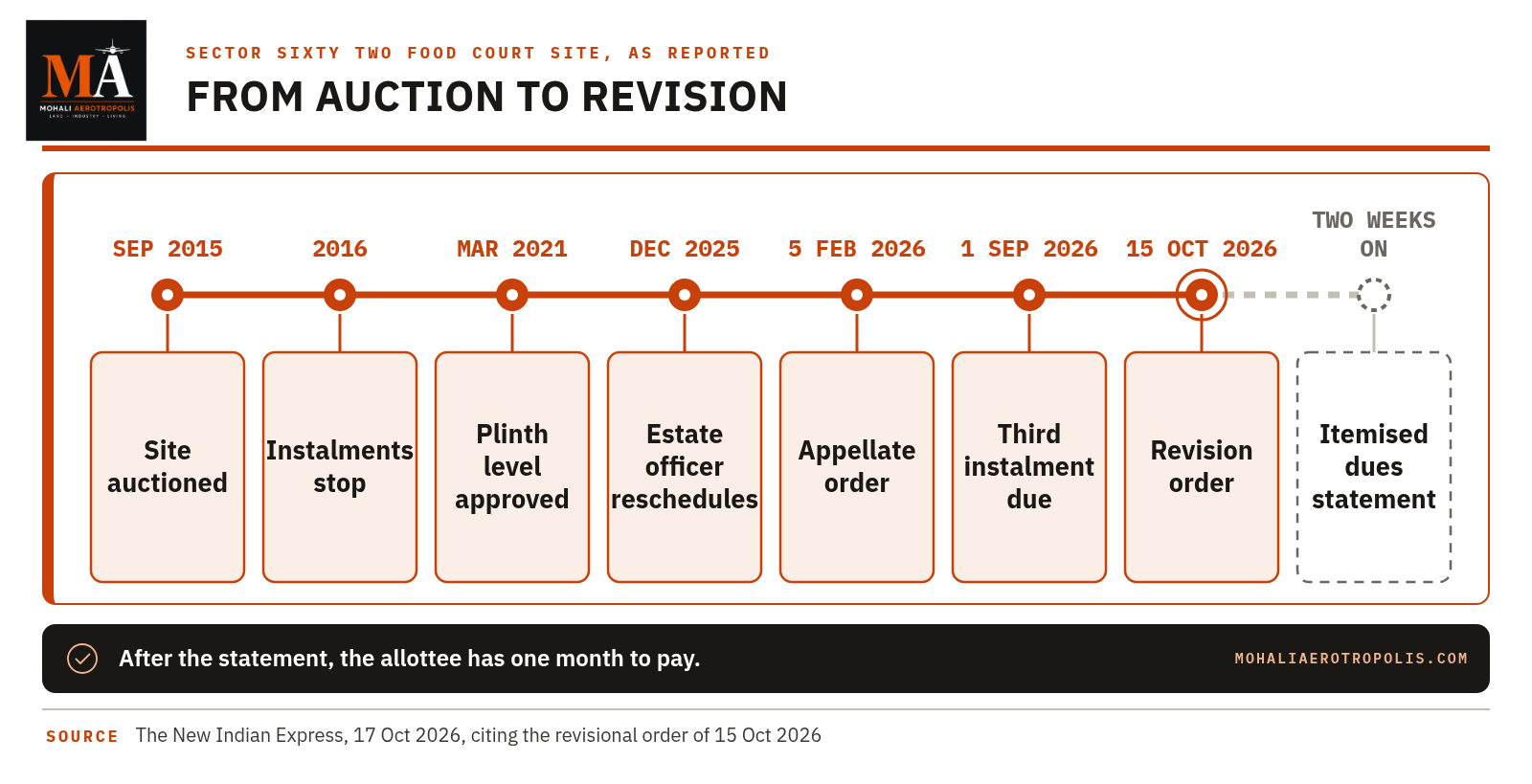
The New Indian Express reports that the principal secretary of the Housing and Urban Development Department, acting as the revisional authority, passed an order dated the fifteenth of October. The order, which the report describes as nineteen pages long, dismissed the company's revision petition.
It also rescinded an order of the fifth of February this year passed by GMADA's appellate authority, who is an additional chief administrator. It reversed a concessional rescheduling of instalments that the estate officer for housing had allowed in December last year. In effect, according to the report, the relief the company had won inside GMADA was undone at the state level.
GMADA has been told to work out the entire outstanding amount, with interest, penal interest and non construction fees, after adjusting what has been paid. It is to send the company an itemised statement within two weeks. The company then has one month to pay. If it does not, the report says, proceedings for resumption of the site and forfeiture could follow, subject to statutory notice and a reasonable opportunity of hearing.
The site and the payments, as reported
The report says the site, about one point one three acres, was allotted through an auction in September two thousand and fifteen for thirty two crore and fifty lakh rupees. The company paid twenty per cent at the start and later one further instalment. It stopped paying instalments in two thousand and sixteen, according to the revisional order as reported.
Construction began after approval of the plinth level in March two thousand and twenty one and was later abandoned, the report says. Under the revised payment schedule communicated in March this year, a third instalment fell due on the first of September. The report puts the shortfall against it at about four crore rupees as of the thirteenth of October.
The company's case, as the report describes it, was that GMADA had not handed over a site free of encumbrances. It pointed to road access, water supply, a sewerage line through the site and delays in clearances. GMADA's engineering reports said the site could be reached by adjoining roads and that sewerage and storm water lines ran along a nearby road. The revisional authority, according to the report, rejected the claim that capital had been deployed and teams mobilised, because no documents, photographs or expenditure statements were produced.
How the waiver came about
The report says GMADA's authority meeting in February this year, chaired by the chief secretary, concluded that a demand of nearly forty crore rupees in non construction charges was not justified because the site was allegedly not free of encumbrances. The meeting approved a waiver despite objections from the state Finance Department.
In its revision petition the company asked for a further year to pay the rescheduled instalments beyond the first of December this year. It also sought five years to build in place of three, and a waiver or reduction of non construction fees and penalties.
The report places the case alongside an Enforcement Directorate inquiry into the allotment and the waiver, including the engineering assessments behind it. That inquiry is a separate matter. This piece does not deal with it, and nothing in the report says any finding has been made in it.
The ladder in the Act: estate officer, chief administrator, state government
The Punjab Regional and Town Planning and Development Act of nineteen ninety five sets out what happens when a GMADA transferee falls behind. Section forty five begins with the estate officer. Where a transferee defaults on any instalment, the estate officer may call on the transferee by written notice "to show cause, within a period of thirty days, why a penalty as may be determined by the Authority be not imposed". The penalty "shall not exceed the amount due from the transferee".
If the dues and penalty are still unpaid, the estate officer may issue a second notice asking why the site ought not to be resumed and money forfeited. The Act caps that forfeiture: it "in no case shall exceed ten per cent" of the total consideration money together with interest and other dues. A resumption order comes only after the transferee has had a chance to show cause and produce evidence, with reasons recorded in writing.
The next rung is the Chief Administrator. A person aggrieved by an estate officer's order may appeal within thirty days of being told of it. The Chief Administrator may hear a late appeal for sufficient cause, and may "confirm, vary or reverse the order appealed from". He can also call for the record of an estate officer's order on his own within six months to check its legality or propriety.
The final rung is the state government. A person aggrieved by the Chief Administrator's decision on appeal or review may apply within thirty days "to the State Government for revision against the said order". The state government may then confirm or alter the Chief Administrator's order, and it may also rescind it. The order reported on the seventeenth of October is a use of that last power. The Act does not use the word appellate authority. On our reading, GMADA's appellate authority in this case was exercising the Chief Administrator's appeal power under delegation, which is why the revision went to the department.
What the case shows for allottees on instalments
The case is unusual for its size and for the inquiry around it. The mechanics are the ones that apply to any plot bought from GMADA on instalments.
First, relief granted inside GMADA can be revisited. The report shows a rescheduling by the estate officer and an appellate order both set aside at the revision stage, on the company's own petition. A concession won at one stage can meet a different view at a later one.
Second, the reported order turned on evidence. The claim of work on site failed, according to the report, because nothing was produced to support it. The Act's own wording asks for any evidence the transferee may produce before a resumption order.
Third, resumption is not automatic even after a long default. The report says the company is to receive an itemised statement and then has a month to pay. Statutory notice and a hearing come before any resumption.
Fourth, non construction fees are a separate head of dues from instalments. An earlier MA piece explains how GMADA levies them when a plot is bought and left unbuilt.
What remains open
This piece relies on The New Indian Express report of the seventeenth of October. That report cites sources as well as the revisional order. The order itself was not available to us, and GMADA had not published a statement on it when this was written. The company may have further legal remedies outside the Act, and the report does not say whether it plans to use them.
Related reading
- GMADA non construction charges: what happens when a plot is bought and not built on
- A Mohali plot allotment cancelled over dues: what Punjab RERA ordered after the resale
Sources: The sources we use are listed on our Editorial Sources page.
This piece describes a reported state government order and the published text of the Punjab Regional and Town Planning and Development Act. Nothing here is legal advice, and any allotment turns on its own papers and facts.
मोहाली का एक अलॉटमेंट विवाद, जो सेक्टर बासठ में नीलाम हुई एक फ़ूड कोर्ट साइट से शुरू हुआ था, GMADA की अपील की सीढ़ी के आख़िरी पायदान तक पहुँच गया है। सत्रह अक्टूबर की The New Indian Express की एक रिपोर्ट के अनुसार पंजाब के आवास एवं शहरी विकास विभाग ने लगभग चालीस करोड़ रुपये की वे रियायतें वापस ले ली हैं जो GMADA ने अलॉटी, दिल्ली की एक बिल्डर कंपनी, को दी थीं। रिपोर्ट अपना विवरण सूत्रों और एक लिखित आदेश के हवाले से देती है। किस्तों पर GMADA का प्लॉट या साइट रखने वाले किसी भी व्यक्ति के लिए यह मामला दिखाता है कि बकाया पिछड़ने पर पंजाब रीजनल एंड टाउन प्लानिंग एंड डेवलपमेंट एक्ट में अपील और रिविज़न का रास्ता कैसे चलता है।
रिपोर्ट के अनुसार क्या तय हुआ
The New Indian Express के अनुसार आवास एवं शहरी विकास विभाग के प्रधान सचिव ने रिविज़नल प्राधिकारी के रूप में पंद्रह अक्टूबर का एक आदेश पारित किया। रिपोर्ट इस आदेश को उन्नीस पन्नों का बताती है, और इसने कंपनी की रिविज़न याचिका ख़ारिज कर दी।
इसने इस वर्ष पाँच फ़रवरी का वह आदेश भी रद्द कर दिया जो GMADA के अपीलीय प्राधिकारी ने पारित किया था, जो एक अतिरिक्त मुख्य प्रशासक हैं। इसने किस्तों की वह रियायती पुनर्निर्धारण भी पलट दी जो एस्टेट ऑफ़िसर (हाउसिंग) ने पिछले वर्ष दिसंबर में दी थी। रिपोर्ट के अनुसार, असल में कंपनी को GMADA के भीतर जो राहत मिली थी, वह राज्य स्तर पर पलट गई।
GMADA से कहा गया है कि वह भुगतान की गई रक़म घटाकर पूरी बकाया राशि, ब्याज, दंडात्मक ब्याज और नॉन-कंस्ट्रक्शन फ़ीस सहित, निकाले। उसे दो सप्ताह के भीतर कंपनी को एक मदवार विवरण भेजना है। इसके बाद कंपनी के पास भुगतान के लिए एक महीना होगा। रिपोर्ट कहती है कि भुगतान न होने पर साइट की वापसी और ज़ब्ती की कार्यवाही हो सकती है, जो वैधानिक नोटिस और सुनवाई के उचित अवसर के अधीन होगी।
साइट और भुगतान, रिपोर्ट के अनुसार
रिपोर्ट कहती है कि लगभग एक दशमलव एक तीन एकड़ की यह साइट सितंबर दो हज़ार पंद्रह में बत्तीस करोड़ पचास लाख रुपये में नीलामी के ज़रिए अलॉट हुई थी। कंपनी ने शुरू में बीस प्रतिशत चुकाया और बाद में एक और किस्त दी। रिपोर्ट किए गए रिविज़नल आदेश के अनुसार उसने दो हज़ार सोलह में किस्तें देना बंद कर दिया।
रिपोर्ट के अनुसार प्लिंथ स्तर की मंज़ूरी के बाद मार्च दो हज़ार इक्कीस में निर्माण शुरू हुआ और बाद में छोड़ दिया गया। इस वर्ष मार्च में बताए गए संशोधित भुगतान कार्यक्रम के तहत तीसरी किस्त एक सितंबर को देय थी। रिपोर्ट तेरह अक्टूबर तक उसके मुक़ाबले कमी लगभग चार करोड़ रुपये बताती है।
रिपोर्ट के विवरण के अनुसार कंपनी का पक्ष यह था कि GMADA ने भार-मुक्त साइट नहीं सौंपी। उसने सड़क पहुँच, पानी की आपूर्ति, साइट से गुज़रती सीवरेज लाइन और मंज़ूरियों में देरी की ओर इशारा किया। GMADA की इंजीनियरिंग रिपोर्टों में कहा गया कि साइट तक साथ लगती सड़कों से पहुँचा जा सकता है और सीवरेज तथा बरसाती पानी की लाइनें पास की एक सड़क के साथ चलती हैं। रिपोर्ट के अनुसार रिविज़नल प्राधिकारी ने पूँजी लगाने और टीमें तैनात करने का दावा ठुकरा दिया, क्योंकि कोई दस्तावेज़, तस्वीरें या ख़र्च विवरण पेश नहीं किए गए।
छूट कैसे मिली थी
रिपोर्ट कहती है कि इस वर्ष फ़रवरी में मुख्य सचिव की अध्यक्षता में हुई GMADA की अथॉरिटी बैठक ने निष्कर्ष निकाला कि नॉन-कंस्ट्रक्शन शुल्क में लगभग चालीस करोड़ रुपये की माँग उचित नहीं थी, क्योंकि साइट कथित रूप से भार-मुक्त नहीं थी। राज्य के वित्त विभाग की आपत्तियों के बावजूद बैठक ने छूट मंज़ूर कर दी।
अपनी रिविज़न याचिका में कंपनी ने इस वर्ष एक दिसंबर के बाद पुनर्निर्धारित किस्तें चुकाने के लिए एक और वर्ष माँगा। उसने निर्माण के लिए तीन की जगह पाँच वर्ष, और नॉन-कंस्ट्रक्शन फ़ीस तथा दंड में छूट या कमी भी माँगी।
रिपोर्ट इस मामले को प्रवर्तन निदेशालय की एक जाँच के साथ रखती है, जो अलॉटमेंट और छूट को, उसके पीछे के इंजीनियरिंग आकलनों सहित, देख रही है। वह जाँच एक अलग विषय है। यह लेख उस पर बात नहीं करता, और रिपोर्ट में ऐसा कुछ नहीं है जो बताए कि उसमें कोई निष्कर्ष निकला है।
एक्ट की सीढ़ी: एस्टेट ऑफ़िसर, मुख्य प्रशासक, राज्य सरकार
पंजाब रीजनल एंड टाउन प्लानिंग एंड डेवलपमेंट एक्ट, उन्नीस सौ पचानवे बताता है कि GMADA का कोई ट्रांसफ़री पिछड़ जाए तो क्या होता है। धारा पैंतालीस की शुरुआत एस्टेट ऑफ़िसर से होती है। जहाँ कोई ट्रांसफ़री किसी किस्त में चूक करता है, वहाँ एस्टेट ऑफ़िसर लिखित नोटिस देकर उससे कह सकता है कि वह "to show cause, within a period of thirty days, why a penalty as may be determined by the Authority be not imposed" यानी तीस दिन के भीतर कारण बताए कि अथॉरिटी द्वारा तय दंड क्यों न लगाया जाए। दंड "shall not exceed the amount due from the transferee" यानी ट्रांसफ़री पर बकाया रक़म से अधिक नहीं होगा।
अगर बकाया और दंड फिर भी नहीं चुकाए जाते, तो एस्टेट ऑफ़िसर दूसरा नोटिस देकर पूछ सकता है कि साइट वापस क्यों न ली जाए और रक़म ज़ब्त क्यों न की जाए। एक्ट उस ज़ब्ती की सीमा तय करता है: यह "in no case shall exceed ten per cent" यानी किसी भी हालत में कुल प्रतिफल राशि, ब्याज और अन्य बकाया मिलाकर, दस प्रतिशत से अधिक नहीं होगी। वापसी का आदेश तभी आता है जब ट्रांसफ़री को कारण बताने और सबूत पेश करने का मौक़ा मिल चुका हो, और कारण लिखित रूप में दर्ज हों।
अगला पायदान मुख्य प्रशासक है। एस्टेट ऑफ़िसर के आदेश से असंतुष्ट व्यक्ति उसकी सूचना मिलने के तीस दिन के भीतर अपील कर सकता है। पर्याप्त कारण होने पर मुख्य प्रशासक देर से आई अपील भी सुन सकते हैं, और "confirm, vary or reverse the order appealed from" यानी अपील किए गए आदेश की पुष्टि कर सकते हैं, उसे बदल सकते हैं या पलट सकते हैं। वे छह महीने के भीतर अपने स्तर पर भी एस्टेट ऑफ़िसर के किसी आदेश का रिकॉर्ड मँगाकर उसकी वैधता या औचित्य जाँच सकते हैं।
आख़िरी पायदान राज्य सरकार है। अपील या समीक्षा पर मुख्य प्रशासक के फ़ैसले से असंतुष्ट व्यक्ति तीस दिन के भीतर "to the State Government for revision against the said order" यानी उस आदेश के विरुद्ध रिविज़न के लिए राज्य सरकार को अर्ज़ी दे सकता है। राज्य सरकार तब मुख्य प्रशासक के आदेश की पुष्टि कर सकती है या उसे बदल सकती है, और उसे रद्द भी कर सकती है। सत्रह अक्टूबर को रिपोर्ट हुआ आदेश इसी आख़िरी शक्ति का इस्तेमाल है। एक्ट में अपीलीय प्राधिकारी शब्द नहीं आता। हमारी समझ में इस मामले में GMADA के अपीलीय प्राधिकारी प्रत्यायोजन के तहत मुख्य प्रशासक की अपील शक्ति का प्रयोग कर रहे थे, इसीलिए रिविज़न विभाग के पास गया।
किस्तों वाले अलॉटियों के लिए मामला क्या दिखाता है
यह मामला अपने आकार और अपने आसपास की जाँच के कारण असामान्य है। इसकी प्रक्रिया वही है जो GMADA से किस्तों पर ख़रीदे गए किसी भी प्लॉट पर लागू होती है।
पहला, GMADA के भीतर मिली राहत पर दोबारा विचार हो सकता है। रिपोर्ट दिखाती है कि एस्टेट ऑफ़िसर का पुनर्निर्धारण और एक अपीलीय आदेश, दोनों रिविज़न के चरण पर रद्द हो गए, और वह भी कंपनी की अपनी याचिका पर। एक चरण पर मिली रियायत को बाद के चरण पर अलग नज़रिए का सामना करना पड़ सकता है।
दूसरा, रिपोर्ट किया गया आदेश सबूत पर टिका था। रिपोर्ट के अनुसार साइट पर काम का दावा इसलिए नाकाम रहा क्योंकि उसके समर्थन में कुछ पेश नहीं किया गया। एक्ट की अपनी भाषा भी वापसी के आदेश से पहले ट्रांसफ़री द्वारा पेश किए जा सकने वाले सबूत की बात करती है।
तीसरा, लंबी चूक के बाद भी वापसी अपने आप नहीं होती। रिपोर्ट कहती है कि कंपनी को एक मदवार विवरण मिलना है और फिर उसके पास भुगतान के लिए एक महीना है। किसी भी वापसी से पहले वैधानिक नोटिस और सुनवाई आती है।
चौथा, नॉन-कंस्ट्रक्शन फ़ीस किस्तों से अलग बकाया मद है। MA का एक पिछला लेख बताता है कि प्लॉट ख़रीदकर ख़ाली छोड़ दिए जाने पर GMADA इसे कैसे वसूलता है।
क्या अभी खुला है
यह लेख सत्रह अक्टूबर की The New Indian Express रिपोर्ट पर निर्भर है। वह रिपोर्ट सूत्रों के साथ-साथ रिविज़नल आदेश का भी हवाला देती है। आदेश स्वयं हमें उपलब्ध नहीं था, और यह लिखे जाने तक GMADA ने इस पर कोई बयान प्रकाशित नहीं किया था। कंपनी के पास एक्ट से बाहर और क़ानूनी उपाय हो सकते हैं, और रिपोर्ट यह नहीं बताती कि वह उनका इस्तेमाल करना चाहती है या नहीं।
संबंधित लेख
- GMADA नॉन-कंस्ट्रक्शन शुल्क: प्लॉट ख़रीदकर उस पर निर्माण न करने पर क्या होता है
- मोहाली में बकाया के चलते रद्द हुआ प्लॉट अलॉटमेंट: दोबारा बिक्री के बाद पंजाब RERA ने क्या आदेश दिया
स्रोत: हम जिन स्रोतों का उपयोग करते हैं, वे हमारे Editorial Sources पृष्ठ पर सूचीबद्ध हैं।
यह लेख राज्य सरकार के एक रिपोर्ट किए गए आदेश और पंजाब रीजनल एंड टाउन प्लानिंग एंड डेवलपमेंट एक्ट के प्रकाशित पाठ का वर्णन करता है। यहाँ कुछ भी क़ानूनी सलाह नहीं है, और हर अलॉटमेंट अपने काग़ज़ों और तथ्यों पर निर्भर करता है।
ਮੋਹਾਲੀ ਦਾ ਇੱਕ ਅਲਾਟਮੈਂਟ ਝਗੜਾ, ਜੋ ਸੈਕਟਰ ਬਾਹਠ ਵਿੱਚ ਨਿਲਾਮ ਹੋਈ ਇੱਕ ਫ਼ੂਡ ਕੋਰਟ ਸਾਈਟ ਤੋਂ ਸ਼ੁਰੂ ਹੋਇਆ ਸੀ, GMADA ਦੀ ਅਪੀਲ ਦੀ ਪੌੜੀ ਦੇ ਆਖ਼ਰੀ ਡੰਡੇ ਤੱਕ ਪਹੁੰਚ ਗਿਆ ਹੈ। ਸਤਾਰਾਂ ਅਕਤੂਬਰ ਦੀ The New Indian Express ਦੀ ਇੱਕ ਰਿਪੋਰਟ ਮੁਤਾਬਕ ਪੰਜਾਬ ਦੇ ਹਾਊਸਿੰਗ ਅਤੇ ਸ਼ਹਿਰੀ ਵਿਕਾਸ ਵਿਭਾਗ ਨੇ ਲਗਭਗ ਚਾਲੀ ਕਰੋੜ ਰੁਪਏ ਦੀਆਂ ਉਹ ਰਿਆਇਤਾਂ ਵਾਪਸ ਲੈ ਲਈਆਂ ਹਨ ਜੋ GMADA ਨੇ ਅਲਾਟੀ, ਦਿੱਲੀ ਦੀ ਇੱਕ ਬਿਲਡਰ ਕੰਪਨੀ, ਨੂੰ ਦਿੱਤੀਆਂ ਸਨ। ਰਿਪੋਰਟ ਆਪਣਾ ਵੇਰਵਾ ਸੂਤਰਾਂ ਅਤੇ ਇੱਕ ਲਿਖਤੀ ਆਦੇਸ਼ ਦੇ ਹਵਾਲੇ ਨਾਲ ਦਿੰਦੀ ਹੈ। ਕਿਸ਼ਤਾਂ ’ਤੇ GMADA ਦਾ ਪਲਾਟ ਜਾਂ ਸਾਈਟ ਰੱਖਣ ਵਾਲੇ ਕਿਸੇ ਵੀ ਵਿਅਕਤੀ ਲਈ ਇਹ ਮਾਮਲਾ ਵਿਖਾਉਂਦਾ ਹੈ ਕਿ ਬਕਾਇਆ ਪਿੱਛੇ ਰਹਿ ਜਾਣ ’ਤੇ ਪੰਜਾਬ ਰੀਜਨਲ ਐਂਡ ਟਾਊਨ ਪਲਾਨਿੰਗ ਐਂਡ ਡਿਵੈਲਪਮੈਂਟ ਐਕਟ ਵਿੱਚ ਅਪੀਲ ਅਤੇ ਰਿਵੀਜ਼ਨ ਦਾ ਰਾਹ ਕਿਵੇਂ ਚੱਲਦਾ ਹੈ।
ਰਿਪੋਰਟ ਮੁਤਾਬਕ ਕੀ ਤੈਅ ਹੋਇਆ
The New Indian Express ਮੁਤਾਬਕ ਹਾਊਸਿੰਗ ਅਤੇ ਸ਼ਹਿਰੀ ਵਿਕਾਸ ਵਿਭਾਗ ਦੇ ਪ੍ਰਮੁੱਖ ਸਕੱਤਰ ਨੇ ਰਿਵੀਜ਼ਨਲ ਅਥਾਰਟੀ ਵਜੋਂ ਪੰਦਰਾਂ ਅਕਤੂਬਰ ਦਾ ਇੱਕ ਆਦੇਸ਼ ਪਾਸ ਕੀਤਾ। ਰਿਪੋਰਟ ਇਸ ਆਦੇਸ਼ ਨੂੰ ਉੱਨੀ ਸਫ਼ਿਆਂ ਦਾ ਦੱਸਦੀ ਹੈ, ਅਤੇ ਇਸ ਨੇ ਕੰਪਨੀ ਦੀ ਰਿਵੀਜ਼ਨ ਪਟੀਸ਼ਨ ਖ਼ਾਰਜ ਕਰ ਦਿੱਤੀ।
ਇਸ ਨੇ ਇਸ ਸਾਲ ਪੰਜ ਫ਼ਰਵਰੀ ਦਾ ਉਹ ਆਦੇਸ਼ ਵੀ ਰੱਦ ਕਰ ਦਿੱਤਾ ਜੋ GMADA ਦੀ ਅਪੀਲੀ ਅਥਾਰਟੀ ਨੇ ਪਾਸ ਕੀਤਾ ਸੀ, ਜੋ ਇੱਕ ਵਧੀਕ ਮੁੱਖ ਪ੍ਰਸ਼ਾਸਕ ਹਨ। ਇਸ ਨੇ ਕਿਸ਼ਤਾਂ ਦੀ ਉਹ ਰਿਆਇਤੀ ਮੁੜ-ਤਰਤੀਬ ਵੀ ਪਲਟ ਦਿੱਤੀ ਜੋ ਅਸਟੇਟ ਅਫ਼ਸਰ (ਹਾਊਸਿੰਗ) ਨੇ ਪਿਛਲੇ ਸਾਲ ਦਸੰਬਰ ਵਿੱਚ ਦਿੱਤੀ ਸੀ। ਰਿਪੋਰਟ ਮੁਤਾਬਕ, ਅਸਲ ਵਿੱਚ ਕੰਪਨੀ ਨੂੰ GMADA ਦੇ ਅੰਦਰ ਜੋ ਰਾਹਤ ਮਿਲੀ ਸੀ, ਉਹ ਰਾਜ ਪੱਧਰ ’ਤੇ ਪਲਟ ਗਈ।
GMADA ਨੂੰ ਕਿਹਾ ਗਿਆ ਹੈ ਕਿ ਉਹ ਦਿੱਤੀ ਗਈ ਰਕਮ ਘਟਾ ਕੇ ਪੂਰੀ ਬਕਾਇਆ ਰਕਮ, ਵਿਆਜ, ਜੁਰਮਾਨਾ ਵਿਆਜ ਅਤੇ ਨਾਨ-ਕੰਸਟ੍ਰਕਸ਼ਨ ਫ਼ੀਸ ਸਮੇਤ, ਕੱਢੇ। ਉਸ ਨੇ ਦੋ ਹਫ਼ਤਿਆਂ ਅੰਦਰ ਕੰਪਨੀ ਨੂੰ ਇੱਕ ਮੱਦਵਾਰ ਵੇਰਵਾ ਭੇਜਣਾ ਹੈ। ਇਸ ਤੋਂ ਬਾਅਦ ਕੰਪਨੀ ਕੋਲ ਭੁਗਤਾਨ ਲਈ ਇੱਕ ਮਹੀਨਾ ਹੋਵੇਗਾ। ਰਿਪੋਰਟ ਕਹਿੰਦੀ ਹੈ ਕਿ ਭੁਗਤਾਨ ਨਾ ਹੋਣ ’ਤੇ ਸਾਈਟ ਦੀ ਵਾਪਸੀ ਅਤੇ ਜ਼ਬਤੀ ਦੀ ਕਾਰਵਾਈ ਹੋ ਸਕਦੀ ਹੈ, ਜੋ ਕਾਨੂੰਨੀ ਨੋਟਿਸ ਅਤੇ ਸੁਣਵਾਈ ਦੇ ਵਾਜਬ ਮੌਕੇ ਦੇ ਅਧੀਨ ਹੋਵੇਗੀ।
ਸਾਈਟ ਅਤੇ ਭੁਗਤਾਨ, ਰਿਪੋਰਟ ਮੁਤਾਬਕ
ਰਿਪੋਰਟ ਕਹਿੰਦੀ ਹੈ ਕਿ ਲਗਭਗ ਇੱਕ ਦਸ਼ਮਲਵ ਇੱਕ ਤਿੰਨ ਏਕੜ ਦੀ ਇਹ ਸਾਈਟ ਸਤੰਬਰ ਦੋ ਹਜ਼ਾਰ ਪੰਦਰਾਂ ਵਿੱਚ ਬੱਤੀ ਕਰੋੜ ਪੰਜਾਹ ਲੱਖ ਰੁਪਏ ਵਿੱਚ ਨਿਲਾਮੀ ਰਾਹੀਂ ਅਲਾਟ ਹੋਈ ਸੀ। ਕੰਪਨੀ ਨੇ ਸ਼ੁਰੂ ਵਿੱਚ ਵੀਹ ਪ੍ਰਤੀਸ਼ਤ ਅਦਾ ਕੀਤਾ ਅਤੇ ਬਾਅਦ ਵਿੱਚ ਇੱਕ ਹੋਰ ਕਿਸ਼ਤ ਦਿੱਤੀ। ਰਿਪੋਰਟ ਕੀਤੇ ਰਿਵੀਜ਼ਨਲ ਆਦੇਸ਼ ਮੁਤਾਬਕ ਉਸ ਨੇ ਦੋ ਹਜ਼ਾਰ ਸੋਲਾਂ ਵਿੱਚ ਕਿਸ਼ਤਾਂ ਦੇਣੀਆਂ ਬੰਦ ਕਰ ਦਿੱਤੀਆਂ।
ਰਿਪੋਰਟ ਮੁਤਾਬਕ ਪਲਿੰਥ ਪੱਧਰ ਦੀ ਮਨਜ਼ੂਰੀ ਤੋਂ ਬਾਅਦ ਮਾਰਚ ਦੋ ਹਜ਼ਾਰ ਇੱਕੀ ਵਿੱਚ ਉਸਾਰੀ ਸ਼ੁਰੂ ਹੋਈ ਅਤੇ ਬਾਅਦ ਵਿੱਚ ਛੱਡ ਦਿੱਤੀ ਗਈ। ਇਸ ਸਾਲ ਮਾਰਚ ਵਿੱਚ ਦੱਸੇ ਗਏ ਸੋਧੇ ਭੁਗਤਾਨ ਪ੍ਰੋਗਰਾਮ ਹੇਠ ਤੀਜੀ ਕਿਸ਼ਤ ਇੱਕ ਸਤੰਬਰ ਨੂੰ ਦੇਣਯੋਗ ਸੀ। ਰਿਪੋਰਟ ਤੇਰਾਂ ਅਕਤੂਬਰ ਤੱਕ ਉਸ ਦੇ ਮੁਕਾਬਲੇ ਘਾਟ ਲਗਭਗ ਚਾਰ ਕਰੋੜ ਰੁਪਏ ਦੱਸਦੀ ਹੈ।
ਰਿਪੋਰਟ ਦੇ ਵੇਰਵੇ ਮੁਤਾਬਕ ਕੰਪਨੀ ਦਾ ਪੱਖ ਇਹ ਸੀ ਕਿ GMADA ਨੇ ਭਾਰ-ਮੁਕਤ ਸਾਈਟ ਨਹੀਂ ਸੌਂਪੀ। ਉਸ ਨੇ ਸੜਕ ਪਹੁੰਚ, ਪਾਣੀ ਦੀ ਸਪਲਾਈ, ਸਾਈਟ ਵਿੱਚੋਂ ਲੰਘਦੀ ਸੀਵਰੇਜ ਲਾਈਨ ਅਤੇ ਮਨਜ਼ੂਰੀਆਂ ਵਿੱਚ ਦੇਰੀ ਵੱਲ ਇਸ਼ਾਰਾ ਕੀਤਾ। GMADA ਦੀਆਂ ਇੰਜੀਨੀਅਰਿੰਗ ਰਿਪੋਰਟਾਂ ਵਿੱਚ ਕਿਹਾ ਗਿਆ ਕਿ ਸਾਈਟ ਤੱਕ ਨਾਲ ਲੱਗਦੀਆਂ ਸੜਕਾਂ ਰਾਹੀਂ ਪਹੁੰਚਿਆ ਜਾ ਸਕਦਾ ਹੈ ਅਤੇ ਸੀਵਰੇਜ ਅਤੇ ਬਰਸਾਤੀ ਪਾਣੀ ਦੀਆਂ ਲਾਈਨਾਂ ਨੇੜਲੀ ਇੱਕ ਸੜਕ ਦੇ ਨਾਲ ਚੱਲਦੀਆਂ ਹਨ। ਰਿਪੋਰਟ ਮੁਤਾਬਕ ਰਿਵੀਜ਼ਨਲ ਅਥਾਰਟੀ ਨੇ ਪੂੰਜੀ ਲਾਉਣ ਅਤੇ ਟੀਮਾਂ ਤਾਇਨਾਤ ਕਰਨ ਦਾ ਦਾਅਵਾ ਠੁਕਰਾ ਦਿੱਤਾ, ਕਿਉਂਕਿ ਕੋਈ ਦਸਤਾਵੇਜ਼, ਤਸਵੀਰਾਂ ਜਾਂ ਖ਼ਰਚ ਵੇਰਵੇ ਪੇਸ਼ ਨਹੀਂ ਕੀਤੇ ਗਏ।
ਛੋਟ ਕਿਵੇਂ ਮਿਲੀ ਸੀ
ਰਿਪੋਰਟ ਕਹਿੰਦੀ ਹੈ ਕਿ ਇਸ ਸਾਲ ਫ਼ਰਵਰੀ ਵਿੱਚ ਮੁੱਖ ਸਕੱਤਰ ਦੀ ਪ੍ਰਧਾਨਗੀ ਹੇਠ ਹੋਈ GMADA ਦੀ ਅਥਾਰਟੀ ਮੀਟਿੰਗ ਨੇ ਨਤੀਜਾ ਕੱਢਿਆ ਕਿ ਨਾਨ-ਕੰਸਟ੍ਰਕਸ਼ਨ ਖ਼ਰਚਿਆਂ ਵਿੱਚ ਲਗਭਗ ਚਾਲੀ ਕਰੋੜ ਰੁਪਏ ਦੀ ਮੰਗ ਜਾਇਜ਼ ਨਹੀਂ ਸੀ, ਕਿਉਂਕਿ ਸਾਈਟ ਕਥਿਤ ਤੌਰ ’ਤੇ ਭਾਰ-ਮੁਕਤ ਨਹੀਂ ਸੀ। ਰਾਜ ਦੇ ਵਿੱਤ ਵਿਭਾਗ ਦੇ ਇਤਰਾਜ਼ਾਂ ਦੇ ਬਾਵਜੂਦ ਮੀਟਿੰਗ ਨੇ ਛੋਟ ਮਨਜ਼ੂਰ ਕਰ ਦਿੱਤੀ।
ਆਪਣੀ ਰਿਵੀਜ਼ਨ ਪਟੀਸ਼ਨ ਵਿੱਚ ਕੰਪਨੀ ਨੇ ਇਸ ਸਾਲ ਇੱਕ ਦਸੰਬਰ ਤੋਂ ਬਾਅਦ ਮੁੜ-ਤਰਤੀਬ ਕੀਤੀਆਂ ਕਿਸ਼ਤਾਂ ਚੁਕਾਉਣ ਲਈ ਇੱਕ ਹੋਰ ਸਾਲ ਮੰਗਿਆ। ਉਸ ਨੇ ਉਸਾਰੀ ਲਈ ਤਿੰਨ ਦੀ ਥਾਂ ਪੰਜ ਸਾਲ, ਅਤੇ ਨਾਨ-ਕੰਸਟ੍ਰਕਸ਼ਨ ਫ਼ੀਸ ਅਤੇ ਜੁਰਮਾਨਿਆਂ ਵਿੱਚ ਛੋਟ ਜਾਂ ਕਮੀ ਵੀ ਮੰਗੀ।
ਰਿਪੋਰਟ ਇਸ ਮਾਮਲੇ ਨੂੰ ਇਨਫ਼ੋਰਸਮੈਂਟ ਡਾਇਰੈਕਟੋਰੇਟ ਦੀ ਇੱਕ ਜਾਂਚ ਨਾਲ ਰੱਖਦੀ ਹੈ, ਜੋ ਅਲਾਟਮੈਂਟ ਅਤੇ ਛੋਟ ਨੂੰ, ਉਸ ਪਿੱਛੇ ਦੇ ਇੰਜੀਨੀਅਰਿੰਗ ਮੁਲਾਂਕਣਾਂ ਸਮੇਤ, ਵੇਖ ਰਹੀ ਹੈ। ਉਹ ਜਾਂਚ ਇੱਕ ਵੱਖਰਾ ਵਿਸ਼ਾ ਹੈ। ਇਹ ਲੇਖ ਉਸ ਬਾਰੇ ਗੱਲ ਨਹੀਂ ਕਰਦਾ, ਅਤੇ ਰਿਪੋਰਟ ਵਿੱਚ ਅਜਿਹਾ ਕੁਝ ਨਹੀਂ ਜੋ ਦੱਸੇ ਕਿ ਉਸ ਵਿੱਚ ਕੋਈ ਨਤੀਜਾ ਨਿਕਲਿਆ ਹੈ।
ਐਕਟ ਦੀ ਪੌੜੀ: ਅਸਟੇਟ ਅਫ਼ਸਰ, ਮੁੱਖ ਪ੍ਰਸ਼ਾਸਕ, ਰਾਜ ਸਰਕਾਰ
ਪੰਜਾਬ ਰੀਜਨਲ ਐਂਡ ਟਾਊਨ ਪਲਾਨਿੰਗ ਐਂਡ ਡਿਵੈਲਪਮੈਂਟ ਐਕਟ, ਉੱਨੀ ਸੌ ਪਚਾਨਵੇਂ ਦੱਸਦਾ ਹੈ ਕਿ GMADA ਦਾ ਕੋਈ ਟਰਾਂਸਫ਼ਰੀ ਪਿੱਛੇ ਰਹਿ ਜਾਵੇ ਤਾਂ ਕੀ ਹੁੰਦਾ ਹੈ। ਧਾਰਾ ਪੰਤਾਲੀ ਦੀ ਸ਼ੁਰੂਆਤ ਅਸਟੇਟ ਅਫ਼ਸਰ ਤੋਂ ਹੁੰਦੀ ਹੈ। ਜਿੱਥੇ ਕੋਈ ਟਰਾਂਸਫ਼ਰੀ ਕਿਸੇ ਕਿਸ਼ਤ ਵਿੱਚ ਕੁਤਾਹੀ ਕਰਦਾ ਹੈ, ਉੱਥੇ ਅਸਟੇਟ ਅਫ਼ਸਰ ਲਿਖਤੀ ਨੋਟਿਸ ਦੇ ਕੇ ਉਸ ਨੂੰ ਕਹਿ ਸਕਦਾ ਹੈ ਕਿ ਉਹ "to show cause, within a period of thirty days, why a penalty as may be determined by the Authority be not imposed" ਯਾਨੀ ਤੀਹ ਦਿਨਾਂ ਅੰਦਰ ਕਾਰਨ ਦੱਸੇ ਕਿ ਅਥਾਰਟੀ ਵੱਲੋਂ ਤੈਅ ਜੁਰਮਾਨਾ ਕਿਉਂ ਨਾ ਲਾਇਆ ਜਾਵੇ। ਜੁਰਮਾਨਾ "shall not exceed the amount due from the transferee" ਯਾਨੀ ਟਰਾਂਸਫ਼ਰੀ ’ਤੇ ਬਕਾਇਆ ਰਕਮ ਤੋਂ ਵੱਧ ਨਹੀਂ ਹੋਵੇਗਾ।
ਜੇ ਬਕਾਇਆ ਅਤੇ ਜੁਰਮਾਨਾ ਫਿਰ ਵੀ ਨਹੀਂ ਚੁਕਾਏ ਜਾਂਦੇ, ਤਾਂ ਅਸਟੇਟ ਅਫ਼ਸਰ ਦੂਜਾ ਨੋਟਿਸ ਦੇ ਕੇ ਪੁੱਛ ਸਕਦਾ ਹੈ ਕਿ ਸਾਈਟ ਵਾਪਸ ਕਿਉਂ ਨਾ ਲਈ ਜਾਵੇ ਅਤੇ ਰਕਮ ਜ਼ਬਤ ਕਿਉਂ ਨਾ ਕੀਤੀ ਜਾਵੇ। ਐਕਟ ਉਸ ਜ਼ਬਤੀ ਦੀ ਹੱਦ ਤੈਅ ਕਰਦਾ ਹੈ: ਇਹ "in no case shall exceed ten per cent" ਯਾਨੀ ਕਿਸੇ ਵੀ ਹਾਲਤ ਵਿੱਚ ਕੁੱਲ ਪ੍ਰਤੀਫਲ ਰਕਮ, ਵਿਆਜ ਅਤੇ ਹੋਰ ਬਕਾਏ ਮਿਲਾ ਕੇ, ਦਸ ਪ੍ਰਤੀਸ਼ਤ ਤੋਂ ਵੱਧ ਨਹੀਂ ਹੋਵੇਗੀ। ਵਾਪਸੀ ਦਾ ਆਦੇਸ਼ ਤਦ ਹੀ ਆਉਂਦਾ ਹੈ ਜਦੋਂ ਟਰਾਂਸਫ਼ਰੀ ਨੂੰ ਕਾਰਨ ਦੱਸਣ ਅਤੇ ਸਬੂਤ ਪੇਸ਼ ਕਰਨ ਦਾ ਮੌਕਾ ਮਿਲ ਚੁੱਕਾ ਹੋਵੇ, ਅਤੇ ਕਾਰਨ ਲਿਖਤੀ ਰੂਪ ਵਿੱਚ ਦਰਜ ਹੋਣ।
ਅਗਲਾ ਡੰਡਾ ਮੁੱਖ ਪ੍ਰਸ਼ਾਸਕ ਹੈ। ਅਸਟੇਟ ਅਫ਼ਸਰ ਦੇ ਆਦੇਸ਼ ਤੋਂ ਨਾਰਾਜ਼ ਵਿਅਕਤੀ ਉਸ ਦੀ ਸੂਚਨਾ ਮਿਲਣ ਦੇ ਤੀਹ ਦਿਨਾਂ ਅੰਦਰ ਅਪੀਲ ਕਰ ਸਕਦਾ ਹੈ। ਢੁਕਵਾਂ ਕਾਰਨ ਹੋਣ ’ਤੇ ਮੁੱਖ ਪ੍ਰਸ਼ਾਸਕ ਦੇਰ ਨਾਲ ਆਈ ਅਪੀਲ ਵੀ ਸੁਣ ਸਕਦੇ ਹਨ, ਅਤੇ "confirm, vary or reverse the order appealed from" ਯਾਨੀ ਅਪੀਲ ਕੀਤੇ ਆਦੇਸ਼ ਦੀ ਪੁਸ਼ਟੀ ਕਰ ਸਕਦੇ ਹਨ, ਉਸ ਨੂੰ ਬਦਲ ਸਕਦੇ ਹਨ ਜਾਂ ਪਲਟ ਸਕਦੇ ਹਨ। ਉਹ ਛੇ ਮਹੀਨਿਆਂ ਅੰਦਰ ਆਪਣੇ ਪੱਧਰ ’ਤੇ ਵੀ ਅਸਟੇਟ ਅਫ਼ਸਰ ਦੇ ਕਿਸੇ ਆਦੇਸ਼ ਦਾ ਰਿਕਾਰਡ ਮੰਗਵਾ ਕੇ ਉਸ ਦੀ ਕਾਨੂੰਨੀ ਵੈਧਤਾ ਜਾਂ ਔਚਿਤ ਜਾਂਚ ਸਕਦੇ ਹਨ।
ਆਖ਼ਰੀ ਡੰਡਾ ਰਾਜ ਸਰਕਾਰ ਹੈ। ਅਪੀਲ ਜਾਂ ਸਮੀਖਿਆ ’ਤੇ ਮੁੱਖ ਪ੍ਰਸ਼ਾਸਕ ਦੇ ਫ਼ੈਸਲੇ ਤੋਂ ਨਾਰਾਜ਼ ਵਿਅਕਤੀ ਤੀਹ ਦਿਨਾਂ ਅੰਦਰ "to the State Government for revision against the said order" ਯਾਨੀ ਉਸ ਆਦੇਸ਼ ਵਿਰੁੱਧ ਰਿਵੀਜ਼ਨ ਲਈ ਰਾਜ ਸਰਕਾਰ ਨੂੰ ਅਰਜ਼ੀ ਦੇ ਸਕਦਾ ਹੈ। ਰਾਜ ਸਰਕਾਰ ਤਦ ਮੁੱਖ ਪ੍ਰਸ਼ਾਸਕ ਦੇ ਆਦੇਸ਼ ਦੀ ਪੁਸ਼ਟੀ ਕਰ ਸਕਦੀ ਹੈ ਜਾਂ ਉਸ ਨੂੰ ਬਦਲ ਸਕਦੀ ਹੈ, ਅਤੇ ਉਸ ਨੂੰ ਰੱਦ ਵੀ ਕਰ ਸਕਦੀ ਹੈ। ਸਤਾਰਾਂ ਅਕਤੂਬਰ ਨੂੰ ਰਿਪੋਰਟ ਹੋਇਆ ਆਦੇਸ਼ ਇਸੇ ਆਖ਼ਰੀ ਸ਼ਕਤੀ ਦੀ ਵਰਤੋਂ ਹੈ। ਐਕਟ ਵਿੱਚ ਅਪੀਲੀ ਅਥਾਰਟੀ ਸ਼ਬਦ ਨਹੀਂ ਆਉਂਦਾ। ਸਾਡੀ ਸਮਝ ਵਿੱਚ ਇਸ ਮਾਮਲੇ ਵਿੱਚ GMADA ਦੀ ਅਪੀਲੀ ਅਥਾਰਟੀ ਸੌਂਪੀ ਗਈ ਸ਼ਕਤੀ ਹੇਠ ਮੁੱਖ ਪ੍ਰਸ਼ਾਸਕ ਦੀ ਅਪੀਲ ਸ਼ਕਤੀ ਵਰਤ ਰਹੀ ਸੀ, ਇਸੇ ਲਈ ਰਿਵੀਜ਼ਨ ਵਿਭਾਗ ਕੋਲ ਗਈ।
ਕਿਸ਼ਤਾਂ ਵਾਲੇ ਅਲਾਟੀਆਂ ਲਈ ਮਾਮਲਾ ਕੀ ਵਿਖਾਉਂਦਾ ਹੈ
ਇਹ ਮਾਮਲਾ ਆਪਣੇ ਆਕਾਰ ਅਤੇ ਆਪਣੇ ਆਲੇ-ਦੁਆਲੇ ਦੀ ਜਾਂਚ ਕਰਕੇ ਅਸਾਧਾਰਨ ਹੈ। ਇਸ ਦੀ ਪ੍ਰਕਿਰਿਆ ਉਹੀ ਹੈ ਜੋ GMADA ਤੋਂ ਕਿਸ਼ਤਾਂ ’ਤੇ ਖ਼ਰੀਦੇ ਕਿਸੇ ਵੀ ਪਲਾਟ ’ਤੇ ਲਾਗੂ ਹੁੰਦੀ ਹੈ।
ਪਹਿਲਾ, GMADA ਦੇ ਅੰਦਰ ਮਿਲੀ ਰਾਹਤ ’ਤੇ ਮੁੜ ਵਿਚਾਰ ਹੋ ਸਕਦਾ ਹੈ। ਰਿਪੋਰਟ ਵਿਖਾਉਂਦੀ ਹੈ ਕਿ ਅਸਟੇਟ ਅਫ਼ਸਰ ਦੀ ਮੁੜ-ਤਰਤੀਬ ਅਤੇ ਇੱਕ ਅਪੀਲੀ ਆਦੇਸ਼, ਦੋਵੇਂ ਰਿਵੀਜ਼ਨ ਦੇ ਪੜਾਅ ’ਤੇ ਰੱਦ ਹੋ ਗਏ, ਅਤੇ ਉਹ ਵੀ ਕੰਪਨੀ ਦੀ ਆਪਣੀ ਪਟੀਸ਼ਨ ’ਤੇ। ਇੱਕ ਪੜਾਅ ’ਤੇ ਮਿਲੀ ਰਿਆਇਤ ਨੂੰ ਬਾਅਦ ਦੇ ਪੜਾਅ ’ਤੇ ਵੱਖਰੇ ਨਜ਼ਰੀਏ ਦਾ ਸਾਹਮਣਾ ਕਰਨਾ ਪੈ ਸਕਦਾ ਹੈ।
ਦੂਜਾ, ਰਿਪੋਰਟ ਕੀਤਾ ਆਦੇਸ਼ ਸਬੂਤ ’ਤੇ ਟਿਕਿਆ ਸੀ। ਰਿਪੋਰਟ ਮੁਤਾਬਕ ਸਾਈਟ ’ਤੇ ਕੰਮ ਦਾ ਦਾਅਵਾ ਇਸ ਲਈ ਨਾਕਾਮ ਰਿਹਾ ਕਿਉਂਕਿ ਉਸ ਦੇ ਹੱਕ ਵਿੱਚ ਕੁਝ ਪੇਸ਼ ਨਹੀਂ ਕੀਤਾ ਗਿਆ। ਐਕਟ ਦੀ ਆਪਣੀ ਭਾਸ਼ਾ ਵੀ ਵਾਪਸੀ ਦੇ ਆਦੇਸ਼ ਤੋਂ ਪਹਿਲਾਂ ਟਰਾਂਸਫ਼ਰੀ ਵੱਲੋਂ ਪੇਸ਼ ਕੀਤੇ ਜਾ ਸਕਣ ਵਾਲੇ ਸਬੂਤ ਦੀ ਗੱਲ ਕਰਦੀ ਹੈ।
ਤੀਜਾ, ਲੰਬੀ ਕੁਤਾਹੀ ਤੋਂ ਬਾਅਦ ਵੀ ਵਾਪਸੀ ਆਪਣੇ ਆਪ ਨਹੀਂ ਹੁੰਦੀ। ਰਿਪੋਰਟ ਕਹਿੰਦੀ ਹੈ ਕਿ ਕੰਪਨੀ ਨੂੰ ਇੱਕ ਮੱਦਵਾਰ ਵੇਰਵਾ ਮਿਲਣਾ ਹੈ ਅਤੇ ਫਿਰ ਉਸ ਕੋਲ ਭੁਗਤਾਨ ਲਈ ਇੱਕ ਮਹੀਨਾ ਹੈ। ਕਿਸੇ ਵੀ ਵਾਪਸੀ ਤੋਂ ਪਹਿਲਾਂ ਕਾਨੂੰਨੀ ਨੋਟਿਸ ਅਤੇ ਸੁਣਵਾਈ ਆਉਂਦੀ ਹੈ।
ਚੌਥਾ, ਨਾਨ-ਕੰਸਟ੍ਰਕਸ਼ਨ ਫ਼ੀਸ ਕਿਸ਼ਤਾਂ ਤੋਂ ਵੱਖਰੀ ਬਕਾਇਆ ਮੱਦ ਹੈ। MA ਦਾ ਇੱਕ ਪਿਛਲਾ ਲੇਖ ਦੱਸਦਾ ਹੈ ਕਿ ਪਲਾਟ ਖ਼ਰੀਦ ਕੇ ਖ਼ਾਲੀ ਛੱਡ ਦਿੱਤੇ ਜਾਣ ’ਤੇ GMADA ਇਸ ਨੂੰ ਕਿਵੇਂ ਵਸੂਲਦਾ ਹੈ।
ਕੀ ਅਜੇ ਖੁੱਲ੍ਹਾ ਹੈ
ਇਹ ਲੇਖ ਸਤਾਰਾਂ ਅਕਤੂਬਰ ਦੀ The New Indian Express ਰਿਪੋਰਟ ’ਤੇ ਨਿਰਭਰ ਹੈ। ਉਹ ਰਿਪੋਰਟ ਸੂਤਰਾਂ ਦੇ ਨਾਲ-ਨਾਲ ਰਿਵੀਜ਼ਨਲ ਆਦੇਸ਼ ਦਾ ਵੀ ਹਵਾਲਾ ਦਿੰਦੀ ਹੈ। ਆਦੇਸ਼ ਆਪ ਸਾਨੂੰ ਉਪਲਬਧ ਨਹੀਂ ਸੀ, ਅਤੇ ਇਹ ਲਿਖੇ ਜਾਣ ਤੱਕ GMADA ਨੇ ਇਸ ਬਾਰੇ ਕੋਈ ਬਿਆਨ ਪ੍ਰਕਾਸ਼ਿਤ ਨਹੀਂ ਕੀਤਾ ਸੀ। ਕੰਪਨੀ ਕੋਲ ਐਕਟ ਤੋਂ ਬਾਹਰ ਹੋਰ ਕਾਨੂੰਨੀ ਉਪਾਅ ਹੋ ਸਕਦੇ ਹਨ, ਅਤੇ ਰਿਪੋਰਟ ਇਹ ਨਹੀਂ ਦੱਸਦੀ ਕਿ ਉਹ ਉਨ੍ਹਾਂ ਦੀ ਵਰਤੋਂ ਕਰਨਾ ਚਾਹੁੰਦੀ ਹੈ ਜਾਂ ਨਹੀਂ।
ਸੰਬੰਧਿਤ ਲੇਖ
- GMADA ਨਾਨ-ਕੰਸਟ੍ਰਕਸ਼ਨ ਖ਼ਰਚੇ: ਪਲਾਟ ਖ਼ਰੀਦ ਕੇ ਉਸ ’ਤੇ ਉਸਾਰੀ ਨਾ ਕਰਨ ’ਤੇ ਕੀ ਹੁੰਦਾ ਹੈ
- ਮੋਹਾਲੀ ਵਿੱਚ ਬਕਾਏ ਕਾਰਨ ਰੱਦ ਹੋਈ ਪਲਾਟ ਅਲਾਟਮੈਂਟ: ਮੁੜ ਵਿਕਰੀ ਤੋਂ ਬਾਅਦ ਪੰਜਾਬ RERA ਨੇ ਕੀ ਹੁਕਮ ਦਿੱਤਾ
ਸਰੋਤ: ਅਸੀਂ ਜਿਨ੍ਹਾਂ ਸਰੋਤਾਂ ਦੀ ਵਰਤੋਂ ਕਰਦੇ ਹਾਂ, ਉਹ ਸਾਡੇ Editorial Sources ਪੰਨੇ ’ਤੇ ਸੂਚੀਬੱਧ ਹਨ।
ਇਹ ਲੇਖ ਰਾਜ ਸਰਕਾਰ ਦੇ ਇੱਕ ਰਿਪੋਰਟ ਕੀਤੇ ਆਦੇਸ਼ ਅਤੇ ਪੰਜਾਬ ਰੀਜਨਲ ਐਂਡ ਟਾਊਨ ਪਲਾਨਿੰਗ ਐਂਡ ਡਿਵੈਲਪਮੈਂਟ ਐਕਟ ਦੇ ਛਪੇ ਪਾਠ ਦਾ ਵਰਣਨ ਕਰਦਾ ਹੈ। ਇੱਥੇ ਕੁਝ ਵੀ ਕਾਨੂੰਨੀ ਸਲਾਹ ਨਹੀਂ ਹੈ, ਅਤੇ ਹਰ ਅਲਾਟਮੈਂਟ ਆਪਣੇ ਕਾਗ਼ਜ਼ਾਂ ਅਤੇ ਤੱਥਾਂ ’ਤੇ ਟਿਕੀ ਹੁੰਦੀ ਹੈ।