

Someone abroad often gets three screenshots in one chat: a Letter of Intent, an allotment letter, and a sale deed or agreement draft. The captions treat them as interchangeable proof that “the plot is yours.” They are not the same paper. This piece maps what each usually does, what it does not do, and a reading order you can use before money or a Power of Attorney moves.
Mohali Aerotropolis is a property-intelligence publisher under Fidus Synergies LLP. We explain instruments and notices. We do not take commission on LOI trades. If you want help reading a conflicting pack, you can ask for document-literacy help through Fidus Realty under the same LLP parent — that is orientation, not a pitch for project stock.
The confusion in one sentence
Dealers and forwards often use allotment,” “LOI,” and “registry” as if they named one finished title. In Greater Mohali work those words usually mark different stages of paper. Mixing them up is how people approve a transfer on a cropped photo.
What a Letter of Intent usually is
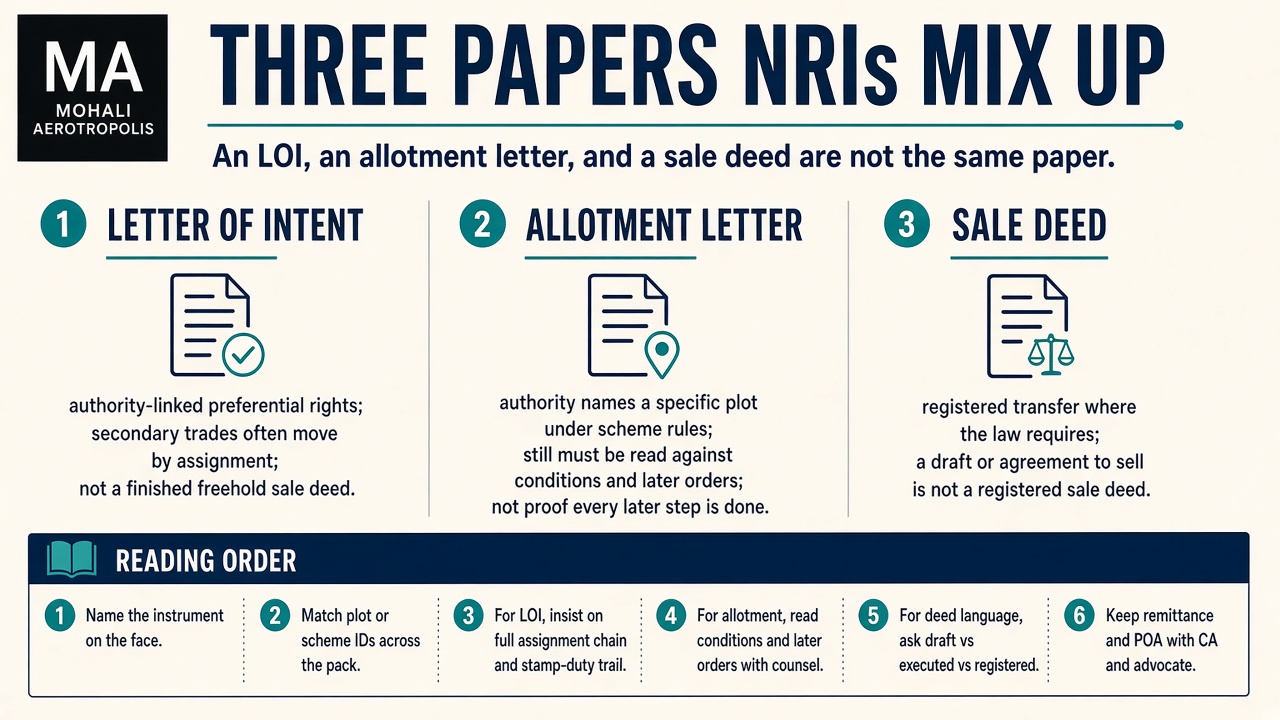
In the GMADA Aerotropolis setting, an LOI is commonly an authority-linked instrument that records preferential rights over a designated plot while the township is still being delivered. Secondary trades often move by assignment, with stamp duty and a chain of earlier transfers that must survive a check at the authority’s office.
An LOI is useful paper. It is not, by itself, the same thing as a completed freehold sale deed you can treat like a finished private-colony registry.
What an allotment letter usually is
An allotment letter is typically the authority’s formal communication that a specific plot or unit has been allotted to a named person under a scheme’s rules. It sits closer to the authority’s own allotment record than a purely private agreement between two dealers.
It still has to be read against the scheme rules, any conditions or dues language in the letter, and later office orders or corrigenda that may change what the letter assumed. An allotment letter is not a guarantee that every later step — payment schedule, possession of land by the authority, or final registry — has already happened.
What a sale deed or agreement draft usually is
A sale deed is the instrument that, once duly executed and registered where the law requires, is meant to transfer title in the way the deed and the registration system provide. An agreement to sell or a draft deed is not the same as a registered sale deed.
Private paperwork cannot invent an authority stage that has not occurred. If the upstream LOI or allotment chain is incomplete, a polished PDF agreement does not repair it.
What none of these papers is
None of the three is:
- A possession calendar invented in a reel
- A substitute for verifying the chain at GMADA when the instrument depends on GMADAs record
- Proof that stamp duty, transfer fees, or later dues are already settled unless the documents say so and counsel confirms
- The same as a court decree, even when a notice or caption mentions court language
A reading order if you are outside India
1. Name the instrument on the face of the document — LOI, allotment letter, agreement, or registered deed — before you argue about price.
2. Match the plot or scheme identifiers across every page in the pack. If names or numbers drift, stop.
3. For an LOI pack, insist on the full assignment chain and stamp-duty trail, not a single cropped face page.
4. For allotment language, read conditions and any reference to later orders; ask counsel what still depends on GMADA action.
5. For deed language, ask whether it is draft, executed, or registered — and what the registration office record shows.
6. Keep remittance and Power of Attorney questions with your chartered accountant and advocate. This desk does not give legal or tax opinions.
What you can actually establish before you proceed
You can usually establish, with counsel and primary documents:
- Which instrument you are looking at
- Whether the pack is complete enough to verify at the authority or the registration office
- Whether a Power of Attorney, if used, matches the step someone abroad is being asked to authorise
You cannot establish a finished title story from a WhatsApp collage that never names the instrument.
Before you act on a conflicting pack
Start with the primary PDF and, where the instrument depends on GMADA, the authority’s own record. Use this site’s notices desk for official notice explainers. If you want help reading a conflicting pack, you can opt in to Fidus Realty advisory under the same LLP parent. We do not take commission on LOI trades.
Related reading
- Where your money actually sits between paying and possession
- GMADA notices
- GMADA / Aerotropolis hub
Sources
- GMADA public site and scheme / notice PDFs — gmada.gov.in
- Instrument distinctions above are a publisher’s process map of common document types in this corridor; the controlling text is always the face of your documents and counsel’s reading of them
This is a map of the papers, not a substitute for the gazette or the registered instrument, and it is not legal advice. The position in any transaction turns on its own facts.
विदेश में रहने वाले किसी व्यक्ति को अक्सर एक ही चैट में तीन स्क्रीनशॉट मिलते हैं: एक Letter of Intent, एक allotment letter, और एक sale deed या agreement draft। कैप्शन उन्हें एक-दूसरे के बदले इस्तेमाल होने वाला सबूत मान लेते हैं कि “plot आपका है।” वे एक ही कागज़ नहीं हैं। यह लेख बताता है कि आम तौर पर हर एक क्या करता है, क्या नहीं करता, और पैसा या Power of Attorney आगे बढ़ने से पहले आप किस क्रम में पढ़ें।
Mohali Aerotropolis, Fidus Synergies LLP के अंतर्गत एक property-intelligence publisher है। हम instruments और notices समझाते हैं। हम LOI trades पर कमीशन नहीं लेते। अगर आप किसी परस्पर विरोधी pack को पढ़ने में मदद चाहते हैं, तो आप उसी LLP parent के अंतर्गत Fidus Realty के ज़रिए document-literacy help माँग सकते हैं — यह orientation है, project stock की पेशकश नहीं।
एक वाक्य में भ्रम
Dealers और forwards अक्सर “allotment,” “LOI,” और “registry” को ऐसे इस्तेमाल करते हैं जैसे वे एक तैयार title का नाम हों। Greater Mohali के काम में ये शब्द आम तौर पर कागज़ के अलग-अलग चरणों को दर्शाते हैं। इन्हें मिला देना ही वह तरीका है जिससे लोग किसी cropped photo पर transfer approve कर देते हैं।
Letter of Intent आम तौर पर क्या होता है
GMADA Aerotropolis के संदर्भ में, LOI आम तौर पर एक authority-linked instrument होता है जो township के अभी deliver होने के दौरान किसी निर्दिष्ट plot पर preferential rights दर्ज करता है। Secondary trades अक्सर assignment से चलते हैं, जिसमें stamp duty और पहले के transfers की एक श्रृंखला होती है जिसे authority के दफ़्तर में जाँच में टिकना ज़रूरी है।
LOI उपयोगी कागज़ है। यह अपने आप में उस पूर्ण freehold sale deed के बराबर नहीं है जिसे आप किसी तैयार private-colony registry की तरह मान सकें।
Allotment letter आम तौर पर क्या होता है
एक allotment letter आम तौर पर authority का औपचारिक संचार होता है कि किसी scheme के नियमों के तहत एक विशिष्ट plot या unit किसी नामित व्यक्ति को allot कर दिया गया है। यह दो dealers के बीच के पूर्णतः निजी agreement की तुलना में authority के अपने allotment record के अधिक निकट होता है।
फिर भी इसे scheme rules, letter में दी गई किसी भी condition या dues की भाषा, और बाद के office orders या corrigenda के सापेक्ष पढ़ना होता है जो letter की मान्यताओं को बदल सकते हैं। Allotment letter यह गारंटी नहीं है कि हर आगे का चरण — payment schedule, authority द्वारा land का possession, या final registry — पहले ही हो चुका है।
Sale deed या agreement draft आम तौर पर क्या होता है
एक sale deed वह instrument है जो, जहाँ कानून अपेक्षा करता है वहाँ विधिवत executed और registered होने पर, deed और registration system के अनुसार title transfer करने के लिए होता है। एक agreement to sell या एक draft deed, एक registered sale deed के बराबर नहीं है।
निजी कागज़ात ऐसा authority stage नहीं गढ़ सकते जो हुआ ही न हो। अगर ऊपर का LOI या allotment chain अधूरा है, तो एक चमकदार PDF agreement उसे ठीक नहीं करता।
इनमें से कोई भी कागज़ क्या नहीं है
तीनों में से कोई भी नहीं है:
- किसी reel में गढ़ा गया possession calendar
- GMADA में chain सत्यापित करने का विकल्प, जब instrument GMADA के record पर निर्भर हो
- इस बात का सबूत कि stamp duty, transfer fees, या बाद के dues पहले ही निपट चुके हैं — जब तक दस्तावेज़ ऐसा न कहें और counsel पुष्टि न करे
- किसी court decree के समान, भले ही कोई notice या caption court की भाषा का ज़िक्र करे
अगर आप भारत से बाहर हैं तो पढ़ने का क्रम
1. कीमत पर बहस करने से पहले दस्तावेज़ के मुखपृष्ठ पर instrument का नाम पहचानें — LOI, allotment letter, agreement, या registered deed।
2. Pack के हर पन्ने पर plot या scheme identifiers का मिलान करें। अगर नाम या नंबर मेल न खाएँ, तो रुक जाएँ।
3. LOI pack के लिए, पूरी assignment chain और stamp-duty trail पर ज़ोर दें, किसी एक cropped face page पर नहीं।
4. Allotment की भाषा के लिए, conditions और बाद के orders के किसी भी संदर्भ को पढ़ें; counsel से पूछें कि अभी क्या GMADA की कार्रवाई पर निर्भर है।
5. Deed की भाषा के लिए, पूछें कि यह draft है, executed है, या registered है — और registration office का record क्या दिखाता है।
6. Remittance और Power of Attorney के सवाल अपने chartered accountant और advocate के पास रखें। यह डेस्क कानूनी या कर संबंधी राय नहीं देता।
आगे बढ़ने से पहले आप वास्तव में क्या स्थापित कर सकते हैं
आप आम तौर पर, counsel और primary documents के साथ, यह स्थापित कर सकते हैं:
- आप कौन-सा instrument देख रहे हैं
- Pack authority या registration office में सत्यापन के लिए पर्याप्त पूर्ण है या नहीं
- कोई Power of Attorney, अगर इस्तेमाल हो रहा हो, उस चरण से मेल खाता है या नहीं जिसे विदेश में किसी व्यक्ति से अधिकृत करने को कहा जा रहा है
आप किसी ऐसे WhatsApp collage से तैयार title की कहानी स्थापित नहीं कर सकते जो instrument का नाम ही कभी न बताए।
किसी परस्पर विरोधी pack पर कार्रवाई करने से पहले
Primary PDF से शुरू करें और, जहाँ instrument GMADA पर निर्भर हो, authority के अपने record से। आधिकारिक notice explainers के लिए इस साइट के notices desk का उपयोग करें। अगर आप किसी परस्पर विरोधी pack को पढ़ने में मदद चाहते हैं, तो आप उसी LLP parent के अंतर्गत Fidus Realty advisory में opt in कर सकते हैं। हम LOI trades पर कमीशन नहीं लेते।
संबंधित पठन
- Where your money actually sits between paying and possession
- GMADA notices
- GMADA / Aerotropolis hub
स्रोत
- GMADA public site और scheme / notice PDFs — gmada.gov.in
- ऊपर दिए गए instrument भेद इस corridor में सामान्य document types का publisher का process map हैं; नियंत्रक पाठ हमेशा आपके दस्तावेज़ों का मुखपृष्ठ और उन पर counsel का पठन होता है
यह कागज़ात का map है, gazette या registered instrument का विकल्प नहीं, और यह कानूनी सलाह नहीं है। किसी भी transaction की स्थिति उसके अपने तथ्यों पर निर्भर करती है।
ਵਿਦੇਸ਼ ਵਿੱਚ ਬੈਠੇ ਕਿਸੇ ਵਿਅਕਤੀ ਨੂੰ ਅਕਸਰ ਇੱਕ ਹੀ ਚੈਟ ਵਿੱਚ ਤਿੰਨ ਸਕ੍ਰੀਨਸ਼ਾਟ ਮਿਲਦੇ ਹਨ: ਇੱਕ Letter of Intent, ਇੱਕ allotment letter, ਅਤੇ ਇੱਕ sale deed ਜਾਂ agreement ਦਾ ਡਰਾਫਟ। ਕੈਪਸ਼ਨ ਇਹਨਾਂ ਨੂੰ ਇੱਕੋ ਜਿਹਾ ਸਬੂਤ ਮੰਨ ਲੈਂਦੇ ਹਨ ਕਿ “ਪਲਾਟ ਤੁਹਾਡਾ ਹੈ।” ਇਹ ਇੱਕੋ ਕਾਗਜ਼ ਨਹੀਂ ਹਨ। ਇਹ ਲੇਖ ਦੱਸਦਾ ਹੈ ਕਿ ਹਰ ਇੱਕ ਆਮ ਤੌਰ 'ਤੇ ਕੀ ਕਰਦਾ ਹੈ, ਕੀ ਨਹੀਂ ਕਰਦਾ, ਅਤੇ ਪੈਸਾ ਜਾਂ Power of Attorney ਅੱਗੇ ਵਧਣ ਤੋਂ ਪਹਿਲਾਂ ਤੁਸੀਂ ਕਿਹੜਾ ਪੜ੍ਹਨ ਦਾ ਕ੍ਰਮ ਵਰਤ ਸਕਦੇ ਹੋ।
Mohali Aerotropolis, Fidus Synergies LLP ਅਧੀਨ ਇੱਕ property-intelligence ਪ੍ਰਕਾਸ਼ਕ ਹੈ। ਅਸੀਂ ਦਸਤਾਵੇਜ਼ਾਂ ਅਤੇ ਨੋਟਿਸਾਂ ਦੀ ਵਿਆਖਿਆ ਕਰਦੇ ਹਾਂ। ਅਸੀਂ LOI ਦੇ ਸੌਦਿਆਂ 'ਤੇ ਕਮਿਸ਼ਨ ਨਹੀਂ ਲੈਂਦੇ। ਜੇ ਤੁਸੀਂ ਕਿਸੇ ਟਕਰਾਉਂਦੇ ਪੈਕ ਨੂੰ ਪੜ੍ਹਨ ਵਿੱਚ ਮਦਦ ਚਾਹੁੰਦੇ ਹੋ, ਤਾਂ ਤੁਸੀਂ ਉਸੇ LLP ਪੈਰੈਂਟ ਅਧੀਨ Fidus Realty ਰਾਹੀਂ document-literacy ਸਹਾਇਤਾ ਮੰਗ ਸਕਦੇ ਹੋ — ਇਹ ਸਮਝ ਪ੍ਰਦਾਨ ਕਰਨਾ ਹੈ, ਪ੍ਰੋਜੈਕਟ ਸਟਾਕ ਲਈ ਪਿਚ ਨਹੀਂ।
ਉਲਝਣ ਇੱਕ ਵਾਕ ਵਿੱਚ
ਡੀਲਰ ਅਤੇ ਫਾਰਵਰਡ ਅਕਸਰ “allotment,” “LOI,” ਅਤੇ “registry” ਨੂੰ ਇੰਝ ਵਰਤਦੇ ਹਨ ਜਿਵੇਂ ਇਹ ਇੱਕ ਮੁਕੰਮਲ title ਦਾ ਨਾਮ ਹੋਣ। Greater Mohali ਦੇ ਕੰਮ ਵਿੱਚ ਇਹ ਸ਼ਬਦ ਆਮ ਤੌਰ 'ਤੇ ਕਾਗਜ਼ ਦੇ ਵੱਖ-ਵੱਖ ਪੜਾਵਾਂ ਨੂੰ ਦਰਸਾਉਂਦੇ ਹਨ। ਇਹਨਾਂ ਨੂੰ ਮਿਲਾ ਦੇਣਾ ਹੀ ਉਹ ਤਰੀਕਾ ਹੈ ਜਿਸ ਨਾਲ ਲੋਕ ਇੱਕ ਕੱਟੀ ਹੋਈ ਫੋਟੋ 'ਤੇ ਤਬਦੀਲੀ ਮਨਜ਼ੂਰ ਕਰ ਲੈਂਦੇ ਹਨ।
Letter of Intent ਆਮ ਤੌਰ 'ਤੇ ਕੀ ਹੁੰਦਾ ਹੈ
GMADA Aerotropolis ਦੇ ਸੰਦਰਭ ਵਿੱਚ, ਇੱਕ LOI ਆਮ ਤੌਰ 'ਤੇ ਇੱਕ ਅਥਾਰਟੀ ਨਾਲ ਜੁੜਿਆ ਦਸਤਾਵੇਜ਼ ਹੁੰਦਾ ਹੈ ਜੋ ਕਿਸੇ ਨਿਰਧਾਰਤ ਪਲਾਟ 'ਤੇ ਤਰਜੀਹੀ ਹੱਕ ਦਰਜ ਕਰਦਾ ਹੈ, ਜਦੋਂ ਕਿ ਟਾਊਨਸ਼ਿਪ ਅਜੇ ਬਣਾਈ ਜਾ ਰਹੀ ਹੁੰਦੀ ਹੈ। ਸੈਕੰਡਰੀ ਸੌਦੇ ਅਕਸਰ assignment ਰਾਹੀਂ ਚੱਲਦੇ ਹਨ, ਜਿਸ ਵਿੱਚ ਸਟੈਂਪ ਡਿਊਟੀ ਅਤੇ ਪਹਿਲਾਂ ਦੀਆਂ ਤਬਦੀਲੀਆਂ ਦੀ ਇੱਕ ਲੜੀ ਹੁੰਦੀ ਹੈ ਜੋ ਅਥਾਰਟੀ ਦੇ ਦਫ਼ਤਰ ਵਿੱਚ ਜਾਂਚ ਵਿੱਚ ਖਰੀ ਉਤਰਨੀ ਚਾਹੀਦੀ ਹੈ।
LOI ਲਾਭਦਾਇਕ ਕਾਗਜ਼ ਹੈ। ਇਹ ਆਪਣੇ ਆਪ ਵਿੱਚ ਉਸ ਮੁਕੰਮਲ freehold sale deed ਵਰਗਾ ਨਹੀਂ ਹੈ ਜਿਸਨੂੰ ਤੁਸੀਂ ਕਿਸੇ ਪੂਰੀ ਹੋ ਚੁੱਕੀ ਪ੍ਰਾਈਵੇਟ-ਕਾਲੋਨੀ registry ਵਾਂਗ ਮੰਨ ਸਕੋ।
Allotment letter ਆਮ ਤੌਰ 'ਤੇ ਕੀ ਹੁੰਦਾ ਹੈ
ਇੱਕ allotment letter ਆਮ ਤੌਰ 'ਤੇ ਅਥਾਰਟੀ ਦਾ ਰਸਮੀ ਸੰਚਾਰ ਹੁੰਦਾ ਹੈ ਕਿ ਕਿਸੇ ਖਾਸ ਪਲਾਟ ਜਾਂ ਯੂਨਿਟ ਨੂੰ ਕਿਸੇ ਸਕੀਮ ਦੇ ਨਿਯਮਾਂ ਅਧੀਨ ਇੱਕ ਨਾਮਜ਼ਦ ਵਿਅਕਤੀ ਨੂੰ ਅਲਾਟ ਕੀਤਾ ਗਿਆ ਹੈ। ਇਹ ਦੋ ਡੀਲਰਾਂ ਵਿਚਕਾਰ ਸਿਰਫ਼ ਇੱਕ ਪ੍ਰਾਈਵੇਟ ਸਮਝੌਤੇ ਨਾਲੋਂ ਅਥਾਰਟੀ ਦੇ ਆਪਣੇ allotment ਰਿਕਾਰਡ ਦੇ ਵਧੇਰੇ ਨੇੜੇ ਹੁੰਦਾ ਹੈ।
ਇਸਨੂੰ ਫਿਰ ਵੀ ਸਕੀਮ ਦੇ ਨਿਯਮਾਂ, ਚਿੱਠੀ ਵਿੱਚ ਕਿਸੇ ਵੀ ਸ਼ਰਤ ਜਾਂ ਬਕਾਇਆ ਸੰਬੰਧੀ ਭਾਸ਼ਾ, ਅਤੇ ਬਾਅਦ ਦੇ ਦਫ਼ਤਰੀ ਹੁਕਮਨਾਮਿਆਂ ਜਾਂ corrigenda ਦੇ ਮੁਕਾਬਲੇ ਪੜ੍ਹਨਾ ਪੈਂਦਾ ਹੈ ਜੋ ਚਿੱਠੀ ਵੱਲੋਂ ਮੰਨੀਆਂ ਗਈਆਂ ਗੱਲਾਂ ਨੂੰ ਬਦਲ ਸਕਦੇ ਹਨ। Allotment letter ਇਸ ਗੱਲ ਦੀ ਗਾਰੰਟੀ ਨਹੀਂ ਕਿ ਹਰ ਬਾਅਦਲਾ ਕਦਮ — ਭੁਗਤਾਨ ਸ਼ਡਿਊਲ, ਅਥਾਰਟੀ ਵੱਲੋਂ ਜ਼ਮੀਨ ਦਾ ਕਬਜ਼ਾ, ਜਾਂ ਅੰਤਿਮ registry — ਪਹਿਲਾਂ ਹੀ ਹੋ ਚੁੱਕਾ ਹੈ।
Sale deed ਜਾਂ agreement draft ਆਮ ਤੌਰ 'ਤੇ ਕੀ ਹੁੰਦਾ ਹੈ
ਇੱਕ sale deed ਉਹ ਦਸਤਾਵੇਜ਼ ਹੁੰਦਾ ਹੈ ਜੋ, ਜਦੋਂ ਵਿਧੀ ਅਨੁਸਾਰ execute ਅਤੇ ਜਿੱਥੇ ਕਾਨੂੰਨ ਲੋੜਦਾ ਹੈ ਰਜਿਸਟਰ ਹੋ ਜਾਵੇ, ਉਸ ਤਰੀਕੇ ਨਾਲ title ਤਬਦੀਲ ਕਰਨ ਲਈ ਹੁੰਦਾ ਹੈ ਜਿਵੇਂ deed ਅਤੇ ਰਜਿਸਟ੍ਰੇਸ਼ਨ ਪ੍ਰਣਾਲੀ ਪ੍ਰਦਾਨ ਕਰਦੀ ਹੈ। ਇੱਕ agreement to sell ਜਾਂ ਡਰਾਫਟ deed ਇੱਕ ਰਜਿਸਟਰਡ sale deed ਵਰਗਾ ਨਹੀਂ ਹੁੰਦਾ।
ਪ੍ਰਾਈਵੇਟ ਕਾਗਜ਼-ਪੱਤਰ ਕੋਈ ਅਜਿਹਾ ਅਥਾਰਟੀ ਪੜਾਅ ਨਹੀਂ ਖੜ੍ਹਾ ਕਰ ਸਕਦੇ ਜੋ ਹੋਇਆ ਹੀ ਨਹੀਂ। ਜੇ ਉੱਪਰਲੀ LOI ਜਾਂ allotment ਦੀ ਲੜੀ ਅਧੂਰੀ ਹੈ, ਤਾਂ ਇੱਕ ਚਮਕਦਾਰ PDF agreement ਉਸਨੂੰ ਠੀਕ ਨਹੀਂ ਕਰਦਾ।
ਇਹਨਾਂ ਵਿੱਚੋਂ ਕੋਈ ਵੀ ਕਾਗਜ਼ ਕੀ ਨਹੀਂ ਹੈ
ਇਹਨਾਂ ਤਿੰਨਾਂ ਵਿੱਚੋਂ ਕੋਈ ਵੀ ਇਹ ਨਹੀਂ ਹੈ:
- ਕਿਸੇ ਰੀਲ ਵਿੱਚ ਘੜਿਆ ਹੋਇਆ ਕਬਜ਼ਾ ਕੈਲੰਡਰ
- ਜਦੋਂ ਦਸਤਾਵੇਜ਼ GMADA ਦੇ ਰਿਕਾਰਡ 'ਤੇ ਨਿਰਭਰ ਕਰਦਾ ਹੈ, ਤਾਂ GMADA ਵਿਖੇ ਲੜੀ ਦੀ ਪੁਸ਼ਟੀ ਕਰਨ ਦਾ ਬਦਲ
- ਇਸ ਗੱਲ ਦਾ ਸਬੂਤ ਕਿ ਸਟੈਂਪ ਡਿਊਟੀ, transfer fees, ਜਾਂ ਬਾਅਦ ਦੇ ਬਕਾਏ ਪਹਿਲਾਂ ਹੀ ਨਿਪਟਾ ਦਿੱਤੇ ਗਏ ਹਨ — ਜਦੋਂ ਤੱਕ ਦਸਤਾਵੇਜ਼ ਇਹ ਨਾ ਕਹਿਣ ਅਤੇ ਵਕੀਲ ਇਸਦੀ ਪੁਸ਼ਟੀ ਨਾ ਕਰੇ
- ਅਦਾਲਤੀ ਡਿਕਰੀ ਵਰਗਾ, ਭਾਵੇਂ ਕੋਈ ਨੋਟਿਸ ਜਾਂ ਕੈਪਸ਼ਨ ਅਦਾਲਤੀ ਭਾਸ਼ਾ ਦਾ ਜ਼ਿਕਰ ਕਰੇ
ਜੇ ਤੁਸੀਂ ਭਾਰਤ ਤੋਂ ਬਾਹਰ ਹੋ ਤਾਂ ਪੜ੍ਹਨ ਦਾ ਕ੍ਰਮ
1. ਕੀਮਤ ਬਾਰੇ ਬਹਿਸ ਕਰਨ ਤੋਂ ਪਹਿਲਾਂ ਦਸਤਾਵੇਜ਼ ਦੇ ਸਾਹਮਣੇ ਲਿਖਿਆ ਦਸਤਾਵੇਜ਼ ਦਾ ਨਾਮ ਦੱਸੋ — LOI, allotment letter, agreement, ਜਾਂ ਰਜਿਸਟਰਡ deed।
2. ਪੈਕ ਦੇ ਹਰ ਪੰਨੇ 'ਤੇ ਪਲਾਟ ਜਾਂ ਸਕੀਮ ਦੇ ਸ਼ਨਾਖਤੀ ਨੰਬਰ ਮਿਲਾਓ। ਜੇ ਨਾਮ ਜਾਂ ਨੰਬਰ ਬਦਲਦੇ ਹਨ, ਤਾਂ ਰੁਕ ਜਾਓ।
3. LOI ਪੈਕ ਲਈ, ਸਿਰਫ਼ ਇੱਕ ਕੱਟੇ ਹੋਏ ਸਾਹਮਣੇ ਵਾਲੇ ਪੰਨੇ ਦੀ ਨਹੀਂ, ਸਗੋਂ ਪੂਰੀ assignment ਲੜੀ ਅਤੇ ਸਟੈਂਪ-ਡਿਊਟੀ ਦੇ ਰਿਕਾਰਡ ਦੀ ਮੰਗ ਕਰੋ।
4. Allotment ਦੀ ਭਾਸ਼ਾ ਲਈ, ਸ਼ਰਤਾਂ ਅਤੇ ਬਾਅਦ ਦੇ ਹੁਕਮਨਾਮਿਆਂ ਦੇ ਕਿਸੇ ਵੀ ਹਵਾਲੇ ਨੂੰ ਪੜ੍ਹੋ; ਵਕੀਲ ਤੋਂ ਪੁੱਛੋ ਕਿ ਕੀ ਅਜੇ ਵੀ GMADA ਦੀ ਕਾਰਵਾਈ 'ਤੇ ਨਿਰਭਰ ਹੈ।
5. Deed ਦੀ ਭਾਸ਼ਾ ਲਈ, ਪੁੱਛੋ ਕਿ ਇਹ ਡਰਾਫਟ ਹੈ, execute ਹੋਇਆ ਹੈ, ਜਾਂ ਰਜਿਸਟਰ ਹੋਇਆ ਹੈ — ਅਤੇ ਰਜਿਸਟ੍ਰੇਸ਼ਨ ਦਫ਼ਤਰ ਦਾ ਰਿਕਾਰਡ ਕੀ ਦਰਸਾਉਂਦਾ ਹੈ।
6. ਭੇਜਣ-ਪੈਸੇ (remittance) ਅਤੇ Power of Attorney ਦੇ ਸਵਾਲ ਆਪਣੇ ਚਾਰਟਰਡ ਅਕਾਊਂਟੈਂਟ ਅਤੇ ਵਕੀਲ ਨਾਲ ਰੱਖੋ। ਇਹ ਡੈਸਕ ਕਾਨੂੰਨੀ ਜਾਂ ਟੈਕਸ ਸੰਬੰਧੀ ਰਾਏ ਨਹੀਂ ਦਿੰਦਾ।
ਅੱਗੇ ਵਧਣ ਤੋਂ ਪਹਿਲਾਂ ਤੁਸੀਂ ਅਸਲ ਵਿੱਚ ਕੀ ਸਥਾਪਿਤ ਕਰ ਸਕਦੇ ਹੋ
ਤੁਸੀਂ ਆਮ ਤੌਰ 'ਤੇ ਵਕੀਲ ਅਤੇ ਅਸਲੀ ਦਸਤਾਵੇਜ਼ਾਂ ਦੀ ਮਦਦ ਨਾਲ ਇਹ ਸਥਾਪਿਤ ਕਰ ਸਕਦੇ ਹੋ:
- ਤੁਸੀਂ ਕਿਹੜਾ ਦਸਤਾਵੇਜ਼ ਵੇਖ ਰਹੇ ਹੋ
- ਕੀ ਪੈਕ ਅਥਾਰਟੀ ਜਾਂ ਰਜਿਸਟ੍ਰੇਸ਼ਨ ਦਫ਼ਤਰ ਵਿੱਚ ਪੁਸ਼ਟੀ ਕਰਨ ਲਈ ਕਾਫ਼ੀ ਪੂਰਾ ਹੈ
- ਕੀ Power of Attorney, ਜੇ ਵਰਤੀ ਗਈ ਹੈ, ਉਸ ਕਦਮ ਨਾਲ ਮੇਲ ਖਾਂਦੀ ਹੈ ਜਿਸਨੂੰ ਵਿਦੇਸ਼ ਵਿੱਚ ਬੈਠੇ ਵਿਅਕਤੀ ਨੂੰ ਅਧਿਕਾਰ ਦੇਣ ਲਈ ਕਿਹਾ ਜਾ ਰਿਹਾ ਹੈ
ਤੁਸੀਂ ਇੱਕ WhatsApp ਕੋਲਾਜ ਤੋਂ ਮੁਕੰਮਲ title ਦੀ ਕਹਾਣੀ ਸਥਾਪਿਤ ਨਹੀਂ ਕਰ ਸਕਦੇ ਜੋ ਦਸਤਾਵੇਜ਼ ਦਾ ਨਾਮ ਹੀ ਨਹੀਂ ਦੱਸਦਾ।
ਕਿਸੇ ਟਕਰਾਉਂਦੇ ਪੈਕ 'ਤੇ ਕੰਮ ਕਰਨ ਤੋਂ ਪਹਿਲਾਂ
ਅਸਲੀ PDF ਨਾਲ ਸ਼ੁਰੂ ਕਰੋ ਅਤੇ, ਜਿੱਥੇ ਦਸਤਾਵੇਜ਼ GMADA 'ਤੇ ਨਿਰਭਰ ਕਰਦਾ ਹੈ, ਅਥਾਰਟੀ ਦੇ ਆਪਣੇ ਰਿਕਾਰਡ ਨਾਲ। ਸਰਕਾਰੀ ਨੋਟਿਸਾਂ ਦੀ ਵਿਆਖਿਆ ਲਈ ਇਸ ਸਾਈਟ ਦੇ ਨੋਟਿਸ ਡੈਸਕ ਦੀ ਵਰਤੋਂ ਕਰੋ। ਜੇ ਤੁਸੀਂ ਕਿਸੇ ਟਕਰਾਉਂਦੇ ਪੈਕ ਨੂੰ ਪੜ੍ਹਨ ਵਿੱਚ ਮਦਦ ਚਾਹੁੰਦੇ ਹੋ, ਤਾਂ ਤੁਸੀਂ ਉਸੇ LLP ਪੈਰੈਂਟ ਅਧੀਨ Fidus Realty ਸਲਾਹ ਦੀ ਚੋਣ ਕਰ ਸਕਦੇ ਹੋ। ਅਸੀਂ LOI ਦੇ ਸੌਦਿਆਂ 'ਤੇ ਕਮਿਸ਼ਨ ਨਹੀਂ ਲੈਂਦੇ।
ਸੰਬੰਧਿਤ ਪੜ੍ਹਤ
- ਭੁਗਤਾਨ ਅਤੇ ਕਬਜ਼ੇ ਦੇ ਵਿਚਕਾਰ ਤੁਹਾਡਾ ਪੈਸਾ ਅਸਲ ਵਿੱਚ ਕਿੱਥੇ ਬੈਠਦਾ ਹੈ
- GMADA ਨੋਟਿਸ
- GMADA / Aerotropolis ਹੱਬ
ਸਰੋਤ
- GMADA ਜਨਤਕ ਸਾਈਟ ਅਤੇ ਸਕੀਮ / ਨੋਟਿਸ PDF — gmada.gov.in
- ਉੱਪਰ ਦਿੱਤੇ ਦਸਤਾਵੇਜ਼ਾਂ ਦੇ ਅੰਤਰ ਇਸ ਕੋਰੀਡੋਰ ਵਿੱਚ ਆਮ ਦਸਤਾਵੇਜ਼ ਕਿਸਮਾਂ ਦਾ ਪ੍ਰਕਾਸ਼ਕ ਦਾ ਪ੍ਰਕਿਰਿਆ ਨਕਸ਼ਾ ਹਨ; ਨਿਯੰਤਰਕ ਪਾਠ ਸਦਾ ਤੁਹਾਡੇ ਦਸਤਾਵੇਜ਼ਾਂ ਦਾ ਸਾਹਮਣਾ ਅਤੇ ਵਕੀਲ ਦੀ ਉਹਨਾਂ ਦੀ ਪੜ੍ਹਤ ਹੁੰਦੀ ਹੈ
ਇਹ ਕਾਗਜ਼ਾਂ ਦਾ ਨਕਸ਼ਾ ਹੈ, ਗਜ਼ਟ ਜਾਂ ਰਜਿਸਟਰਡ ਦਸਤਾਵੇਜ਼ ਦਾ ਬਦਲ ਨਹੀਂ, ਅਤੇ ਇਹ ਕਾਨੂੰਨੀ ਸਲਾਹ ਨਹੀਂ ਹੈ। ਕਿਸੇ ਵੀ ਲੈਣ-ਦੇਣ ਦੀ ਸਥਿਤੀ ਉਸਦੇ ਆਪਣੇ ਤੱਥਾਂ 'ਤੇ ਨਿਰਭਰ ਕਰਦੀ ਹੈ।