

A Mohali flat or plot sold by an owner who lives abroad raises a question a resident seller never faces. The sale deed is registered in India. The price arrives in rupees. Whether that money can leave India on a special remittance route, and for how many homes that route is open, is fixed by foreign exchange rules that apply only because the seller lives outside India.
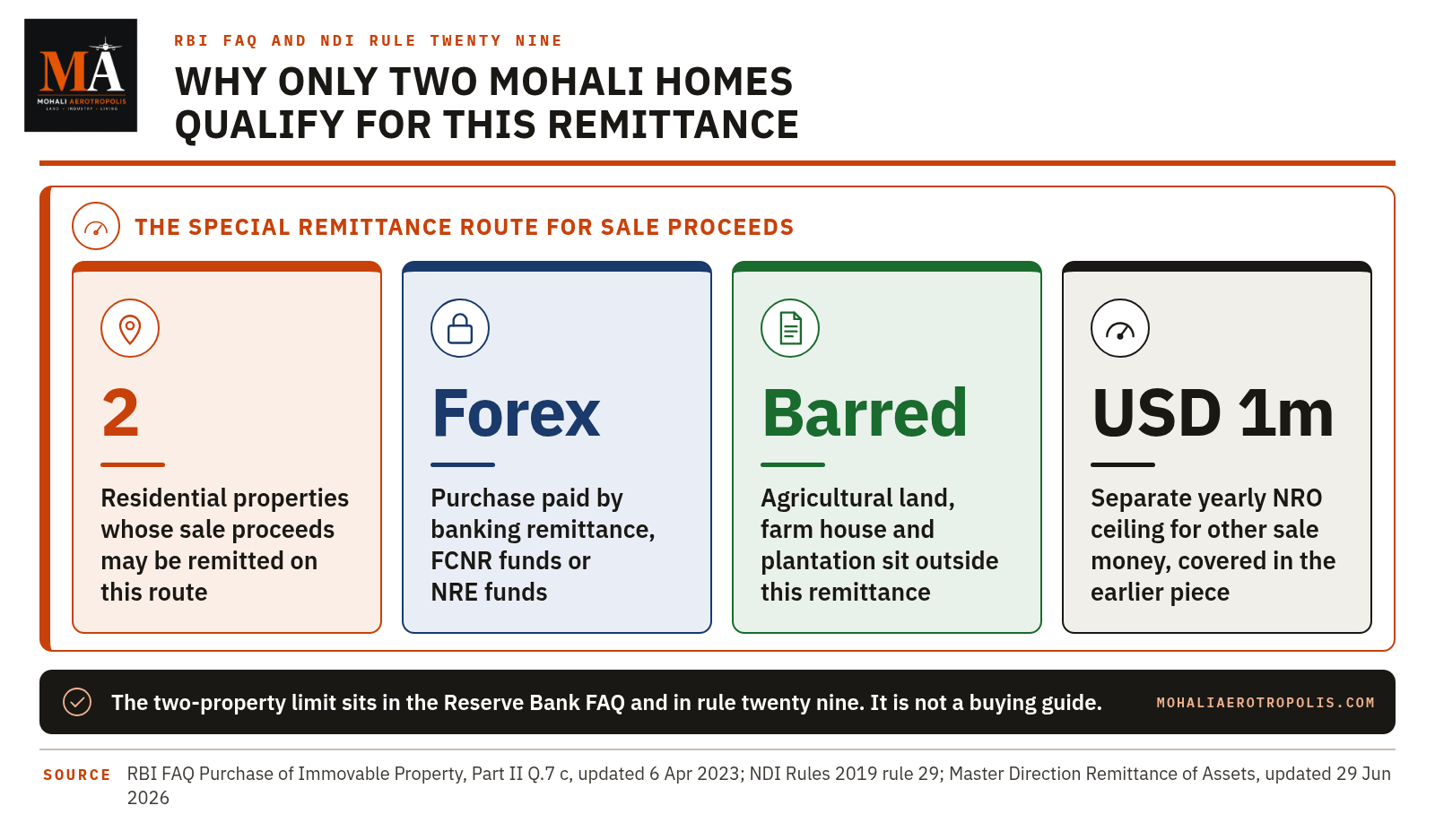
This piece stays on one narrow point. The Reserve Bank of India's frequently asked questions on the purchase of immovable property set out, in Part II question seven clause c, when an NRI or a PIO may remit the sale proceeds of immovable property other than agricultural land or a farm house or plantation property. The same conditions appear in rule twenty nine of the Foreign Exchange Management Non-debt Instruments Rules of two thousand and nineteen. For residential property, both texts restrict that remittance to not more than two such properties. The wider yearly ceiling on money leaving an NRO account, and the tax declaration forms that sit before a bank remittance, are covered in our earlier piece on taking Mohali sale money abroad. This piece does not retell those forms.
What the Reserve Bank's answer says
The Reserve Bank's frequently asked question on this point, updated on the sixth of April twenty twenty three, asks whether a non-resident can repatriate the sale proceeds of immovable property in India. Clause c of the published answer is quoted here in full.
"NRIs/ PIOs can remit the sale proceeds of immovable property (other than agricultural land/ farm house/ plantation property) in India subject to the following conditions:
i. The immovable property was acquired in accordance with the provisions of the foreign exchange law in force at the time of acquisition or the provisions of Foreign Exchange Management (Non-Debt Instrument) Rules, 2019.;
ii. The amount for acquisition of the property was paid in foreign exchange received through banking channels or out of the funds held in foreign currency non-resident account or out of the funds held in non-resident external account;
iii. In the case of residential property, the repatriation of sale proceeds is restricted to not more than two such properties."
Those three conditions are the whole of clause c. The rest of this piece unpacks each of them against a Mohali sale, without adding terms the answer does not contain.
What rule twenty nine says
Rule twenty nine of the Non-debt Instruments Rules is headed "Repatriation of sale proceeds". Sub-rule two covers a sale by an NRI or an OCI of immovable property other than agricultural land or a farm house or plantation property. The authorised dealer may allow repatriation of the sale proceeds outside India when the conditions in that sub-rule are met. The operative conditions are quoted here from the rules.
"(a) the immovable property was acquired by the seller in accordance with the provisions of the foreign exchange law in force at the time of acquisition or the provisions of these rules;
(b) the amount for acquisition of the immovable property was paid in foreign exchange received through banking channels or out of funds held in Foreign Currency Non-Resident Account or out of funds held in Non-Resident External Account;
(c) in the case of residential property, the repatriation of sale proceeds is restricted to not more than two such properties."
The Reserve Bank's answer and the rule use the same three conditions. The FAQ speaks of NRIs and PIOs. The rule speaks of an NRI or an OCI. Neither text invents a further residential-property test beyond the two-property limit.
Why the purchase money had to come from abroad
The second condition in the FAQ, and the matching condition in the rule, both require that the amount used to buy the property was paid in foreign exchange received through banking channels, or out of funds held in a foreign currency non-resident account, or out of funds held in a non-resident external account. A Mohali flat bought years earlier with rupee savings in a resident account, before the owner moved abroad, does not meet that wording. A flat paid for from an NRE account, or from an FCNR account, or by an inward remittance through banking channels, is the kind of purchase the texts describe.
The rule and the FAQ do not themselves say what happens to any surplus above the original foreign exchange amount. Older Reserve Bank circulars on remittance facilities have treated that surplus as money that goes to the NRO account and then under the yearly ceiling. That wider ceiling is the subject of the earlier piece linked above. This piece stays on the special remittance route and on the two-property residential limit.
Lawful acquisition under the foreign exchange rules
The first condition in the FAQ, and the matching condition in the rule, require that the property was acquired in accordance with the foreign exchange law in force at the time, or under the Non-debt Instruments Rules. Rule twenty four of those rules is the main route by which an NRI or an OCI may buy immovable property in India other than agricultural land or a farm house or plantation property. A Mohali residential flat or plot bought under that route, and paid for in the modes the remittance texts name, is the kind of acquisition those conditions point to. This piece does not restate every clause of rule twenty four. It only records that lawful acquisition is a stated condition of the remittance route.
Why only two residential properties qualify
The third condition in the FAQ, and the matching condition in the rule, both say that in the case of residential property the repatriation of sale proceeds is restricted to not more than two such properties. The texts do not say the seller may use the route for a third home. They do not say how a later purchase after an earlier remittance is counted. They do not define residential property beyond the ordinary sense of the phrase. The limit is stated once in those words and left there.
The same texts exclude agricultural land, and a farm house, and plantation property, from this remittance route altogether. A sale of farmland on the edge of the Aerotropolis does not sit inside clause c or sub-rule two. Those exclusions are separate from the two-property residential limit. A commercial shop that is not farmland still has to meet the lawful-acquisition and foreign-exchange-payment conditions, even though it sits outside the residential limit's wording.
What this route does not decide
Neither the FAQ nor rule twenty nine says how a Mohali bank branch counts the two properties. They are silent on what proof of the original foreign exchange payment the authorised dealer works from. They do not set capital gains tax. They do not replace the tax declaration that sits before a remittance, which the earlier piece on this site covers. They do not replace GMADA's own transfer conditions where the property is a GMADA site.
Rule twenty nine sub-rule one deals with a different case: a person who holds Indian property under section six sub-section five of the Foreign Exchange Management Act, or that person's successor. That person cannot repatriate the sale proceeds without Reserve Bank permission. That case is outside the two-property residential route this piece describes.
The FAQ's clause b points to a separate yearly remittance facility under the Remittance of Assets regulations. That facility, including the yearly United States dollar one million ceiling for NRO balances and sale proceeds, is the background route for money that does not qualify under clause c. The Reserve Bank's Master Direction on Remittance of Assets, updated on the twenty ninth of June twenty twenty six, restates that ceiling. That ceiling is left to the earlier piece.
How this fits a Mohali sale from abroad
An owner in Toronto or London or California who sells a Mohali residential flat that was bought with money from an NRE account, or from an FCNR account, or by an inward remittance, may ask the authorised dealer to remit the sale proceeds under the conditions in the FAQ and in rule twenty nine. The property has to have been acquired lawfully under the foreign exchange rules. The purchase price has to have moved through the foreign exchange modes those texts name. For residential property, that remittance route is open for not more than two such properties. A third residential sale does not meet the wording of the limit. Sale money that never qualified for this route, or that sits above what the route covers, is the money that goes through the NRO ceiling described in the earlier piece.
None of those points is a step-by-step remittance guide. They are a reading of the Reserve Bank's published answer and of rule twenty nine.
Related reading
- Taking Mohali sale money abroad: how NRI repatriation works now
- Selling a Mohali property from abroad: the TDS rule for buyers
- What do India's property rules say once an NRI takes Canadian or American citizenship
- Can an NRI buy property in India: Mohali guide
Sources: Reserve Bank of India frequently asked questions on purchase of immovable property, Part II question seven clause c, page updated on the sixth of April twenty twenty three. Foreign Exchange Management Non-debt Instruments Rules of two thousand and nineteen. Rule twenty nine is the remittance rule. Rule twenty four is the acquisition route those remittance conditions point back to. Reserve Bank of India Master Direction on Remittance of Assets, updated on the twenty ninth of June twenty twenty six, for the yearly NRO ceiling named only as background. The sources we use are listed on our Editorial Sources page.
This piece describes the published text of the Reserve Bank's answer and of rule twenty nine. Nothing here is legal or tax advice, and every remittance turns on its own papers and the bank's checks.
मोहाली का फ़्लैट या प्लॉट जब ऐसा मालिक बेचता है जो विदेश में रहता है, तो एक ऐसा सवाल उठता है जो निवासी विक्रेता के सामने नहीं आता। विक्रय विलेख भारत में पंजीकृत होता है। कीमत रुपये में आती है। वह रकम विशेष प्रेषण मार्ग पर भारत छोड़ सकती है या नहीं, और वह मार्ग कितने घरों के लिए खुला है, यह विदेशी मुद्रा नियमों से तय होता है जो केवल इसलिए लागू होते हैं क्योंकि विक्रेता भारत के बाहर रहता है।
यह लेख एक संकीर्ण बिंदु पर रहता है। रिज़र्व बैंक ऑफ़ इंडिया के अचल संपत्ति की ख़रीद पर अक्सर पूछे जाने वाले प्रश्न, भाग दो प्रश्न सात खंड ग में, बताते हैं कि एनआरआई या पीआईओ कृषि भूमि या फ़ार्म हाउस या प्लांटेशन संपत्ति के अलावा अचल संपत्ति की बिक्री की रकम कब भेज सकता है। वही शर्तें दो हज़ार उन्नीस के फ़ॉरेन एक्सचेंज मैनेजमेंट नॉन-डेट इंस्ट्रूमेंट्स रूल्स के नियम उनतीस में आती हैं। आवासीय संपत्ति के लिए दोनों पाठ उस प्रेषण को दो से अधिक ऐसी संपत्तियों तक सीमित करते हैं। एनआरओ खाते से जाने वाली रकम की व्यापक वार्षिक सीमा, और बैंक प्रेषण से पहले वाले कर घोषणा प्रपत्र, हमारे पहले लेख मोहाली की बिक्री की रकम विदेश ले जाना में कवर हैं। यह लेख उन प्रपत्रों को दोबारा नहीं बताता।
रिज़र्व बैंक का जवाब क्या कहता है
रिज़र्व बैंक का इस बिंदु पर अक्सर पूछा जाने वाला सवाल, जो छह अप्रैल दो हज़ार तेईस को अपडेट हुआ, पूछता है कि क्या गैर-निवासी भारत में अचल संपत्ति की बिक्री की रकम प्रत्यावर्तित कर सकता है। प्रकाशित जवाब का खंड ग यहाँ पूरा उद्धृत है।
"NRIs/ PIOs can remit the sale proceeds of immovable property (other than agricultural land/ farm house/ plantation property) in India subject to the following conditions:
i. The immovable property was acquired in accordance with the provisions of the foreign exchange law in force at the time of acquisition or the provisions of Foreign Exchange Management (Non-Debt Instrument) Rules, 2019.;
ii. The amount for acquisition of the property was paid in foreign exchange received through banking channels or out of the funds held in foreign currency non-resident account or out of the funds held in non-resident external account;
iii. In the case of residential property, the repatriation of sale proceeds is restricted to not more than two such properties."
ये तीन शर्तें खंड ग की पूरी बात हैं। इस लेख का बाक़ी हिस्सा मोहाली की बिक्री के संदर्भ में उनमें से प्रत्येक को खोलता है, बिना वे शब्द जोड़े जो जवाब में नहीं हैं।
नियम उनतीस क्या कहता है
नॉन-डेट इंस्ट्रूमेंट्स रूल्स के नियम उनतीस का शीर्षक है "Repatriation of sale proceeds"। उप-नियम दो एनआरआई या ओसीआई द्वारा कृषि भूमि या फ़ार्म हाउस या प्लांटेशन संपत्ति के अलावा अचल संपत्ति की बिक्री को कवर करता है। अधिकृत डीलर भारत के बाहर बिक्री की रकम का प्रत्यावर्तन तब अनुमति दे सकता है जब उस उप-नियम की शर्तें पूरी हों। लागू शर्तें नियमों से यहाँ उद्धृत हैं।
"(a) the immovable property was acquired by the seller in accordance with the provisions of the foreign exchange law in force at the time of acquisition or the provisions of these rules;
(b) the amount for acquisition of the immovable property was paid in foreign exchange received through banking channels or out of funds held in Foreign Currency Non-Resident Account or out of funds held in Non-Resident External Account;
(c) in the case of residential property, the repatriation of sale proceeds is restricted to not more than two such properties."
रिज़र्व बैंक का जवाब और नियम वही तीन शर्तें इस्तेमाल करते हैं। एफएक्यू एनआरआई और पीआईओ की बात करता है। नियम एनआरआई या ओसीआई की बात करता है। कोई भी पाठ दो-संपत्ति सीमा से आगे कोई और आवासीय-संपत्ति परीक्षा नहीं गढ़ता।
ख़रीद की रकम विदेश से क्यों आनी थी
एफएक्यू की दूसरी शर्त, और नियम की मेल खाती शर्त, दोनों माँगती हैं कि संपत्ति ख़रीदने में लगी रकम बैंकिंग चैनलों से प्राप्त विदेशी मुद्रा से चुकाई गई हो, या विदेशी मुद्रा गैर-निवासी खाते में रखी निधि से, या गैर-निवासी बाहरी खाते में रखी निधि से। मोहाली का वह फ़्लैट जो सालों पहले निवासी खाते की रुपये बचत से ख़रीदा गया, मालिक के विदेश जाने से पहले, उस शब्दावली पर खरा नहीं उतरता। एनआरई खाते से, या एफसीएनआर खाते से, या बैंकिंग चैनलों से आवक प्रेषण से चुकाया गया फ़्लैट उस तरह की ख़रीद है जिसका वर्णन पाठ करते हैं।
नियम और एफएक्यू स्वयं नहीं कहते कि मूल विदेशी मुद्रा राशि से ऊपर की किसी बचत का क्या होता है। प्रेषण सुविधाओं पर रिज़र्व बैंक के पुराने परिपत्रों ने उस बचत को ऐसी रकम माना है जो एनआरओ खाते में जाती है और फिर वार्षिक सीमा के तहत। वह व्यापक सीमा ऊपर जुड़े पहले लेख का विषय है। यह लेख विशेष प्रेषण मार्ग और दो-संपत्ति आवासीय सीमा पर रहता है।
विदेशी मुद्रा नियमों के तहत वैध ख़रीद
एफएक्यू की पहली शर्त, और नियम की मेल खाती शर्त, माँगती हैं कि संपत्ति उस समय लागू विदेशी मुद्रा क़ानून के अनुसार, या नॉन-डेट इंस्ट्रूमेंट्स रूल्स के तहत ली गई हो। उन नियमों का नियम चौबीस वह मुख्य मार्ग है जिससे एनआरआई या ओसीआई भारत में कृषि भूमि या फ़ार्म हाउस या प्लांटेशन संपत्ति के अलावा अचल संपत्ति ख़रीद सकता है। उस मार्ग से ख़रीदा और प्रेषण पाठों में नामित तरीकों से चुकाया गया मोहाली का आवासीय फ़्लैट या प्लॉट उसी तरह की ख़रीद है जिसकी ओर वे शर्तें इशारा करती हैं। यह लेख नियम चौबीस का हर खंड नहीं दोहराता। यह केवल दर्ज करता है कि वैध ख़रीद प्रेषण मार्ग की कही गई शर्त है।
केवल दो आवासीय संपत्तियाँ क्यों योग्य हैं
एफएक्यू की तीसरी शर्त, और नियम की मेल खाती शर्त, दोनों कहती हैं कि आवासीय संपत्ति के मामले में बिक्री की रकम का प्रत्यावर्तन दो से अधिक ऐसी संपत्तियों तक सीमित है। पाठ नहीं कहते कि विक्रेता तीसरे घर के लिए मार्ग इस्तेमाल कर सकता है। वे नहीं कहते कि पहले प्रेषण के बाद बाद की ख़रीद कैसे गिनी जाती है। वे आवासीय संपत्ति को साधारण अर्थ से आगे परिभाषित नहीं करते। सीमा उन्हीं शब्दों में एक बार कही गई है और वहीं छोड़ दी गई है।
वही पाठ कृषि भूमि, और फ़ार्म हाउस, और प्लांटेशन संपत्ति को इस प्रेषण मार्ग से पूरी तरह बाहर रखते हैं। एरोट्रोपोलिस के किनारे खेती की ज़मीन की बिक्री खंड ग या उप-नियम दो के भीतर नहीं बैठती। वे रोकें दो-संपत्ति आवासीय सीमा से अलग हैं। वह व्यावसायिक दुकान जो खेती की ज़मीन नहीं है, फिर भी वैध-ख़रीद और विदेशी-मुद्रा-भुगतान शर्तों पर खरा उतरना होता है, भले वह आवासीय सीमा की शब्दावली से बाहर बैठती हो।
यह मार्ग क्या तय नहीं करता
न तो एफएक्यू और न नियम उनतीस कहता है कि मोहाली की बैंक शाखा दो संपत्तियाँ कैसे गिनती है। वे इस पर चुप हैं कि मूल विदेशी मुद्रा भुगतान का कौन सा प्रमाण अधिकृत डीलर देखता है। वे पूंजीगत लाभ कर तय नहीं करते। वे प्रेषण से पहले वाली कर घोषणा को नहीं बदलते, जिसे इस साइट का पहले वाला लेख कवर करता है। जहाँ संपत्ति गमाडा साइट हो, वे गमाडा की अपनी अंतरण शर्तों को नहीं बदलते।
नियम उनतीस उप-नियम एक एक अलग मामले से जुड़ा है: वह व्यक्ति जो फ़ॉरेन एक्सचेंज मैनेजमेंट एक्ट की धारा छह उप-धारा पाँच के तहत भारतीय संपत्ति रखता है, या उसका उत्तराधिकारी। वह व्यक्ति रिज़र्व बैंक की अनुमति के बिना बिक्री की रकम प्रत्यावर्तित नहीं कर सकता। वह मामला इस लेख वाले दो-संपत्ति आवासीय मार्ग से बाहर है।
एफएक्यू का खंड ख रेमिटेंस ऑफ़ एसेट्स विनियमों के तहत एक अलग वार्षिक प्रेषण सुविधा की ओर इशारा करता है। वह सुविधा, जिसमें एनआरओ शेष और बिक्री की रकम के लिए वार्षिक संयुक्त राज्य डॉलर दस लाख की सीमा शामिल है, खंड ग के तहत योग्य न होने वाली रकम का पृष्ठभूमि मार्ग है। रिज़र्व बैंक का मास्टर डायरेक्शन ऑन रेमिटेंस ऑफ़ एसेट्स, जो उन्तीस जून दो हज़ार छब्बीस को अपडेट हुआ, उस सीमा को दोहराता है। वह सीमा पहले वाले लेख पर छोड़ दी गई है।
विदेश से मोहाली बिक्री में यह कैसे बैठता है
टोरंटो या लंदन या कैलिफ़ोर्निया का मालिक जो मोहाली का आवासीय फ़्लैट बेचता है, और वह फ़्लैट एनआरई खाते से, या एफसीएनआर खाते से, या आवक प्रेषण से ख़रीदा गया था, अधिकृत डीलर से एफएक्यू और नियम उनतीस की शर्तों के तहत बिक्री की रकम भेजने को कह सकता है। संपत्ति विदेशी मुद्रा नियमों के तहत वैध रूप से ली गई होनी चाहिए। ख़रीद मूल्य उन पाठों में नामित विदेशी मुद्रा तरीकों से गुज़रा होना चाहिए। आवासीय संपत्ति के लिए वह प्रेषण मार्ग दो से अधिक ऐसी संपत्तियों के लिए खुला नहीं है। तीसरी आवासीय बिक्री सीमा की शब्दावली पर खरी नहीं उतरती। वह बिक्री रकम जो कभी इस मार्ग के लिए योग्य नहीं रही, या जो मार्ग जितना कवर करता है उससे ऊपर बैठती है, वही रकम है जो पहले लेख में वर्णित एनआरओ सीमा से गुज़रती है।
इनमें से कोई बिंदु कदम-दर-कदम प्रेषण मार्गदर्शिका नहीं है। ये रिज़र्व बैंक के प्रकाशित जवाब और नियम उनतीस का पाठ हैं।
Related reading
- Taking Mohali sale money abroad: how NRI repatriation works now
- Selling a Mohali property from abroad: the TDS rule for buyers
- What do India's property rules say once an NRI takes Canadian or American citizenship
- Can an NRI buy property in India: Mohali guide
Sources: रिज़र्व बैंक ऑफ़ इंडिया अचल संपत्ति की ख़रीद पर अक्सर पूछे जाने वाले प्रश्न, भाग दो प्रश्न सात खंड ग, पृष्ठ छह अप्रैल दो हज़ार तेईस को अपडेट। फ़ॉरेन एक्सचेंज मैनेजमेंट नॉन-डेट इंस्ट्रूमेंट्स रूल्स दो हज़ार उन्नीस। नियम उनतीस प्रेषण नियम है। नियम चौबीस वह ख़रीद मार्ग है जिसकी ओर वे प्रेषण शर्तें लौटती हैं। रिज़र्व बैंक ऑफ़ इंडिया मास्टर डायरेक्शन ऑन रेमिटेंस ऑफ़ एसेट्स, उन्तीस जून दो हज़ार छब्बीस को अपडेट, केवल पृष्ठभूमि के रूप में नामित वार्षिक एनआरओ सीमा के लिए। जिन स्रोतों का हम उपयोग करते हैं वे हमारे Editorial Sources पृष्ठ पर सूचीबद्ध हैं।
यह लेख रिज़र्व बैंक के जवाब और नियम उनतीस के प्रकाशित पाठ का वर्णन करता है। यहाँ कुछ भी क़ानूनी या कर सलाह नहीं है, और हर प्रेषण अपने कागज़ों और बैंक की जाँच पर टिका होता है।
ਮੋਹਾਲੀ ਦਾ ਫਲੈਟ ਜਾਂ ਪਲਾਟ ਜਦੋਂ ਐਸਾ ਮਾਲਕ ਵੇਚਦਾ ਹੈ ਜੋ ਵਿਦੇਸ਼ ਵਿੱਚ ਰਹਿੰਦਾ ਹੈ, ਤਾਂ ਇੱਕ ਐਸਾ ਸਵਾਲ ਉੱਠਦਾ ਹੈ ਜੋ ਨਿਵਾਸੀ ਵਿਕਰੇਤਾ ਦੇ ਸਾਹਮਣੇ ਨਹੀਂ ਆਉਂਦਾ। ਵਿਕਰੀ ਵਿਲੇਖ ਭਾਰਤ ਵਿੱਚ ਰਜਿਸਟਰਡ ਹੁੰਦਾ ਹੈ। ਕੀਮਤ ਰੁਪਏ ਵਿੱਚ ਆਉਂਦੀ ਹੈ। ਉਹ ਰਕਮ ਖਾਸ ਰੈਮਿਟੈਂਸ ਮਾਰਗ ਉੱਤੇ ਭਾਰਤ ਛੱਡ ਸਕਦੀ ਹੈ ਜਾਂ ਨਹੀਂ, ਅਤੇ ਉਹ ਮਾਰਗ ਕਿੰਨੇ ਘਰਾਂ ਲਈ ਖੁੱਲ੍ਹਾ ਹੈ, ਇਹ ਵਿਦੇਸ਼ੀ ਮੁਦਰਾ ਨਿਯਮਾਂ ਤੋਂ ਤੈਅ ਹੁੰਦਾ ਹੈ ਜੋ ਕੇਵਲ ਇਸ ਲਈ ਲਾਗੂ ਹੁੰਦੇ ਹਨ ਕਿਉਂਕਿ ਵਿਕਰੇਤਾ ਭਾਰਤ ਤੋਂ ਬਾਹਰ ਰਹਿੰਦਾ ਹੈ।
ਇਹ ਲੇਖ ਇੱਕ ਸੰਕੀਰਣ ਬਿੰਦੂ ਉੱਤੇ ਰਹਿੰਦਾ ਹੈ। ਰਿਜ਼ਰਵ ਬੈਂਕ ਆਫ਼ ਇੰਡੀਆ ਦੇ ਅਚਲ ਜਾਇਦਾਦ ਦੀ ਖਰੀਦ ਉੱਤੇ ਅਕਸਰ ਪੁੱਛੇ ਜਾਣ ਵਾਲੇ ਸਵਾਲ, ਭਾਗ ਦੋ ਸਵਾਲ ਸੱਤ ਖੰਡ ਗ ਵਿੱਚ, ਦੱਸਦੇ ਹਨ ਕਿ ਐਨਆਰਆਈ ਜਾਂ ਪੀਆਈਓ ਖੇਤੀ ਜ਼ਮੀਨ ਜਾਂ ਫਾਰਮ ਹਾਊਸ ਜਾਂ ਪਲਾਂਟੇਸ਼ਨ ਜਾਇਦਾਦ ਤੋਂ ਇਲਾਵਾ ਅਚਲ ਜਾਇਦਾਦ ਦੀ ਵਿਕਰੀ ਦੀ ਰਕਮ ਕਦੋਂ ਭੇਜ ਸਕਦਾ ਹੈ। ਉਹੀ ਸ਼ਰਤਾਂ ਦੋ ਹਜ਼ਾਰ ਉਨੀ ਦੇ ਫਾਰੇਨ ਐਕਸਚੇਂਜ ਮੈਨੇਜਮੈਂਟ ਨਾਨ-ਡੈਟ ਇੰਸਟ੍ਰੂਮੈਂਟਸ ਰੂਲਜ਼ ਦੇ ਨਿਯਮ ਉਨੱਤੀ ਵਿੱਚ ਆਉਂਦੀਆਂ ਹਨ। ਰਿਹਾਇਸ਼ੀ ਜਾਇਦਾਦ ਲਈ ਦੋਵੇਂ ਪਾਠ ਉਸ ਰੈਮਿਟੈਂਸ ਨੂੰ ਦੋ ਤੋਂ ਵੱਧ ਐਸੀਆਂ ਜਾਇਦਾਦਾਂ ਤੱਕ ਸੀਮਿਤ ਕਰਦੇ ਹਨ। ਐਨਆਰਓ ਖਾਤੇ ਤੋਂ ਜਾਣ ਵਾਲੀ ਰਕਮ ਦੀ ਵਿਆਪਕ ਸਾਲਾਨਾ ਹੱਦ, ਅਤੇ ਬੈਂਕ ਰੈਮਿਟੈਂਸ ਤੋਂ ਪਹਿਲਾਂ ਵਾਲੇ ਟੈਕਸ ਘੋਸ਼ਣਾ ਫਾਰਮ, ਸਾਡੇ ਪਹਿਲੇ ਲੇਖ ਮੋਹਾਲੀ ਦੀ ਵਿਕਰੀ ਦੀ ਰਕਮ ਵਿਦੇਸ਼ ਲੈ ਜਾਣਾ ਵਿੱਚ ਕਵਰ ਹਨ। ਇਹ ਲੇਖ ਉਨ੍ਹਾਂ ਫਾਰਮਾਂ ਨੂੰ ਦੁਬਾਰਾ ਨਹੀਂ ਦੱਸਦਾ।
ਰਿਜ਼ਰਵ ਬੈਂਕ ਦਾ ਜਵਾਬ ਕੀ ਕਹਿੰਦਾ ਹੈ
ਰਿਜ਼ਰਵ ਬੈਂਕ ਦਾ ਇਸ ਬਿੰਦੂ ਉੱਤੇ ਅਕਸਰ ਪੁੱਛਿਆ ਜਾਣ ਵਾਲਾ ਸਵਾਲ, ਜੋ ਛੇ ਅਪ੍ਰੈਲ ਦੋ ਹਜ਼ਾਰ ਤੇਈ ਨੂੰ ਅਪਡੇਟ ਹੋਇਆ, ਪੁੱਛਦਾ ਹੈ ਕਿ ਕੀ ਗੈਰ-ਨਿਵਾਸੀ ਭਾਰਤ ਵਿੱਚ ਅਚਲ ਜਾਇਦਾਦ ਦੀ ਵਿਕਰੀ ਦੀ ਰਕਮ ਪ੍ਰਤਿਆਵਰਤਿਤ ਕਰ ਸਕਦਾ ਹੈ। ਪ੍ਰਕਾਸ਼ਿਤ ਜਵਾਬ ਦਾ ਖੰਡ ਗ ਇੱਥੇ ਪੂਰਾ ਉਧ੍ਰਿਤ ਹੈ।
"NRIs/ PIOs can remit the sale proceeds of immovable property (other than agricultural land/ farm house/ plantation property) in India subject to the following conditions:
i. The immovable property was acquired in accordance with the provisions of the foreign exchange law in force at the time of acquisition or the provisions of Foreign Exchange Management (Non-Debt Instrument) Rules, 2019.;
ii. The amount for acquisition of the property was paid in foreign exchange received through banking channels or out of the funds held in foreign currency non-resident account or out of the funds held in non-resident external account;
iii. In the case of residential property, the repatriation of sale proceeds is restricted to not more than two such properties."
ਇਹ ਤਿੰਨ ਸ਼ਰਤਾਂ ਖੰਡ ਗ ਦੀ ਪੂਰੀ ਗੱਲ ਹਨ। ਇਸ ਲੇਖ ਦਾ ਬਾਕੀ ਹਿੱਸਾ ਮੋਹਾਲੀ ਦੀ ਵਿਕਰੀ ਦੇ ਸੰਦਰਭ ਵਿੱਚ ਉਨ੍ਹਾਂ ਵਿੱਚੋਂ ਹਰ ਇੱਕ ਨੂੰ ਖੋਲ੍ਹਦਾ ਹੈ, ਬਿਨਾਂ ਉਹ ਸ਼ਬਦ ਜੋੜੇ ਜੋ ਜਵਾਬ ਵਿੱਚ ਨਹੀਂ ਹਨ।
ਨਿਯਮ ਉਨੱਤੀ ਕੀ ਕਹਿੰਦਾ ਹੈ
ਨਾਨ-ਡੈਟ ਇੰਸਟ੍ਰੂਮੈਂਟਸ ਰੂਲਜ਼ ਦੇ ਨਿਯਮ ਉਨੱਤੀ ਦਾ ਸਿਰਲੇਖ ਹੈ "Repatriation of sale proceeds"। ਉਪ-ਨਿਯਮ ਦੋ ਐਨਆਰਆਈ ਜਾਂ ਓਸੀਆਈ ਵੱਲੋਂ ਖੇਤੀ ਜ਼ਮੀਨ ਜਾਂ ਫਾਰਮ ਹਾਊਸ ਜਾਂ ਪਲਾਂਟੇਸ਼ਨ ਜਾਇਦਾਦ ਤੋਂ ਇਲਾਵਾ ਅਚਲ ਜਾਇਦਾਦ ਦੀ ਵਿਕਰੀ ਨੂੰ ਕਵਰ ਕਰਦਾ ਹੈ। ਅਧਿਕ੍ਰਿਤ ਡੀਲਰ ਭਾਰਤ ਤੋਂ ਬਾਹਰ ਵਿਕਰੀ ਦੀ ਰਕਮ ਦਾ ਪ੍ਰਤਿਆਵਰਤਨ ਤਦ ਇਜਾਜ਼ਤ ਦੇ ਸਕਦਾ ਹੈ ਜਦੋਂ ਉਸ ਉਪ-ਨਿਯਮ ਦੀਆਂ ਸ਼ਰਤਾਂ ਪੂਰੀਆਂ ਹੋਣ। ਲਾਗੂ ਸ਼ਰਤਾਂ ਨਿਯਮਾਂ ਤੋਂ ਇੱਥੇ ਉਧ੍ਰਿਤ ਹਨ।
"(a) the immovable property was acquired by the seller in accordance with the provisions of the foreign exchange law in force at the time of acquisition or the provisions of these rules;
(b) the amount for acquisition of the immovable property was paid in foreign exchange received through banking channels or out of funds held in Foreign Currency Non-Resident Account or out of funds held in Non-Resident External Account;
(c) in the case of residential property, the repatriation of sale proceeds is restricted to not more than two such properties."
ਰਿਜ਼ਰਵ ਬੈਂਕ ਦਾ ਜਵਾਬ ਅਤੇ ਨਿਯਮ ਉਹੀ ਤਿੰਨ ਸ਼ਰਤਾਂ ਵਰਤਦੇ ਹਨ। ਐਫਏਕਿਊ ਐਨਆਰਆਈ ਅਤੇ ਪੀਆਈਓ ਦੀ ਗੱਲ ਕਰਦਾ ਹੈ। ਨਿਯਮ ਐਨਆਰਆਈ ਜਾਂ ਓਸੀਆਈ ਦੀ ਗੱਲ ਕਰਦਾ ਹੈ। ਕੋਈ ਵੀ ਪਾਠ ਦੋ-ਜਾਇਦਾਦ ਹੱਦ ਤੋਂ ਅੱਗੇ ਕੋਈ ਹੋਰ ਰਿਹਾਇਸ਼ੀ-ਜਾਇਦਾਦ ਪਰੀਖਿਆ ਨਹੀਂ ਘੜਦਾ।
ਖਰੀਦ ਦੀ ਰਕਮ ਵਿਦੇਸ਼ ਤੋਂ ਕਿਉਂ ਆਉਣੀ ਸੀ
ਐਫਏਕਿਊ ਦੀ ਦੂਜੀ ਸ਼ਰਤ, ਅਤੇ ਨਿਯਮ ਦੀ ਮੇਲ ਖਾਂਦੀ ਸ਼ਰਤ, ਦੋਵੇਂ ਮੰਗਦੀਆਂ ਹਨ ਕਿ ਜਾਇਦਾਦ ਖਰੀਦਣ ਵਿੱਚ ਲੱਗੀ ਰਕਮ ਬੈਂਕਿੰਗ ਚੈਨਲਾਂ ਤੋਂ ਪ੍ਰਾਪਤ ਵਿਦੇਸ਼ੀ ਮੁਦਰਾ ਤੋਂ ਚੁਕਾਈ ਗਈ ਹੋਵੇ, ਜਾਂ ਵਿਦੇਸ਼ੀ ਮੁਦਰਾ ਗੈਰ-ਨਿਵਾਸੀ ਖਾਤੇ ਵਿੱਚ ਰੱਖੀ ਨਿਧੀ ਤੋਂ, ਜਾਂ ਗੈਰ-ਨਿਵਾਸੀ ਬਾਹਰੀ ਖਾਤੇ ਵਿੱਚ ਰੱਖੀ ਨਿਧੀ ਤੋਂ। ਮੋਹਾਲੀ ਦਾ ਉਹ ਫਲੈਟ ਜੋ ਸਾਲਾਂ ਪਹਿਲਾਂ ਨਿਵਾਸੀ ਖਾਤੇ ਦੀ ਰੁਪਏ ਬੱਚਤ ਤੋਂ ਖਰੀਦਿਆ ਗਿਆ, ਮਾਲਕ ਦੇ ਵਿਦੇਸ਼ ਜਾਣ ਤੋਂ ਪਹਿਲਾਂ, ਉਸ ਸ਼ਬਦਾਵਲੀ ਉੱਤੇ ਖਰਾ ਨਹੀਂ ਉਤਰਦਾ। ਐਨਆਰਈ ਖਾਤੇ ਤੋਂ, ਜਾਂ ਐਫਸੀਐਨਆਰ ਖਾਤੇ ਤੋਂ, ਜਾਂ ਬੈਂਕਿੰਗ ਚੈਨਲਾਂ ਤੋਂ ਆਉਣ ਵਾਲੀ ਰੈਮਿਟੈਂਸ ਤੋਂ ਚੁਕਾਇਆ ਫਲੈਟ ਉਸ ਕਿਸਮ ਦੀ ਖਰੀਦ ਹੈ ਜਿਸਦਾ ਵਰਣਨ ਪਾਠ ਕਰਦੇ ਹਨ।
ਨਿਯਮ ਅਤੇ ਐਫਏਕਿਊ ਖੁਦ ਨਹੀਂ ਕਹਿੰਦੇ ਕਿ ਮੂਲ ਵਿਦੇਸ਼ੀ ਮੁਦਰਾ ਰਕਮ ਤੋਂ ਉੱਪਰ ਦੀ ਕਿਸੇ ਬੱਚਤ ਦਾ ਕੀ ਹੁੰਦਾ ਹੈ। ਰੈਮਿਟੈਂਸ ਸਹੂਲਤਾਂ ਉੱਤੇ ਰਿਜ਼ਰਵ ਬੈਂਕ ਦੇ ਪੁਰਾਣੇ ਪਰਿਪੱਤਰਾਂ ਨੇ ਉਸ ਬੱਚਤ ਨੂੰ ਐਸੀ ਰਕਮ ਮੰਨਿਆ ਹੈ ਜੋ ਐਨਆਰਓ ਖਾਤੇ ਵਿੱਚ ਜਾਂਦੀ ਹੈ ਅਤੇ ਫਿਰ ਸਾਲਾਨਾ ਹੱਦ ਅਧੀਨ। ਉਹ ਵਿਆਪਕ ਹੱਦ ਉੱਪਰ ਜੁੜੇ ਪਹਿਲੇ ਲੇਖ ਦਾ ਵਿਸ਼ਾ ਹੈ। ਇਹ ਲੇਖ ਖਾਸ ਰੈਮਿਟੈਂਸ ਮਾਰਗ ਅਤੇ ਦੋ-ਜਾਇਦਾਦ ਰਿਹਾਇਸ਼ੀ ਹੱਦ ਉੱਤੇ ਰਹਿੰਦਾ ਹੈ।
ਵਿਦੇਸ਼ੀ ਮੁਦਰਾ ਨਿਯਮਾਂ ਅਧੀਨ ਕਾਨੂੰਨੀ ਖਰੀਦ
ਐਫਏਕਿਊ ਦੀ ਪਹਿਲੀ ਸ਼ਰਤ, ਅਤੇ ਨਿਯਮ ਦੀ ਮੇਲ ਖਾਂਦੀ ਸ਼ਰਤ, ਮੰਗਦੀਆਂ ਹਨ ਕਿ ਜਾਇਦਾਦ ਉਸ ਵੇਲੇ ਲਾਗੂ ਵਿਦੇਸ਼ੀ ਮੁਦਰਾ ਕਾਨੂੰਨ ਅਨੁਸਾਰ, ਜਾਂ ਨਾਨ-ਡੈਟ ਇੰਸਟ੍ਰੂਮੈਂਟਸ ਰੂਲਜ਼ ਅਧੀਨ ਲਈ ਗਈ ਹੋਵੇ। ਉਨ੍ਹਾਂ ਨਿਯਮਾਂ ਦਾ ਨਿਯਮ ਚੌਵੀ ਉਹ ਮੁੱਖ ਮਾਰਗ ਹੈ ਜਿਸ ਨਾਲ ਐਨਆਰਆਈ ਜਾਂ ਓਸੀਆਈ ਭਾਰਤ ਵਿੱਚ ਖੇਤੀ ਜ਼ਮੀਨ ਜਾਂ ਫਾਰਮ ਹਾਊਸ ਜਾਂ ਪਲਾਂਟੇਸ਼ਨ ਜਾਇਦਾਦ ਤੋਂ ਇਲਾਵਾ ਅਚਲ ਜਾਇਦਾਦ ਖਰੀਦ ਸਕਦਾ ਹੈ। ਉਸ ਮਾਰਗ ਤੋਂ ਖਰੀਦਿਆ ਅਤੇ ਰੈਮਿਟੈਂਸ ਪਾਠਾਂ ਵਿੱਚ ਨਾਮਜ਼ਦ ਤਰੀਕਿਆਂ ਤੋਂ ਚੁਕਾਇਆ ਮੋਹਾਲੀ ਦਾ ਰਿਹਾਇਸ਼ੀ ਫਲੈਟ ਜਾਂ ਪਲਾਟ ਉਸੇ ਕਿਸਮ ਦੀ ਖਰੀਦ ਹੈ ਜਿਸ ਵੱਲ ਉਹ ਸ਼ਰਤਾਂ ਇਸ਼ਾਰਾ ਕਰਦੀਆਂ ਹਨ। ਇਹ ਲੇਖ ਨਿਯਮ ਚੌਵੀ ਦਾ ਹਰ ਖੰਡ ਨਹੀਂ ਦੁਹਰਾਉਂਦਾ। ਇਹ ਕੇਵਲ ਦਰਜ ਕਰਦਾ ਹੈ ਕਿ ਕਾਨੂੰਨੀ ਖਰੀਦ ਰੈਮਿਟੈਂਸ ਮਾਰਗ ਦੀ ਕਹੀ ਗਈ ਸ਼ਰਤ ਹੈ।
ਕੇਵਲ ਦੋ ਰਿਹਾਇਸ਼ੀ ਜਾਇਦਾਦਾਂ ਹੀ ਕਿਉਂ ਯੋਗ ਹਨ
ਐਫਏਕਿਊ ਦੀ ਤੀਜੀ ਸ਼ਰਤ, ਅਤੇ ਨਿਯਮ ਦੀ ਮੇਲ ਖਾਂਦੀ ਸ਼ਰਤ, ਦੋਵੇਂ ਕਹਿੰਦੀਆਂ ਹਨ ਕਿ ਰਿਹਾਇਸ਼ੀ ਜਾਇਦਾਦ ਦੇ ਮਾਮਲੇ ਵਿੱਚ ਵਿਕਰੀ ਦੀ ਰਕਮ ਦਾ ਪ੍ਰਤਿਆਵਰਤਨ ਦੋ ਤੋਂ ਵੱਧ ਐਸੀਆਂ ਜਾਇਦਾਦਾਂ ਤੱਕ ਸੀਮਿਤ ਹੈ। ਪਾਠ ਨਹੀਂ ਕਹਿੰਦੇ ਕਿ ਵਿਕਰੇਤਾ ਤੀਜੇ ਘਰ ਲਈ ਮਾਰਗ ਵਰਤ ਸਕਦਾ ਹੈ। ਉਹ ਨਹੀਂ ਕਹਿੰਦੇ ਕਿ ਪਹਿਲੀ ਰੈਮਿਟੈਂਸ ਤੋਂ ਬਾਅਦ ਬਾਅਦ ਦੀ ਖਰੀਦ ਕਿਵੇਂ ਗਿਣੀ ਜਾਂਦੀ ਹੈ। ਉਹ ਰਿਹਾਇਸ਼ੀ ਜਾਇਦਾਦ ਨੂੰ ਸਾਧਾਰਣ ਅਰਥ ਤੋਂ ਅੱਗੇ ਪਰਿਭਾਸ਼ਿਤ ਨਹੀਂ ਕਰਦੇ। ਹੱਦ ਉਨ੍ਹਾਂ ਸ਼ਬਦਾਂ ਵਿੱਚ ਇੱਕ ਵਾਰ ਕਹੀ ਗਈ ਹੈ ਅਤੇ ਉੱਥੇ ਛੱਡ ਦਿੱਤੀ ਗਈ ਹੈ।
ਉਹੀ ਪਾਠ ਖੇਤੀ ਜ਼ਮੀਨ, ਅਤੇ ਫਾਰਮ ਹਾਊਸ, ਅਤੇ ਪਲਾਂਟੇਸ਼ਨ ਜਾਇਦਾਦ ਨੂੰ ਇਸ ਰੈਮਿਟੈਂਸ ਮਾਰਗ ਤੋਂ ਪੂਰੀ ਤਰ੍ਹਾਂ ਬਾਹਰ ਰੱਖਦੇ ਹਨ। ਏਰੋਟ੍ਰੋਪੋਲਿਸ ਦੇ ਕਿਨਾਰੇ ਖੇਤੀ ਜ਼ਮੀਨ ਦੀ ਵਿਕਰੀ ਖੰਡ ਗ ਜਾਂ ਉਪ-ਨਿਯਮ ਦੋ ਦੇ ਅੰਦਰ ਨਹੀਂ ਬੈਠਦੀ। ਉਹ ਰੋਕਾਂ ਦੋ-ਜਾਇਦਾਦ ਰਿਹਾਇਸ਼ੀ ਹੱਦ ਤੋਂ ਅੱਡ ਹਨ। ਉਹ ਵਪਾਰਕ ਦੁਕਾਨ ਜੋ ਖੇਤੀ ਜ਼ਮੀਨ ਨਹੀਂ ਹੈ, ਫਿਰ ਵੀ ਕਾਨੂੰਨੀ-ਖਰੀਦ ਅਤੇ ਵਿਦੇਸ਼ੀ-ਮੁਦਰਾ-ਭੁਗਤਾਨ ਸ਼ਰਤਾਂ ਉੱਤੇ ਖਰੀ ਉਤਰਨੀ ਹੁੰਦੀ ਹੈ, ਭਾਵੇਂ ਉਹ ਰਿਹਾਇਸ਼ੀ ਹੱਦ ਦੀ ਸ਼ਬਦਾਵਲੀ ਤੋਂ ਬਾਹਰ ਬੈਠਦੀ ਹੋਵੇ।
ਇਹ ਮਾਰਗ ਕੀ ਤੈਅ ਨਹੀਂ ਕਰਦਾ
ਨਾ ਐਫਏਕਿਊ ਅਤੇ ਨਾ ਨਿਯਮ ਉਨੱਤੀ ਕਹਿੰਦਾ ਹੈ ਕਿ ਮੋਹਾਲੀ ਦੀ ਬੈਂਕ ਸ਼ਾਖਾ ਦੋ ਜਾਇਦਾਦਾਂ ਕਿਵੇਂ ਗਿਣਦੀ ਹੈ। ਉਹ ਇਸ ਉੱਤੇ ਚੁੱਪ ਹਨ ਕਿ ਮੂਲ ਵਿਦੇਸ਼ੀ ਮੁਦਰਾ ਭੁਗਤਾਨ ਦਾ ਕਿਹੜਾ ਸਬੂਤ ਅਧਿਕ੍ਰਿਤ ਡੀਲਰ ਵੇਖਦਾ ਹੈ। ਉਹ ਪੂੰਜੀਗਤ ਲਾਭ ਟੈਕਸ ਤੈਅ ਨਹੀਂ ਕਰਦੇ। ਉਹ ਰੈਮਿਟੈਂਸ ਤੋਂ ਪਹਿਲਾਂ ਵਾਲੀ ਟੈਕਸ ਘੋਸ਼ਣਾ ਨੂੰ ਨਹੀਂ ਬਦਲਦੇ, ਜਿਸਨੂੰ ਇਸ ਸਾਈਟ ਦਾ ਪਹਿਲਾਂ ਵਾਲਾ ਲੇਖ ਕਵਰ ਕਰਦਾ ਹੈ। ਜਿੱਥੇ ਜਾਇਦਾਦ ਗਮਾਡਾ ਸਾਈਟ ਹੋਵੇ, ਉਹ ਗਮਾਡਾ ਦੀਆਂ ਆਪਣੀਆਂ ਤਬਾਦਲਾ ਸ਼ਰਤਾਂ ਨੂੰ ਨਹੀਂ ਬਦਲਦੇ।
ਨਿਯਮ ਉਨੱਤੀ ਉਪ-ਨਿਯਮ ਇੱਕ ਇੱਕ ਅੱਡ ਮਾਮਲੇ ਨਾਲ ਜੁੜਿਆ ਹੈ: ਉਹ ਵਿਅਕਤੀ ਜੋ ਫਾਰੇਨ ਐਕਸਚੇਂਜ ਮੈਨੇਜਮੈਂਟ ਐਕਟ ਦੀ ਧਾਰਾ ਛੇ ਉਪ-ਧਾਰਾ ਪੰਜ ਅਧੀਨ ਭਾਰਤੀ ਜਾਇਦਾਦ ਰੱਖਦਾ ਹੈ, ਜਾਂ ਉਸਦਾ ਉੱਤਰਾਧਿਕਾਰੀ। ਉਹ ਵਿਅਕਤੀ ਰਿਜ਼ਰਵ ਬੈਂਕ ਦੀ ਇਜਾਜ਼ਤ ਤੋਂ ਬਿਨਾਂ ਵਿਕਰੀ ਦੀ ਰਕਮ ਪ੍ਰਤਿਆਵਰਤਿਤ ਨਹੀਂ ਕਰ ਸਕਦਾ। ਉਹ ਮਾਮਲਾ ਇਸ ਲੇਖ ਵਾਲੇ ਦੋ-ਜਾਇਦਾਦ ਰਿਹਾਇਸ਼ੀ ਮਾਰਗ ਤੋਂ ਬਾਹਰ ਹੈ।
ਐਫਏਕਿਊ ਦਾ ਖੰਡ ਖ ਰੈਮਿਟੈਂਸ ਆਫ਼ ਐਸੈਟਸ ਵਿਨਿਯਮਾਂ ਅਧੀਨ ਇੱਕ ਅੱਡ ਸਾਲਾਨਾ ਰੈਮਿਟੈਂਸ ਸਹੂਲਤ ਵੱਲ ਇਸ਼ਾਰਾ ਕਰਦਾ ਹੈ। ਉਹ ਸਹੂਲਤ, ਜਿਸ ਵਿੱਚ ਐਨਆਰਓ ਬਕਾਇਆ ਅਤੇ ਵਿਕਰੀ ਦੀ ਰਕਮ ਲਈ ਸਾਲਾਨਾ ਸੰਯੁਕਤ ਰਾਜ ਡਾਲਰ ਦਸ ਲੱਖ ਦੀ ਹੱਦ ਸ਼ਾਮਲ ਹੈ, ਖੰਡ ਗ ਅਧੀਨ ਯੋਗ ਨਾ ਹੋਣ ਵਾਲੀ ਰਕਮ ਦਾ ਪਿਛੋਕੜ ਮਾਰਗ ਹੈ। ਰਿਜ਼ਰਵ ਬੈਂਕ ਦਾ ਮਾਸਟਰ ਡਾਇਰੈਕਸ਼ਨ ਆਨ ਰੈਮਿਟੈਂਸ ਆਫ਼ ਐਸੈਟਸ, ਜੋ ਉਨੱਤੀ ਜੂਨ ਦੋ ਹਜ਼ਾਰ ਛੱਬੀ ਨੂੰ ਅਪਡੇਟ ਹੋਇਆ, ਉਸ ਹੱਦ ਨੂੰ ਦੁਹਰਾਉਂਦਾ ਹੈ। ਉਹ ਹੱਦ ਪਹਿਲਾਂ ਵਾਲੇ ਲੇਖ ਉੱਤੇ ਛੱਡ ਦਿੱਤੀ ਗਈ ਹੈ।
ਵਿਦੇਸ਼ ਤੋਂ ਮੋਹਾਲੀ ਵਿਕਰੀ ਵਿੱਚ ਇਹ ਕਿਵੇਂ ਬੈਠਦਾ ਹੈ
ਟੋਰਾਂਟੋ ਜਾਂ ਲੰਡਨ ਜਾਂ ਕੈਲੀਫੋਰਨੀਆ ਦਾ ਮਾਲਕ ਜੋ ਮੋਹਾਲੀ ਦਾ ਰਿਹਾਇਸ਼ੀ ਫਲੈਟ ਵੇਚਦਾ ਹੈ, ਅਤੇ ਉਹ ਫਲੈਟ ਐਨਆਰਈ ਖਾਤੇ ਤੋਂ, ਜਾਂ ਐਫਸੀਐਨਆਰ ਖਾਤੇ ਤੋਂ, ਜਾਂ ਆਉਣ ਵਾਲੀ ਰੈਮਿਟੈਂਸ ਤੋਂ ਖਰੀਦਿਆ ਗਿਆ ਸੀ, ਅਧਿਕ੍ਰਿਤ ਡੀਲਰ ਤੋਂ ਐਫਏਕਿਊ ਅਤੇ ਨਿਯਮ ਉਨੱਤੀ ਦੀਆਂ ਸ਼ਰਤਾਂ ਅਧੀਨ ਵਿਕਰੀ ਦੀ ਰਕਮ ਭੇਜਣ ਨੂੰ ਕਹਿ ਸਕਦਾ ਹੈ। ਜਾਇਦਾਦ ਵਿਦੇਸ਼ੀ ਮੁਦਰਾ ਨਿਯਮਾਂ ਅਧੀਨ ਕਾਨੂੰਨੀ ਤੌਰ ਤੇ ਲਈ ਗਈ ਹੋਣੀ ਚਾਹੀਦੀ ਹੈ। ਖਰੀਦ ਮੁੱਲ ਉਨ੍ਹਾਂ ਪਾਠਾਂ ਵਿੱਚ ਨਾਮਜ਼ਦ ਵਿਦੇਸ਼ੀ ਮੁਦਰਾ ਤਰੀਕਿਆਂ ਤੋਂ ਗੁਜ਼ਰਿਆ ਹੋਣਾ ਚਾਹੀਦਾ ਹੈ। ਰਿਹਾਇਸ਼ੀ ਜਾਇਦਾਦ ਲਈ ਉਹ ਰੈਮਿਟੈਂਸ ਮਾਰਗ ਦੋ ਤੋਂ ਵੱਧ ਐਸੀਆਂ ਜਾਇਦਾਦਾਂ ਲਈ ਖੁੱਲ੍ਹਾ ਨਹੀਂ ਹੈ। ਤੀਜੀ ਰਿਹਾਇਸ਼ੀ ਵਿਕਰੀ ਹੱਦ ਦੀ ਸ਼ਬਦਾਵਲੀ ਉੱਤੇ ਖਰੀ ਨਹੀਂ ਉਤਰਦੀ। ਉਹ ਵਿਕਰੀ ਰਕਮ ਜੋ ਕਦੇ ਇਸ ਮਾਰਗ ਲਈ ਯੋਗ ਨਹੀਂ ਰਹੀ, ਜਾਂ ਜੋ ਮਾਰਗ ਜਿੰਨਾ ਕਵਰ ਕਰਦਾ ਹੈ ਉਸ ਤੋਂ ਉੱਪਰ ਬੈਠਦੀ ਹੈ, ਉਹੀ ਰਕਮ ਹੈ ਜੋ ਪਹਿਲੇ ਲੇਖ ਵਿੱਚ ਵਰਣਿਤ ਐਨਆਰਓ ਹੱਦ ਤੋਂ ਗੁਜ਼ਰਦੀ ਹੈ।
ਇਨ੍ਹਾਂ ਵਿੱਚੋਂ ਕੋਈ ਬਿੰਦੂ ਕਦਮ-ਦਰ-ਕਦਮ ਰੈਮਿਟੈਂਸ ਮਾਰਗਦਰਸ਼ਿਕਾ ਨਹੀਂ ਹੈ। ਇਹ ਰਿਜ਼ਰਵ ਬੈਂਕ ਦੇ ਪ੍ਰਕਾਸ਼ਿਤ ਜਵਾਬ ਅਤੇ ਨਿਯਮ ਉਨੱਤੀ ਦਾ ਪਾਠ ਹਨ।
Related reading
- Taking Mohali sale money abroad: how NRI repatriation works now
- Selling a Mohali property from abroad: the TDS rule for buyers
- What do India's property rules say once an NRI takes Canadian or American citizenship
- Can an NRI buy property in India: Mohali guide
Sources: ਰਿਜ਼ਰਵ ਬੈਂਕ ਆਫ਼ ਇੰਡੀਆ ਅਚਲ ਜਾਇਦਾਦ ਦੀ ਖਰੀਦ ਉੱਤੇ ਅਕਸਰ ਪੁੱਛੇ ਜਾਣ ਵਾਲੇ ਸਵਾਲ, ਭਾਗ ਦੋ ਸਵਾਲ ਸੱਤ ਖੰਡ ਗ, ਪੰਨਾ ਛੇ ਅਪ੍ਰੈਲ ਦੋ ਹਜ਼ਾਰ ਤੇਈ ਨੂੰ ਅਪਡੇਟ। ਫਾਰੇਨ ਐਕਸਚੇਂਜ ਮੈਨੇਜਮੈਂਟ ਨਾਨ-ਡੈਟ ਇੰਸਟ੍ਰੂਮੈਂਟਸ ਰੂਲਜ਼ ਦੋ ਹਜ਼ਾਰ ਉਨੀ। ਨਿਯਮ ਉਨੱਤੀ ਰੈਮਿਟੈਂਸ ਨਿਯਮ ਹੈ। ਨਿਯਮ ਚੌਵੀ ਉਹ ਖਰੀਦ ਮਾਰਗ ਹੈ ਜਿਸ ਵੱਲ ਉਹ ਰੈਮਿਟੈਂਸ ਸ਼ਰਤਾਂ ਮੁੜਦੀਆਂ ਹਨ। ਰਿਜ਼ਰਵ ਬੈਂਕ ਆਫ਼ ਇੰਡੀਆ ਮਾਸਟਰ ਡਾਇਰੈਕਸ਼ਨ ਆਨ ਰੈਮਿਟੈਂਸ ਆਫ਼ ਐਸੈਟਸ, ਉਨੱਤੀ ਜੂਨ ਦੋ ਹਜ਼ਾਰ ਛੱਬੀ ਨੂੰ ਅਪਡੇਟ, ਕੇਵਲ ਪਿਛੋਕੜ ਵਜੋਂ ਨਾਮਜ਼ਦ ਸਾਲਾਨਾ ਐਨਆਰਓ ਹੱਦ ਲਈ। ਜਿਨ੍ਹਾਂ ਸਰੋਤਾਂ ਦੀ ਅਸੀਂ ਵਰਤੋਂ ਕਰਦੇ ਹਾਂ ਉਹ ਸਾਡੇ Editorial Sources ਪੰਨੇ ਉੱਤੇ ਸੂਚੀਬੱਧ ਹਨ।
ਇਹ ਲੇਖ ਰਿਜ਼ਰਵ ਬੈਂਕ ਦੇ ਜਵਾਬ ਅਤੇ ਨਿਯਮ ਉਨੱਤੀ ਦੇ ਪ੍ਰਕਾਸ਼ਿਤ ਪਾਠ ਦਾ ਵਰਣਨ ਕਰਦਾ ਹੈ। ਇੱਥੇ ਕੁਝ ਵੀ ਕਾਨੂੰਨੀ ਜਾਂ ਟੈਕਸ ਸਲਾਹ ਨਹੀਂ ਹੈ, ਅਤੇ ਹਰ ਰੈਮਿਟੈਂਸ ਆਪਣੇ ਕਾਗਜ਼ਾਂ ਅਤੇ ਬੈਂਕ ਦੀ ਜਾਂਚ ਉੱਤੇ ਟਿਕੀ ਹੁੰਦੀ ਹੈ।