

A family that booked into a GMADA scheme on the strength of its layout drawings bought more than a plot. It bought the road in front of the plot and the sector road that was meant to carry traffic past the gate. On the eighteenth of October, the Hindustan Times reported that GMADA has proposed to amend the Master Plan so that some of those roads come out narrower in its upcoming projects and townships.
The proposal is a plan on paper for now. It has not been notified, and an architect quoted in the same report said it still has to go through board approval and a public objection stage. For buyers and allottees in Eco City Three and Four and the Aerotropolis, the question is what actually changes and when anyone will know for certain.
What GMADA has proposed
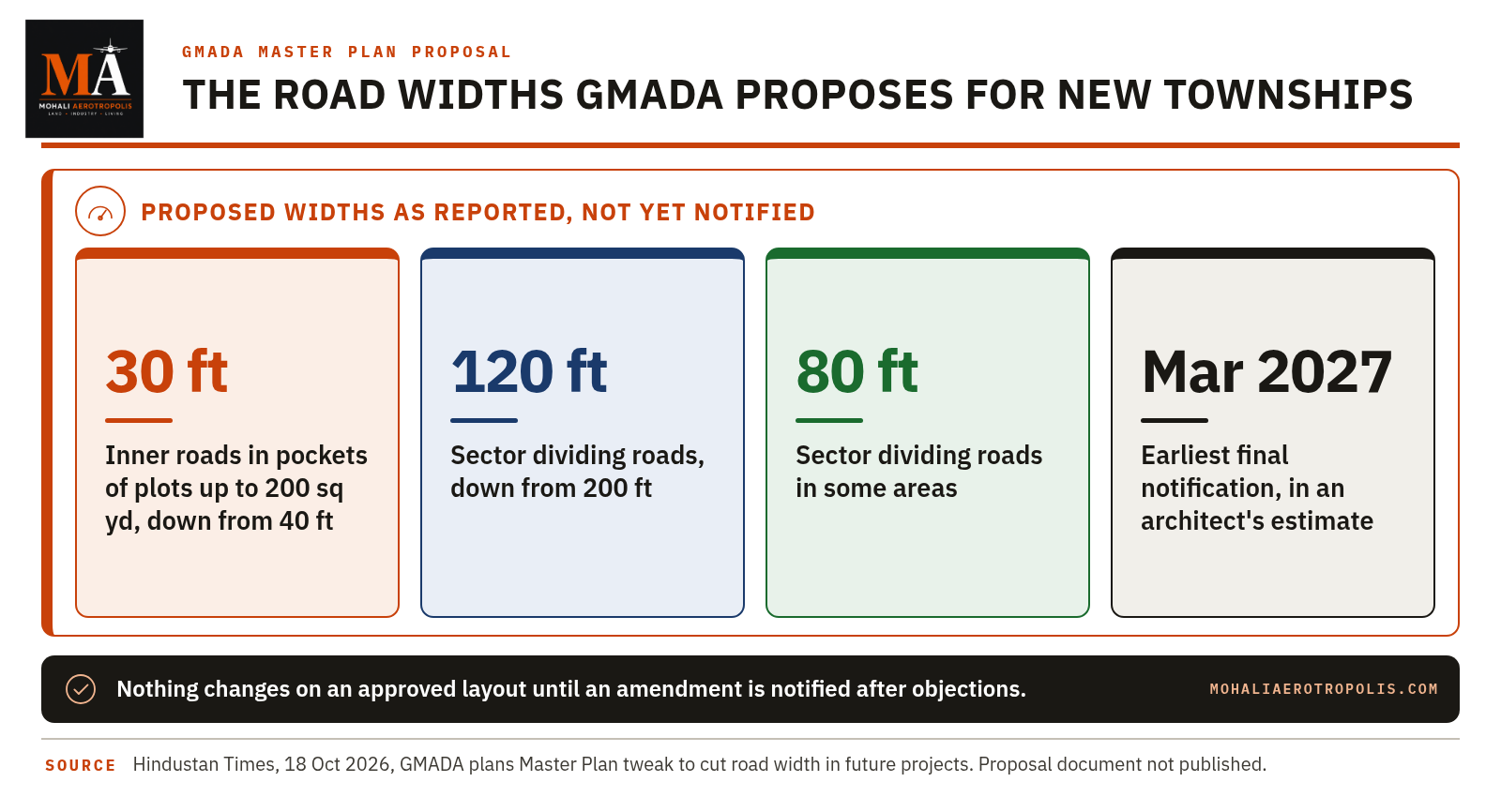
According to the Hindustan Times, the change touches two kinds of road. The first is the inner road in pockets of smaller residential plots. The second is the sector dividing road, the wide road that runs between sectors and is meant to spread traffic across the city. Both would be planned narrower than the Master Plan now provides. In some areas, the report says, sector dividing roads would be cut even further.
The chart with this article sets out the widths exactly as the newspaper reported them. MA has not seen the proposal document itself. GMADA has not published it on its notices page in a form MA could find on the nineteenth of October. Every width and every project named here rests on the Hindustan Times account.
The report names the projects likely to be affected. They are Eco City Three and Eco City Four in New Chandigarh and the Aerotropolis project next to the airport, along with all other projects GMADA takes up in future. A town planning official, speaking without being named, told the paper that some areas such as Medicity would not see compromises, because road widths and green spaces there were considered essential.
Why GMADA says it needs the change
GMADA's chief administrator told the Hindustan Times that the decision was driven by a growing financial liability under the national land acquisition law of two thousand and thirteen, often shortened to the RFCTLARR Act. The provision he cited is Section ten, sub-section three.
That sub-section is short. In the text on India Code, it says that whenever multi-crop irrigated land is acquired, "an equivalent area of culturable wasteland shall be developed for agricultural purposes or an amount equivalent to the value of the land acquired shall be deposited with the appropriate Government for investment in agriculture for enhancing food-security."
Put simply, when fertile irrigated farmland is taken for a township, the law asks for a matching investment in farming elsewhere. The chief administrator told the paper that converting farmland for housing had raised GMADA's liability and that the authority was paying more than it could earn. He added that GMADA was still not sure it could break even. Narrower roads leave more land to sell as plots. That is the arithmetic behind the proposal, on GMADA's own account.
Planners and residents push back
The report carries a veteran planner and a senior architect who do not agree with the move. A former senior town planner of Punjab said the change was aimed at increasing saleable area, and that more saleable area means more people and more vehicles on the same roads. He pointed out that sector dividing roads in Chandigarh are generally wider than the narrowest width now proposed, and said narrower inner roads in Mohali's older phases already cause problems. His suggestion was denser, vertical housing in place of a heavy reliance on plots.
A senior architect told the paper that the Master Plan expects society roads to leave room for utility lines such as water supply and electricity. He said cutting road widths could affect how those services are laid. A residents' umbrella body representing private housing townships has opposed the changes to the Eco City Three master plan and the Aerotropolis project. It has asked for the originally approved road widths to be restored, saying the cuts could hurt connectivity and the interests of allottees and investors who relied on the original plans.
These are views reported by the newspaper. GMADA has said statutory green space requirements will still be met, according to its town planning official. Neither side's claim has yet been tested in any formal hearing.
What the law requires before a Master Plan changes
A Master Plan in Punjab is made under the Punjab Regional and Town Planning and Development Act. Section seventy of that Act says a Master Plan has to "indicate, define and provide the existing and proposed highways, roads, major streets and other lines of communication", so road widths are part of the plan itself.
The same section sets the route to approval. Under sub-section three, the plan is published along with the places where copies can be inspected, "for inviting objections in writing from any person" within thirty days of publication. The State Government then decides under sub-section four. It may direct changes or approve the plan "after considering the objections and in consultation with the Board". Section seventy six applies the same steps when the planning agency revises a plan that is already in force.
The architect quoted by the Hindustan Times described the same path for this proposal. The agenda is to go to the next meeting of the state's town planning board for approval in principle, and objections from the public are to be invited through press advertisements before any final notification. In his estimate, the change may not be notified before the middle of March next year. That is his reading, and GMADA has given no date.
Section seventy seven of the Act separately allows minor changes to a plan in force with the prior approval of the State Government. The report does not say GMADA intends to use that route. The architect quoted described the full objection process for this proposal.
What changes for buyers and allottees today
On the record as it stands, nothing has changed yet for a plot already shown on an approved layout. The proposal is not notified. No objection notice has been published. No revised layout has been released for the Eco City schemes or the Aerotropolis.
What the proposal does change is the reliability of drawings for land not yet laid out. A sector or pocket that GMADA has still to plan in detail is exactly where a narrower road would land first. The chief administrator's words, as quoted, were that the change will apply to projects from here on.
The report does not say whether the narrower widths would reach pockets where plots have already been allotted or letters of intent issued. That is the point allottees will want settled, and it is the point the objection stage exists to air. Until GMADA publishes a draft, any claim that a given plot faces a wider or narrower road than shown is ahead of the record.
What a buyer can establish
Two documents carry weight here, and both can be read today. The approved layout plan for a scheme shows the road widths that apply to it until a change is notified. The allotment letter or letter of intent shows which plot sits on which road. Beyond those two, GMADA's public notices page is where any draft amendment and its objection window would appear.
A buyer can also note the timing. A change that has to clear board approval and then a hearing of objections takes months. The architect quoted by the paper put the earliest notification in the middle of March next year. Anyone selling a plot in these schemes on the promise of a particular road width is selling against a plan that GMADA itself now proposes to redraw.
Once a draft is published, any person can object in writing within the statutory window. That window is the real decision point. Until it opens, the proposal is GMADA's stated intention, reported once, with the reasons and the objections both on the table.
Related reading
- GMADA Eco City Three: acquisition done, launch still months away
- Why the SAS Nagar master plan was drawn the way it was
- The New Chandigarh master plan: land use and sectors
- GMADA land pooling policy update: what changed
Sources: The sources we use are listed on our Editorial Sources page.
This piece reports a GMADA proposal as published by the press and the planning law as written. Nothing here is legal or investment advice, and the final road widths are for GMADA and the State Government to settle after objections are heard.
जिस परिवार ने GMADA की किसी योजना में उसके लेआउट नक्शों के भरोसे बुकिंग की, उसने सिर्फ़ एक प्लॉट नहीं ख़रीदा। उसने प्लॉट के सामने की सड़क और वह सेक्टर सड़क भी ख़रीदी जिसे गेट के पास से ट्रैफ़िक ले जाना था। अठारह अक्टूबर को हिंदुस्तान टाइम्स ने ख़बर दी कि GMADA ने मास्टर प्लान (Master Plan) में संशोधन का प्रस्ताव रखा है, ताकि उसकी आने वाली परियोजनाओं और टाउनशिप में इनमें से कुछ सड़कें संकरी बनें।
फ़िलहाल यह प्रस्ताव काग़ज़ पर एक योजना है। इसे अधिसूचित नहीं किया गया है, और उसी रिपोर्ट में उद्धृत एक आर्किटेक्ट ने कहा कि इसे अभी बोर्ड की मंज़ूरी और जन आपत्ति के चरण से गुज़रना है। इको सिटी तीन और चार और एयरोट्रोपोलिस के ख़रीदारों और आवंटियों के लिए सवाल यह है कि असल में क्या बदलता है और पक्के तौर पर कब पता चलेगा।
GMADA ने क्या प्रस्ताव रखा है
हिंदुस्तान टाइम्स के अनुसार, यह बदलाव दो तरह की सड़कों पर असर डालता है। पहली, छोटे आवासीय प्लॉटों वाले पॉकेट की अंदरूनी सड़क। दूसरी, सेक्टर विभाजक सड़क, यानी वह चौड़ी सड़क जो सेक्टरों के बीच चलती है और शहर भर में ट्रैफ़िक बाँटने के लिए होती है। दोनों को मास्टर प्लान में अभी तय चौड़ाई से संकरा रखने की योजना है। रिपोर्ट कहती है कि कुछ इलाक़ों में सेक्टर विभाजक सड़कें और भी संकरी की जाएँगी।
इस लेख के साथ दिया चार्ट चौड़ाइयाँ ठीक वैसे ही दिखाता है जैसे अख़बार ने बताईं। MA ने प्रस्ताव का दस्तावेज़ ख़ुद नहीं देखा है। उन्नीस अक्टूबर को GMADA के नोटिस पेज पर यह ऐसे रूप में नहीं मिला जिसे MA पढ़ सके। यहाँ बताई गई हर चौड़ाई और हर परियोजना हिंदुस्तान टाइम्स के विवरण पर आधारित है।
रिपोर्ट उन परियोजनाओं के नाम बताती है जिन पर असर पड़ने की संभावना है। ये हैं न्यू चंडीगढ़ में इको सिटी तीन और इको सिटी चार, हवाई अड्डे के पास एयरोट्रोपोलिस परियोजना, और आगे GMADA की हर नई परियोजना। नाम न बताने की शर्त पर एक टाउन प्लानिंग अधिकारी ने अख़बार से कहा कि मेडिसिटी जैसे कुछ इलाक़ों में कोई समझौता नहीं होगा, क्योंकि वहाँ सड़कों की चौड़ाई और हरित क्षेत्र ज़रूरी माने गए हैं।
GMADA यह बदलाव ज़रूरी क्यों बताता है
GMADA के मुख्य प्रशासक ने हिंदुस्तान टाइम्स से कहा कि यह फ़ैसला दो हज़ार तेरह के राष्ट्रीय भूमि अधिग्रहण क़ानून, जिसे संक्षेप में RFCTLARR Act कहा जाता है, के तहत बढ़ती वित्तीय देनदारी के कारण लिया गया। उन्होंने जिस प्रावधान का हवाला दिया वह धारा दस की उपधारा तीन है।
यह उपधारा छोटी है। इंडिया कोड के पाठ के अनुसार, जब भी बहु-फ़सली सिंचित भूमि का अधिग्रहण होता है, "उतने ही क्षेत्र की कृषि योग्य बंजर भूमि कृषि के लिए विकसित की जाएगी या अधिग्रहित भूमि के मूल्य के बराबर राशि खाद्य सुरक्षा बढ़ाने हेतु कृषि में निवेश के लिए उपयुक्त सरकार के पास जमा की जाएगी" (an equivalent area of culturable wasteland shall be developed for agricultural purposes or an amount equivalent to the value of the land acquired shall be deposited with the appropriate Government for investment in agriculture for enhancing food-security)।
सीधे शब्दों में, जब किसी टाउनशिप के लिए उपजाऊ सिंचित खेत लिए जाते हैं, तो क़ानून कहीं और खेती में उतने ही निवेश की माँग करता है। मुख्य प्रशासक ने अख़बार को बताया कि खेती की ज़मीन को आवास में बदलने से GMADA की देनदारी बढ़ी है और प्राधिकरण जितना कमा सकता है उससे ज़्यादा चुका रहा है। उन्होंने यह भी कहा कि GMADA को अभी भरोसा नहीं है कि लागत निकल पाएगी। संकरी सड़कों से प्लॉट के रूप में बेचने के लिए ज़्यादा ज़मीन बचती है। GMADA के अपने बयान के अनुसार, प्रस्ताव के पीछे यही हिसाब है।
योजनाकार और निवासी विरोध में
रिपोर्ट में एक अनुभवी योजनाकार और एक वरिष्ठ आर्किटेक्ट हैं जो इस क़दम से सहमत नहीं हैं। पंजाब के एक पूर्व वरिष्ठ टाउन प्लानर ने कहा कि बदलाव का मक़सद बिक्री योग्य क्षेत्र बढ़ाना है, और ज़्यादा बिक्री योग्य क्षेत्र का मतलब उन्हीं सड़कों पर ज़्यादा लोग और ज़्यादा वाहन हैं। उन्होंने बताया कि चंडीगढ़ में सेक्टर विभाजक सड़कें आम तौर पर अब प्रस्तावित सबसे कम चौड़ाई से ज़्यादा चौड़ी हैं, और कहा कि मोहाली के पुराने फ़ेज़ में संकरी अंदरूनी सड़कें पहले से दिक़्क़त पैदा करती हैं। उनका सुझाव था कि प्लॉटों पर ज़्यादा निर्भर रहने के बजाय घनी, ऊँची इमारतों वाली आवास योजना बनाई जाए।
एक वरिष्ठ आर्किटेक्ट ने अख़बार से कहा कि मास्टर प्लान में सोसाइटी सड़कों पर पानी की आपूर्ति और बिजली जैसी यूटिलिटी लाइनों के लिए जगह रखने की अपेक्षा है। उन्होंने कहा कि सड़कों की चौड़ाई घटाने से इन सेवाओं को बिछाने पर असर पड़ सकता है। निजी आवासीय टाउनशिप का प्रतिनिधित्व करने वाली निवासियों की एक छत्र संस्था ने इको सिटी तीन के मास्टर प्लान और एयरोट्रोपोलिस परियोजना में बदलावों का विरोध किया है। उसने मूल रूप से मंज़ूर सड़क चौड़ाई बहाल करने की माँग की है, यह कहते हुए कि कटौती से कनेक्टिविटी और उन आवंटियों और निवेशकों के हितों को नुक़सान हो सकता है जिन्होंने मूल योजनाओं पर भरोसा किया था।
ये अख़बार में छपे विचार हैं। GMADA के टाउन प्लानिंग अधिकारी के अनुसार, हरित क्षेत्र की वैधानिक शर्तें फिर भी पूरी की जाएँगी। किसी भी पक्ष के दावे की अभी किसी औपचारिक सुनवाई में जाँच नहीं हुई है।
मास्टर प्लान बदलने से पहले क़ानून क्या माँगता है
पंजाब में मास्टर प्लान पंजाब क्षेत्रीय एवं नगर नियोजन और विकास अधिनियम (Punjab Regional and Town Planning and Development Act) के तहत बनता है। उस अधिनियम की धारा सत्तर कहती है कि मास्टर प्लान को "मौजूदा और प्रस्तावित राजमार्ग, सड़कें, प्रमुख गलियाँ और संचार के अन्य मार्ग दर्शाने, परिभाषित करने और उपलब्ध कराने" होंगे (indicate, define and provide the existing and proposed highways, roads, major streets and other lines of communication), इसलिए सड़कों की चौड़ाई ख़ुद योजना का हिस्सा है।
यही धारा मंज़ूरी का रास्ता तय करती है। उपधारा तीन के तहत योजना उन जगहों के साथ प्रकाशित होती है जहाँ उसकी प्रतियाँ देखी जा सकती हैं, "किसी भी व्यक्ति से लिखित आपत्तियाँ आमंत्रित करने के लिए" (for inviting objections in writing from any person), प्रकाशन से तीस दिन के भीतर। इसके बाद उपधारा चार के तहत राज्य सरकार फ़ैसला करती है। वह "आपत्तियों पर विचार करने के बाद और बोर्ड से परामर्श करके" (after considering the objections and in consultation with the Board) बदलाव का निर्देश दे सकती है या योजना को मंज़ूर कर सकती है। धारा छिहत्तर यही क़दम तब लागू करती है जब नियोजन एजेंसी पहले से लागू योजना को संशोधित करती है।
हिंदुस्तान टाइम्स में उद्धृत आर्किटेक्ट ने इस प्रस्ताव के लिए यही रास्ता बताया। एजेंडा सैद्धांतिक मंज़ूरी के लिए राज्य के टाउन प्लानिंग बोर्ड की अगली बैठक में जाना है, और किसी भी अंतिम अधिसूचना से पहले अख़बारी विज्ञापनों के ज़रिए जनता से आपत्तियाँ आमंत्रित की जानी हैं। उनके अनुमान में बदलाव अगले साल मार्च के मध्य से पहले अधिसूचित नहीं हो सकता। यह उनका आकलन है, और GMADA ने कोई तारीख़ नहीं दी है।
अधिनियम की धारा सतहत्तर अलग से लागू योजना में राज्य सरकार की पूर्व मंज़ूरी से छोटे बदलावों की अनुमति देती है। रिपोर्ट यह नहीं कहती कि GMADA उस रास्ते का इस्तेमाल करना चाहता है। उद्धृत आर्किटेक्ट ने इस प्रस्ताव के लिए पूरी आपत्ति प्रक्रिया बताई।
ख़रीदारों और आवंटियों के लिए आज क्या बदलता है
रिकॉर्ड जैसा अभी है, उसके अनुसार किसी मंज़ूर लेआउट पर पहले से दिखाए गए प्लॉट के लिए अभी कुछ नहीं बदला है। प्रस्ताव अधिसूचित नहीं है। कोई आपत्ति नोटिस प्रकाशित नहीं हुआ है। इको सिटी योजनाओं या एयरोट्रोपोलिस का कोई संशोधित लेआउट जारी नहीं हुआ है।
प्रस्ताव जो बदलता है वह है उस ज़मीन के नक्शों की विश्वसनीयता जिसका लेआउट अभी बना नहीं है। जिस सेक्टर या पॉकेट की विस्तृत योजना GMADA को अभी बनानी है, संकरी सड़क सबसे पहले वहीं आएगी। उद्धृत बयान के अनुसार, मुख्य प्रशासक के शब्द थे कि बदलाव अब से परियोजनाओं पर लागू होगा।
रिपोर्ट यह नहीं बताती कि संकरी चौड़ाई उन पॉकेट तक पहुँचेगी या नहीं जहाँ प्लॉट पहले ही आवंटित हो चुके हैं या आशय पत्र जारी हो चुके हैं। आवंटी यही बात तय होते देखना चाहेंगे, और आपत्ति का चरण इसी बात को उठाने के लिए है। जब तक GMADA मसौदा प्रकाशित नहीं करता, यह दावा कि कोई प्लॉट दिखाई गई सड़क से चौड़ी या संकरी सड़क पर है, रिकॉर्ड से आगे की बात है।
ख़रीदार क्या पक्का कर सकता है
यहाँ दो दस्तावेज़ मायने रखते हैं, और दोनों आज पढ़े जा सकते हैं। किसी योजना का मंज़ूर लेआउट प्लान वह सड़क चौड़ाई दिखाता है जो बदलाव अधिसूचित होने तक उस पर लागू है। आवंटन पत्र या आशय पत्र दिखाता है कि कौन सा प्लॉट किस सड़क पर है। इन दोनों के अलावा, GMADA का सार्वजनिक नोटिस पेज वह जगह है जहाँ कोई भी मसौदा संशोधन और उसकी आपत्ति अवधि दिखेगी।
ख़रीदार समय पर भी ध्यान दे सकता है। जिस बदलाव को बोर्ड की मंज़ूरी और फिर आपत्तियों की सुनवाई से गुज़रना है, उसमें महीनों लगते हैं। अख़बार में उद्धृत आर्किटेक्ट ने सबसे जल्दी अधिसूचना अगले साल मार्च के मध्य में बताई। इन योजनाओं में किसी ख़ास सड़क चौड़ाई के वादे पर प्लॉट बेचने वाला ऐसी योजना के भरोसे बेच रहा है जिसे GMADA ख़ुद अब दोबारा बनाने का प्रस्ताव रख रहा है।
मसौदा प्रकाशित होने के बाद कोई भी व्यक्ति वैधानिक अवधि के भीतर लिखित आपत्ति दे सकता है। असली फ़ैसले का मौक़ा वही अवधि है। उसके खुलने तक यह प्रस्ताव GMADA का घोषित इरादा है, जिसकी एक बार ख़बर छपी है, और जिसके कारण और आपत्तियाँ दोनों सामने हैं।
संबंधित लेख
- GMADA इको सिटी तीन: अधिग्रहण पूरा, लॉन्च अभी महीनों दूर
- SAS नगर मास्टर प्लान जैसा बना, वैसा क्यों बना
- न्यू चंडीगढ़ मास्टर प्लान: भूमि उपयोग और सेक्टर
- GMADA लैंड पूलिंग नीति में बदलाव: क्या बदला
स्रोत: हम जिन स्रोतों का उपयोग करते हैं, वे हमारे संपादकीय स्रोत पेज पर सूचीबद्ध हैं।
यह लेख प्रेस में छपे GMADA के एक प्रस्ताव और लिखे गए नियोजन क़ानून की जानकारी देता है। यहाँ कुछ भी क़ानूनी या निवेश सलाह नहीं है, और अंतिम सड़क चौड़ाई आपत्तियाँ सुनने के बाद GMADA और राज्य सरकार को तय करनी है।
ਜਿਸ ਪਰਿਵਾਰ ਨੇ GMADA ਦੀ ਕਿਸੇ ਸਕੀਮ ਵਿੱਚ ਉਸਦੇ ਲੇਆਉਟ ਨਕਸ਼ਿਆਂ ਦੇ ਭਰੋਸੇ ਬੁਕਿੰਗ ਕੀਤੀ, ਉਸਨੇ ਸਿਰਫ਼ ਇੱਕ ਪਲਾਟ ਨਹੀਂ ਖਰੀਦਿਆ। ਉਸਨੇ ਪਲਾਟ ਦੇ ਸਾਹਮਣੇ ਵਾਲੀ ਸੜਕ ਅਤੇ ਉਹ ਸੈਕਟਰ ਸੜਕ ਵੀ ਖਰੀਦੀ ਜਿਸਨੇ ਗੇਟ ਦੇ ਕੋਲੋਂ ਟ੍ਰੈਫ਼ਿਕ ਲੰਘਾਉਣਾ ਸੀ। ਅਠਾਰਾਂ ਅਕਤੂਬਰ ਨੂੰ ਹਿੰਦੁਸਤਾਨ ਟਾਈਮਜ਼ ਨੇ ਖ਼ਬਰ ਦਿੱਤੀ ਕਿ GMADA ਨੇ ਮਾਸਟਰ ਪਲਾਨ (Master Plan) ਵਿੱਚ ਸੋਧ ਦਾ ਪ੍ਰਸਤਾਵ ਰੱਖਿਆ ਹੈ, ਤਾਂ ਜੋ ਉਸਦੇ ਆਉਣ ਵਾਲੇ ਪ੍ਰਾਜੈਕਟਾਂ ਅਤੇ ਟਾਊਨਸ਼ਿਪਾਂ ਵਿੱਚ ਇਨ੍ਹਾਂ ਵਿੱਚੋਂ ਕੁਝ ਸੜਕਾਂ ਤੰਗ ਬਣਨ।
ਫ਼ਿਲਹਾਲ ਇਹ ਪ੍ਰਸਤਾਵ ਕਾਗਜ਼ ਉੱਤੇ ਇੱਕ ਯੋਜਨਾ ਹੈ। ਇਸਨੂੰ ਨੋਟੀਫਾਈ ਨਹੀਂ ਕੀਤਾ ਗਿਆ, ਅਤੇ ਉਸੇ ਰਿਪੋਰਟ ਵਿੱਚ ਹਵਾਲਾ ਦਿੱਤੇ ਇੱਕ ਆਰਕੀਟੈਕਟ ਨੇ ਕਿਹਾ ਕਿ ਇਸਨੂੰ ਅਜੇ ਬੋਰਡ ਦੀ ਮਨਜ਼ੂਰੀ ਅਤੇ ਜਨਤਕ ਇਤਰਾਜ਼ਾਂ ਦੇ ਪੜਾਅ ਵਿੱਚੋਂ ਲੰਘਣਾ ਹੈ। ਈਕੋ ਸਿਟੀ ਤਿੰਨ ਅਤੇ ਚਾਰ ਅਤੇ ਏਅਰੋਟ੍ਰੋਪੋਲਿਸ ਦੇ ਖਰੀਦਦਾਰਾਂ ਅਤੇ ਅਲਾਟੀਆਂ ਲਈ ਸਵਾਲ ਇਹ ਹੈ ਕਿ ਅਸਲ ਵਿੱਚ ਕੀ ਬਦਲਦਾ ਹੈ ਅਤੇ ਪੱਕੇ ਤੌਰ ਉੱਤੇ ਕਦੋਂ ਪਤਾ ਲੱਗੇਗਾ।
GMADA ਨੇ ਕੀ ਪ੍ਰਸਤਾਵ ਰੱਖਿਆ ਹੈ
ਹਿੰਦੁਸਤਾਨ ਟਾਈਮਜ਼ ਅਨੁਸਾਰ, ਇਹ ਬਦਲਾਅ ਦੋ ਕਿਸਮ ਦੀਆਂ ਸੜਕਾਂ ਨੂੰ ਛੂੰਹਦਾ ਹੈ। ਪਹਿਲੀ, ਛੋਟੇ ਰਿਹਾਇਸ਼ੀ ਪਲਾਟਾਂ ਵਾਲੇ ਪਾਕੇਟਾਂ ਦੀ ਅੰਦਰੂਨੀ ਸੜਕ। ਦੂਜੀ, ਸੈਕਟਰ ਵੰਡਣ ਵਾਲੀ ਸੜਕ, ਯਾਨੀ ਉਹ ਚੌੜੀ ਸੜਕ ਜੋ ਸੈਕਟਰਾਂ ਵਿਚਕਾਰ ਚੱਲਦੀ ਹੈ ਅਤੇ ਸ਼ਹਿਰ ਭਰ ਵਿੱਚ ਟ੍ਰੈਫ਼ਿਕ ਵੰਡਣ ਲਈ ਹੁੰਦੀ ਹੈ। ਦੋਹਾਂ ਨੂੰ ਮਾਸਟਰ ਪਲਾਨ ਵਿੱਚ ਹੁਣ ਤੈਅ ਚੌੜਾਈ ਤੋਂ ਤੰਗ ਰੱਖਣ ਦੀ ਯੋਜਨਾ ਹੈ। ਰਿਪੋਰਟ ਕਹਿੰਦੀ ਹੈ ਕਿ ਕੁਝ ਇਲਾਕਿਆਂ ਵਿੱਚ ਸੈਕਟਰ ਵੰਡਣ ਵਾਲੀਆਂ ਸੜਕਾਂ ਹੋਰ ਵੀ ਤੰਗ ਕੀਤੀਆਂ ਜਾਣਗੀਆਂ।
ਇਸ ਲੇਖ ਨਾਲ ਦਿੱਤਾ ਚਾਰਟ ਚੌੜਾਈਆਂ ਠੀਕ ਉਸੇ ਤਰ੍ਹਾਂ ਦਿਖਾਉਂਦਾ ਹੈ ਜਿਵੇਂ ਅਖ਼ਬਾਰ ਨੇ ਦੱਸੀਆਂ। MA ਨੇ ਪ੍ਰਸਤਾਵ ਦਾ ਦਸਤਾਵੇਜ਼ ਆਪ ਨਹੀਂ ਦੇਖਿਆ। ਉੱਨੀ ਅਕਤੂਬਰ ਨੂੰ GMADA ਦੇ ਨੋਟਿਸ ਪੰਨੇ ਉੱਤੇ ਇਹ ਅਜਿਹੇ ਰੂਪ ਵਿੱਚ ਨਹੀਂ ਮਿਲਿਆ ਜਿਸਨੂੰ MA ਪੜ੍ਹ ਸਕੇ। ਇੱਥੇ ਦੱਸੀ ਹਰ ਚੌੜਾਈ ਅਤੇ ਹਰ ਪ੍ਰਾਜੈਕਟ ਹਿੰਦੁਸਤਾਨ ਟਾਈਮਜ਼ ਦੇ ਬਿਰਤਾਂਤ ਉੱਤੇ ਅਧਾਰਤ ਹੈ।
ਰਿਪੋਰਟ ਉਨ੍ਹਾਂ ਪ੍ਰਾਜੈਕਟਾਂ ਦੇ ਨਾਂ ਦੱਸਦੀ ਹੈ ਜਿਨ੍ਹਾਂ ਉੱਤੇ ਅਸਰ ਪੈਣ ਦੀ ਸੰਭਾਵਨਾ ਹੈ। ਇਹ ਹਨ ਨਿਊ ਚੰਡੀਗੜ੍ਹ ਵਿੱਚ ਈਕੋ ਸਿਟੀ ਤਿੰਨ ਅਤੇ ਈਕੋ ਸਿਟੀ ਚਾਰ, ਹਵਾਈ ਅੱਡੇ ਨੇੜੇ ਏਅਰੋਟ੍ਰੋਪੋਲਿਸ ਪ੍ਰਾਜੈਕਟ, ਅਤੇ ਅੱਗੇ GMADA ਦਾ ਹਰ ਨਵਾਂ ਪ੍ਰਾਜੈਕਟ। ਨਾਂ ਨਾ ਦੱਸਣ ਦੀ ਸ਼ਰਤ ਉੱਤੇ ਇੱਕ ਟਾਊਨ ਪਲਾਨਿੰਗ ਅਧਿਕਾਰੀ ਨੇ ਅਖ਼ਬਾਰ ਨੂੰ ਕਿਹਾ ਕਿ ਮੈਡੀਸਿਟੀ ਵਰਗੇ ਕੁਝ ਇਲਾਕਿਆਂ ਵਿੱਚ ਕੋਈ ਸਮਝੌਤਾ ਨਹੀਂ ਹੋਵੇਗਾ, ਕਿਉਂਕਿ ਉੱਥੇ ਸੜਕਾਂ ਦੀ ਚੌੜਾਈ ਅਤੇ ਹਰੇ ਖੇਤਰ ਜ਼ਰੂਰੀ ਮੰਨੇ ਗਏ ਹਨ।
GMADA ਇਹ ਬਦਲਾਅ ਜ਼ਰੂਰੀ ਕਿਉਂ ਦੱਸਦਾ ਹੈ
GMADA ਦੇ ਮੁੱਖ ਪ੍ਰਸ਼ਾਸਕ ਨੇ ਹਿੰਦੁਸਤਾਨ ਟਾਈਮਜ਼ ਨੂੰ ਕਿਹਾ ਕਿ ਇਹ ਫ਼ੈਸਲਾ ਦੋ ਹਜ਼ਾਰ ਤੇਰਾਂ ਦੇ ਕੌਮੀ ਭੂਮੀ ਪ੍ਰਾਪਤੀ ਕਾਨੂੰਨ, ਜਿਸਨੂੰ ਛੋਟੇ ਰੂਪ ਵਿੱਚ RFCTLARR Act ਕਿਹਾ ਜਾਂਦਾ ਹੈ, ਹੇਠ ਵਧਦੀ ਵਿੱਤੀ ਦੇਣਦਾਰੀ ਕਾਰਨ ਲਿਆ ਗਿਆ। ਉਨ੍ਹਾਂ ਨੇ ਜਿਸ ਉਪਬੰਧ ਦਾ ਹਵਾਲਾ ਦਿੱਤਾ ਉਹ ਧਾਰਾ ਦਸ ਦੀ ਉਪਧਾਰਾ ਤਿੰਨ ਹੈ।
ਇਹ ਉਪਧਾਰਾ ਛੋਟੀ ਹੈ। ਇੰਡੀਆ ਕੋਡ ਦੇ ਪਾਠ ਅਨੁਸਾਰ, ਜਦੋਂ ਵੀ ਬਹੁ-ਫ਼ਸਲੀ ਸਿੰਜਾਈ ਵਾਲੀ ਜ਼ਮੀਨ ਪ੍ਰਾਪਤ ਕੀਤੀ ਜਾਂਦੀ ਹੈ, "ਉੱਨੇ ਹੀ ਖੇਤਰ ਦੀ ਖੇਤੀਯੋਗ ਬੰਜਰ ਜ਼ਮੀਨ ਖੇਤੀ ਲਈ ਵਿਕਸਤ ਕੀਤੀ ਜਾਵੇਗੀ ਜਾਂ ਪ੍ਰਾਪਤ ਜ਼ਮੀਨ ਦੇ ਮੁੱਲ ਦੇ ਬਰਾਬਰ ਰਕਮ ਖ਼ੁਰਾਕ ਸੁਰੱਖਿਆ ਵਧਾਉਣ ਲਈ ਖੇਤੀ ਵਿੱਚ ਨਿਵੇਸ਼ ਵਾਸਤੇ ਢੁਕਵੀਂ ਸਰਕਾਰ ਕੋਲ ਜਮ੍ਹਾਂ ਕਰਵਾਈ ਜਾਵੇਗੀ" (an equivalent area of culturable wasteland shall be developed for agricultural purposes or an amount equivalent to the value of the land acquired shall be deposited with the appropriate Government for investment in agriculture for enhancing food-security)।
ਸਿੱਧੇ ਸ਼ਬਦਾਂ ਵਿੱਚ, ਜਦੋਂ ਕਿਸੇ ਟਾਊਨਸ਼ਿਪ ਲਈ ਉਪਜਾਊ ਸਿੰਜਾਈ ਵਾਲੇ ਖੇਤ ਲਏ ਜਾਂਦੇ ਹਨ, ਤਾਂ ਕਾਨੂੰਨ ਕਿਤੇ ਹੋਰ ਖੇਤੀ ਵਿੱਚ ਬਰਾਬਰ ਨਿਵੇਸ਼ ਦੀ ਮੰਗ ਕਰਦਾ ਹੈ। ਮੁੱਖ ਪ੍ਰਸ਼ਾਸਕ ਨੇ ਅਖ਼ਬਾਰ ਨੂੰ ਦੱਸਿਆ ਕਿ ਖੇਤੀ ਵਾਲੀ ਜ਼ਮੀਨ ਨੂੰ ਰਿਹਾਇਸ਼ ਵਿੱਚ ਬਦਲਣ ਨਾਲ GMADA ਦੀ ਦੇਣਦਾਰੀ ਵਧੀ ਹੈ ਅਤੇ ਅਥਾਰਟੀ ਜਿੰਨਾ ਕਮਾ ਸਕਦੀ ਹੈ ਉਸ ਤੋਂ ਵੱਧ ਅਦਾ ਕਰ ਰਹੀ ਹੈ। ਉਨ੍ਹਾਂ ਨੇ ਇਹ ਵੀ ਕਿਹਾ ਕਿ GMADA ਨੂੰ ਅਜੇ ਯਕੀਨ ਨਹੀਂ ਕਿ ਲਾਗਤ ਪੂਰੀ ਹੋ ਸਕੇਗੀ। ਤੰਗ ਸੜਕਾਂ ਨਾਲ ਪਲਾਟਾਂ ਵਜੋਂ ਵੇਚਣ ਲਈ ਵੱਧ ਜ਼ਮੀਨ ਬਚਦੀ ਹੈ। GMADA ਦੇ ਆਪਣੇ ਬਿਆਨ ਅਨੁਸਾਰ, ਪ੍ਰਸਤਾਵ ਪਿੱਛੇ ਇਹੀ ਹਿਸਾਬ ਹੈ।
ਯੋਜਨਾਕਾਰ ਅਤੇ ਵਸਨੀਕ ਵਿਰੋਧ ਵਿੱਚ
ਰਿਪੋਰਟ ਵਿੱਚ ਇੱਕ ਤਜਰਬੇਕਾਰ ਯੋਜਨਾਕਾਰ ਅਤੇ ਇੱਕ ਸੀਨੀਅਰ ਆਰਕੀਟੈਕਟ ਹਨ ਜੋ ਇਸ ਕਦਮ ਨਾਲ ਸਹਿਮਤ ਨਹੀਂ। ਪੰਜਾਬ ਦੇ ਇੱਕ ਸਾਬਕਾ ਸੀਨੀਅਰ ਟਾਊਨ ਪਲਾਨਰ ਨੇ ਕਿਹਾ ਕਿ ਬਦਲਾਅ ਦਾ ਮਕਸਦ ਵੇਚਣਯੋਗ ਖੇਤਰ ਵਧਾਉਣਾ ਹੈ, ਅਤੇ ਵੱਧ ਵੇਚਣਯੋਗ ਖੇਤਰ ਦਾ ਮਤਲਬ ਉਨ੍ਹਾਂ ਹੀ ਸੜਕਾਂ ਉੱਤੇ ਵੱਧ ਲੋਕ ਅਤੇ ਵੱਧ ਵਾਹਨ ਹਨ। ਉਨ੍ਹਾਂ ਦੱਸਿਆ ਕਿ ਚੰਡੀਗੜ੍ਹ ਵਿੱਚ ਸੈਕਟਰ ਵੰਡਣ ਵਾਲੀਆਂ ਸੜਕਾਂ ਆਮ ਤੌਰ ਉੱਤੇ ਹੁਣ ਪ੍ਰਸਤਾਵਿਤ ਸਭ ਤੋਂ ਘੱਟ ਚੌੜਾਈ ਨਾਲੋਂ ਚੌੜੀਆਂ ਹਨ, ਅਤੇ ਕਿਹਾ ਕਿ ਮੋਹਾਲੀ ਦੇ ਪੁਰਾਣੇ ਫ਼ੇਜ਼ਾਂ ਵਿੱਚ ਤੰਗ ਅੰਦਰੂਨੀ ਸੜਕਾਂ ਪਹਿਲਾਂ ਹੀ ਮੁਸ਼ਕਲਾਂ ਪੈਦਾ ਕਰਦੀਆਂ ਹਨ। ਉਨ੍ਹਾਂ ਦਾ ਸੁਝਾਅ ਸੀ ਕਿ ਪਲਾਟਾਂ ਉੱਤੇ ਬਹੁਤੀ ਨਿਰਭਰਤਾ ਦੀ ਥਾਂ ਸੰਘਣੀ, ਉੱਚੀਆਂ ਇਮਾਰਤਾਂ ਵਾਲੀ ਰਿਹਾਇਸ਼ ਬਣਾਈ ਜਾਵੇ।
ਇੱਕ ਸੀਨੀਅਰ ਆਰਕੀਟੈਕਟ ਨੇ ਅਖ਼ਬਾਰ ਨੂੰ ਕਿਹਾ ਕਿ ਮਾਸਟਰ ਪਲਾਨ ਵਿੱਚ ਸੁਸਾਇਟੀ ਸੜਕਾਂ ਉੱਤੇ ਪਾਣੀ ਦੀ ਸਪਲਾਈ ਅਤੇ ਬਿਜਲੀ ਵਰਗੀਆਂ ਯੂਟਿਲਿਟੀ ਲਾਈਨਾਂ ਲਈ ਥਾਂ ਰੱਖਣ ਦੀ ਉਮੀਦ ਹੈ। ਉਨ੍ਹਾਂ ਕਿਹਾ ਕਿ ਸੜਕਾਂ ਦੀ ਚੌੜਾਈ ਘਟਾਉਣ ਨਾਲ ਇਹ ਸੇਵਾਵਾਂ ਵਿਛਾਉਣ ਉੱਤੇ ਅਸਰ ਪੈ ਸਕਦਾ ਹੈ। ਨਿੱਜੀ ਰਿਹਾਇਸ਼ੀ ਟਾਊਨਸ਼ਿਪਾਂ ਦੀ ਨੁਮਾਇੰਦਗੀ ਕਰਨ ਵਾਲੀ ਵਸਨੀਕਾਂ ਦੀ ਇੱਕ ਸਾਂਝੀ ਸੰਸਥਾ ਨੇ ਈਕੋ ਸਿਟੀ ਤਿੰਨ ਦੇ ਮਾਸਟਰ ਪਲਾਨ ਅਤੇ ਏਅਰੋਟ੍ਰੋਪੋਲਿਸ ਪ੍ਰਾਜੈਕਟ ਵਿੱਚ ਬਦਲਾਵਾਂ ਦਾ ਵਿਰੋਧ ਕੀਤਾ ਹੈ। ਉਸਨੇ ਅਸਲ ਵਿੱਚ ਮਨਜ਼ੂਰ ਸੜਕ ਚੌੜਾਈ ਬਹਾਲ ਕਰਨ ਦੀ ਮੰਗ ਕੀਤੀ ਹੈ, ਇਹ ਕਹਿੰਦੇ ਹੋਏ ਕਿ ਕਟੌਤੀ ਨਾਲ ਕਨੈਕਟੀਵਿਟੀ ਅਤੇ ਉਨ੍ਹਾਂ ਅਲਾਟੀਆਂ ਅਤੇ ਨਿਵੇਸ਼ਕਾਂ ਦੇ ਹਿੱਤਾਂ ਨੂੰ ਨੁਕਸਾਨ ਹੋ ਸਕਦਾ ਹੈ ਜਿਨ੍ਹਾਂ ਨੇ ਅਸਲ ਯੋਜਨਾਵਾਂ ਉੱਤੇ ਭਰੋਸਾ ਕੀਤਾ ਸੀ।
ਇਹ ਅਖ਼ਬਾਰ ਵਿੱਚ ਛਪੇ ਵਿਚਾਰ ਹਨ। GMADA ਦੇ ਟਾਊਨ ਪਲਾਨਿੰਗ ਅਧਿਕਾਰੀ ਅਨੁਸਾਰ, ਹਰੇ ਖੇਤਰ ਦੀਆਂ ਕਾਨੂੰਨੀ ਸ਼ਰਤਾਂ ਫਿਰ ਵੀ ਪੂਰੀਆਂ ਕੀਤੀਆਂ ਜਾਣਗੀਆਂ। ਕਿਸੇ ਵੀ ਧਿਰ ਦੇ ਦਾਅਵੇ ਦੀ ਅਜੇ ਕਿਸੇ ਰਸਮੀ ਸੁਣਵਾਈ ਵਿੱਚ ਜਾਂਚ ਨਹੀਂ ਹੋਈ।
ਮਾਸਟਰ ਪਲਾਨ ਬਦਲਣ ਤੋਂ ਪਹਿਲਾਂ ਕਾਨੂੰਨ ਕੀ ਮੰਗਦਾ ਹੈ
ਪੰਜਾਬ ਵਿੱਚ ਮਾਸਟਰ ਪਲਾਨ ਪੰਜਾਬ ਖੇਤਰੀ ਅਤੇ ਨਗਰ ਯੋਜਨਾਬੰਦੀ ਅਤੇ ਵਿਕਾਸ ਐਕਟ (Punjab Regional and Town Planning and Development Act) ਹੇਠ ਬਣਦਾ ਹੈ। ਉਸ ਐਕਟ ਦੀ ਧਾਰਾ ਸੱਤਰ ਕਹਿੰਦੀ ਹੈ ਕਿ ਮਾਸਟਰ ਪਲਾਨ ਨੇ "ਮੌਜੂਦਾ ਅਤੇ ਪ੍ਰਸਤਾਵਿਤ ਹਾਈਵੇ, ਸੜਕਾਂ, ਮੁੱਖ ਗਲੀਆਂ ਅਤੇ ਸੰਚਾਰ ਦੇ ਹੋਰ ਮਾਰਗ ਦਰਸਾਉਣੇ, ਪਰਿਭਾਸ਼ਤ ਕਰਨੇ ਅਤੇ ਮੁਹੱਈਆ ਕਰਨੇ" ਹਨ (indicate, define and provide the existing and proposed highways, roads, major streets and other lines of communication), ਇਸ ਲਈ ਸੜਕਾਂ ਦੀ ਚੌੜਾਈ ਆਪ ਯੋਜਨਾ ਦਾ ਹਿੱਸਾ ਹੈ।
ਇਹੀ ਧਾਰਾ ਮਨਜ਼ੂਰੀ ਦਾ ਰਾਹ ਤੈਅ ਕਰਦੀ ਹੈ। ਉਪਧਾਰਾ ਤਿੰਨ ਹੇਠ ਯੋਜਨਾ ਉਨ੍ਹਾਂ ਥਾਵਾਂ ਸਮੇਤ ਪ੍ਰਕਾਸ਼ਤ ਹੁੰਦੀ ਹੈ ਜਿੱਥੇ ਉਸਦੀਆਂ ਕਾਪੀਆਂ ਦੇਖੀਆਂ ਜਾ ਸਕਦੀਆਂ ਹਨ, "ਕਿਸੇ ਵੀ ਵਿਅਕਤੀ ਤੋਂ ਲਿਖਤੀ ਇਤਰਾਜ਼ ਮੰਗਣ ਲਈ" (for inviting objections in writing from any person), ਪ੍ਰਕਾਸ਼ਨ ਤੋਂ ਤੀਹ ਦਿਨਾਂ ਦੇ ਅੰਦਰ। ਇਸ ਤੋਂ ਬਾਅਦ ਉਪਧਾਰਾ ਚਾਰ ਹੇਠ ਰਾਜ ਸਰਕਾਰ ਫ਼ੈਸਲਾ ਕਰਦੀ ਹੈ। ਉਹ "ਇਤਰਾਜ਼ਾਂ ਉੱਤੇ ਵਿਚਾਰ ਕਰਨ ਤੋਂ ਬਾਅਦ ਅਤੇ ਬੋਰਡ ਨਾਲ ਸਲਾਹ ਕਰਕੇ" (after considering the objections and in consultation with the Board) ਬਦਲਾਅ ਦਾ ਨਿਰਦੇਸ਼ ਦੇ ਸਕਦੀ ਹੈ ਜਾਂ ਯੋਜਨਾ ਨੂੰ ਮਨਜ਼ੂਰ ਕਰ ਸਕਦੀ ਹੈ। ਧਾਰਾ ਛਿਹੱਤਰ ਇਹੀ ਕਦਮ ਉਦੋਂ ਲਾਗੂ ਕਰਦੀ ਹੈ ਜਦੋਂ ਯੋਜਨਾ ਏਜੰਸੀ ਪਹਿਲਾਂ ਤੋਂ ਲਾਗੂ ਯੋਜਨਾ ਨੂੰ ਸੋਧਦੀ ਹੈ।
ਹਿੰਦੁਸਤਾਨ ਟਾਈਮਜ਼ ਵਿੱਚ ਹਵਾਲਾ ਦਿੱਤੇ ਆਰਕੀਟੈਕਟ ਨੇ ਇਸ ਪ੍ਰਸਤਾਵ ਲਈ ਇਹੀ ਰਾਹ ਦੱਸਿਆ। ਏਜੰਡਾ ਸਿਧਾਂਤਕ ਮਨਜ਼ੂਰੀ ਲਈ ਰਾਜ ਦੇ ਟਾਊਨ ਪਲਾਨਿੰਗ ਬੋਰਡ ਦੀ ਅਗਲੀ ਮੀਟਿੰਗ ਵਿੱਚ ਜਾਣਾ ਹੈ, ਅਤੇ ਕਿਸੇ ਵੀ ਅੰਤਿਮ ਨੋਟੀਫਿਕੇਸ਼ਨ ਤੋਂ ਪਹਿਲਾਂ ਅਖ਼ਬਾਰੀ ਇਸ਼ਤਿਹਾਰਾਂ ਰਾਹੀਂ ਲੋਕਾਂ ਤੋਂ ਇਤਰਾਜ਼ ਮੰਗੇ ਜਾਣੇ ਹਨ। ਉਨ੍ਹਾਂ ਦੇ ਅੰਦਾਜ਼ੇ ਵਿੱਚ ਬਦਲਾਅ ਅਗਲੇ ਸਾਲ ਮਾਰਚ ਦੇ ਅੱਧ ਤੋਂ ਪਹਿਲਾਂ ਨੋਟੀਫਾਈ ਨਹੀਂ ਹੋ ਸਕਦਾ। ਇਹ ਉਨ੍ਹਾਂ ਦਾ ਅੰਦਾਜ਼ਾ ਹੈ, ਅਤੇ GMADA ਨੇ ਕੋਈ ਤਾਰੀਖ਼ ਨਹੀਂ ਦਿੱਤੀ।
ਐਕਟ ਦੀ ਧਾਰਾ ਸਤੱਤਰ ਵੱਖਰੇ ਤੌਰ ਉੱਤੇ ਲਾਗੂ ਯੋਜਨਾ ਵਿੱਚ ਰਾਜ ਸਰਕਾਰ ਦੀ ਪਹਿਲਾਂ ਮਨਜ਼ੂਰੀ ਨਾਲ ਛੋਟੇ ਬਦਲਾਵਾਂ ਦੀ ਇਜਾਜ਼ਤ ਦਿੰਦੀ ਹੈ। ਰਿਪੋਰਟ ਇਹ ਨਹੀਂ ਕਹਿੰਦੀ ਕਿ GMADA ਉਸ ਰਾਹ ਦੀ ਵਰਤੋਂ ਕਰਨਾ ਚਾਹੁੰਦਾ ਹੈ। ਹਵਾਲਾ ਦਿੱਤੇ ਆਰਕੀਟੈਕਟ ਨੇ ਇਸ ਪ੍ਰਸਤਾਵ ਲਈ ਪੂਰੀ ਇਤਰਾਜ਼ ਪ੍ਰਕਿਰਿਆ ਦੱਸੀ।
ਖਰੀਦਦਾਰਾਂ ਅਤੇ ਅਲਾਟੀਆਂ ਲਈ ਅੱਜ ਕੀ ਬਦਲਦਾ ਹੈ
ਰਿਕਾਰਡ ਜਿਵੇਂ ਹੁਣ ਹੈ, ਉਸ ਅਨੁਸਾਰ ਕਿਸੇ ਮਨਜ਼ੂਰ ਲੇਆਉਟ ਉੱਤੇ ਪਹਿਲਾਂ ਹੀ ਦਿਖਾਏ ਗਏ ਪਲਾਟ ਲਈ ਅਜੇ ਕੁਝ ਨਹੀਂ ਬਦਲਿਆ। ਪ੍ਰਸਤਾਵ ਨੋਟੀਫਾਈ ਨਹੀਂ ਹੋਇਆ। ਕੋਈ ਇਤਰਾਜ਼ ਨੋਟਿਸ ਪ੍ਰਕਾਸ਼ਤ ਨਹੀਂ ਹੋਇਆ। ਈਕੋ ਸਿਟੀ ਸਕੀਮਾਂ ਜਾਂ ਏਅਰੋਟ੍ਰੋਪੋਲਿਸ ਦਾ ਕੋਈ ਸੋਧਿਆ ਲੇਆਉਟ ਜਾਰੀ ਨਹੀਂ ਹੋਇਆ।
ਪ੍ਰਸਤਾਵ ਜੋ ਬਦਲਦਾ ਹੈ ਉਹ ਹੈ ਉਸ ਜ਼ਮੀਨ ਦੇ ਨਕਸ਼ਿਆਂ ਦੀ ਭਰੋਸੇਯੋਗਤਾ ਜਿਸਦਾ ਲੇਆਉਟ ਅਜੇ ਬਣਿਆ ਨਹੀਂ। ਜਿਸ ਸੈਕਟਰ ਜਾਂ ਪਾਕੇਟ ਦੀ ਵਿਸਥਾਰਤ ਯੋਜਨਾ GMADA ਨੇ ਅਜੇ ਬਣਾਉਣੀ ਹੈ, ਤੰਗ ਸੜਕ ਸਭ ਤੋਂ ਪਹਿਲਾਂ ਉੱਥੇ ਹੀ ਆਵੇਗੀ। ਹਵਾਲੇ ਅਨੁਸਾਰ, ਮੁੱਖ ਪ੍ਰਸ਼ਾਸਕ ਦੇ ਸ਼ਬਦ ਸਨ ਕਿ ਬਦਲਾਅ ਹੁਣ ਤੋਂ ਪ੍ਰਾਜੈਕਟਾਂ ਉੱਤੇ ਲਾਗੂ ਹੋਵੇਗਾ।
ਰਿਪੋਰਟ ਇਹ ਨਹੀਂ ਦੱਸਦੀ ਕਿ ਤੰਗ ਚੌੜਾਈ ਉਨ੍ਹਾਂ ਪਾਕੇਟਾਂ ਤੱਕ ਪਹੁੰਚੇਗੀ ਜਾਂ ਨਹੀਂ ਜਿੱਥੇ ਪਲਾਟ ਪਹਿਲਾਂ ਹੀ ਅਲਾਟ ਹੋ ਚੁੱਕੇ ਹਨ ਜਾਂ ਇਰਾਦਾ ਪੱਤਰ ਜਾਰੀ ਹੋ ਚੁੱਕੇ ਹਨ। ਅਲਾਟੀ ਇਹੀ ਗੱਲ ਤੈਅ ਹੁੰਦੀ ਦੇਖਣਾ ਚਾਹੁਣਗੇ, ਅਤੇ ਇਤਰਾਜ਼ਾਂ ਦਾ ਪੜਾਅ ਇਸੇ ਗੱਲ ਨੂੰ ਚੁੱਕਣ ਲਈ ਹੈ। ਜਦੋਂ ਤੱਕ GMADA ਖਰੜਾ ਪ੍ਰਕਾਸ਼ਤ ਨਹੀਂ ਕਰਦਾ, ਇਹ ਦਾਅਵਾ ਕਿ ਕੋਈ ਪਲਾਟ ਦਿਖਾਈ ਗਈ ਸੜਕ ਨਾਲੋਂ ਚੌੜੀ ਜਾਂ ਤੰਗ ਸੜਕ ਉੱਤੇ ਹੈ, ਰਿਕਾਰਡ ਤੋਂ ਅੱਗੇ ਦੀ ਗੱਲ ਹੈ।
ਖਰੀਦਦਾਰ ਕੀ ਪੱਕਾ ਕਰ ਸਕਦਾ ਹੈ
ਇੱਥੇ ਦੋ ਦਸਤਾਵੇਜ਼ ਮਾਇਨੇ ਰੱਖਦੇ ਹਨ, ਅਤੇ ਦੋਵੇਂ ਅੱਜ ਪੜ੍ਹੇ ਜਾ ਸਕਦੇ ਹਨ। ਕਿਸੇ ਸਕੀਮ ਦਾ ਮਨਜ਼ੂਰ ਲੇਆਉਟ ਪਲਾਨ ਉਹ ਸੜਕ ਚੌੜਾਈ ਦਿਖਾਉਂਦਾ ਹੈ ਜੋ ਬਦਲਾਅ ਨੋਟੀਫਾਈ ਹੋਣ ਤੱਕ ਉਸ ਉੱਤੇ ਲਾਗੂ ਹੈ। ਅਲਾਟਮੈਂਟ ਪੱਤਰ ਜਾਂ ਇਰਾਦਾ ਪੱਤਰ ਦਿਖਾਉਂਦਾ ਹੈ ਕਿ ਕਿਹੜਾ ਪਲਾਟ ਕਿਹੜੀ ਸੜਕ ਉੱਤੇ ਹੈ। ਇਨ੍ਹਾਂ ਦੋਹਾਂ ਤੋਂ ਇਲਾਵਾ, GMADA ਦਾ ਜਨਤਕ ਨੋਟਿਸ ਪੰਨਾ ਉਹ ਥਾਂ ਹੈ ਜਿੱਥੇ ਕੋਈ ਵੀ ਖਰੜਾ ਸੋਧ ਅਤੇ ਉਸਦੀ ਇਤਰਾਜ਼ ਮਿਆਦ ਦਿਖਾਈ ਦੇਵੇਗੀ।
ਖਰੀਦਦਾਰ ਸਮੇਂ ਵੱਲ ਵੀ ਧਿਆਨ ਦੇ ਸਕਦਾ ਹੈ। ਜਿਸ ਬਦਲਾਅ ਨੂੰ ਬੋਰਡ ਦੀ ਮਨਜ਼ੂਰੀ ਅਤੇ ਫਿਰ ਇਤਰਾਜ਼ਾਂ ਦੀ ਸੁਣਵਾਈ ਵਿੱਚੋਂ ਲੰਘਣਾ ਹੈ, ਉਸ ਵਿੱਚ ਮਹੀਨੇ ਲੱਗਦੇ ਹਨ। ਅਖ਼ਬਾਰ ਵਿੱਚ ਹਵਾਲਾ ਦਿੱਤੇ ਆਰਕੀਟੈਕਟ ਨੇ ਸਭ ਤੋਂ ਜਲਦੀ ਨੋਟੀਫਿਕੇਸ਼ਨ ਅਗਲੇ ਸਾਲ ਮਾਰਚ ਦੇ ਅੱਧ ਵਿੱਚ ਦੱਸੀ। ਇਨ੍ਹਾਂ ਸਕੀਮਾਂ ਵਿੱਚ ਕਿਸੇ ਖ਼ਾਸ ਸੜਕ ਚੌੜਾਈ ਦੇ ਵਾਅਦੇ ਉੱਤੇ ਪਲਾਟ ਵੇਚਣ ਵਾਲਾ ਅਜਿਹੀ ਯੋਜਨਾ ਦੇ ਭਰੋਸੇ ਵੇਚ ਰਿਹਾ ਹੈ ਜਿਸਨੂੰ GMADA ਆਪ ਹੁਣ ਦੁਬਾਰਾ ਬਣਾਉਣ ਦਾ ਪ੍ਰਸਤਾਵ ਰੱਖ ਰਿਹਾ ਹੈ।
ਖਰੜਾ ਪ੍ਰਕਾਸ਼ਤ ਹੋਣ ਤੋਂ ਬਾਅਦ ਕੋਈ ਵੀ ਵਿਅਕਤੀ ਕਾਨੂੰਨੀ ਮਿਆਦ ਦੇ ਅੰਦਰ ਲਿਖਤੀ ਇਤਰਾਜ਼ ਦੇ ਸਕਦਾ ਹੈ। ਅਸਲ ਫ਼ੈਸਲੇ ਦਾ ਮੌਕਾ ਉਹੀ ਮਿਆਦ ਹੈ। ਉਸਦੇ ਖੁੱਲ੍ਹਣ ਤੱਕ ਇਹ ਪ੍ਰਸਤਾਵ GMADA ਦਾ ਐਲਾਨਿਆ ਇਰਾਦਾ ਹੈ, ਜਿਸਦੀ ਇੱਕ ਵਾਰ ਖ਼ਬਰ ਛਪੀ ਹੈ, ਅਤੇ ਜਿਸਦੇ ਕਾਰਨ ਅਤੇ ਇਤਰਾਜ਼ ਦੋਵੇਂ ਸਾਹਮਣੇ ਹਨ।
ਸਬੰਧਤ ਲੇਖ
- GMADA ਈਕੋ ਸਿਟੀ ਤਿੰਨ: ਪ੍ਰਾਪਤੀ ਪੂਰੀ, ਲਾਂਚ ਅਜੇ ਮਹੀਨੇ ਦੂਰ
- SAS ਨਗਰ ਮਾਸਟਰ ਪਲਾਨ ਜਿਵੇਂ ਬਣਿਆ, ਉਵੇਂ ਕਿਉਂ ਬਣਿਆ
- ਨਿਊ ਚੰਡੀਗੜ੍ਹ ਮਾਸਟਰ ਪਲਾਨ: ਭੂਮੀ ਵਰਤੋਂ ਅਤੇ ਸੈਕਟਰ
- GMADA ਲੈਂਡ ਪੂਲਿੰਗ ਨੀਤੀ ਵਿੱਚ ਬਦਲਾਅ: ਕੀ ਬਦਲਿਆ
ਸਰੋਤ: ਅਸੀਂ ਜਿਨ੍ਹਾਂ ਸਰੋਤਾਂ ਦੀ ਵਰਤੋਂ ਕਰਦੇ ਹਾਂ, ਉਹ ਸਾਡੇ ਸੰਪਾਦਕੀ ਸਰੋਤ ਪੰਨੇ ਉੱਤੇ ਸੂਚੀਬੱਧ ਹਨ।
ਇਹ ਲੇਖ ਪ੍ਰੈੱਸ ਵਿੱਚ ਛਪੇ GMADA ਦੇ ਇੱਕ ਪ੍ਰਸਤਾਵ ਅਤੇ ਲਿਖੇ ਗਏ ਯੋਜਨਾਬੰਦੀ ਕਾਨੂੰਨ ਦੀ ਜਾਣਕਾਰੀ ਦਿੰਦਾ ਹੈ। ਇੱਥੇ ਕੁਝ ਵੀ ਕਾਨੂੰਨੀ ਜਾਂ ਨਿਵੇਸ਼ ਸਲਾਹ ਨਹੀਂ ਹੈ, ਅਤੇ ਅੰਤਿਮ ਸੜਕ ਚੌੜਾਈ ਇਤਰਾਜ਼ ਸੁਣਨ ਤੋਂ ਬਾਅਦ GMADA ਅਤੇ ਰਾਜ ਸਰਕਾਰ ਨੇ ਤੈਅ ਕਰਨੀ ਹੈ।