

A family in Brampton or Melbourne that settles on a flat in Mohali soon reaches the money question. Most of the price can come from savings abroad, yet many buyers would rather borrow part of it in India, where the home is. A resident buyer only has to satisfy the bank. A buyer who lives abroad has a second test first, because India's foreign exchange law starts from a ban on lending rupees to anyone resident outside India. The Reserve Bank then opens a door for housing, with conditions on where the loan goes, who repays it and what happens when the home is sold.
The starting point is a ban with exceptions
The Foreign Exchange Management Borrowing and Lending Regulations of two thousand and eighteen, in the version the Reserve Bank shows as amended up to the sixteenth of February this year, set the default. Regulation three says that, save as otherwise provided, no person resident in India shall "lend in rupees to, a person resident outside India".
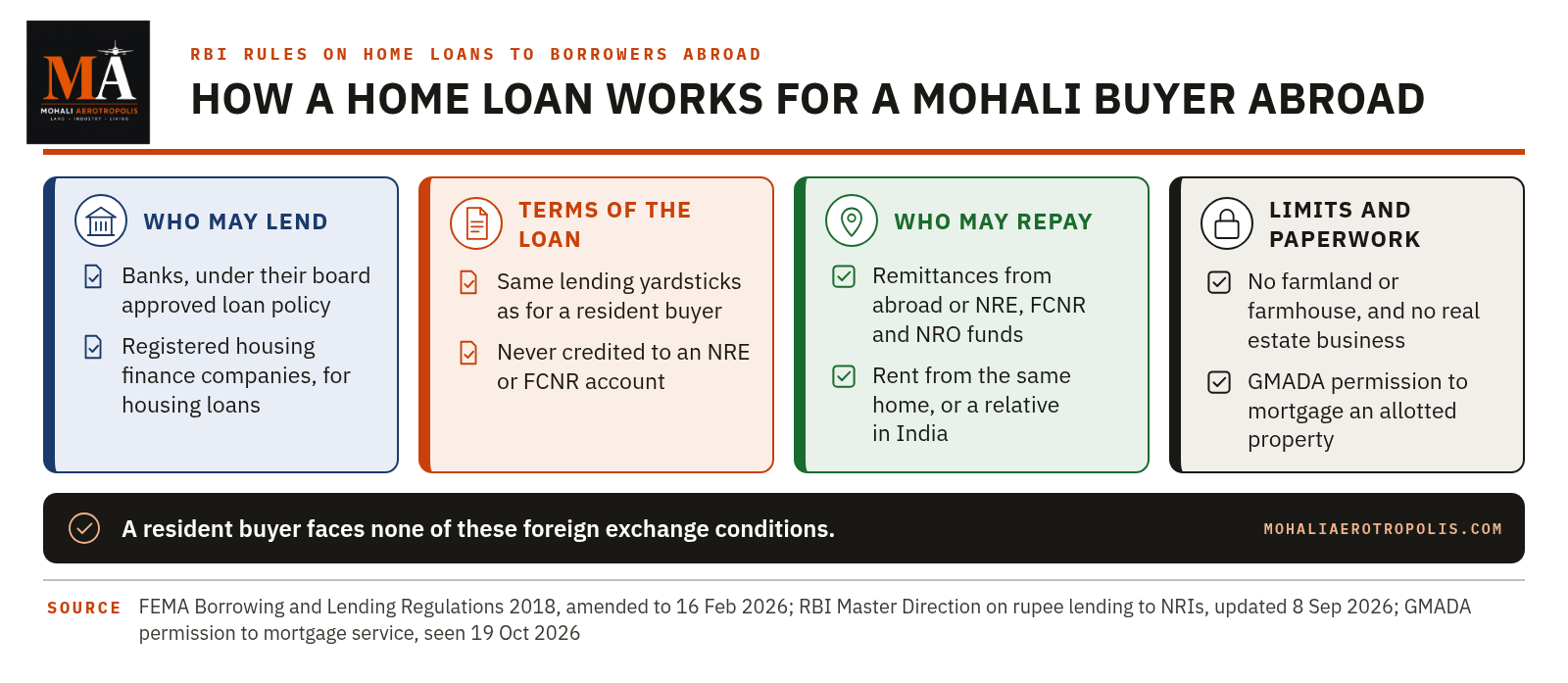
Regulation seven then lists who may lend all the same. An authorised dealer bank may grant a rupee loan to an NRI or an OCI cardholder for several purposes, among them the "acquisition of a residential accommodation in India", in line with the loan policy set by the bank's board and the Reserve Bank's prudential rules. A registered housing finance institution, or a registered non-banking finance company, may provide a housing loan to an NRI or an OCI cardholder on terms the Reserve Bank prescribes.
So the two kinds of lender a Mohali buyer usually meets, a bank and a housing finance company, are both covered. A bank works under a slightly wider permission, since its board policy can allow other purposes too. A housing finance company is confined to the housing loan itself.
The loan follows resident terms and stays in India
The detailed conditions sit in the Reserve Bank's Master Direction on rupee borrowing and lending between residents and NRIs, updated as on the eighth of September this year. Its paragraph on housing loans to NRIs carries the conditions that matter most to a buyer abroad.
The quantum of the loan and the margin money are to be "at par with those applicable to housing finance provided to a person resident in India". The same goes for the repayment period. A buyer abroad, in other words, is held to the same lending yardsticks as a buyer in Phase Seven or Sector Eighty Eight, subject to whatever the lender's own policy adds.
The loan amount "shall not be credited" to the borrower's NRE or FCNR account. The money is meant for the home in India, so it goes towards the purchase and does not become a balance that could be sent back out.
The loan "shall be fully secured by equitable mortgage of the property proposed to be acquired", and where needed by a lien on the borrower's other assets in India. The home being bought is the main security. That condition has a Mohali consequence, explained further down, for anything allotted by GMADA.
The interest rate is left to the Reserve Bank's general directives and to the lender. This piece gives no rates. They change over time and vary between lenders.
Who may pay the instalments
The Master Direction names the sources that may pay the loan instalments and the interest. Money remitted from outside India through banking channels is the first. Funds held in the borrower's non-resident accounts are also allowed, and the direction names the NRE and FCNR accounts as well as the NRO account.
Two further sources reflect the life of a family split across countries. Rental income "derived from renting out the property acquired" may go towards the loan, so a flat let out while the owner lives abroad can carry part of its own repayment. A tenant paying rent to an owner abroad has a tax duty of its own, set out in an earlier MA piece on rent paid to owners living abroad.
The last source is a relative in India, who may pay by "crediting the borrower's loan account through account to account transfer". The word relative carries its meaning under the Companies Act of two thousand and thirteen. The Master Direction's table for that Act lists eight relations: father, mother, son, son's wife, daughter, daughter's husband, brother and sister. Members of a Hindu undivided family and a husband and wife also count under the Act. A cousin or an uncle falls outside the list.
What a loan to a borrower abroad cannot fund
The regulations bar borrowed funds from certain uses. These include "real estate business and construction of farmhouses", and most agricultural activity. The definition of real estate business leaves out commercial or residential property bought for the borrower's own use, so a home for the family sits outside the bar.
The property rules point the same way. Rule twenty four of the Non-debt Instruments Rules of two thousand and nineteen lets an NRI or an OCI acquire immovable property in India "other than an agricultural land or farm house or plantation property". Land on the edge of Mohali that is still recorded as farmland in the revenue papers is therefore off limits to a buyer abroad as a purchase, and a loan cannot change that.
The same rule says how the buyer's own share of the price is paid. It comes by inward remittance through banking channels or from a non-resident account. Traveller's cheques and foreign currency notes are not allowed.
A GMADA property needs the authority's permission to mortgage
Many Mohali homes stand on plots allotted by the Greater Mohali Area Development Authority, and the allotment terms keep the authority in the picture when the property is pledged. GMADA's published service for permission to mortgage asks for an application form, the consent of the lender in GMADA's prescribed format, and a self attested copy of the allotment, re allotment or change of ownership letter.
The prescribed consent tells part of the story. In it the lender confirms that it lends "on our own" and will make no claim on GMADA if the borrower stops paying, and that "the first charge of the property shall remain with" GMADA. In the application the owner declares that the property is free from any other mortgage and that no court case or injunction stands against it, and undertakes to clear any unpaid dues to the authority within thirty days of the permission.
GMADA's service page gives the time limit as seven working days from receipt of the application. Its citizen charter lists ten working days for the same service. The two pages, both read on the nineteenth of October, do not agree.
A letter of intent from a land pooling scheme is a different paper from an allotment, and lenders treat it differently, as an earlier MA piece on what lenders can finance in Mohali sets out.
When the borrower moves abroad after taking the loan
The rules also cover the reverse case, where a resident takes a home loan in Mohali and later moves overseas for work or study. Regulation eight lets an authorised dealer bank allow such a loan to continue. The Master Direction adds that the bank may let it run "till its original maturity subject to the satisfaction of the lender".
From then on, so long as the borrower lives abroad, repayment comes from inward remittances or from the borrower's non-resident accounts. The direction speaks of authorised dealer banks. It says nothing specific about a loan from a housing finance company in this situation, which is left to that lender's own terms.
How the repayments count when the home is sold
The repayment route matters again if the owner later sells and wants the money abroad. Under rule twenty nine of the Non-debt Instruments Rules, sale proceeds can be repatriated where the purchase was paid for in foreign exchange through banking channels or from an NRE or FCNR account. For homes, that is limited to two properties.
The Reserve Bank's Master Direction on immovable property, as updated on the first of September two thousand and twenty two, adds a line on loans. Where an NRI or an OCI bought with a housing loan and repaid it out of remittances from abroad through banking channels or by debit to an NRE or FCNR account, those repayments "may be treated as equivalent to foreign exchange received".
The text names only those two routes. That line does not mention instalments paid from an NRO account or out of rent. Nor does it mention payments by a relative in India. On our reading of the direction, the part of the price they covered would leave India under the general limits for NRO money, which an earlier MA piece on taking sale money abroad describes.
What this piece does not cover
It does not give interest rates or loan sizes, and it does not set out eligibility, which each lender decides. It does not cover tax relief on home loan interest, or the tax a buyer deducts when paying a seller who lives abroad. It does not compare lenders.
Related reading
- Home loan, plot loan or neither: what lenders can finance in Mohali and why an LOI is different
- Taking Mohali sale money abroad: how NRI repatriation works now
- Renting out a Mohali home from abroad: the tax the tenant deducts
- What India's property rules say once an NRI takes Canadian or American citizenship
Sources: The sources we use are listed on our Editorial Sources page.
This piece describes the published Reserve Bank regulations and directions on lending to borrowers abroad, along with GMADA's published mortgage permission service. Nothing here is legal or financial advice, and any loan or property turns on its own papers and facts.
ब्रैम्पटन या मेलबर्न में रहने वाला कोई परिवार जब मोहाली में एक फ़्लैट तय कर लेता है, तो जल्दी ही पैसे का सवाल सामने आता है। क़ीमत का बड़ा हिस्सा विदेश की बचत से आ सकता है, फिर भी कई ख़रीदार उसका कुछ हिस्सा भारत में ही उधार लेना चाहते हैं, जहाँ घर है। भारत में रहने वाले ख़रीदार को सिर्फ़ बैंक को संतुष्ट करना होता है। विदेश में रहने वाले ख़रीदार के सामने पहले एक और कसौटी आती है, क्योंकि भारत का विदेशी मुद्रा क़ानून भारत से बाहर रहने वाले किसी भी व्यक्ति को रुपये में क़र्ज़ देने पर रोक से शुरू होता है। फिर रिज़र्व बैंक आवास के लिए एक रास्ता खोलता है, इन शर्तों के साथ कि क़र्ज़ की रक़म कहाँ जाएगी, उसे कौन चुकाएगा, और घर बिकने पर क्या होगा।
शुरुआत रोक से होती है, जिसमें छूटें हैं
विदेशी मुद्रा प्रबंधन उधार और ऋण विनियम, दो हज़ार अठारह, उस रूप में जिसे रिज़र्व बैंक इस साल सोलह फ़रवरी तक संशोधित बताता है, बुनियादी नियम तय करते हैं। विनियम तीन कहता है कि जहाँ अन्यथा प्रावधान न हो, वहाँ भारत में रहने वाला कोई व्यक्ति भारत से बाहर रहने वाले व्यक्ति को रुपये में क़र्ज़ नहीं देगा ("lend in rupees to, a person resident outside India")।
इसके बाद विनियम सात बताता है कि फिर भी कौन क़र्ज़ दे सकता है। एक अधिकृत डीलर बैंक किसी NRI या OCI कार्डधारक को कई कामों के लिए रुपये में क़र्ज़ दे सकता है, जिनमें भारत में आवासीय मकान ख़रीदना ("acquisition of a residential accommodation in India") शामिल है, बशर्ते यह बैंक के बोर्ड की ऋण नीति और रिज़र्व बैंक के विवेकपूर्ण नियमों के अनुसार हो। एक पंजीकृत हाउसिंग फ़ाइनेंस संस्था, या एक पंजीकृत गैर-बैंकिंग वित्त कंपनी, रिज़र्व बैंक की तय शर्तों पर किसी NRI या OCI कार्डधारक को होम लोन दे सकती है।
यानी मोहाली के ख़रीदार को आम तौर पर जिन दो तरह के ऋणदाताओं से वास्ता पड़ता है, बैंक और हाउसिंग फ़ाइनेंस कंपनी, दोनों इसमें आते हैं। बैंक के पास थोड़ी व्यापक अनुमति है, क्योंकि उसकी बोर्ड नीति दूसरे कामों की भी इजाज़त दे सकती है। हाउसिंग फ़ाइनेंस कंपनी होम लोन तक ही सीमित है।
क़र्ज़ भारत में रहने वालों जैसी शर्तों पर चलता है और भारत में ही रहता है
विस्तृत शर्तें रिज़र्व बैंक के उस मास्टर डायरेक्शन में हैं जो भारत में रहने वालों और NRI के बीच रुपये में उधार और ऋण के बारे में है, और जिसे इस साल आठ सितंबर तक अद्यतन किया गया है। NRI को होम लोन वाले इसके अनुच्छेद में वे शर्तें हैं जो विदेश में रहने वाले ख़रीदार के लिए सबसे अहम हैं।
क़र्ज़ की रक़म और मार्जिन मनी भारत में रहने वाले व्यक्ति को दिए जाने वाले आवास वित्त के बराबर होनी चाहिए ("at par with those applicable to housing finance provided to a person resident in India")। चुकाने की अवधि पर भी यही बात लागू होती है।
क़र्ज़ की रक़म उधार लेने वाले के NRE या FCNR खाते में जमा नहीं की जाएगी ("shall not be credited")। यह पैसा भारत के घर के लिए है, इसलिए यह ख़रीद में जाता है और ऐसा बैलेंस नहीं बनता जिसे वापस बाहर भेजा जा सके।
क़र्ज़ ख़रीदी जाने वाली संपत्ति के साम्यिक बंधक से पूरी तरह सुरक्षित होगा ("shall be fully secured by equitable mortgage of the property proposed to be acquired"), और ज़रूरत हो तो उधार लेने वाले की भारत में दूसरी संपत्तियों पर ग्रहणाधिकार से भी। ख़रीदा जा रहा घर ही मुख्य ज़मानत है। इस शर्त का मोहाली में एक असर है, जो आगे GMADA द्वारा आवंटित संपत्ति के संदर्भ में बताया गया है।
ब्याज दर रिज़र्व बैंक के सामान्य निर्देशों और ऋणदाता पर छोड़ी गई है। यह लेख कोई दर नहीं बताता। दरें समय के साथ बदलती हैं और हर ऋणदाता की अलग होती हैं।
किस्तें कौन चुका सकता है
मास्टर डायरेक्शन उन स्रोतों के नाम बताता है जिनसे क़र्ज़ की किस्तें और ब्याज चुकाया जा सकता है। पहला स्रोत बैंकिंग चैनलों के ज़रिए भारत के बाहर से भेजा गया पैसा है। उधार लेने वाले के अनिवासी खातों का पैसा भी मान्य है, और डायरेक्शन NRE और FCNR खातों के साथ NRO खाते का भी नाम लेता है।
दो और स्रोत उस परिवार की ज़िंदगी को दिखाते हैं जो अलग अलग देशों में बँटा है। ख़रीदी गई संपत्ति को किराए पर देने से होने वाली आमदनी ("derived from renting out the property acquired") क़र्ज़ में लगाई जा सकती है, इसलिए मालिक के विदेश में रहते किराए पर दिया गया फ़्लैट अपनी किस्त का कुछ हिस्सा ख़ुद चुका सकता है। विदेश में रहने वाले मालिक को किराया देने वाले किरायेदार की अपनी एक टैक्स ज़िम्मेदारी है, जो विदेश में रहने वाले मालिकों को दिए जाने वाले किराए पर MA के पहले के एक लेख में बताई गई है।
आख़िरी स्रोत भारत में रहने वाला कोई रिश्तेदार है, जो खाते से खाते में ट्रांसफ़र के ज़रिए उधार लेने वाले के लोन खाते में पैसा जमा करके चुका सकता है ("crediting the borrower's loan account through account to account transfer")। रिश्तेदार शब्द का अर्थ वही है जो कंपनी अधिनियम, दो हज़ार तेरह में है। उस अधिनियम के लिए मास्टर डायरेक्शन की तालिका आठ रिश्ते गिनाती है: पिता, माता, बेटा, बेटे की पत्नी, बेटी, बेटी का पति, भाई और बहन। अधिनियम के तहत हिंदू अविभाजित परिवार के सदस्य और पति पत्नी भी गिने जाते हैं। चचेरा भाई या चाचा इस सूची से बाहर हैं।
विदेश में रहने वाले को दिया गया क़र्ज़ किन चीज़ों में नहीं लग सकता
विनियम उधार के पैसे को कुछ कामों में लगाने से रोकते हैं। इनमें रियल एस्टेट कारोबार और फ़ार्महाउस का निर्माण ("real estate business and construction of farmhouses") और ज़्यादातर कृषि गतिविधियाँ शामिल हैं। रियल एस्टेट कारोबार की परिभाषा में उधार लेने वाले के अपने इस्तेमाल के लिए ख़रीदी गई व्यावसायिक या आवासीय संपत्ति शामिल नहीं है, इसलिए परिवार के लिए घर इस रोक से बाहर है।
संपत्ति के नियम भी इसी दिशा में जाते हैं। गैर-ऋण लिखत नियम, दो हज़ार उन्नीस का नियम चौबीस किसी NRI या OCI को भारत में कृषि भूमि, फ़ार्महाउस या बागान संपत्ति के अलावा अचल संपत्ति ख़रीदने देता है ("other than an agricultural land or farm house or plantation property")। इसलिए मोहाली के किनारे की वह ज़मीन जो राजस्व काग़ज़ों में अब भी खेती की ज़मीन दर्ज है, विदेश में रहने वाले ख़रीदार के लिए ख़रीद के तौर पर वर्जित है, और कोई क़र्ज़ इसे नहीं बदल सकता।
यही नियम बताता है कि क़ीमत में ख़रीदार का अपना हिस्सा कैसे चुकाया जाए। यह बैंकिंग चैनलों से आने वाले पैसे के रूप में या किसी अनिवासी खाते से आता है। ट्रैवलर्स चेक और विदेशी मुद्रा के नोट मान्य नहीं हैं।
GMADA की संपत्ति को गिरवी रखने के लिए प्राधिकरण की अनुमति चाहिए
मोहाली के कई घर ग्रेटर मोहाली एरिया डेवलपमेंट अथॉरिटी द्वारा आवंटित प्लॉटों पर बने हैं, और आवंटन की शर्तें संपत्ति गिरवी रखे जाने पर प्राधिकरण को तस्वीर में बनाए रखती हैं। गिरवी रखने की अनुमति के लिए GMADA की प्रकाशित सेवा एक आवेदन फ़ॉर्म, GMADA के तय प्रारूप में ऋणदाता की सहमति, और आवंटन, पुनः आवंटन या स्वामित्व बदलाव पत्र की स्व-सत्यापित प्रति माँगती है।
तय सहमति पत्र कहानी का एक हिस्सा बताता है। इसमें ऋणदाता पुष्टि करता है कि वह अपने जोखिम पर क़र्ज़ दे रहा है ("on our own") और उधार लेने वाले के भुगतान बंद करने पर GMADA पर कोई दावा नहीं करेगा, और यह कि संपत्ति पर पहला अधिकार GMADA के पास ही रहेगा ("the first charge of the property shall remain with")। आवेदन में मालिक घोषणा करता है कि संपत्ति किसी और गिरवी से मुक्त है और उसके ख़िलाफ़ कोई मुक़दमा या निषेधाज्ञा नहीं है, और वचन देता है कि अनुमति मिलने के तीस दिन के भीतर प्राधिकरण का कोई भी बकाया चुका देगा।
GMADA का सेवा पृष्ठ समय सीमा आवेदन मिलने से सात कार्य दिवस बताता है। उसका नागरिक चार्टर इसी सेवा के लिए दस कार्य दिवस बताता है। उन्नीस अक्टूबर को पढ़े गए ये दोनों पृष्ठ आपस में मेल नहीं खाते।
लैंड पूलिंग योजना का लेटर ऑफ़ इंटेंट आवंटन से अलग काग़ज़ है, और ऋणदाता उसे अलग तरह से देखते हैं, जैसा कि मोहाली में ऋणदाता क्या फ़ाइनेंस कर सकते हैं, इस पर MA का पहले का एक लेख बताता है।
जब क़र्ज़ लेने के बाद उधार लेने वाला विदेश चला जाए
नियम उलटी स्थिति को भी देखते हैं, जब भारत में रहने वाला कोई व्यक्ति मोहाली में होम लोन लेता है और बाद में काम या पढ़ाई के लिए विदेश चला जाता है। विनियम आठ अधिकृत डीलर बैंक को ऐसा क़र्ज़ जारी रखने देता है। मास्टर डायरेक्शन जोड़ता है कि बैंक इसे ऋणदाता की संतुष्टि के अधीन उसकी मूल परिपक्वता तक चलने दे सकता है ("till its original maturity subject to the satisfaction of the lender")।
उसके बाद, जब तक उधार लेने वाला विदेश में रहता है, भुगतान विदेश से आने वाले पैसे से या उसके अनिवासी खातों से होता है। डायरेक्शन अधिकृत डीलर बैंकों की बात करता है। इस स्थिति में हाउसिंग फ़ाइनेंस कंपनी के क़र्ज़ के बारे में यह कुछ ख़ास नहीं कहता, जो उस ऋणदाता की अपनी शर्तों पर छोड़ा गया है।
घर बिकने पर किस्तों की गिनती कैसे होती है
अगर मालिक बाद में घर बेचे और पैसा विदेश ले जाना चाहे, तो भुगतान का रास्ता फिर मायने रखता है। गैर-ऋण लिखत नियमों के नियम उनतीस के तहत बिक्री की रक़म वापस भेजी जा सकती है जहाँ ख़रीद का भुगतान बैंकिंग चैनलों से आई विदेशी मुद्रा में या NRE या FCNR खाते से हुआ हो। घरों के लिए यह दो संपत्तियों तक सीमित है।
रिज़र्व बैंक का अचल संपत्ति पर मास्टर डायरेक्शन, जैसा वह एक सितंबर दो हज़ार बाईस को अद्यतन हुआ, क़र्ज़ पर एक पंक्ति जोड़ता है। जहाँ किसी NRI या OCI ने होम लोन से ख़रीद की और उसे बैंकिंग चैनलों से विदेश से भेजे गए पैसे से या NRE या FCNR खाते से चुकाया, वहाँ उन भुगतानों को प्राप्त विदेशी मुद्रा के बराबर माना जा सकता है ("may be treated as equivalent to foreign exchange received")।
पाठ सिर्फ़ इन्हीं दो रास्तों का नाम लेता है। वह पंक्ति NRO खाते से या किराए से चुकाई गई किस्तों का ज़िक्र नहीं करती। भारत में किसी रिश्तेदार के भुगतान का भी ज़िक्र नहीं है। डायरेक्शन की हमारी समझ में, क़ीमत का जो हिस्सा इनसे चुका, वह NRO पैसे की सामान्य सीमाओं के तहत भारत से बाहर जाएगा, जिसका वर्णन बिक्री का पैसा विदेश ले जाने पर MA का पहले का एक लेख करता है।
यह लेख किन बातों को नहीं छूता
यह ब्याज दरें या क़र्ज़ की रक़में नहीं बताता, और पात्रता भी नहीं बताता, जो हर ऋणदाता तय करता है। यह होम लोन के ब्याज पर टैक्स राहत को नहीं छूता, और न उस टैक्स को जो विदेश में रहने वाले विक्रेता को भुगतान करते समय ख़रीदार काटता है। यह ऋणदाताओं की तुलना नहीं करता।
संबंधित पठन
- होम लोन, प्लॉट लोन, या कुछ नहीं: मोहाली में लेंडर क्या फाइनेंस कर सकते हैं, और LOI क्यों अलग है
- मोहाली की बिक्री का पैसा विदेश ले जाना: NRI रिपैट्रिएशन अब कैसे काम करता है
- विदेश से मोहाली का घर किराए पर देना: वह टैक्स जो किरायेदार काटता है
- जब कोई NRI कनाडा या अमेरिका की नागरिकता ले ले, तब भारत के संपत्ति नियम क्या कहते हैं
स्रोत: हम जिन स्रोतों का उपयोग करते हैं, वे हमारे Editorial Sources पृष्ठ पर सूचीबद्ध हैं।
यह लेख विदेश में रहने वाले उधारकर्ताओं को क़र्ज़ पर रिज़र्व बैंक के प्रकाशित विनियमों और निर्देशों का, और GMADA की गिरवी अनुमति की प्रकाशित सेवा का वर्णन करता है। यहाँ कुछ भी कानूनी या वित्तीय सलाह नहीं है, और हर क़र्ज़ या संपत्ति अपने काग़ज़ों और तथ्यों पर टिकी होती है।
ਬਰੈਂਪਟਨ ਜਾਂ ਮੈਲਬੌਰਨ ਵਿੱਚ ਰਹਿੰਦਾ ਕੋਈ ਪਰਿਵਾਰ ਜਦੋਂ ਮੋਹਾਲੀ ਵਿੱਚ ਇੱਕ ਫ਼ਲੈਟ ਤੈਅ ਕਰ ਲੈਂਦਾ ਹੈ, ਤਾਂ ਛੇਤੀ ਹੀ ਪੈਸੇ ਦਾ ਸਵਾਲ ਸਾਹਮਣੇ ਆ ਜਾਂਦਾ ਹੈ। ਕੀਮਤ ਦਾ ਵੱਡਾ ਹਿੱਸਾ ਵਿਦੇਸ਼ ਦੀ ਬੱਚਤ ਤੋਂ ਆ ਸਕਦਾ ਹੈ, ਫਿਰ ਵੀ ਕਈ ਖ਼ਰੀਦਦਾਰ ਉਸਦਾ ਕੁਝ ਹਿੱਸਾ ਭਾਰਤ ਵਿੱਚ ਹੀ ਉਧਾਰ ਲੈਣਾ ਚਾਹੁੰਦੇ ਹਨ, ਜਿੱਥੇ ਘਰ ਹੈ। ਭਾਰਤ ਵਿੱਚ ਰਹਿੰਦੇ ਖ਼ਰੀਦਦਾਰ ਨੂੰ ਸਿਰਫ਼ ਬੈਂਕ ਦੀ ਤਸੱਲੀ ਕਰਵਾਉਣੀ ਹੁੰਦੀ ਹੈ। ਵਿਦੇਸ਼ ਵਿੱਚ ਰਹਿੰਦੇ ਖ਼ਰੀਦਦਾਰ ਅੱਗੇ ਪਹਿਲਾਂ ਇੱਕ ਹੋਰ ਕਸੌਟੀ ਆਉਂਦੀ ਹੈ, ਕਿਉਂਕਿ ਭਾਰਤ ਦਾ ਵਿਦੇਸ਼ੀ ਮੁਦਰਾ ਕਾਨੂੰਨ ਭਾਰਤ ਤੋਂ ਬਾਹਰ ਰਹਿੰਦੇ ਕਿਸੇ ਵੀ ਵਿਅਕਤੀ ਨੂੰ ਰੁਪਏ ਵਿੱਚ ਕਰਜ਼ਾ ਦੇਣ ’ਤੇ ਰੋਕ ਤੋਂ ਸ਼ੁਰੂ ਹੁੰਦਾ ਹੈ। ਫਿਰ ਰਿਜ਼ਰਵ ਬੈਂਕ ਰਿਹਾਇਸ਼ ਲਈ ਇੱਕ ਰਾਹ ਖੋਲ੍ਹਦਾ ਹੈ, ਇਨ੍ਹਾਂ ਸ਼ਰਤਾਂ ਨਾਲ ਕਿ ਕਰਜ਼ੇ ਦੀ ਰਕਮ ਕਿੱਥੇ ਜਾਵੇਗੀ, ਉਸਨੂੰ ਕੌਣ ਮੋੜੇਗਾ, ਅਤੇ ਘਰ ਵਿਕਣ ’ਤੇ ਕੀ ਹੋਵੇਗਾ।
ਸ਼ੁਰੂਆਤ ਰੋਕ ਤੋਂ ਹੁੰਦੀ ਹੈ, ਜਿਸ ਵਿੱਚ ਛੋਟਾਂ ਹਨ
ਵਿਦੇਸ਼ੀ ਮੁਦਰਾ ਪ੍ਰਬੰਧਨ ਉਧਾਰ ਅਤੇ ਕਰਜ਼ਾ ਨਿਯਮ, ਦੋ ਹਜ਼ਾਰ ਅਠਾਰਾਂ, ਉਸ ਰੂਪ ਵਿੱਚ ਜਿਸਨੂੰ ਰਿਜ਼ਰਵ ਬੈਂਕ ਇਸ ਸਾਲ ਸੋਲਾਂ ਫ਼ਰਵਰੀ ਤੱਕ ਸੋਧਿਆ ਦੱਸਦਾ ਹੈ, ਮੁੱਢਲਾ ਨਿਯਮ ਤੈਅ ਕਰਦੇ ਹਨ। ਨਿਯਮ ਤਿੰਨ ਕਹਿੰਦਾ ਹੈ ਕਿ ਜਿੱਥੇ ਹੋਰ ਕੋਈ ਪ੍ਰਬੰਧ ਨਾ ਹੋਵੇ, ਉੱਥੇ ਭਾਰਤ ਵਿੱਚ ਰਹਿੰਦਾ ਕੋਈ ਵਿਅਕਤੀ ਭਾਰਤ ਤੋਂ ਬਾਹਰ ਰਹਿੰਦੇ ਵਿਅਕਤੀ ਨੂੰ ਰੁਪਏ ਵਿੱਚ ਕਰਜ਼ਾ ਨਹੀਂ ਦੇਵੇਗਾ ("lend in rupees to, a person resident outside India")।
ਇਸ ਤੋਂ ਬਾਅਦ ਨਿਯਮ ਸੱਤ ਦੱਸਦਾ ਹੈ ਕਿ ਫਿਰ ਵੀ ਕੌਣ ਕਰਜ਼ਾ ਦੇ ਸਕਦਾ ਹੈ। ਇੱਕ ਅਧਿਕਾਰਤ ਡੀਲਰ ਬੈਂਕ ਕਿਸੇ NRI ਜਾਂ OCI ਕਾਰਡਧਾਰਕ ਨੂੰ ਕਈ ਕੰਮਾਂ ਲਈ ਰੁਪਏ ਵਿੱਚ ਕਰਜ਼ਾ ਦੇ ਸਕਦਾ ਹੈ, ਜਿਨ੍ਹਾਂ ਵਿੱਚ ਭਾਰਤ ਵਿੱਚ ਰਿਹਾਇਸ਼ੀ ਮਕਾਨ ਖ਼ਰੀਦਣਾ ("acquisition of a residential accommodation in India") ਸ਼ਾਮਲ ਹੈ, ਬਸ਼ਰਤੇ ਇਹ ਬੈਂਕ ਦੇ ਬੋਰਡ ਦੀ ਕਰਜ਼ਾ ਨੀਤੀ ਅਤੇ ਰਿਜ਼ਰਵ ਬੈਂਕ ਦੇ ਸਮਝਦਾਰੀ ਵਾਲੇ ਨਿਯਮਾਂ ਮੁਤਾਬਕ ਹੋਵੇ। ਇੱਕ ਰਜਿਸਟਰਡ ਹਾਊਸਿੰਗ ਫ਼ਾਈਨੈਂਸ ਸੰਸਥਾ, ਜਾਂ ਇੱਕ ਰਜਿਸਟਰਡ ਗ਼ੈਰ-ਬੈਂਕਿੰਗ ਵਿੱਤ ਕੰਪਨੀ, ਰਿਜ਼ਰਵ ਬੈਂਕ ਦੀਆਂ ਤੈਅ ਸ਼ਰਤਾਂ ’ਤੇ ਕਿਸੇ NRI ਜਾਂ OCI ਕਾਰਡਧਾਰਕ ਨੂੰ ਹੋਮ ਲੋਨ ਦੇ ਸਕਦੀ ਹੈ।
ਮਤਲਬ ਮੋਹਾਲੀ ਦੇ ਖ਼ਰੀਦਦਾਰ ਦਾ ਆਮ ਤੌਰ ’ਤੇ ਜਿਨ੍ਹਾਂ ਦੋ ਕਿਸਮ ਦੇ ਕਰਜ਼ਾਦਾਤਿਆਂ ਨਾਲ ਵਾਹ ਪੈਂਦਾ ਹੈ, ਬੈਂਕ ਅਤੇ ਹਾਊਸਿੰਗ ਫ਼ਾਈਨੈਂਸ ਕੰਪਨੀ, ਦੋਵੇਂ ਇਸ ਵਿੱਚ ਆਉਂਦੇ ਹਨ। ਬੈਂਕ ਕੋਲ ਥੋੜ੍ਹੀ ਖੁੱਲ੍ਹੀ ਇਜਾਜ਼ਤ ਹੈ, ਕਿਉਂਕਿ ਉਸਦੀ ਬੋਰਡ ਨੀਤੀ ਹੋਰ ਕੰਮਾਂ ਦੀ ਵੀ ਇਜਾਜ਼ਤ ਦੇ ਸਕਦੀ ਹੈ। ਹਾਊਸਿੰਗ ਫ਼ਾਈਨੈਂਸ ਕੰਪਨੀ ਹੋਮ ਲੋਨ ਤੱਕ ਹੀ ਸੀਮਤ ਹੈ।
ਕਰਜ਼ਾ ਭਾਰਤ ਵਿੱਚ ਰਹਿਣ ਵਾਲਿਆਂ ਵਰਗੀਆਂ ਸ਼ਰਤਾਂ ’ਤੇ ਚੱਲਦਾ ਹੈ ਅਤੇ ਭਾਰਤ ਵਿੱਚ ਹੀ ਰਹਿੰਦਾ ਹੈ
ਵਿਸਥਾਰਤ ਸ਼ਰਤਾਂ ਰਿਜ਼ਰਵ ਬੈਂਕ ਦੇ ਉਸ ਮਾਸਟਰ ਡਾਇਰੈਕਸ਼ਨ ਵਿੱਚ ਹਨ ਜੋ ਭਾਰਤ ਵਿੱਚ ਰਹਿਣ ਵਾਲਿਆਂ ਅਤੇ NRI ਵਿਚਕਾਰ ਰੁਪਏ ਵਿੱਚ ਉਧਾਰ ਅਤੇ ਕਰਜ਼ੇ ਬਾਰੇ ਹੈ, ਅਤੇ ਜਿਸਨੂੰ ਇਸ ਸਾਲ ਅੱਠ ਸਤੰਬਰ ਤੱਕ ਅੱਪਡੇਟ ਕੀਤਾ ਗਿਆ ਹੈ। NRI ਨੂੰ ਹੋਮ ਲੋਨ ਵਾਲੇ ਇਸਦੇ ਪੈਰੇ ਵਿੱਚ ਉਹ ਸ਼ਰਤਾਂ ਹਨ ਜੋ ਵਿਦੇਸ਼ ਵਿੱਚ ਰਹਿੰਦੇ ਖ਼ਰੀਦਦਾਰ ਲਈ ਸਭ ਤੋਂ ਅਹਿਮ ਹਨ।
ਕਰਜ਼ੇ ਦੀ ਰਕਮ ਅਤੇ ਮਾਰਜਿਨ ਮਨੀ ਭਾਰਤ ਵਿੱਚ ਰਹਿੰਦੇ ਵਿਅਕਤੀ ਨੂੰ ਦਿੱਤੇ ਜਾਣ ਵਾਲੇ ਰਿਹਾਇਸ਼ੀ ਵਿੱਤ ਦੇ ਬਰਾਬਰ ਹੋਣੇ ਹਨ ("at par with those applicable to housing finance provided to a person resident in India")। ਮੋੜਨ ਦੀ ਮਿਆਦ ’ਤੇ ਵੀ ਇਹੀ ਗੱਲ ਲਾਗੂ ਹੁੰਦੀ ਹੈ।
ਕਰਜ਼ੇ ਦੀ ਰਕਮ ਉਧਾਰ ਲੈਣ ਵਾਲੇ ਦੇ NRE ਜਾਂ FCNR ਖਾਤੇ ਵਿੱਚ ਜਮ੍ਹਾਂ ਨਹੀਂ ਕੀਤੀ ਜਾਵੇਗੀ ("shall not be credited")। ਇਹ ਪੈਸਾ ਭਾਰਤ ਵਾਲੇ ਘਰ ਲਈ ਹੈ, ਇਸ ਲਈ ਇਹ ਖ਼ਰੀਦ ਵਿੱਚ ਜਾਂਦਾ ਹੈ ਅਤੇ ਅਜਿਹਾ ਬਕਾਇਆ ਨਹੀਂ ਬਣਦਾ ਜਿਸਨੂੰ ਵਾਪਸ ਬਾਹਰ ਭੇਜਿਆ ਜਾ ਸਕੇ।
ਕਰਜ਼ਾ ਖ਼ਰੀਦੀ ਜਾਣ ਵਾਲੀ ਜਾਇਦਾਦ ਦੇ ਸਮਾਨਤਾਪੂਰਨ ਗਿਰਵੀਨਾਮੇ ਨਾਲ ਪੂਰੀ ਤਰ੍ਹਾਂ ਸੁਰੱਖਿਅਤ ਹੋਵੇਗਾ ("shall be fully secured by equitable mortgage of the property proposed to be acquired"), ਅਤੇ ਲੋੜ ਹੋਵੇ ਤਾਂ ਉਧਾਰ ਲੈਣ ਵਾਲੇ ਦੀਆਂ ਭਾਰਤ ਵਿਚਲੀਆਂ ਹੋਰ ਜਾਇਦਾਦਾਂ ’ਤੇ ਹੱਕ ਨਾਲ ਵੀ। ਖ਼ਰੀਦਿਆ ਜਾ ਰਿਹਾ ਘਰ ਹੀ ਮੁੱਖ ਜ਼ਮਾਨਤ ਹੈ। ਇਸ ਸ਼ਰਤ ਦਾ ਮੋਹਾਲੀ ਵਿੱਚ ਇੱਕ ਅਸਰ ਹੈ, ਜੋ ਅੱਗੇ GMADA ਵੱਲੋਂ ਅਲਾਟ ਕੀਤੀ ਜਾਇਦਾਦ ਦੇ ਸੰਦਰਭ ਵਿੱਚ ਦੱਸਿਆ ਗਿਆ ਹੈ।
ਵਿਆਜ ਦਰ ਰਿਜ਼ਰਵ ਬੈਂਕ ਦੀਆਂ ਆਮ ਹਦਾਇਤਾਂ ਅਤੇ ਕਰਜ਼ਾਦਾਤੇ ’ਤੇ ਛੱਡੀ ਗਈ ਹੈ। ਇਹ ਲੇਖ ਕੋਈ ਦਰ ਨਹੀਂ ਦੱਸਦਾ। ਦਰਾਂ ਸਮੇਂ ਨਾਲ ਬਦਲਦੀਆਂ ਹਨ ਅਤੇ ਹਰ ਕਰਜ਼ਾਦਾਤੇ ਦੀਆਂ ਵੱਖਰੀਆਂ ਹੁੰਦੀਆਂ ਹਨ।
ਕਿਸ਼ਤਾਂ ਕੌਣ ਭਰ ਸਕਦਾ ਹੈ
ਮਾਸਟਰ ਡਾਇਰੈਕਸ਼ਨ ਉਨ੍ਹਾਂ ਸਰੋਤਾਂ ਦੇ ਨਾਂ ਦੱਸਦਾ ਹੈ ਜਿਨ੍ਹਾਂ ਤੋਂ ਕਰਜ਼ੇ ਦੀਆਂ ਕਿਸ਼ਤਾਂ ਅਤੇ ਵਿਆਜ ਭਰਿਆ ਜਾ ਸਕਦਾ ਹੈ। ਪਹਿਲਾ ਸਰੋਤ ਬੈਂਕਿੰਗ ਚੈਨਲਾਂ ਰਾਹੀਂ ਭਾਰਤ ਤੋਂ ਬਾਹਰੋਂ ਭੇਜਿਆ ਪੈਸਾ ਹੈ। ਉਧਾਰ ਲੈਣ ਵਾਲੇ ਦੇ ਗ਼ੈਰ-ਨਿਵਾਸੀ ਖਾਤਿਆਂ ਦਾ ਪੈਸਾ ਵੀ ਮੰਨਣਯੋਗ ਹੈ, ਅਤੇ ਡਾਇਰੈਕਸ਼ਨ NRE ਅਤੇ FCNR ਖਾਤਿਆਂ ਦੇ ਨਾਲ NRO ਖਾਤੇ ਦਾ ਵੀ ਨਾਂ ਲੈਂਦਾ ਹੈ।
ਦੋ ਹੋਰ ਸਰੋਤ ਉਸ ਪਰਿਵਾਰ ਦੀ ਜ਼ਿੰਦਗੀ ਨੂੰ ਦਰਸਾਉਂਦੇ ਹਨ ਜੋ ਵੱਖ ਵੱਖ ਦੇਸ਼ਾਂ ਵਿੱਚ ਵੰਡਿਆ ਹੋਇਆ ਹੈ। ਖ਼ਰੀਦੀ ਜਾਇਦਾਦ ਨੂੰ ਕਿਰਾਏ ’ਤੇ ਦੇਣ ਤੋਂ ਹੋਣ ਵਾਲੀ ਆਮਦਨ ("derived from renting out the property acquired") ਕਰਜ਼ੇ ਵਿੱਚ ਲਾਈ ਜਾ ਸਕਦੀ ਹੈ, ਇਸ ਲਈ ਮਾਲਕ ਦੇ ਵਿਦੇਸ਼ ਰਹਿੰਦਿਆਂ ਕਿਰਾਏ ’ਤੇ ਦਿੱਤਾ ਫ਼ਲੈਟ ਆਪਣੀ ਕਿਸ਼ਤ ਦਾ ਕੁਝ ਹਿੱਸਾ ਆਪ ਭਰ ਸਕਦਾ ਹੈ। ਵਿਦੇਸ਼ ਵਿੱਚ ਰਹਿੰਦੇ ਮਾਲਕ ਨੂੰ ਕਿਰਾਇਆ ਦੇਣ ਵਾਲੇ ਕਿਰਾਏਦਾਰ ਦੀ ਆਪਣੀ ਇੱਕ ਟੈਕਸ ਜ਼ਿੰਮੇਵਾਰੀ ਹੈ, ਜੋ ਵਿਦੇਸ਼ ਵਿੱਚ ਰਹਿੰਦੇ ਮਾਲਕਾਂ ਨੂੰ ਦਿੱਤੇ ਜਾਣ ਵਾਲੇ ਕਿਰਾਏ ਬਾਰੇ MA ਦੇ ਪਹਿਲਾਂ ਦੇ ਇੱਕ ਲੇਖ ਵਿੱਚ ਦੱਸੀ ਗਈ ਹੈ।
ਆਖ਼ਰੀ ਸਰੋਤ ਭਾਰਤ ਵਿੱਚ ਰਹਿੰਦਾ ਕੋਈ ਰਿਸ਼ਤੇਦਾਰ ਹੈ, ਜੋ ਖਾਤੇ ਤੋਂ ਖਾਤੇ ਵਿੱਚ ਟਰਾਂਸਫ਼ਰ ਰਾਹੀਂ ਉਧਾਰ ਲੈਣ ਵਾਲੇ ਦੇ ਲੋਨ ਖਾਤੇ ਵਿੱਚ ਪੈਸਾ ਜਮ੍ਹਾਂ ਕਰਕੇ ਭਰ ਸਕਦਾ ਹੈ ("crediting the borrower's loan account through account to account transfer")। ਰਿਸ਼ਤੇਦਾਰ ਸ਼ਬਦ ਦਾ ਅਰਥ ਉਹੀ ਹੈ ਜੋ ਕੰਪਨੀਜ਼ ਐਕਟ, ਦੋ ਹਜ਼ਾਰ ਤੇਰਾਂ ਵਿੱਚ ਹੈ। ਉਸ ਐਕਟ ਲਈ ਮਾਸਟਰ ਡਾਇਰੈਕਸ਼ਨ ਦੀ ਸਾਰਣੀ ਅੱਠ ਰਿਸ਼ਤੇ ਗਿਣਾਉਂਦੀ ਹੈ: ਪਿਤਾ, ਮਾਤਾ, ਪੁੱਤਰ, ਪੁੱਤਰ ਦੀ ਪਤਨੀ, ਧੀ, ਧੀ ਦਾ ਪਤੀ, ਭਰਾ ਅਤੇ ਭੈਣ। ਐਕਟ ਤਹਿਤ ਹਿੰਦੂ ਅਣਵੰਡੇ ਪਰਿਵਾਰ ਦੇ ਮੈਂਬਰ ਅਤੇ ਪਤੀ ਪਤਨੀ ਵੀ ਗਿਣੇ ਜਾਂਦੇ ਹਨ। ਚਚੇਰਾ ਭਰਾ ਜਾਂ ਚਾਚਾ ਇਸ ਸੂਚੀ ਤੋਂ ਬਾਹਰ ਹਨ।
ਵਿਦੇਸ਼ ਵਿੱਚ ਰਹਿੰਦੇ ਵਿਅਕਤੀ ਨੂੰ ਦਿੱਤਾ ਕਰਜ਼ਾ ਕਿਨ੍ਹਾਂ ਚੀਜ਼ਾਂ ਵਿੱਚ ਨਹੀਂ ਲੱਗ ਸਕਦਾ
ਨਿਯਮ ਉਧਾਰ ਦੇ ਪੈਸੇ ਨੂੰ ਕੁਝ ਕੰਮਾਂ ਵਿੱਚ ਲਾਉਣ ਤੋਂ ਰੋਕਦੇ ਹਨ। ਇਨ੍ਹਾਂ ਵਿੱਚ ਰੀਅਲ ਅਸਟੇਟ ਕਾਰੋਬਾਰ ਅਤੇ ਫ਼ਾਰਮਹਾਊਸ ਦੀ ਉਸਾਰੀ ("real estate business and construction of farmhouses") ਅਤੇ ਜ਼ਿਆਦਾਤਰ ਖੇਤੀਬਾੜੀ ਸਰਗਰਮੀਆਂ ਸ਼ਾਮਲ ਹਨ। ਰੀਅਲ ਅਸਟੇਟ ਕਾਰੋਬਾਰ ਦੀ ਪਰਿਭਾਸ਼ਾ ਵਿੱਚ ਉਧਾਰ ਲੈਣ ਵਾਲੇ ਦੀ ਆਪਣੀ ਵਰਤੋਂ ਲਈ ਖ਼ਰੀਦੀ ਵਪਾਰਕ ਜਾਂ ਰਿਹਾਇਸ਼ੀ ਜਾਇਦਾਦ ਸ਼ਾਮਲ ਨਹੀਂ ਹੈ, ਇਸ ਲਈ ਪਰਿਵਾਰ ਲਈ ਘਰ ਇਸ ਰੋਕ ਤੋਂ ਬਾਹਰ ਹੈ।
ਜਾਇਦਾਦ ਦੇ ਨਿਯਮ ਵੀ ਇਸੇ ਪਾਸੇ ਜਾਂਦੇ ਹਨ। ਗ਼ੈਰ-ਕਰਜ਼ਾ ਸਾਧਨ ਨਿਯਮ, ਦੋ ਹਜ਼ਾਰ ਉੱਨੀ ਦਾ ਨਿਯਮ ਚੌਵੀ ਕਿਸੇ NRI ਜਾਂ OCI ਨੂੰ ਭਾਰਤ ਵਿੱਚ ਖੇਤੀਬਾੜੀ ਜ਼ਮੀਨ, ਫ਼ਾਰਮਹਾਊਸ ਜਾਂ ਬਾਗ਼ਾਨ ਜਾਇਦਾਦ ਤੋਂ ਇਲਾਵਾ ਅਚੱਲ ਜਾਇਦਾਦ ਖ਼ਰੀਦਣ ਦਿੰਦਾ ਹੈ ("other than an agricultural land or farm house or plantation property")। ਇਸ ਲਈ ਮੋਹਾਲੀ ਦੇ ਕੰਢੇ ਦੀ ਉਹ ਜ਼ਮੀਨ ਜੋ ਮਾਲ ਕਾਗ਼ਜ਼ਾਂ ਵਿੱਚ ਅਜੇ ਵੀ ਖੇਤੀ ਵਾਲੀ ਜ਼ਮੀਨ ਦਰਜ ਹੈ, ਵਿਦੇਸ਼ ਵਿੱਚ ਰਹਿੰਦੇ ਖ਼ਰੀਦਦਾਰ ਲਈ ਖ਼ਰੀਦ ਵਜੋਂ ਵਰਜਿਤ ਹੈ, ਅਤੇ ਕੋਈ ਕਰਜ਼ਾ ਇਸਨੂੰ ਨਹੀਂ ਬਦਲ ਸਕਦਾ।
ਇਹੀ ਨਿਯਮ ਦੱਸਦਾ ਹੈ ਕਿ ਕੀਮਤ ਵਿੱਚ ਖ਼ਰੀਦਦਾਰ ਦਾ ਆਪਣਾ ਹਿੱਸਾ ਕਿਵੇਂ ਭਰਿਆ ਜਾਵੇ। ਇਹ ਬੈਂਕਿੰਗ ਚੈਨਲਾਂ ਰਾਹੀਂ ਬਾਹਰੋਂ ਆਏ ਪੈਸੇ ਵਜੋਂ ਜਾਂ ਕਿਸੇ ਗ਼ੈਰ-ਨਿਵਾਸੀ ਖਾਤੇ ਤੋਂ ਆਉਂਦਾ ਹੈ। ਟਰੈਵਲਰਜ਼ ਚੈੱਕ ਅਤੇ ਵਿਦੇਸ਼ੀ ਕਰੰਸੀ ਦੇ ਨੋਟ ਮੰਨਣਯੋਗ ਨਹੀਂ ਹਨ।
GMADA ਦੀ ਜਾਇਦਾਦ ਗਿਰਵੀ ਰੱਖਣ ਲਈ ਅਥਾਰਟੀ ਦੀ ਇਜਾਜ਼ਤ ਚਾਹੀਦੀ ਹੈ
ਮੋਹਾਲੀ ਦੇ ਕਈ ਘਰ ਗ੍ਰੇਟਰ ਮੋਹਾਲੀ ਏਰੀਆ ਡਿਵੈਲਪਮੈਂਟ ਅਥਾਰਟੀ ਵੱਲੋਂ ਅਲਾਟ ਕੀਤੇ ਪਲਾਟਾਂ ’ਤੇ ਬਣੇ ਹਨ, ਅਤੇ ਅਲਾਟਮੈਂਟ ਦੀਆਂ ਸ਼ਰਤਾਂ ਜਾਇਦਾਦ ਗਿਰਵੀ ਰੱਖੇ ਜਾਣ ’ਤੇ ਅਥਾਰਟੀ ਨੂੰ ਤਸਵੀਰ ਵਿੱਚ ਰੱਖਦੀਆਂ ਹਨ। ਗਿਰਵੀ ਰੱਖਣ ਦੀ ਇਜਾਜ਼ਤ ਲਈ GMADA ਦੀ ਛਪੀ ਸੇਵਾ ਇੱਕ ਅਰਜ਼ੀ ਫ਼ਾਰਮ, GMADA ਦੇ ਤੈਅ ਫ਼ਾਰਮੈਟ ਵਿੱਚ ਕਰਜ਼ਾਦਾਤੇ ਦੀ ਸਹਿਮਤੀ, ਅਤੇ ਅਲਾਟਮੈਂਟ, ਮੁੜ ਅਲਾਟਮੈਂਟ ਜਾਂ ਮਾਲਕੀ ਬਦਲੀ ਪੱਤਰ ਦੀ ਸਵੈ-ਤਸਦੀਕਸ਼ੁਦਾ ਕਾਪੀ ਮੰਗਦੀ ਹੈ।
ਤੈਅ ਸਹਿਮਤੀ ਪੱਤਰ ਕਹਾਣੀ ਦਾ ਇੱਕ ਹਿੱਸਾ ਦੱਸਦਾ ਹੈ। ਇਸ ਵਿੱਚ ਕਰਜ਼ਾਦਾਤਾ ਪੁਸ਼ਟੀ ਕਰਦਾ ਹੈ ਕਿ ਉਹ ਆਪਣੇ ਜ਼ਿੰਮੇ ’ਤੇ ਕਰਜ਼ਾ ਦੇ ਰਿਹਾ ਹੈ ("on our own") ਅਤੇ ਉਧਾਰ ਲੈਣ ਵਾਲੇ ਵੱਲੋਂ ਭੁਗਤਾਨ ਬੰਦ ਕਰਨ ’ਤੇ GMADA ’ਤੇ ਕੋਈ ਦਾਅਵਾ ਨਹੀਂ ਕਰੇਗਾ, ਅਤੇ ਇਹ ਕਿ ਜਾਇਦਾਦ ’ਤੇ ਪਹਿਲਾ ਹੱਕ GMADA ਕੋਲ ਹੀ ਰਹੇਗਾ ("the first charge of the property shall remain with")। ਅਰਜ਼ੀ ਵਿੱਚ ਮਾਲਕ ਐਲਾਨ ਕਰਦਾ ਹੈ ਕਿ ਜਾਇਦਾਦ ਕਿਸੇ ਹੋਰ ਗਿਰਵੀ ਤੋਂ ਮੁਕਤ ਹੈ ਅਤੇ ਉਸਦੇ ਖ਼ਿਲਾਫ਼ ਕੋਈ ਮੁਕੱਦਮਾ ਜਾਂ ਹੁਕਮ-ਇਮਤਨਾਈ ਨਹੀਂ ਹੈ, ਅਤੇ ਵਚਨ ਦਿੰਦਾ ਹੈ ਕਿ ਇਜਾਜ਼ਤ ਮਿਲਣ ਦੇ ਤੀਹ ਦਿਨਾਂ ਅੰਦਰ ਅਥਾਰਟੀ ਦਾ ਕੋਈ ਵੀ ਬਕਾਇਆ ਭਰ ਦੇਵੇਗਾ।
GMADA ਦਾ ਸੇਵਾ ਪੰਨਾ ਸਮਾਂ ਸੀਮਾ ਅਰਜ਼ੀ ਮਿਲਣ ਤੋਂ ਸੱਤ ਕੰਮਕਾਜੀ ਦਿਨ ਦੱਸਦਾ ਹੈ। ਉਸਦਾ ਨਾਗਰਿਕ ਚਾਰਟਰ ਇਸੇ ਸੇਵਾ ਲਈ ਦਸ ਕੰਮਕਾਜੀ ਦਿਨ ਦੱਸਦਾ ਹੈ। ਉੱਨੀ ਅਕਤੂਬਰ ਨੂੰ ਪੜ੍ਹੇ ਗਏ ਇਹ ਦੋਵੇਂ ਪੰਨੇ ਆਪਸ ਵਿੱਚ ਮੇਲ ਨਹੀਂ ਖਾਂਦੇ।
ਲੈਂਡ ਪੂਲਿੰਗ ਸਕੀਮ ਦਾ ਲੈਟਰ ਆਫ਼ ਇੰਟੈਂਟ ਅਲਾਟਮੈਂਟ ਤੋਂ ਵੱਖਰਾ ਕਾਗ਼ਜ਼ ਹੈ, ਅਤੇ ਕਰਜ਼ਾਦਾਤੇ ਉਸਨੂੰ ਵੱਖਰੇ ਢੰਗ ਨਾਲ ਦੇਖਦੇ ਹਨ, ਜਿਵੇਂ ਮੋਹਾਲੀ ਵਿੱਚ ਕਰਜ਼ਾਦਾਤੇ ਕੀ ਫ਼ਾਈਨੈਂਸ ਕਰ ਸਕਦੇ ਹਨ, ਇਸ ਬਾਰੇ MA ਦਾ ਪਹਿਲਾਂ ਦਾ ਇੱਕ ਲੇਖ ਦੱਸਦਾ ਹੈ।
ਜਦੋਂ ਕਰਜ਼ਾ ਲੈਣ ਤੋਂ ਬਾਅਦ ਉਧਾਰ ਲੈਣ ਵਾਲਾ ਵਿਦੇਸ਼ ਚਲਾ ਜਾਵੇ
ਨਿਯਮ ਉਲਟੀ ਸਥਿਤੀ ਨੂੰ ਵੀ ਦੇਖਦੇ ਹਨ, ਜਦੋਂ ਭਾਰਤ ਵਿੱਚ ਰਹਿੰਦਾ ਕੋਈ ਵਿਅਕਤੀ ਮੋਹਾਲੀ ਵਿੱਚ ਹੋਮ ਲੋਨ ਲੈਂਦਾ ਹੈ ਅਤੇ ਬਾਅਦ ਵਿੱਚ ਕੰਮ ਜਾਂ ਪੜ੍ਹਾਈ ਲਈ ਵਿਦੇਸ਼ ਚਲਾ ਜਾਂਦਾ ਹੈ। ਨਿਯਮ ਅੱਠ ਅਧਿਕਾਰਤ ਡੀਲਰ ਬੈਂਕ ਨੂੰ ਅਜਿਹਾ ਕਰਜ਼ਾ ਜਾਰੀ ਰੱਖਣ ਦਿੰਦਾ ਹੈ। ਮਾਸਟਰ ਡਾਇਰੈਕਸ਼ਨ ਜੋੜਦਾ ਹੈ ਕਿ ਬੈਂਕ ਇਸਨੂੰ ਕਰਜ਼ਾਦਾਤੇ ਦੀ ਤਸੱਲੀ ਦੇ ਅਧੀਨ ਉਸਦੀ ਅਸਲ ਮਿਆਦ ਪੂਰੀ ਹੋਣ ਤੱਕ ਚੱਲਣ ਦੇ ਸਕਦਾ ਹੈ ("till its original maturity subject to the satisfaction of the lender")।
ਉਸ ਤੋਂ ਬਾਅਦ, ਜਦੋਂ ਤੱਕ ਉਧਾਰ ਲੈਣ ਵਾਲਾ ਵਿਦੇਸ਼ ਵਿੱਚ ਰਹਿੰਦਾ ਹੈ, ਭੁਗਤਾਨ ਬਾਹਰੋਂ ਆਉਣ ਵਾਲੇ ਪੈਸੇ ਤੋਂ ਜਾਂ ਉਸਦੇ ਗ਼ੈਰ-ਨਿਵਾਸੀ ਖਾਤਿਆਂ ਤੋਂ ਹੁੰਦਾ ਹੈ। ਡਾਇਰੈਕਸ਼ਨ ਅਧਿਕਾਰਤ ਡੀਲਰ ਬੈਂਕਾਂ ਦੀ ਗੱਲ ਕਰਦਾ ਹੈ। ਇਸ ਸਥਿਤੀ ਵਿੱਚ ਹਾਊਸਿੰਗ ਫ਼ਾਈਨੈਂਸ ਕੰਪਨੀ ਦੇ ਕਰਜ਼ੇ ਬਾਰੇ ਇਹ ਕੁਝ ਖ਼ਾਸ ਨਹੀਂ ਕਹਿੰਦਾ, ਜੋ ਉਸ ਕਰਜ਼ਾਦਾਤੇ ਦੀਆਂ ਆਪਣੀਆਂ ਸ਼ਰਤਾਂ ’ਤੇ ਛੱਡਿਆ ਗਿਆ ਹੈ।
ਘਰ ਵਿਕਣ ’ਤੇ ਕਿਸ਼ਤਾਂ ਦੀ ਗਿਣਤੀ ਕਿਵੇਂ ਹੁੰਦੀ ਹੈ
ਜੇ ਮਾਲਕ ਬਾਅਦ ਵਿੱਚ ਘਰ ਵੇਚੇ ਅਤੇ ਪੈਸਾ ਵਿਦੇਸ਼ ਲੈ ਜਾਣਾ ਚਾਹੇ, ਤਾਂ ਭੁਗਤਾਨ ਦਾ ਰਾਹ ਫਿਰ ਮਾਇਨੇ ਰੱਖਦਾ ਹੈ। ਗ਼ੈਰ-ਕਰਜ਼ਾ ਸਾਧਨ ਨਿਯਮਾਂ ਦੇ ਨਿਯਮ ਉਨੱਤੀ ਤਹਿਤ ਵਿਕਰੀ ਦੀ ਰਕਮ ਵਾਪਸ ਭੇਜੀ ਜਾ ਸਕਦੀ ਹੈ ਜਿੱਥੇ ਖ਼ਰੀਦ ਦਾ ਭੁਗਤਾਨ ਬੈਂਕਿੰਗ ਚੈਨਲਾਂ ਰਾਹੀਂ ਆਈ ਵਿਦੇਸ਼ੀ ਮੁਦਰਾ ਵਿੱਚ ਜਾਂ NRE ਜਾਂ FCNR ਖਾਤੇ ਤੋਂ ਹੋਇਆ ਹੋਵੇ। ਘਰਾਂ ਲਈ ਇਹ ਦੋ ਜਾਇਦਾਦਾਂ ਤੱਕ ਸੀਮਤ ਹੈ।
ਰਿਜ਼ਰਵ ਬੈਂਕ ਦਾ ਅਚੱਲ ਜਾਇਦਾਦ ਬਾਰੇ ਮਾਸਟਰ ਡਾਇਰੈਕਸ਼ਨ, ਜਿਵੇਂ ਉਹ ਇੱਕ ਸਤੰਬਰ ਦੋ ਹਜ਼ਾਰ ਬਾਈ ਨੂੰ ਅੱਪਡੇਟ ਹੋਇਆ, ਕਰਜ਼ੇ ਬਾਰੇ ਇੱਕ ਸਤਰ ਜੋੜਦਾ ਹੈ। ਜਿੱਥੇ ਕਿਸੇ NRI ਜਾਂ OCI ਨੇ ਹੋਮ ਲੋਨ ਨਾਲ ਖ਼ਰੀਦ ਕੀਤੀ ਅਤੇ ਉਸਨੂੰ ਬੈਂਕਿੰਗ ਚੈਨਲਾਂ ਰਾਹੀਂ ਵਿਦੇਸ਼ੋਂ ਭੇਜੇ ਪੈਸੇ ਨਾਲ ਜਾਂ NRE ਜਾਂ FCNR ਖਾਤੇ ਤੋਂ ਮੋੜਿਆ, ਉੱਥੇ ਉਨ੍ਹਾਂ ਭੁਗਤਾਨਾਂ ਨੂੰ ਪ੍ਰਾਪਤ ਵਿਦੇਸ਼ੀ ਮੁਦਰਾ ਦੇ ਬਰਾਬਰ ਮੰਨਿਆ ਜਾ ਸਕਦਾ ਹੈ ("may be treated as equivalent to foreign exchange received")।
ਪਾਠ ਸਿਰਫ਼ ਇਨ੍ਹਾਂ ਦੋ ਰਾਹਾਂ ਦਾ ਨਾਂ ਲੈਂਦਾ ਹੈ। ਉਹ ਸਤਰ NRO ਖਾਤੇ ਤੋਂ ਜਾਂ ਕਿਰਾਏ ਤੋਂ ਭਰੀਆਂ ਕਿਸ਼ਤਾਂ ਦਾ ਜ਼ਿਕਰ ਨਹੀਂ ਕਰਦੀ। ਭਾਰਤ ਵਿੱਚ ਕਿਸੇ ਰਿਸ਼ਤੇਦਾਰ ਦੇ ਭੁਗਤਾਨ ਦਾ ਵੀ ਜ਼ਿਕਰ ਨਹੀਂ ਹੈ। ਡਾਇਰੈਕਸ਼ਨ ਦੀ ਸਾਡੀ ਸਮਝ ਮੁਤਾਬਕ, ਕੀਮਤ ਦਾ ਜੋ ਹਿੱਸਾ ਇਨ੍ਹਾਂ ਤੋਂ ਭਰਿਆ ਗਿਆ, ਉਹ NRO ਪੈਸੇ ਦੀਆਂ ਆਮ ਸੀਮਾਵਾਂ ਤਹਿਤ ਭਾਰਤ ਤੋਂ ਬਾਹਰ ਜਾਵੇਗਾ, ਜਿਸਦਾ ਵਰਣਨ ਵਿਕਰੀ ਦਾ ਪੈਸਾ ਵਿਦੇਸ਼ ਲੈ ਜਾਣ ਬਾਰੇ MA ਦਾ ਪਹਿਲਾਂ ਦਾ ਇੱਕ ਲੇਖ ਕਰਦਾ ਹੈ।
ਇਹ ਲੇਖ ਕਿਨ੍ਹਾਂ ਗੱਲਾਂ ਨੂੰ ਨਹੀਂ ਛੂੰਹਦਾ
ਇਹ ਵਿਆਜ ਦਰਾਂ ਜਾਂ ਕਰਜ਼ੇ ਦੀਆਂ ਰਕਮਾਂ ਨਹੀਂ ਦੱਸਦਾ, ਅਤੇ ਯੋਗਤਾ ਵੀ ਨਹੀਂ ਦੱਸਦਾ, ਜੋ ਹਰ ਕਰਜ਼ਾਦਾਤਾ ਤੈਅ ਕਰਦਾ ਹੈ। ਇਹ ਹੋਮ ਲੋਨ ਦੇ ਵਿਆਜ ’ਤੇ ਟੈਕਸ ਰਾਹਤ ਨੂੰ ਨਹੀਂ ਛੂੰਹਦਾ, ਅਤੇ ਨਾ ਉਸ ਟੈਕਸ ਨੂੰ ਜੋ ਵਿਦੇਸ਼ ਵਿੱਚ ਰਹਿੰਦੇ ਵੇਚਣ ਵਾਲੇ ਨੂੰ ਭੁਗਤਾਨ ਕਰਦੇ ਸਮੇਂ ਖ਼ਰੀਦਦਾਰ ਕੱਟਦਾ ਹੈ। ਇਹ ਕਰਜ਼ਾਦਾਤਿਆਂ ਦੀ ਤੁਲਨਾ ਨਹੀਂ ਕਰਦਾ।
ਸਬੰਧਤ ਪੜ੍ਹਤ
- ਹੋਮ ਲੋਨ, ਪਲਾਟ ਲੋਨ ਜਾਂ ਕੋਈ ਵੀ ਨਹੀਂ: ਮੋਹਾਲੀ ਵਿੱਚ ਕਰਜ਼ਾਦਾਤੇ ਕੀ ਫ਼ਾਈਨੈਂਸ ਕਰ ਸਕਦੇ ਹਨ ਅਤੇ LOI ਵੱਖਰਾ ਕਿਉਂ ਹੈ
- ਮੋਹਾਲੀ ਦੀ ਵਿਕਰੀ ਦਾ ਪੈਸਾ ਵਿਦੇਸ਼ ਲੈ ਜਾਣਾ: NRI Repatriation ਹੁਣ ਕਿਵੇਂ ਕੰਮ ਕਰਦੀ ਹੈ
- ਵਿਦੇਸ਼ ਤੋਂ ਮੋਹਾਲੀ ਦਾ ਘਰ ਕਿਰਾਏ 'ਤੇ ਦੇਣਾ: ਉਹ ਟੈਕਸ ਜੋ ਕਿਰਾਏਦਾਰ ਕੱਟਦਾ ਹੈ
- ਜਦੋਂ ਕੋਈ NRI ਕੈਨੇਡਾ ਜਾਂ ਅਮਰੀਕਾ ਦੀ ਨਾਗਰਿਕਤਾ ਲੈ ਲਵੇ, ਤਾਂ ਭਾਰਤ ਦੇ ਜਾਇਦਾਦ ਨਿਯਮ ਕੀ ਕਹਿੰਦੇ ਹਨ
ਸਰੋਤ: ਅਸੀਂ ਜਿਨ੍ਹਾਂ ਸਰੋਤਾਂ ਦੀ ਵਰਤੋਂ ਕਰਦੇ ਹਾਂ, ਉਹ ਸਾਡੇ Editorial Sources ਪੰਨੇ ’ਤੇ ਸੂਚੀਬੱਧ ਹਨ।
ਇਹ ਲੇਖ ਵਿਦੇਸ਼ ਵਿੱਚ ਰਹਿੰਦੇ ਉਧਾਰ ਲੈਣ ਵਾਲਿਆਂ ਨੂੰ ਕਰਜ਼ੇ ਬਾਰੇ ਰਿਜ਼ਰਵ ਬੈਂਕ ਦੇ ਛਪੇ ਨਿਯਮਾਂ ਅਤੇ ਹਦਾਇਤਾਂ ਦਾ, ਅਤੇ GMADA ਦੀ ਗਿਰਵੀ ਇਜਾਜ਼ਤ ਦੀ ਛਪੀ ਸੇਵਾ ਦਾ ਵਰਣਨ ਕਰਦਾ ਹੈ। ਇੱਥੇ ਕੁਝ ਵੀ ਕਾਨੂੰਨੀ ਜਾਂ ਵਿੱਤੀ ਸਲਾਹ ਨਹੀਂ ਹੈ, ਅਤੇ ਹਰ ਕਰਜ਼ਾ ਜਾਂ ਜਾਇਦਾਦ ਆਪਣੇ ਕਾਗ਼ਜ਼ਾਂ ਅਤੇ ਤੱਥਾਂ ’ਤੇ ਟਿਕੀ ਹੁੰਦੀ ਹੈ।